Description
1. Product Overview
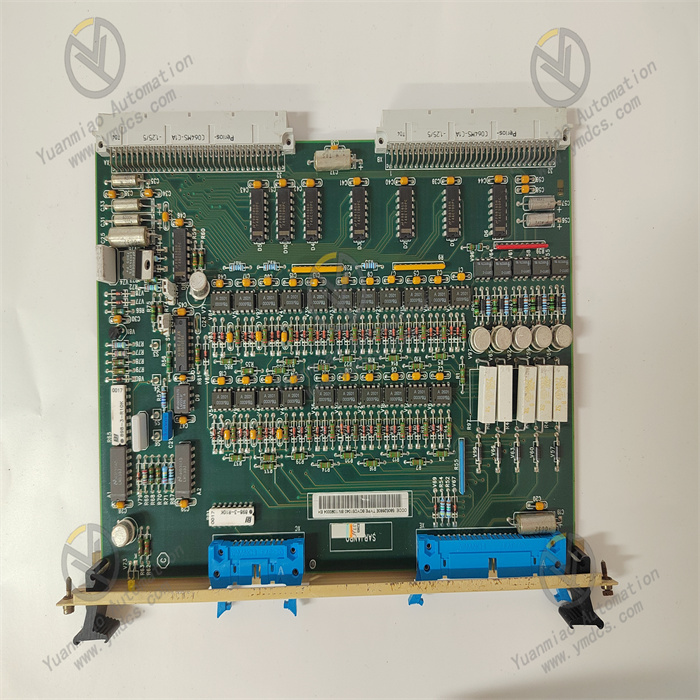
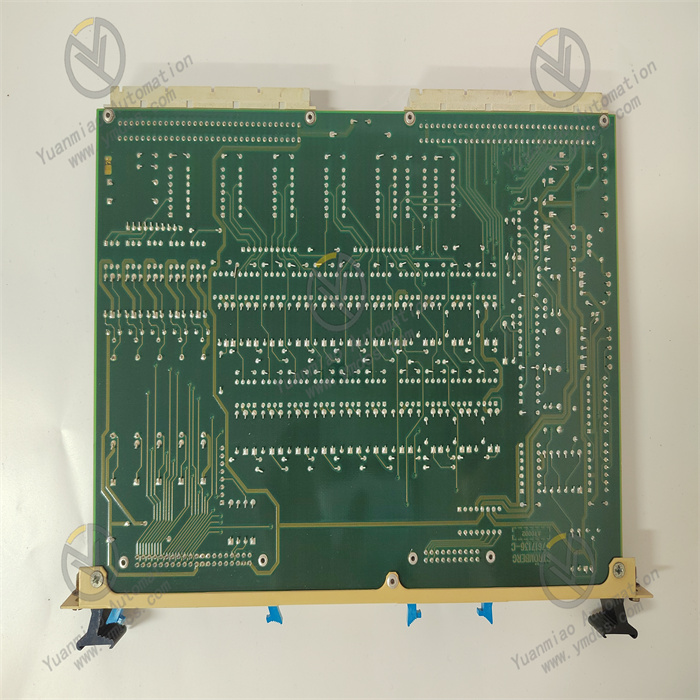
The ABB SCYC 51050 is an industrial‑grade high‑performance system‑control communication expansion module manufactured by ABB Group, Switzerland. It serves as a core supporting unit for ABB high‑end automatic‑control systems and is engineered for industrial‑site isolated‑signal transmission, high‑speed data exchange, system communication expansion and distributed‑control networking applications. Integrate signal conditioning, electrical isolation, data forwarding, protocol parsing and bus expansion into one compact unit, the module effectively compensates for deficiencies of main controllers such as insufficient communication ports, weak anti‑interference performance of signals and poor networking scalability. It is an important expansion component for industrial DCS control systems, PLC automation systems, intelligent drive systems and process‑control equipment.
Built upon ABB’s mature industrial‑automation hardware architecture, the SCYC 51050 adopts a standardized, compact modular design with fully‑isolated circuit layout and on‑board precision signal‑processing chips. Its key advantages include stable communication transmission, low‑signal distortion, strong anti‑interference capability, broad compatibility and zero drift during long‑term operation. Supporting mainstream industrial bus protocols, it enables data interconnection and distributed collaborative control among multiple devices, perfectly meeting requirements for data acquisition, signal transmission and command interaction in complex industrial sites. Constructed with industrial‑grade flame‑retardant PCB materials, ageing‑resistant electronic components and multi‑stage lightning‑surge‑suppression circuits, the module can withstand harsh operating conditions including workshop dust, damp condensation, electromagnetic radiation, voltage fluctuations and wide temperature variations, delivering 7×24‑hour continuous, stable unattended operation. It is widely deployed in new automation‑system supporting projects, communication upgrades for legacy control systems, bus‑network capacity expansion and signal‑transmission‑stability‑optimization renovations across power‑energy, petrochemical, heavy‑metallurgy, water‑treatment, intelligent‑manufacturing production‑line, HVAC and building‑automation industries.
2. Core Functions
High‑speed Bus Communication Expansion and Data Forwarding: As a dedicated communication expansion unit, it efficiently extends the bus‑interface resources of the main controller and supports high‑frequency, high‑speed industrial‑data transceiving and real‑time forwarding, greatly improving the data‑exchange efficiency and device‑networking capacity of automation systems. It synchronously completes multi‑node data acquisition, command distribution and status feedback, guaranteeing synchronization and real‑time performance of data transmission in distributed control systems and eliminating data latency, packet loss and data corruption.
Fully‑isolated Signal Transmission with Anti‑interference and Anti‑distortion Performance: Built‑in complete electrical‑isolation, signal‑filtering and waveform‑shaping circuits effectively suppress common‑mode interference, electromagnetic noise and voltage pulse disturbances on‑site. It fundamentally resolves problems such as long‑distance‑transmission signal attenuation, waveform distortion and data bit‑errors. Even under complex operating conditions with dense frequency‑conversion equipment, strong electromagnetic radiation and high‑voltage apparatus, signal‑transmission accuracy and stability are maintained, substantially enhancing the reliability of the whole automation‑control system.
Multi‑protocol Compatibility for Mainstream Industrial‑control Architectures: Natively compatible with major standard industrial communication protocols, the module seamlessly connects to the full range of ABB main control systems, third‑party PLCs, DCS systems, variable‑speed drives, smart instruments and remote I/O modules. Free of brand‑matching barriers, it flexibly integrates into diverse industrial‑control architectures, supporting independent single‑site expansion, multi‑segment hierarchical networking and cross‑device data linkage, delivering excellent universality and scalability.
Precise Signal Conditioning and Data Calibration: Equipped with high‑accuracy signal‑processing chips, it performs noise reduction, waveform reshaping, amplification and calibration on raw field‑acquired signals, correcting data deviations caused by line losses and environmental interference to ensure the precision of uploaded data and consistency of output commands. It addresses long‑standing industry‑wide issues such as data drift, insufficient accuracy and poor repeatability in conventional transmission methods and satisfies high‑precision data‑interaction requirements for sophisticated process‑control applications.
Comprehensive Hardware‑protection and Built‑in Fault‑self‑diagnosis: On‑board multi‑level electrical‑protection mechanisms cover over‑voltage, over‑current, short‑circuit, reverse‑polarity, surge‑suppression and electrostatic protection. It resists transient voltage spikes, short‑circuit faults and incorrect wiring on‑site, preventing module burnout, communication breakdown and system crash. Automatic hardware self‑test, bus‑link inspection and port‑status diagnosis are executed after power‑on. Abnormal conditions are detected in real‑time with accurate fault localization to facilitate fast maintenance troubleshooting.
Modular Hot‑swap‑ready Design for Convenient and Efficient Maintenance: The compact standardized modular structure enables simple plug‑in installation and secure wiring, suitable for standard DIN‑rail mounting inside control cabinets. Expansion, replacement and capacity‑upgrade work can be carried out without modifying the original system architecture. Online maintenance and upgrade without system shutdown greatly reduce downtime and maintenance costs, adapting to continuous‑production requirements of industrial sites.
- Non‑destructive System Upgrade and Legacy‑system Retrofit Compatibility: Compliant with unified ABB hardware definitions, communication timing and installation specifications, it directly fits older‑generation ABB automation‑control systems to realize communication‑capacity upgrade, network expansion and transmission‑stability optimization. Retrofit projects require no reconstruction of control logic, no replacement of main controllers and no large‑scale rewiring. Plug‑and‑play deployment enables non‑destructive intelligent upgrades for legacy automation installations.
3. Technical Specifications
| Parameter Item | Technical Specification |
|---|---|
| Product Model | SCYC 51050 |
| Product Brand | ABB |
| Product Series | Industrial‑system Communication‑expansion Control‑module Series |
| Product Type | Bus communication expansion module, isolated‑signal transmission module, system networking expansion unit |
| Core Functions | Bus‑communication expansion, high‑speed data forwarding, isolated signal conditioning, protocol parsing, distributed networking |
| Power Supply | Standard industrial 24 VDC, wide‑voltage tolerance for industrial‑voltage fluctuations |
| Communication Protocols | Compatible with mainstream industrial bus protocols; supports ABB proprietary bus and general industrial‑control communication protocols |
| Transmission Characteristics | High‑speed data transmission, low latency, low bit‑error rate, distortion‑free signal forwarding |
| Isolation Performance | Full‑channel electrical isolation; effective suppression of common‑mode interference, electromagnetic interference and long‑line transmission attenuation |
| Hardware Protection | Over‑voltage protection, over‑current protection, short‑circuit protection, reverse‑polarity protection, surge suppression, electrostatic‑discharge protection |
| Operating Temperature | ‑20℃ ~ +60℃, wide‑temperature industrial operation |
| Storage Temperature | ‑40℃ ~ +85℃ |
| Ambient Humidity | 5%‑95%RH, non‑condensing, suitable for high‑humidity enclosed control‑cabinet environments |
| Hardware Construction | Compact modular design, flame‑retardant PCB, ageing‑resistant components, dust‑proof and corrosion‑resistant on‑board technology |
| Mounting Method | Standard industrial DIN‑rail mounting, convenient plug‑in structure |
| Operating Characteristics | Stable transmission, zero data drift, strong anti‑interference performance, low failure rate, infrequent calibration required, reliable long‑term operation |
| Compatible Systems | Full‑range ABB automation‑control systems, industrial DCS, PLC systems, variable‑speed drive systems, distributed I/O networking systems |
| Key Advantages | Stable fully‑isolated transmission, high‑speed low‑latency communication, universal multi‑protocol compatibility, powerful anti‑interference performance, wide‑condition weather resistance, easy‑maintenance modular design, non‑destructive upgrade capability, suitable for industrial‑control networking across all industries |
4. Working Principle
The ABB SCYC 51050 operates under a closed‑loop workflow: Power‑on Self‑test & Initialization → Link Detection & Handshake → Signal Isolation & Conditioning → Protocol Parsing & Forwarding → High‑speed Data Exchange → Real‑time Fault Monitoring → Abnormality Protection & Lock‑up. After being powered by 24 VDC industrial supply, the module first completes hardware self‑inspection, circuit initialization, communication‑port reset and link detection. It automatically matches communication parameters and bus protocols of the upper‑level main controller, finishes device handshake networking and enters normal communication standby mode.
During runtime, the module receives control commands and networking data sent from the main controller in real‑time. On‑board isolation circuits and filter‑shaping units denoise, isolate and calibrate raw signals, removing noise induced by electromagnetic interference, voltage fluctuations and line‑coupling effects and restoring valid standard data and commands. Conditioned signals are processed through protocol parsing and conversion, then forwarded at high speed to downstream field equipment, instruments and I/O modules to guarantee accurate and synchronous delivery of control instructions.
Meanwhile, the module reversely collects operating status, process parameters and fault information from field‑side devices. After data verification, encoding and encapsulation, information is transmitted back to the upper‑level main controller, achieving bidirectional high‑speed data interaction. The electrical‑isolation architecture completely blocks backward interference from field‑side disturbance sources to the main‑control system, preventing system freeze‑ups, data corruption and accidental command triggering caused by interference crosstalk and ensuring a clean, stable and synchronous communication link for the whole automation‑control system.
Full‑time fault‑monitoring and self‑protection logic continuously tracks supply voltage, communication‑link status, port current and signal quality. Once faults such as short‑circuit, overload, abnormal signals or link loss are detected, protection actions are activated immediately: faulty ports are locked and abnormal circuits isolated to stop fault propagation across the whole system, while fault‑state information is saved for rapid maintenance diagnosis. After fault clearance, the module automatically resets and re‑establishes network connections without manual intervention, supporting reliable unattended operation.
5. System‑architecture Compatibility
The ABB SCYC 51050 is a standardized universal communication‑expansion module within the ABB industrial‑automation ecosystem. Its physical dimensions, electrical specifications, communication timing, interface definitions and networking logic fully comply with unified ABB industrial‑control standards. It achieves 100% seamless compatibility with all ABB main controllers, drives, I/O modules and process‑control equipment, acting as a standard accessory for network expansion and communication upgrades on ABB automation platforms.
Featuring strong cross‑brand and cross‑architecture interoperability, the module natively connects to PLC, DCS, smart‑instrument, variable‑frequency‑drive and remote‑I/O products from leading vendors such as Siemens, Schneider Electric and Rockwell Automation. It supports multi‑protocol interconnection without strict brand‑restriction barriers. Multiple system topologies are supported: single‑controller point‑to‑point expansion, multi‑device distributed networking, multi‑segment hierarchical control and cross‑system data linkage. It is equally suitable for communication‑reinforcement projects on small‑scale standalone automation equipment and large‑capacity network‑expansion requirements for complex multi‑node plant‑wide automation systems.
Its standardized modular design is well‑suited for retrofitting legacy industrial‑control installations. It can directly replace older‑generation communication modules, isolation units and signal‑transfer equipment. Upgrades require no main‑controller hardware replacement, no control‑logic reconstruction and no large‑scale field‑rewiring. Simple plug‑in replacement delivers immediate communication‑performance improvements, resolving typical drawbacks of legacy hardware including high‑communication latency, elevated bit‑error rates, weak anti‑interference capability, limited network‑node capacity and poor scalability, and significantly enhancing data‑transmission stability, real‑time responsiveness and overall reliability of automation systems.
6. Application Scenarios
Designed to overcome common limitations of conventional industrial communication modules, including poor anti‑interference performance, signal distortion risks, high transmission latency, narrow‑protocol compatibility, weak networking scalability and limited operating‑condition adaptability, the ABB SCYC 51050 leverages its core strengths of full electrical isolation, stable high‑speed transmission, multi‑protocol universal compatibility, wide‑temperature endurance, convenient maintenance and non‑destructive upgrade capability for a broad spectrum of industrial‑automation communication‑networking and signal‑transmission applications.
Deployment sectors include thermal‑power generation, hydropower and renewable‑energy plants, oil & petrochemical facilities, fine‑chemical‑production sites, iron‑and‑steel metallurgy, mining equipment, municipal water‑treatment works, intelligent‑manufacturing assembly lines, HVAC building automation and smart‑factory process‑control systems. Primary operational tasks comprise communication‑port expansion for industrial‑control systems, bus‑network capacity enlargement, isolated high‑low‑voltage‑signal transmission, remote data‑acquisition and interaction, multi‑device collaborative data‑linkage and communication‑stability optimization for legacy installations. It is applicable to new automation‑system turn‑key projects, communication‑upgrade renovations for legacy control equipment, industrial‑bus network‑expansion retrofits, signal‑transmission‑optimization projects for harsh‑interference environments and distributed‑control‑system architecture improvements. It mitigates operational risks such as data‑transmission latency, signal distortion, communication drop‑outs, system interference crosstalk and insufficient network‑node capacity, improving control accuracy, response speed, operational stability and intelligent‑networking capability of industrial automation systems and ensuring continuous, stable, safe, efficient and controllable industrial‑production workflows.