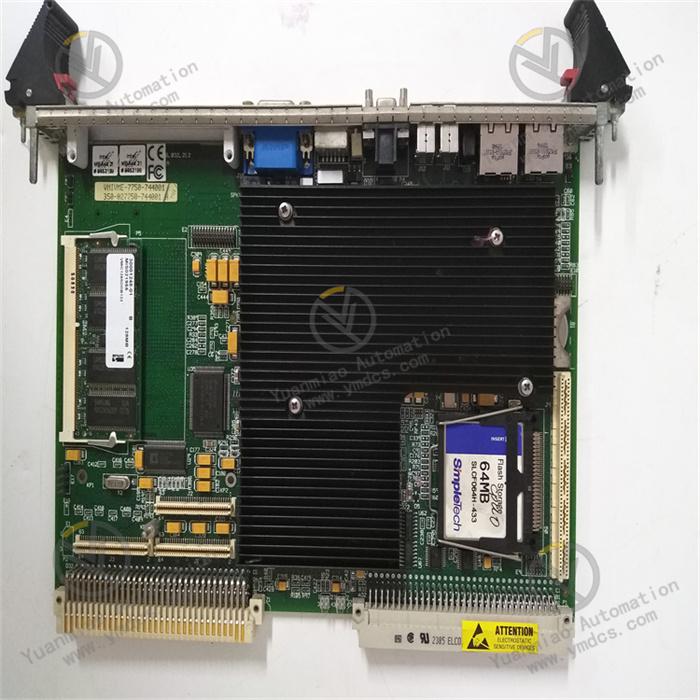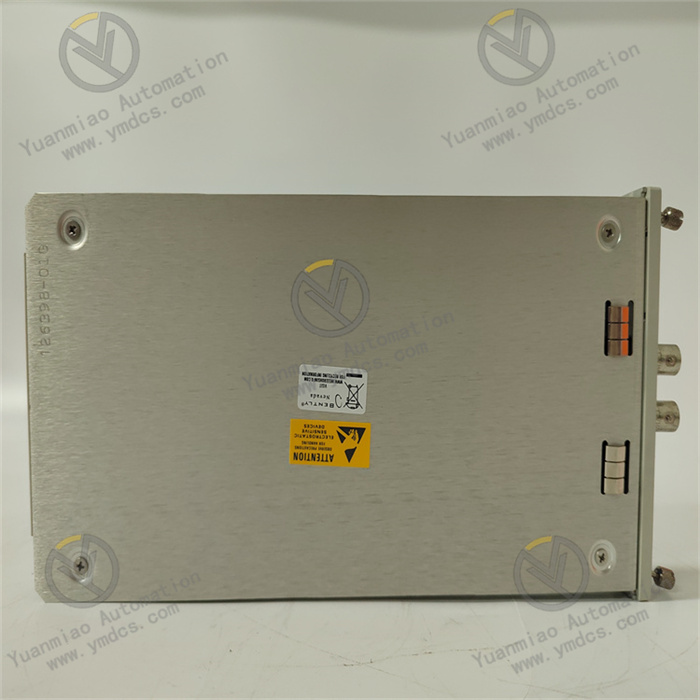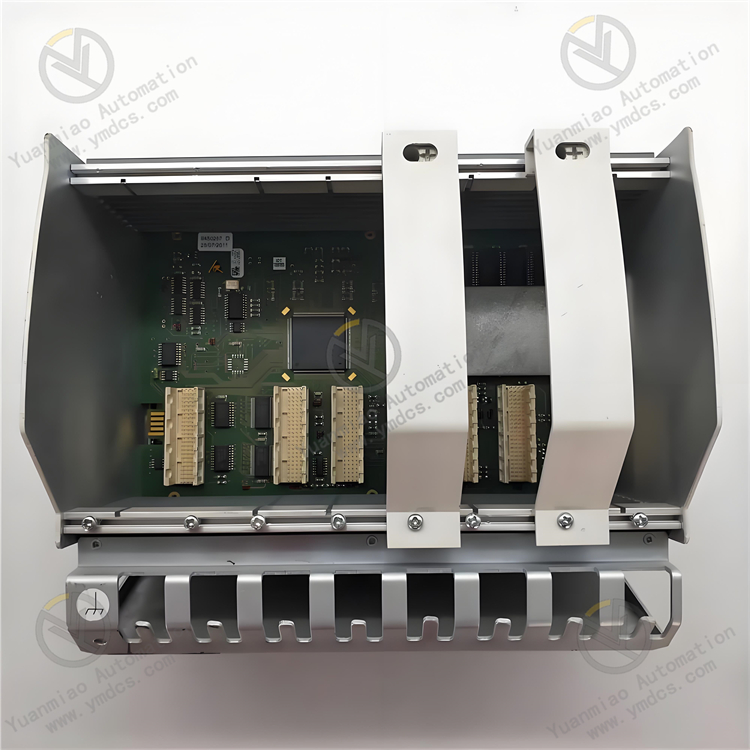
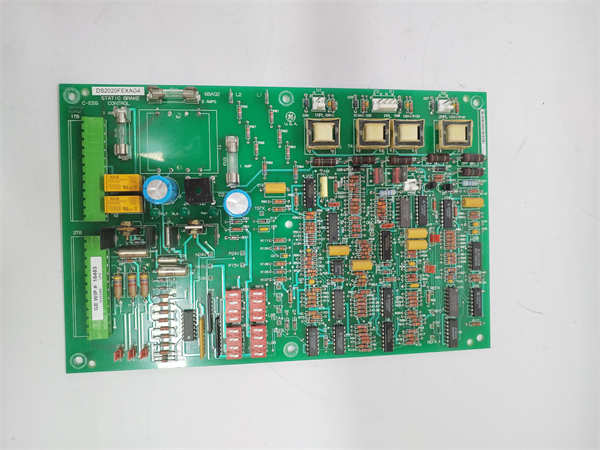
DS2020FEXAG4 - Field Exciter Board

DS2020FEXAG4 - Field Exciter Board

Brand: General Electric

Product ID: DS2020FEXAG4

Condition: New / used

Terms of payment: Paypal、T/T 、Western Union

Category:

Description

GE DS2020FEXAG4

I. Product Overview


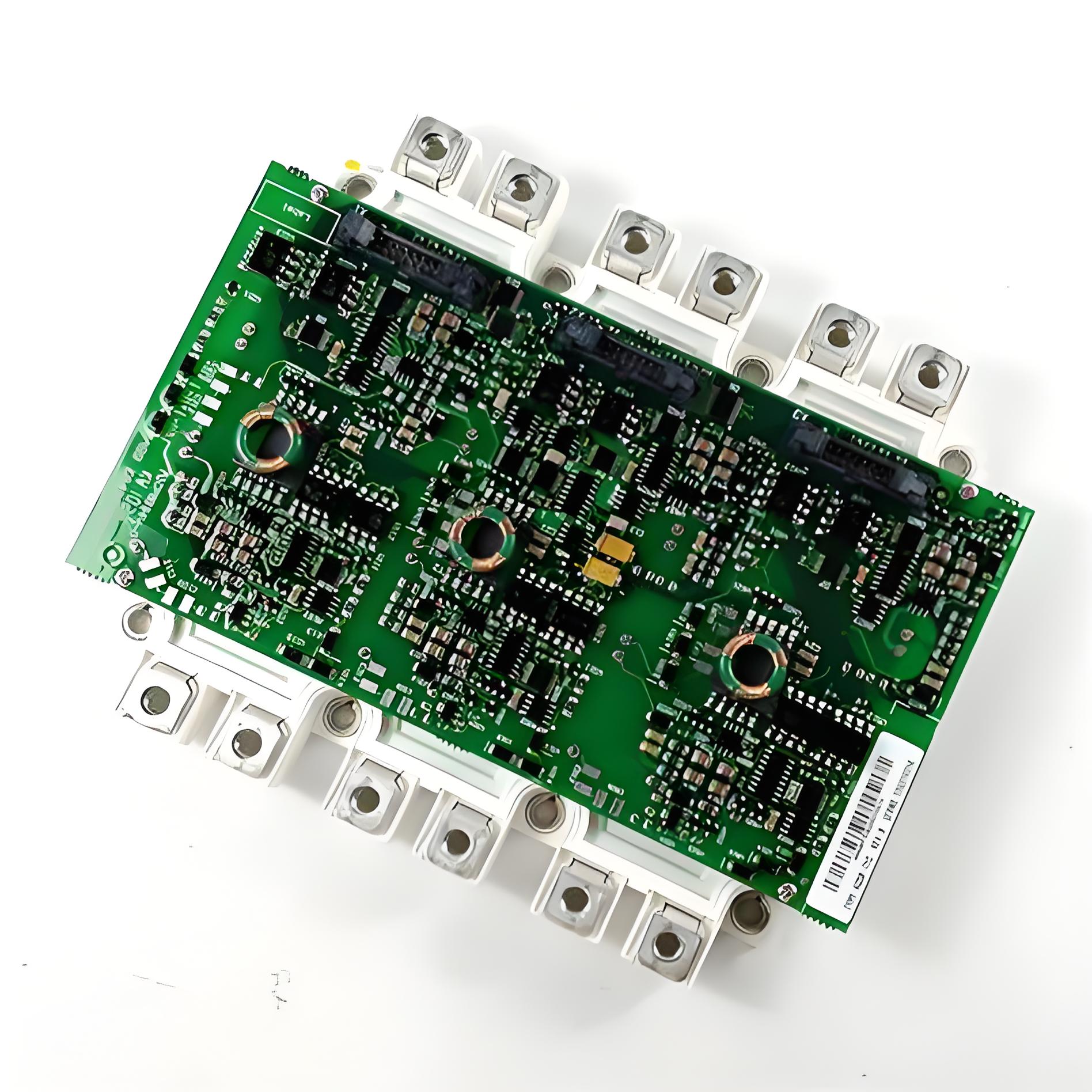
The GE DS2020FEXAG4 is a core excitation triggering module in the Mark VIe series control system, specifically designed for high-power industrial power generation and drive systems. It is positioned as a "dedicated triggering terminal for high-power thyristor excitation power units". Its core function is to receive triggering commands from an excitation control module (such as the DS200FCGDH1B), output synchronous triggering signals through high-precision pulse generation technology, and accurately control the turn-on and turn-off timing of three-phase fully controlled bridge thyristor power units. This enables precise regulation of the excitation current of generators or large synchronous motors. Meanwhile, the module integrates triggering pulse status monitoring, multi-dimensional fault diagnosis, and high-speed communication functions, providing stable and reliable excitation triggering support for key equipment such as high-power generator sets, blast furnace blowers, and large fans in fields including electric power, petrochemicals, and metallurgy.


With high-precision triggering control, fast synchronous response, strong anti-interference capability, and comprehensive protection mechanisms, this module can be highly adapted to the harsh working conditions of high voltage and large current in high-power excitation systems. It serves as a key execution link for the Mark VIe series to achieve closed-loop control of "excitation command - precise triggering - power regulation". It performs outstandingly in different industrial scenarios:
  • In the electric power field, as the core of excitation triggering for large steam turbine generator sets, when controlling 1200A/3000V thyristor power units, the pulse triggering accuracy reaches ±0.1°, and the response time is ≤20μs when the load changes by ±15%, ensuring an excitation current regulation accuracy of ±0.5%.
  • In the petrochemical field, it is suitable for scenarios where multiple thyristors operate in parallel in captive power plants. It realizes multi-module synchronous triggering through optical fiber communication, with a phase consistency error of ≤0.2%, ensuring the current imbalance of parallel units is ≤3%.
  • In the metallurgical field, it provides wide-frequency triggering control (10Hz-500Hz) for synchronous motors of blast furnace blowers, outputting high-amplitude pulses with a peak value of ≥15V, ensuring the motor speed fluctuation is ≤0.2%.


In terms of hardware architecture, the module adopts a design of "high-precision synchronous clock + multi-channel pulse generation + real-time status feedback". Its core consists of a 32-bit industrial-grade DSP processor, a high-precision clock synchronization unit, 6 independent pulse generation circuits, and a multi-protocol communication interface. It is equipped with 2 redundant control command input interfaces (dual-mode of optical fiber + electrical signal; optical fiber transmission distance ≤100m, electrical signal transmission distance ≤10m), 6 thyristor triggering pulse output interfaces, and 2 redundant communication interfaces (supporting EtherNet/IP and CANopen protocols, with a maximum rate of 100Mbps). It has a built-in 16-bit high-precision A/D sampling chip with a sampling frequency of 2kHz, which can collect key parameters in real time, such as pulse amplitude, thyristor anode voltage, and module temperature. In terms of triggering performance, it adopts a composite technology of "Digital Phase-Locked Loop (DPLL) + segmented pulse modulation", with a continuously adjustable triggering angle of 0°-180° and an accuracy of ±0.1°. It supports 50Hz/60Hz self-adaptation and 10Hz-500Hz wide-frequency adjustment, with a configurable pulse width of 50μs-1000μs. In terms of redundancy and protection design, it supports multi-module parallel synchronous triggering (phase consistency error ≤0.2%), adopts a dual mechanism of "hardware fast protection + software logic protection", and has multiple protection functions such as pulse loss protection, overvoltage protection, overtemperature protection, and power reverse connection protection. Its industrial-grade reinforced design allows it to operate stably in environments with a temperature range of -25℃~75℃ and strong electromagnetic interference.


II. Technical Parameters


Parameter CategoryParameter NameSpecific ParametersUnit
Basic ParametersModelGE DS2020FEXAG4-

Product TypeIndustrial-grade Excitation Triggering Module-

Product SeriesGE Speedtronic Mark VIe Series-

Overall Dimensions (L×W×H)180×140×110mm

Installation MethodDIN Rail Mounting (35mm standard), Excitation Power Cabinet Panel Mounting-

Weight≤1.2kg
Triggering Performance ParametersNumber of Triggering Channels6 independent channels (suitable for three-phase fully controlled bridge thyristors)Channel(s)

Triggering Accuracy±0.1°°

Triggering Angle Adjustment Range0°-180° (continuously adjustable)°

Synchronous Signal Frequency50Hz/60Hz (self-adaptive), 10Hz-500Hz wide-frequency adjustmentHz

Pulse Width50μs-1000μs (configurable)μs

Pulse AmplitudePeak value ≥15V, amplitude stability ±5%V

Response Time≤20μs (from command reception to pulse output)μs

Multi-module Synchronization AccuracyPhase consistency error ≤0.2°°
I/O & Communication ParametersControl Command Input Interface2 channels (1 optical fiber + 1 electrical signal, redundant design)-

Pulse Output Interface6 differential outputs, suitable for discrete/modular thyristors-

Communication Interface2 channels (redundant), supporting EtherNet/IP and CANopen-

Communication RateEtherNet/IP: 100Mbps; CANopen: 500kbpsMbps/kbps

Sampling Frequency2kHz (sampling for pulse parameters, voltage, temperature)kHz

Sampling Accuracy16-bit (A/D chip)-
Reliability & Protection ParametersMean Time Between Failures (MTBF)≥1,200,000 hours (at 25℃ ambient temperature)Hour(s)

Redundancy ModeControl command input redundancy, communication redundancy-

Protection FunctionsPulse loss protection, overvoltage protection, overtemperature protection, power reverse connection protection, abnormal phase protection, insufficient pulse amplitude protection-

Overvoltage Protection Threshold110% of rated thyristor anode voltage-

Overtemperature Protection Threshold≥85℃ (inside the module)

Operating Environmental ConditionsTemperature: -25℃~75℃; Humidity: 5%~95% (no condensation); Altitude: ≤2000m; Vibration: ≤5g (IEC 60068-2-6)-

Protection LevelIP20 (module body), IP65 (with protective enclosure)-


III. Functional Features


1. High-Precision Pulse Triggering for Reliable Excitation Regulation Accuracy

The module adopts a composite technology of "Digital Phase-Locked Loop + segmented pulse modulation", breaking through the limitations of traditional analog triggering. It has a built-in high-precision DPLL unit that tracks grid synchronous signals in real time, with a synchronization error of ≤0.05°. Combined with the high-speed computing capability of the 32-bit DSP, it realizes continuous adjustment of the triggering angle from 0° to 180° with an accuracy of ±0.1°. To adapt to the characteristics of different thyristors, it supports configurable pulse width of 50μs-1000μs and adopts a segmented modulation strategy: wide pulses are output at the initial stage of conduction to ensure reliable triggering, and narrow pulses are switched after conduction to reduce power consumption. The pulse amplitude is stably maintained at a peak value of ≥15V with a fluctuation of ≤5%, making it suitable for full-range thyristors of 100A-3000A. In terms of dynamic response, the design of high-speed optocouplers and drive circuits enables a command response time of ≤20μs. When the load changes by ±15%, the excitation current returns to stability within 100ms, ensuring a voltage regulation accuracy of ±0.2% when the unit is connected to the grid.


2. Multi-Module Synchronous Triggering for Complex Topology Requirements

It supports multi-module parallel synchronous triggering, achieving precise phase synchronization between master and slave modules through a synchronous clock bus, and is suitable for multi-pulse topologies such as 12-pulse and 24-pulse. The master module sends synchronous clock signals to the slave modules, with a transmission delay of ≤1μs, ensuring a phase consistency error of ≤0.2% among multiple modules. It is equipped with a synchronous fault-tolerant mechanism: when the synchronous signal of the master module is abnormal, the slave modules automatically switch to the grid synchronous signal within 5ms to ensure the continuity of triggering. To meet the phase offset requirements of multi-pulse topologies, a phase offset of -30°~+30° can be set through configuration software, enabling adaptation to different topologies without modifying hardware. For example, in a 24-pulse system, 4 modules are connected in parallel, with phase offsets set to 0°, 15°, 30°, and 45° respectively. This results in the excitation current harmonic content being ≤2%, significantly reducing grid pollution. The dual-mode command input (optical fiber + electrical signal) can be flexibly selected according to the distance between cabinets, improving the flexibility of system layout.


3. Triple Protection Mechanism for Enhanced Operational Safety

It integrates a triple mechanism of "hardware fast protection + software logic protection + fault diagnosis".
  • At the hardware level: The pulse detection circuit identifies pulse loss and cuts off the channel within 10μs; the overvoltage suppressor clamps the voltage instantly when the anode voltage exceeds 110% of the rated value; the overtemperature relay triggers power-off at 85℃; the power reverse connection protection diode blocks reverse current.
  • At the software level: The DSP monitors parameters such as triggering phase (alarm when deviation exceeds ±0.5°), pulse amplitude (protection when lower than 12V), and synchronous signals in real time. When an abnormality is detected, it immediately cuts off the output and uploads a fault signal.
  • In terms of fault diagnosis: A sampling frequency of 2kHz is used to monitor more than 20 parameters, supporting channel-level fault location. The HMI displays fault types in real time (e.g., "CH03 Pulse Loss"), and can store 500 fault records (including time and parameters). Maintenance personnel can trace and analyze faults through configuration software, improving fault handling efficiency by 70%.


4. Strong Anti-Interference Design for Harsh Industrial Environments

It adopts an anti-interference system of "multiple shielding + signal isolation + power filtering". The shell is made of high-strength galvanized steel, and a 0.5mm copper foil shielding layer is laid on key internal circuits. A shielding network is formed through multi-point grounding, with a shielding effectiveness of ≥80dB, complying with the IEC 61000-4-3 standard (20V/m) to resist electromagnetic interference from thyristor switching. The dual isolation design ensures: isolation between input and control circuits ≥2kVrms, isolation between pulse output and control circuits ≥3kVrms, and isolation between communication interfaces ≥2.5kVrms, blocking common-mode/differential-mode interference. Two-stage EMC filters filter out grid harmonics and pulse interference, with a power supply ripple rejection ratio of ≥50dB. Wide-temperature components (-25℃~75℃) are matched with intelligent heat dissipation (fan starts at 60℃ and stops at 50℃), and the vibration resistance reaches 5g (IEC 60068-2-6). It has IP20 protection with a dust-proof cover, and an optional IP65 enclosure for harsh environments. Under ±4kV electrical fast transient interference, the triggering accuracy fluctuation is ≤0.05°, verifying its strong anti-interference performance.


5. Convenient Configuration & Maintenance for Reduced O&M Costs

It is compatible with configuration software such as GE CIMPLICITY HMI and Proficy Machine Edition, with built-in standardized function blocks. Drag-and-drop programming eliminates the need for complex code, supporting offline configuration and online download (without shutdown). Batch import/export of parameters improves the configuration efficiency of multiple modules. The LED indicator group displays the power status (green always on), operation status (green flashing for normal, red always on for fault), synchronization status (blue always on for normal, blue flashing for abnormal), and 6-channel pulse status in real time, allowing maintenance personnel to complete preliminary troubleshooting without software. Plug-in gold-plated terminals eliminate the need for welding, reducing the risk of poor contact; hot-swappable support enables replacement within 5 minutes, avoiding unit shutdown losses. The remote diagnosis function allows parameter reading and fault debugging through EtherNet/IP, reducing on-site maintenance workload. It is compatible with all controllers of the Mark VIe series and third-party systems, featuring strong expandability.

contact us