Description
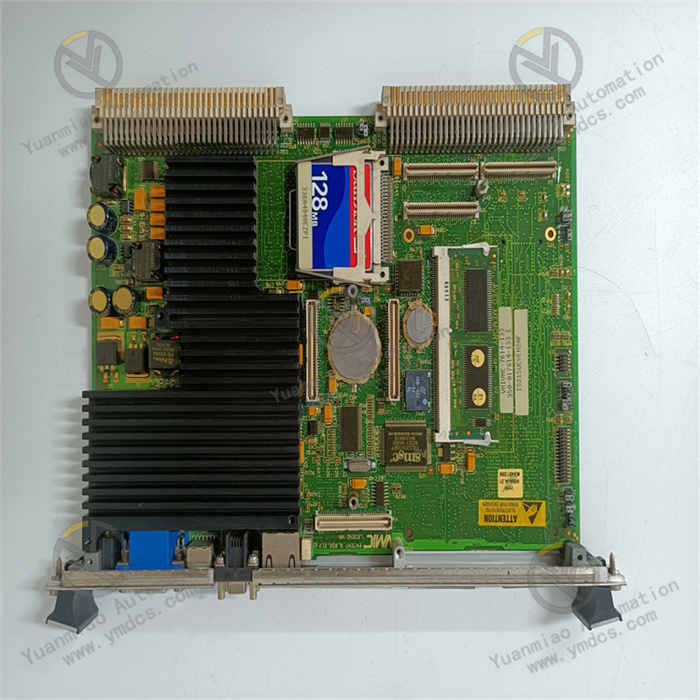
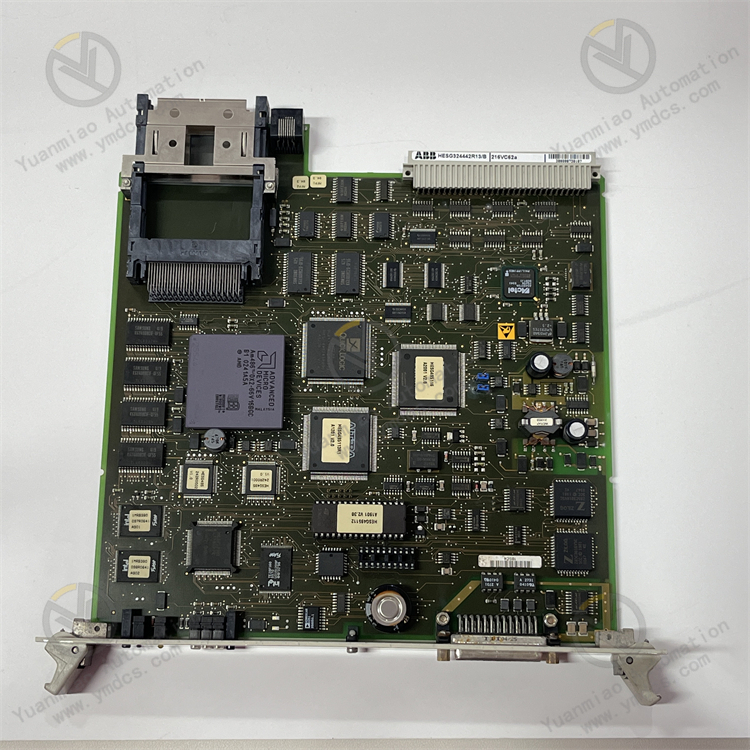
ABB HESG324442R0112 216BVC62A
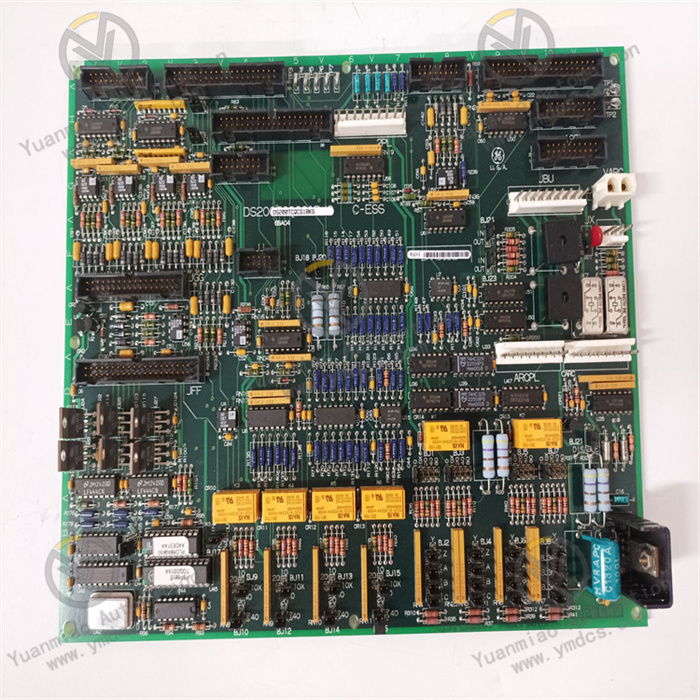
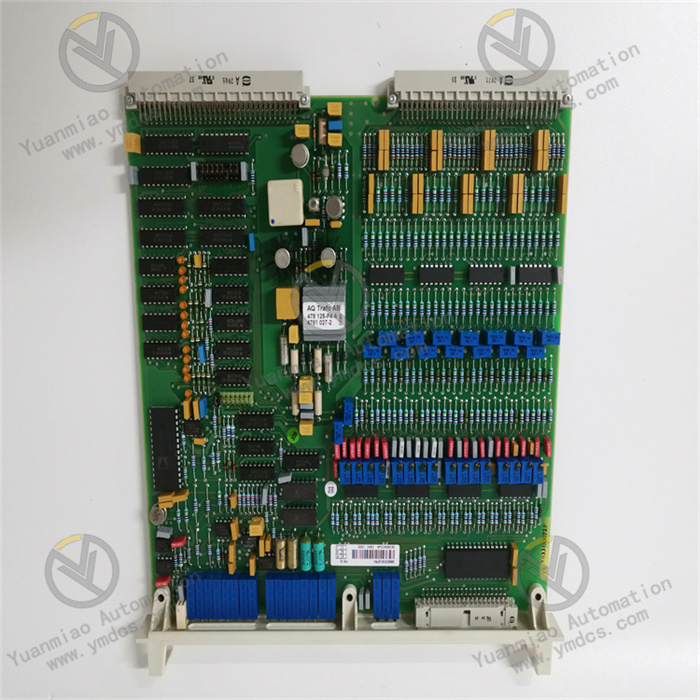
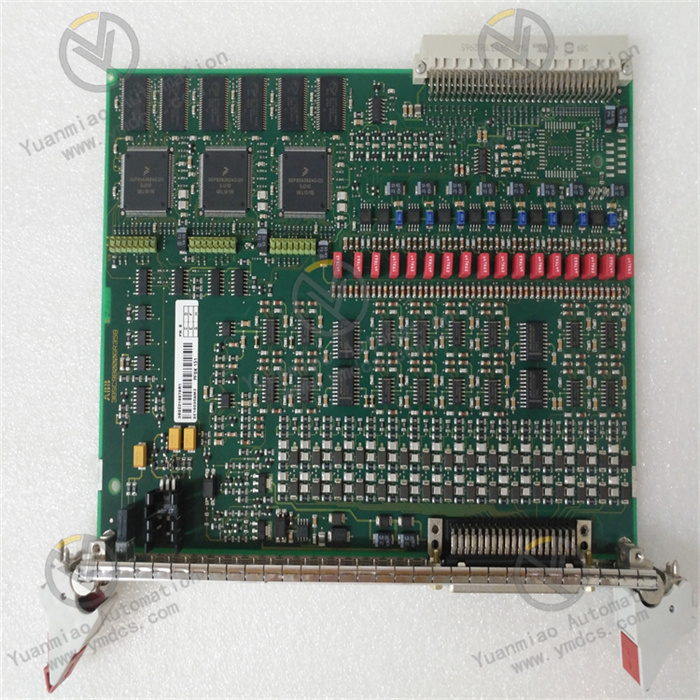
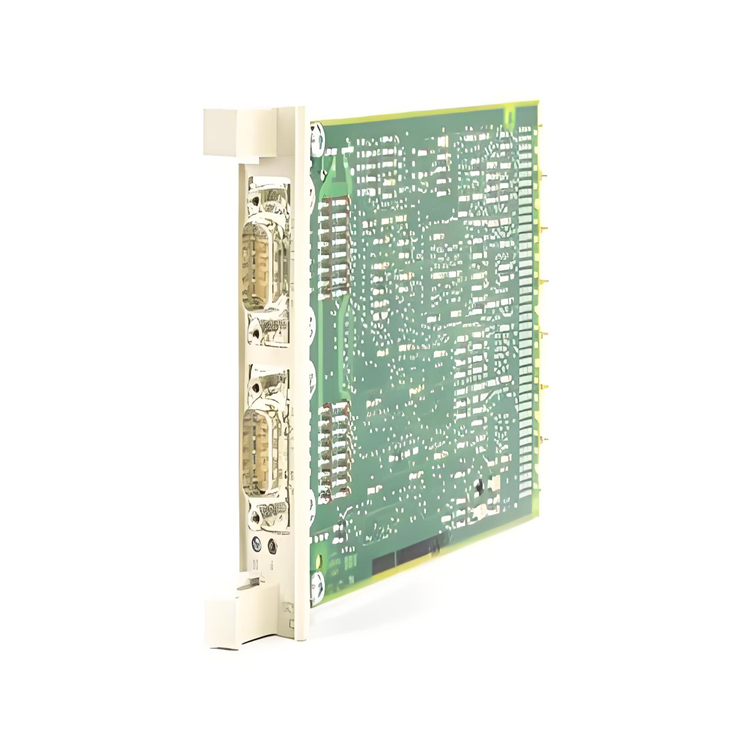
ABB HESG324442R0112 216BVC62A is an industrial-grade high-performance closed-loop control module, belonging to the core component series of ABB industrial automation. It is positioned as key equipment for high-precision closed-loop control, multi-signal interaction, and system linkage in industrial processes. It integrates five core capabilities: high-precision control, multi-protocol compatibility, strong redundancy guarantee, modular expansion, and high anti-interference. As a core component in ABB 800xA DCS, AC800M PLC, and industrial drive systems for realizing precise control, process monitoring, fault diagnosis, and safety linkage, it is widely applicable to harsh industrial scenarios in power, metallurgy, chemical industry, intelligent manufacturing and other industries.
This module mainly undertakes five core tasks: closed-loop control, signal acquisition and conditioning, logic operation, fault monitoring, and data interaction. Equipped with an industrial-grade high-performance embedded processor, it can quickly complete complex closed-loop control algorithm operations, analog/digital signal processing, and control command issuance. It supports multi-channel parallel control and redundancy switchover mechanism, which can effectively avoid system interruption caused by single-point faults and ensure production continuity. Relying on rich communication interfaces and multi-protocol compatibility, it can seamlessly connect with ABB and third-party automation systems, effectively solving problems such as insufficient control precision, poor compatibility, and inconvenient fault troubleshooting in industrial scenarios. Compatible with ABB 800xA DCS, AC800M PLC, ACS series inverters and other systems, it is widely used in power generation auxiliary control, metallurgical production line closed-loop regulation, chemical reaction process control, intelligent manufacturing equipment linkage and other scenarios, providing core hardware support for the stable, efficient and precise operation of industrial automation systems.
It adopts an industrial-grade compact modular design with a corrosion-resistant resin protective coating on the surface, suitable for 35mm DIN rail installation or control cabinet embedded installation, facilitating dense deployment and space optimization in control cabinets. Equipped with high-density pluggable terminals and standardized communication interfaces, it can quickly complete the wiring and replacement of power, signals, and communication lines, greatly improving installation, commissioning, and maintenance efficiency. The enclosure and circuit design comply with relevant industrial EMC standards and IEC 61508 SIL2 safety standards, with IP20 protection level (higher protection requirements can be met when installed internally), offering excellent dustproof and anti-electromagnetic interference performance, which can withstand high-frequency noise from inverters and electromagnetic fields from high-power equipment on industrial sites. It supports hot-swappable function, allowing module replacement without shutdown during maintenance, and supports online configuration, parameter setting, fault diagnosis, and firmware upgrade through ABB special configuration software, making operation and maintenance convenient and efficient.
1. Technical Specifications
1.1 Power Specifications
- Power Supply Voltage: Industrial standard 24VDC (compatible with 18–32VDC wide-range power supply), suitable for centralized power supply in control cabinets or system backplane power supply mode, meeting the needs of voltage fluctuations on industrial sites;
- Power Protection: Equipped with overvoltage, overcurrent, reverse polarity, and surge protection functions; electrical isolation between power circuit and signal circuit to suppress ground loop interference and prevent damage to the module and connected equipment;
- Typical Power Consumption: ≤8W, low power consumption design, suitable for long-term continuous operation without additional heat dissipation burden, no need to install heat dissipation devices, no derating when operating at full load in a 45℃ environment;
- Redundant Power Supply: Supports N+1 redundant power supply configuration; when a single power supply fails, the load can be automatically transferred to the standby power supply, with a switchover time ≤10μs to ensure power supply continuity;
- Power Indication: The panel is equipped with a power LED indicator to intuitively display the module's power supply and redundant power supply status, facilitating quick troubleshooting of power supply faults.
1.2 Computing & Control Parameters
- Processor Type: Industrial-grade 32-bit embedded processor with a main frequency ≥150MHz, featuring high-speed computing and precise control capabilities;
- Computing Performance: PID closed-loop control algorithm response time ≤0.5ms, capable of quickly processing complex logic control tasks and realizing real-time parameter adjustment and precise control;
- Storage Capacity: Built-in 512KB Flash and 128KB RAM, supporting ≥800 groups of recipe storage, which can store control programs, operation logs, and fault information, supporting data power-off preservation;
- Control Precision: Analog signal acquisition precision ≤±0.1%, control output precision ≤±0.2%, enabling high-precision closed-loop control, adapting to precision manufacturing and precise regulation scenarios;
- Self-test Function: Built-in hardware self-test circuit and software watchdog function, analog and digital multiple filtering, which can detect component abnormalities and trigger responses within 10μs, ensuring stable operation of the module.
1.3 Signal & I/O Parameters
- Input Signals: Supports 8 channels of analog input (4-20mA/0-10V) and 16 channels of digital input (24VDC), capable of collecting various types of parameters such as temperature, pressure, flow, liquid level, and equipment status signals;
- Output Signals: Supports 4 channels of analog output (4-20mA) and 8 channels of digital output (relay contacts/PNP), which can directly drive actuators or feedback control signals;
- Signal Conditioning: Equipped with signal filtering, amplification, and isolation functions, which can effectively filter out industrial on-site interference and ensure the accuracy of signal acquisition and output;
- Channel Isolation: Electrical isolation between input/output channels and between channels and power supply, isolation voltage ≥2500VAC, effectively suppressing interference intrusion;
- Alarm Function: Supports multiple types of alarms such as signal over-range, equipment failure, and communication abnormality, can preset alarm thresholds, and timely upload alarm information and light up the panel alarm indicator when an alarm is triggered.
1.4 Communication & Compatibility Parameters
- Communication Interfaces: Integrates 2 Ethernet interfaces, 1 RS485 serial interface, and 1 Profibus-DP interface, supporting redundant communication configuration to ensure the continuity and reliability of data transmission;
- Communication Protocols: Native support for mainstream industrial protocols such as Profinet, Profibus-DP, Modbus RTU/TCP, and EtherCAT, which can be seamlessly connected with ABB 800xA, AC800M, and third-party automation systems;
- Data Transmission: The maximum data transmission rate is 100Mbps, and the parameter refresh cycle ≤500μs, ensuring real-time interaction of control commands and monitoring data without packet loss;
- System Compatibility: Deeply compatible with ABB 800xA DCS, AC800M PLC, and ACS series inverters, can be directly connected to the existing automation network without additional conversion modules;
- Expansion Capacity: Adopts backplane bus architecture, provides 6 expansion slots, can connect 8 I/O module backplanes, and supports free combination and expansion of various function modules such as DI, AI, and AO.
1.5 Environmental Parameters
- Operating Temperature: -40℃ to +80℃, wide-temperature design adapts to extreme high and low temperature industrial environments, startup time at -35℃ is only 3 seconds;
- Operating Humidity: 5%–95% (non-condensing), capable of stable operation in humid industrial environments, adapting to humid scenarios such as chemical industry and water treatment;
- Anti-Interference Level: Complies with IEC 61000-6-2 and IEC 61000-6-4 electromagnetic compatibility standards, has excellent anti-electromagnetic interference performance, and can withstand strong electromagnetic interference on industrial sites;
- Redundancy Switchover: Dual-channel parallel operation, main-standby switchover time ≤50ms, ensuring continuous system operation in case of single-point failure without control interruption;
- Reliability: Certified by CE, UL, and CCC, mean time between failures (MTBF) >60,000 hours, natural heat dissipation, maintenance-free operation, adapting to long-term continuous production needs.
1.6 Physical & Installation Parameters
- Overall Dimensions: Compact design, approximately 110mm×90mm×35mm (subject to actual product), adapting to dense installation needs;
- Installation Method: Supports 35mm DIN rail installation or control cabinet embedded installation, can be directly installed inside the ABB automation system cabinet, saving installation space;
- Wiring Terminals: Pluggable high-density wiring terminals, reliable wiring, plug-in life >1000 times, facilitating quick wiring and module replacement;
- Status Indication: The panel is equipped with multi-color LED indicators, which can intuitively display power supply, operation, communication, fault, and redundancy status, facilitating quick fault location;
- Weight: Net weight of a single module is about 0.4kg, lightweight and easy to install, convenient for spare part management and on-site replacement.
2. Features
- High-Precision Closed-Loop Control: Equipped with a high-performance 32-bit processor, the PID closed-loop control algorithm has fast response speed and high control precision, which can realize precise adjustment of parameters such as temperature, pressure, and flow, adapting to scenarios with high control precision requirements such as precision manufacturing and chemical reactions, effectively improving product quality and production efficiency.
- Redundant Design and High Safety: Adopts dual-machine hot standby architecture, supports N+1 redundant power supply configuration and dual-channel redundant switchover, with short main-standby switchover time, which can effectively avoid system interruption caused by single-point faults; passes IEC 61508 SIL2 safety standard, has a complete fault self-diagnosis and protection mechanism, emergency stop response <10ms, ensuring industrial production safety.
- Multi-Protocol Compatibility and Seamless Integration: Supports multiple mainstream industrial protocols, equipped with rich communication interfaces, which can be seamlessly connected with ABB and third-party automation systems without additional conversion modules; pre-installed with ABB System800xA software library, providing standardized function blocks that engineers can directly call, shortening project delivery cycle and reducing integration difficulty.
- Modular Expansion and Flexible Adaptation: Adopts backplane bus architecture, supports multiple expansion slots, can freely combine various function modules to achieve "one machine with multiple functions"; adapts to industrial control scenarios of different scales, supports "on-demand expansion", and enterprises can gradually add function modules according to business growth, reducing initial investment costs.
- Convenient Operation and Maintenance, High Reliability: Supports hot-swappable function, allowing maintenance without shutdown, reducing production losses; panel indicators can quickly locate faults, supporting online configuration, parameter setting, fault diagnosis, and firmware upgrade, with high maintenance efficiency; industrial-grade resin protection and wide-temperature design, excellent protection performance, can operate stably in harsh industrial environments for a long time, with low maintenance costs.
3. Operating Principle
- Initialization and Link Establishment: After power-on, the module completes a full self-test, initializes the processor, memory, communication interface, I/O channels, and redundancy control circuit, and loads the built-in firmware and pre-configured control parameters; establishes a connection with the upper system (DCS/PLC), inverter, on-site sensors, and actuators through the communication interface, and enters the normal working state after parameter calibration and state synchronization.
- Signal Acquisition and Preprocessing: Collects status signals of on-site switches and sensors through digital input channels, and collects parameter signals such as temperature, pressure, and flow through analog input channels; filters industrial on-site electromagnetic interference and signal noise through multiple digital filtering, signal amplification, and isolation processing to ensure the accuracy of signal acquisition; converts analog signals into digital quantities recognizable by the processor through high-precision conditioning circuits.
- Closed-Loop Computation and Logic Control: According to the preset control program, closed-loop control algorithm, and logic rules, the processor quickly computes and logically judges the collected signals, and completes precise parameter adjustment through the PID adaptive control algorithm; generates control commands, which are issued to actuators, inverters and other equipment through analog output channels (4-20mA) or digital output channels, realizing control functions such as equipment start-stop, parameter adjustment, and process switching, ensuring that the industrial process meets the process requirements.
- Redundancy Monitoring and Fault Handling: Real-time monitors the module operation status, communication link, power supply status, and I/O channel status, and real-time monitors the main-standby channel status through heartbeat packets; if abnormalities (such as signal over-range, communication interruption, power failure) are detected, it immediately triggers redundancy switchover, switches to the standby channel or standby power supply within 50ms, records fault information, triggers sound and light alarms, and uploads fault data to the upper system, facilitating operation and maintenance personnel to quickly troubleshoot and handle.
- Data Interaction and Maintenance Management: Uploads real-time operation data, equipment status, and fault information to the upper system through the communication interface, and receives control commands and parameter modification commands issued by the upper system; supports hot-swappable maintenance, and can complete program download, parameter configuration, and firmware upgrade online; built-in data storage function records operation logs and fault information, supports log export, providing support for fault tracing and predictive maintenance.
4. Applications and Case Examples
- Power Generation Industry: In the auxiliary control system of thermal power plants and wind farms, the module is responsible for collecting parameters such as boiler temperature, steam pressure, and wind speed, adjusting the operation status of feed water pumps, induced draft fans, inverters and other equipment through closed-loop control algorithms, optimizing power generation efficiency, and realizing equipment fault monitoring and protection to ensure the continuity of power production; in substations, it realizes precise control and status monitoring of the DC power supply system.
- Metallurgical Industry: In iron and steel, non-ferrous metal smelting production lines, the module serves as a core control node, collecting parameters such as smelting temperature, furnace pressure, and electrode current, realizing functions such as electrode lifting and furnace temperature adjustment through closed-loop control, maintaining the stability of the smelting process, and improving product quality; in cold rolling and hot rolling production lines, it controls roll pressure and strip tension to achieve precise rolling.
- Chemical Industry: In the control system of chemical reactors and rectification towers, the module collects parameters such as reaction temperature, pressure, and liquid level, and precisely adjusts feed rate, heating power, and cooling speed through PID closed-loop control to ensure that the reaction process meets the process requirements; it has the characteristics of strong anti-interference and high reliability, adapting to the harsh environment of high dust, strong electromagnetic interference, and humidity in chemical plants, supporting fault self-diagnosis and reducing maintenance downtime.
- Intelligent Manufacturing Industry: In 3C electronics and auto parts precision manufacturing production lines, the module links with ABB robots and servo systems to realize precise positioning of robotic arms and precise adjustment of processing parameters, with a repeat positioning accuracy of ±0.01mm, improving product qualification rate; in intelligent warehousing and conveying systems, it controls conveyor speed and sorting equipment actions to realize automatic linkage control.
- Municipal and Environmental Protection Industry: In urban water supply and sewage treatment systems, the module collects parameters such as water supply pipe network pressure, sewage liquid level, and dissolved oxygen concentration, controls the operation status of water pumps and aeration fans, realizes precise adjustment and energy-saving operation, saving 15%-25% energy compared with traditional control methods; in garbage treatment plants, it controls incinerator temperature and flue gas treatment equipment to ensure environmental protection compliance.