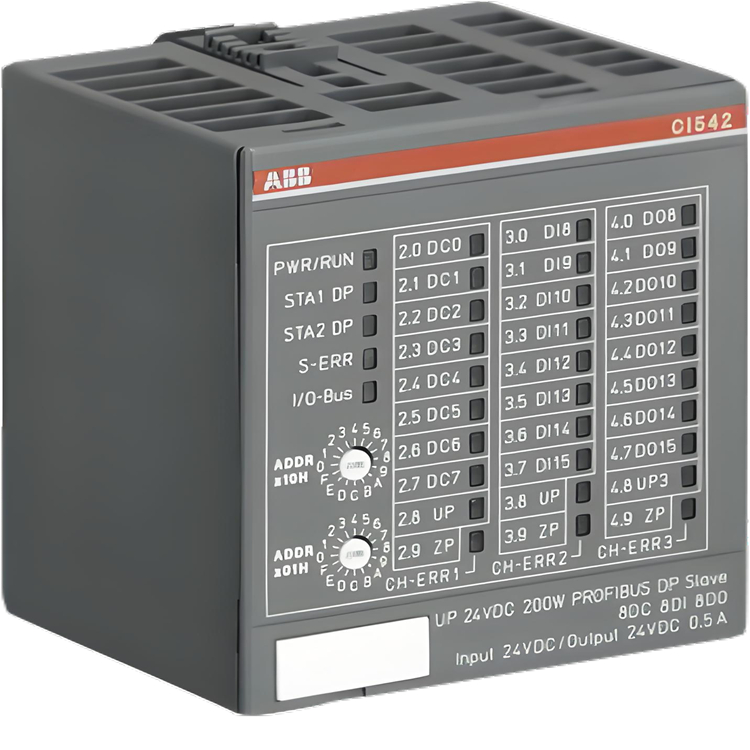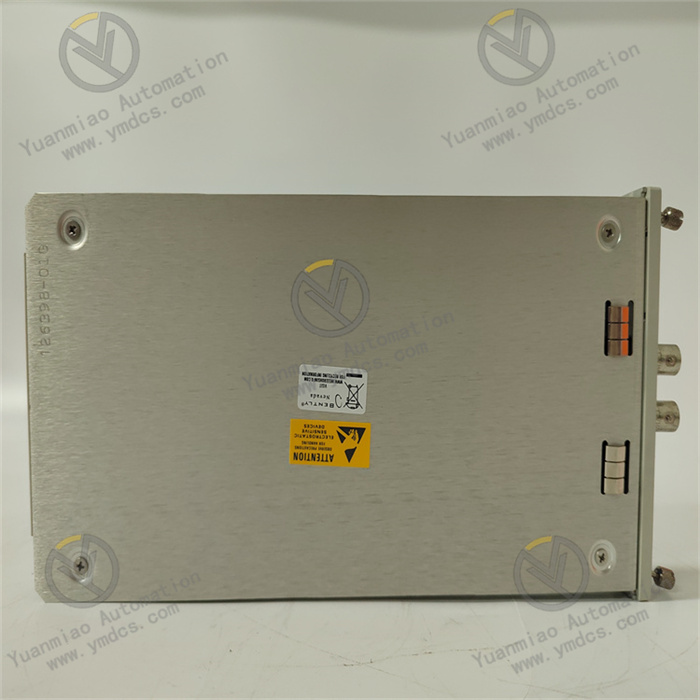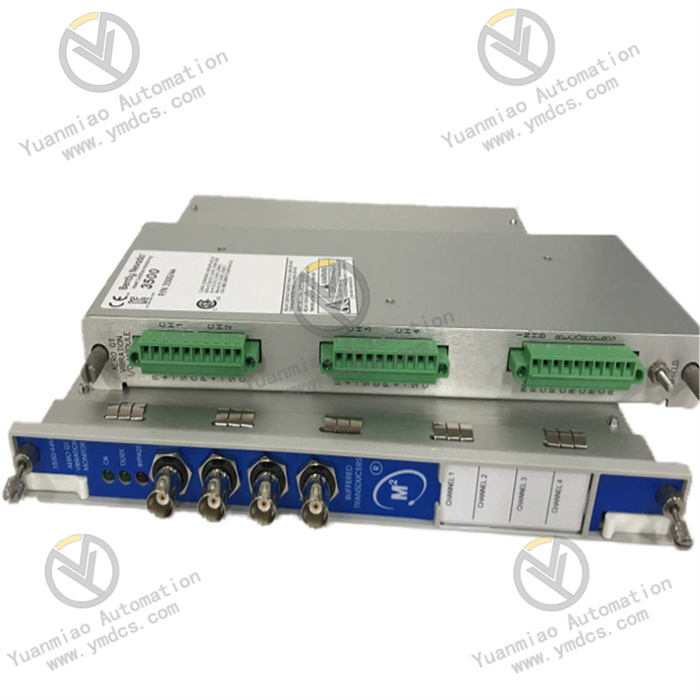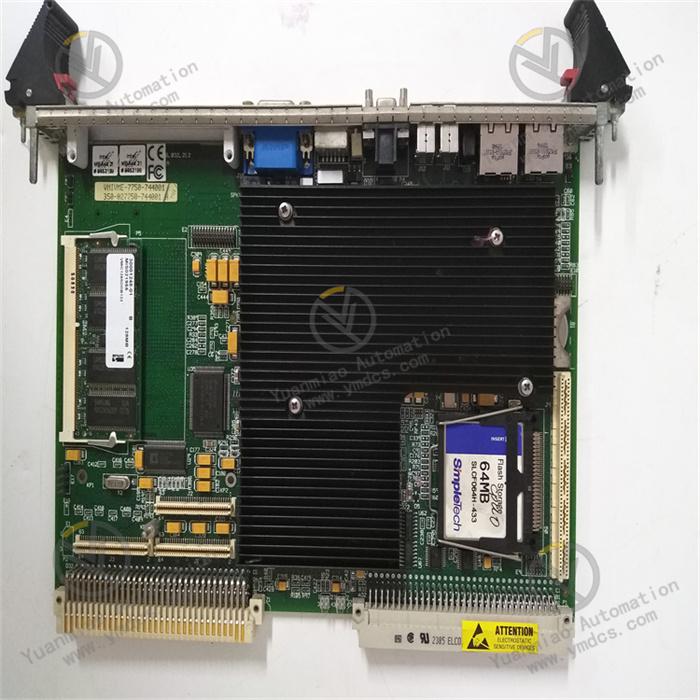
Description
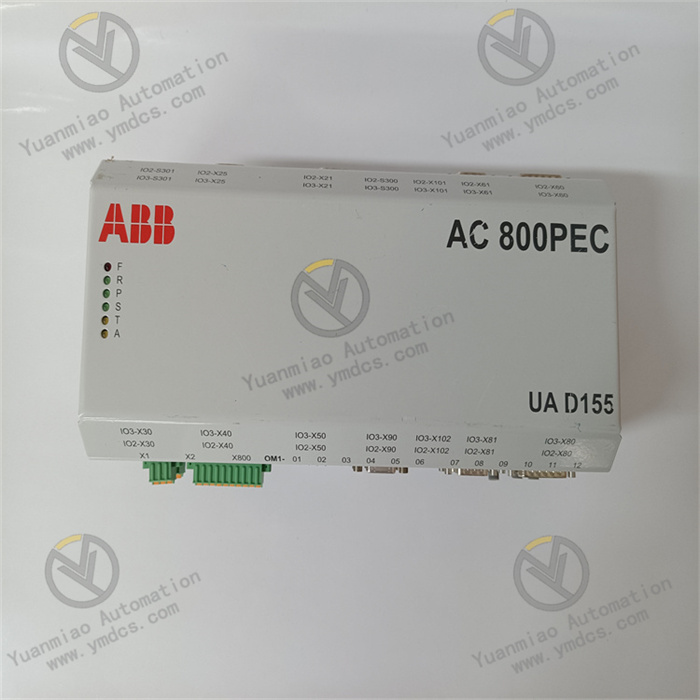
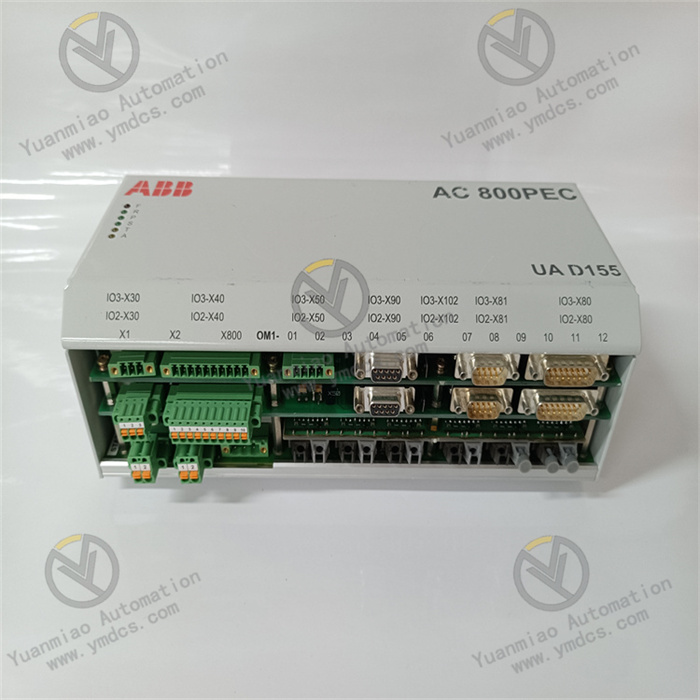
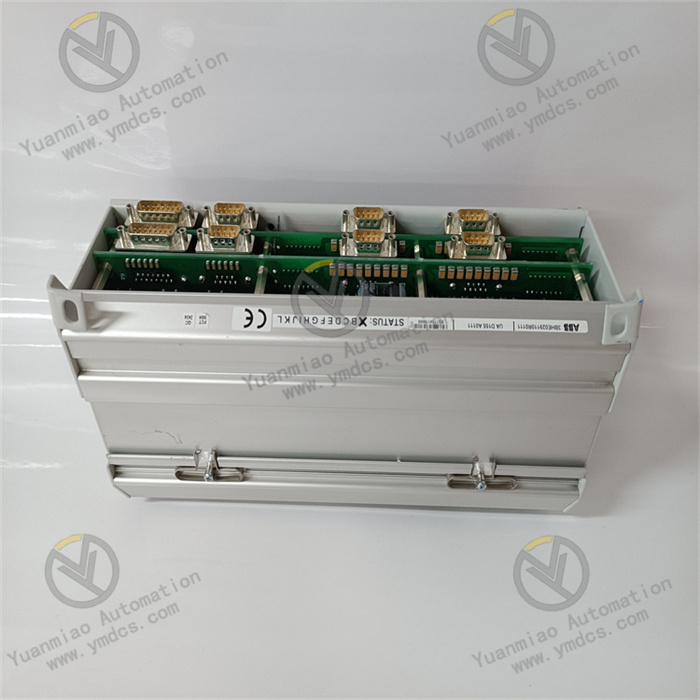
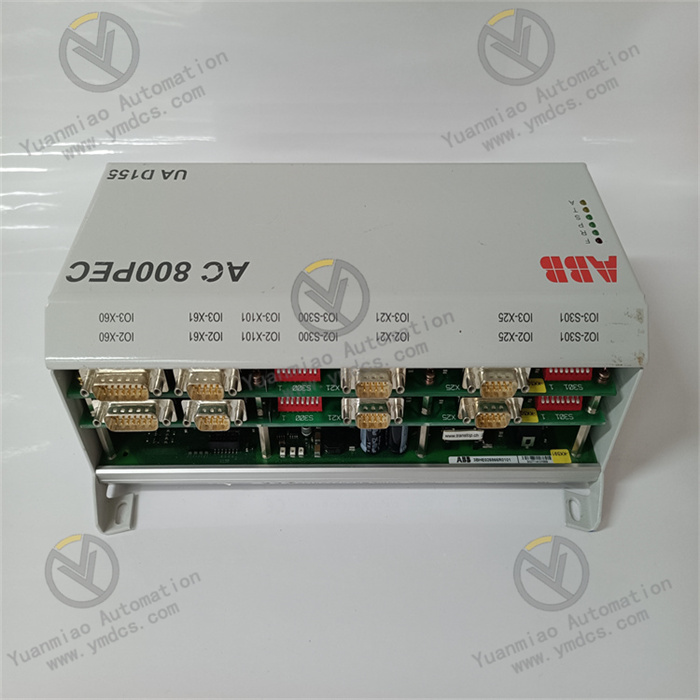
ABB UAD155A0111 3BHE029110R0111
I. Product Positioning and Multi‑Scenario Adaptability
- Core Module for Generator Excitation Control: Specially designed for generator excitation control systems, it is a key component of high‑performance control platforms such as the AC 800PEC. Its core function is to precisely regulate the excitation current of synchronous generators, thereby controlling generator terminal voltage and reactive power output, ensuring stable and reliable grid‑parallel operation of generators, and adapting to complex operating conditions including grid load variations and system disturbances.
- Robot Servo Drive Unit (Axis Computer Board): Compatible with the ABB IRC5 robot controller, it is mainly used to control the 1‑3 axis servo motors of large industrial robots such as the IRB 6600 and IRB 6640. It undertakes the core task of converting main controller commands into precise current signals and driving servo motors to achieve high‑precision, high‑dynamic motion, serving as a critical link between the robot “brain” and “muscles”.
- General‑Purpose Industrial Automation Control Module: Can be used as an extended I/O interface module, logic pulse controller, or motor drive unit. It supports multi‑protocol compatibility and functional expansion, and is compatible with various ABB control systems including DCS and PLC. It is widely applied in diverse industrial automation scenarios for data acquisition, signal processing, equipment actuation, and other functions.
II. Functions and Technical Advantages
(I) Core Functions
Precision Control: Delivers high‑precision control whether for Automatic Voltage Regulator (AVR) and Power System Stabilizer (PSS) functions in excitation control, or servo motor drive and current loop control in robot applications, ensuring operational accuracy and stability.
Data Processing and Communication: Integrates an advanced industrial‑grade processor and high‑precision I/O interfaces for real‑time equipment operating data acquisition, fast calculation, and control command output. Supports mainstream industrial communication protocols including Ethernet and Modbus, enabling seamless connection and data exchange with various control systems.
Safety and Protection Features: Integrates multiple protection mechanisms including Safe Torque Off (STO), overcurrent, overvoltage, undervoltage, and overheating protection, complying with international safety standards such as IEC 61508 and ISO 13849. It also features comprehensive self‑diagnostics for real‑time module status monitoring and fault alarm issuance, safeguarding personnel and equipment safety.
Modularity and Scalability: Adopts a modular design and supports redundant configuration and hot‑swapping (where permitted by safety regulations) for easy maintenance and replacement. I/O interfaces and functional modules can be expanded based on actual needs to suit different application scenarios.
(II) Technical Advantages
High Reliability: Uses high‑quality components and strict manufacturing processes, with strong electromagnetic interference immunity. Supports redundant configuration to minimize system failures and ensure 24/7 continuous stable operation in harsh industrial environments.
High Precision and High Responsiveness: Adopts advanced algorithms such as vector control and Field‑Oriented Control (FOC), featuring fast response and high control accuracy to meet demanding requirements in excitation regulation, robot motion control, and other high‑precision and high‑dynamic applications.
- Easy Maintenance: Provides clear status indication (LED indicators, mechanical markings) and complete fault diagnostics, supporting remote monitoring and maintenance. The modular design significantly reduces troubleshooting time and maintenance costs.
- Wide Compatibility: Compatible with various ABB control systems including AC 800PEC, IRC5, and 800xA, and supports integration with third‑party equipment. It offers strong versatility and flexible deployment across different industries.
III. Application Scenarios
- Power Industry: As the core of generator excitation control, it is applied in thermal power plants and hydropower plants to regulate generator voltage and reactive power for stable synchronous operation with the power grid. It can also be used in grid stabilization and black‑start systems to support rapid grid reconnection after large‑scale outages.
- Industrial Robotics: Used in large industrial robots such as the IRB 6600 and IRB 6640 for automotive manufacturing, heavy‑load handling, welding, and other applications, controlling the 1‑3 axis motion to achieve high‑precision, high‑dynamic operation.
- General Industrial Automation: Covers industries including metallurgy, petrochemicals, cement, mining, papermaking, and municipal environmental protection. It drives key equipment such as fans, water pumps, rolling mills, and compressors to realize precise speed regulation, torque control, and process optimization, improving production efficiency and reducing energy consumption.
- Other Scenarios: Can serve as an extended I/O interface module for interface expansion and signal acquisition in various industrial systems. As a logic pulse controller, it is used in applications requiring complex logic control and pulse output, such as automated production lines and interlocked equipment control.
IV. Technical Parameters
| Parameter Item | Specification |
|---|---|
| Model | UAD155A0111 |
| Spare Part No./Item No. | 3BHE029110R0111 |
| Manufacturer | ABB |
| Operating Temperature | Typically 0℃ ~ 45℃ (industrial environment); -20℃ ~ 60℃ supported in some scenarios |
| Storage Temperature | -25℃ ~ 70℃ |
| Relative Humidity | 5% ~ 95% (non‑condensing) |
| Ingress Protection | IP20 (when installed in control cabinet); IP54/IP65 available in some scenarios |
| Control Method | Vector control, Field‑Oriented Control (FOC), PID control, etc. |
| Safety Functions | Safe Torque Off (STO), overcurrent / overvoltage / undervoltage / overheating protection, etc. |