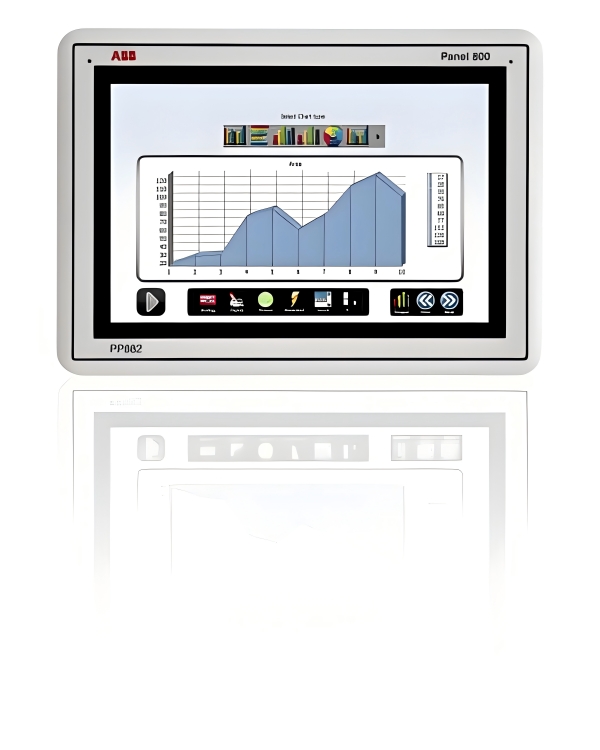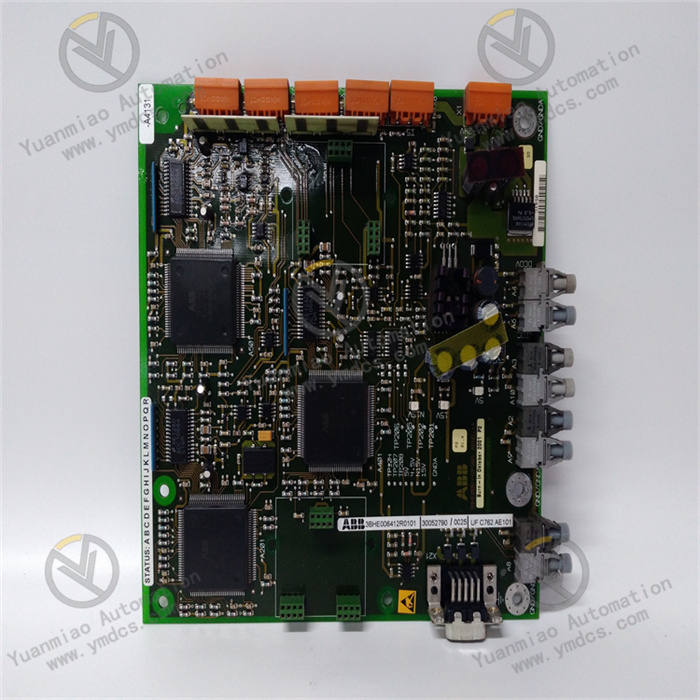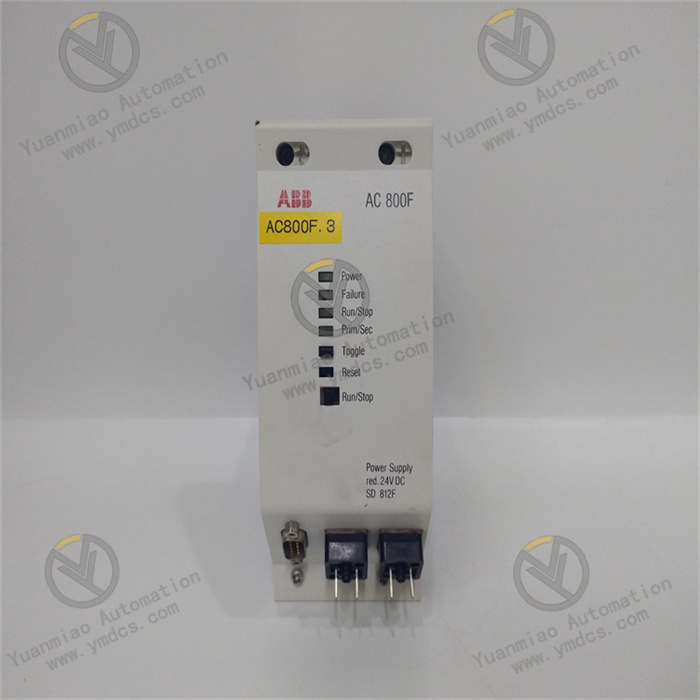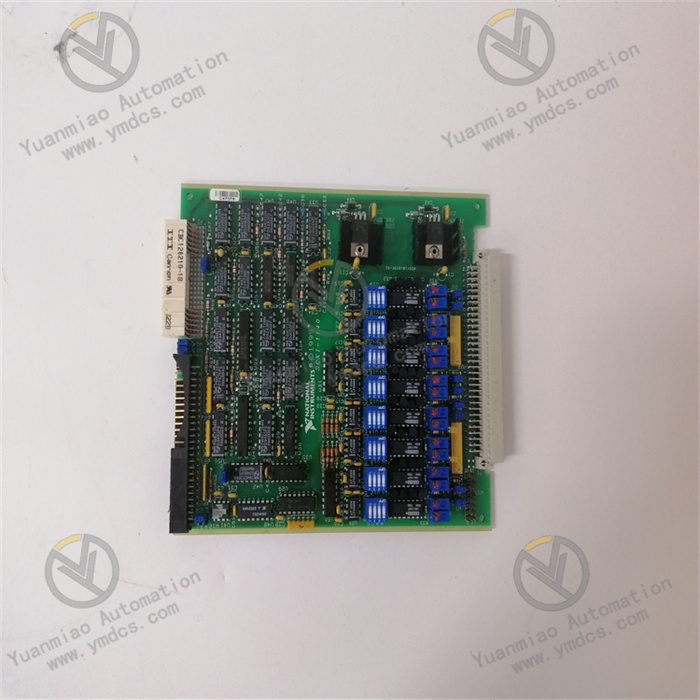
Description
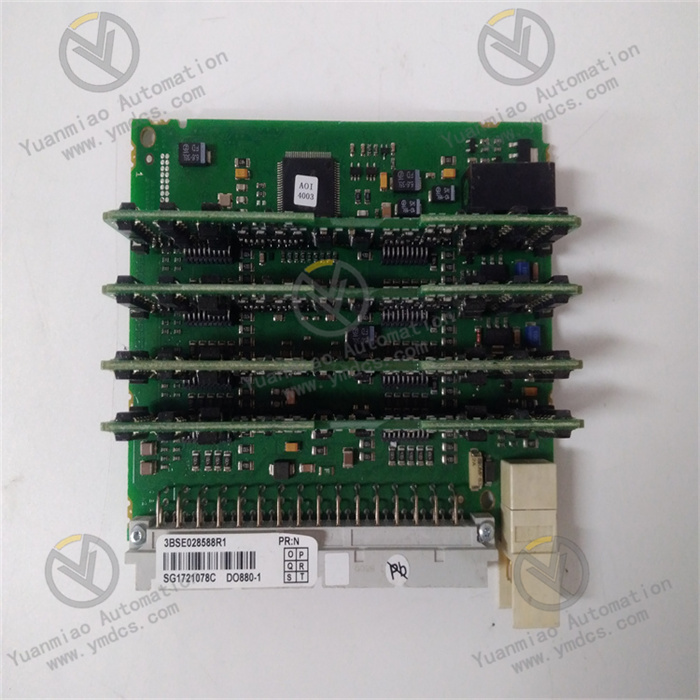
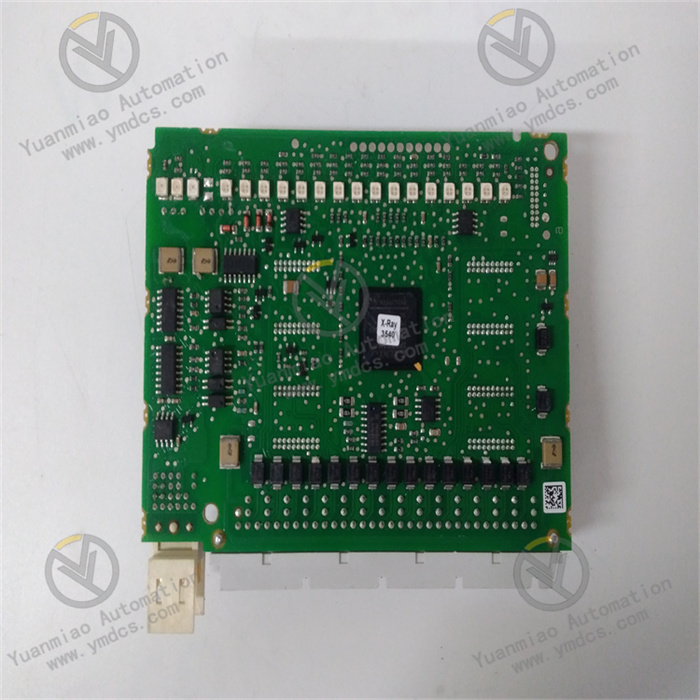
ABB DO880-1 3BSE028588R1
I. Overview
The ABB DO880-1 3BSE028588R1 is a digital output module, with its core positioning as a precision driving and stable control unit for actuators in industrial field applications. Adopting advanced photoelectric isolation technology, reinforced power drive circuits and redundant protection design, this module can accurately convert digital commands from the control system into executable drive signals on site, realizing reliable control of actuators such as relays, contactors, solenoid valves and indicator lights. It provides critical executive support for automated start-stop, process interlocking and safety control of production processes in industries including power generation, chemical engineering, metallurgy, papermaking and water treatment.
II. Product Features
Multi-channel Isolated Output Design: Integrating 16 independent digital output channels, each channel adopts high-performance photoelectric isolation technology with an isolation voltage up to 2500V AC. It can effectively suppress ground loop interference, electromagnetic radiation interference and power loop interference, prevent on-site high-voltage signal crosstalk to the control system, ensure the stability of output signals and the accurate execution of control commands. Full isolation between channels ensures that the failure of a single channel will not affect the normal operation of other channels, significantly improving the fault resistance and fault tolerance of the system.
Wide-range Load Adaptability: Supporting various resistive and inductive load types such as relays, contactors, solenoid valves and indicator lights, it is compatible with 24V DC standard industrial drive power supply. The maximum output current of a single channel can reach 2A, which can directly drive medium-power actuators without additional power amplifier modules. It is equipped with load short-circuit protection function, which can quickly cut off the output circuit when the load is short-circuited, avoiding module damage and ensuring system safety.
Comprehensive Diagnostic and Condition Monitoring: Equipped with a built-in real-time diagnostic unit, it can conduct all-round continuous monitoring of module power supply status, channel output integrity, load on-off status, internal drive circuit faults, overcurrent/overtemperature status, etc. The overall module operating status, power supply status and output status of each channel (normal, fault, output valid) are intuitively displayed via LED indicators. Meanwhile, fault information can be uploaded to the upper system, facilitating maintenance personnel to quickly locate load faults, line problems or internal module faults.
Strong Adaptability to Harsh Environments: Using industrial-grade high-stability components and sealed protection structure, it has an operating temperature range of -25℃ ~ +70℃ and can withstand vibration shocks in the frequency range of 10-2000Hz. Its electromagnetic compatibility complies with the EN 61000 series standards, with strong anti-electromagnetic interference capability. It can operate stably in complex industrial environments with dense frequency converters and high-voltage equipment, ensuring that the accurate execution of control commands is not interfered with.
Flexible Adaptation and Convenient Maintenance: Designed specifically for the ABB AC 800M series controllers, it can seamlessly cooperate with the controller via PROFIBUS DP or ETHERNET/IP bus. It supports hot-swapping function, allowing module replacement, inspection and maintenance without stopping the system, minimizing production downtime. It adopts a standardized 35mm DIN rail mounting method, enabling convenient and efficient installation and disassembly, and reducing the workload of on-site operation and maintenance.
Comprehensive Safety Protection: Equipped with overcurrent, overtemperature, reverse connection protection and surge suppression functions, it can effectively prevent module damage caused by abnormal conditions such as reverse power connection, load short circuit, voltage fluctuation and external surge. It adopts a high-strength engineering plastic shell with a flame retardant rating of UL 94 V-0, which has good impact resistance and corrosion resistance, complying with industrial safety standards. With fast output response speed, it ensures rapid response to control commands and guarantees the timeliness and reliability of interlock control.
- Convenient Parameter Configuration and Debugging: Custom configuration of channel parameters, including output drive mode, fault diagnosis threshold and output delay, can be realized through the dedicated ABB Control Builder M configuration software. It supports online debugging, parameter modification and program downloading, enabling system debugging and optimization without stopping the machine, simplifying the debugging process. It can be seamlessly connected to the ABB System 800xA monitoring system to achieve remote monitoring of output status, data trend analysis and fault log query, providing data support for preventive maintenance.
III. Technical Parameters
1. Core Basic Parameters
- Product Model: ABB DO880-1 3BSE028588R1
- Product Type: Industrial-grade digital output module
- Manufacturer: ABB Group
- Core Functions: Control system command conversion, field actuator driving, output status monitoring, fault diagnosis and data feedback
- Compatible System: ABB AC 800M series process control system
- Safety Certifications: CE, UL, CSA, ATEX explosion-proof certification
- Output Channels: 16 independent digital output channels with photoelectric isolation between channels
- Application Fields: Process control systems, equipment interlock systems, safety control systems and actuator drive systems in industries such as power generation, chemical engineering, metallurgy, papermaking, water treatment, oil & gas, and pharmaceuticals.
2. Electrical Performance Parameters
- Supply Voltage: 24V DC (allowable fluctuation range: 19.2V DC ~ 28.8V DC)
- Output Signal Type: Switch signal output (high/low level)
- Compatible Load Types: Resistive load, inductive load (relays, contactors, solenoid valves, indicator lights, etc.)
- Maximum Output Current per Channel: 2A
- Output Voltage Range: 24V DC (typical value)
- Isolation Voltage: 2500V AC between channels and between channels and backplane for 1 minute
- Response Time: ≤1ms (output on/off)
- Insulation Resistance: ≥100MΩ (500V DC, between output and ground)
- Surge Protection: ±4kV (differential mode), ±6kV (common mode), complying with IEC 61000-4-5 standard
- Power Consumption: Typical value 4W, maximum value 6W
- Communication Protocols: PROFIBUS DP, ETHERNET/IP
- Communication Interfaces: Backplane bus interface, PROFIBUS DP interface (optional)
3. Environmental and Physical Parameters
- Operating Temperature: -25℃ ~ +70℃
- Storage Temperature: -40℃ ~ +85℃
- Relative Humidity: 5% ~ 95% RH (non-condensing)
- Vibration Resistance: Frequency 10-500Hz, acceleration 12g (sine wave); frequency 500-2000Hz, acceleration 8g (random wave), complying with IEC 60068-2-6 standard
- Shock Resistance: Peak acceleration 35g, duration 11ms (half-sine wave), complying with IEC 60068-2-27 standard
- Protection Grade: IP20 (complies with IEC 60529 standard, suitable for cabinet installation)
- Shell Material: High-strength engineering plastic, flame retardant rating UL 94 V-0
- Mounting Method: Standard 35mm DIN rail mounting, supporting hot-swapping
- Dimensions: 142mm (width) × 102mm (height) × 212mm (depth) (approximate value)
- Weight: Approximately 0.7kg (including installation accessories)
- Wiring Method: Spring-loaded terminal blocks, supporting 0.5-2.5mm² wire connection with anti-loosening structure
IV. Working Principle
The core working principle of the ABB DO880-1 3BSE028588R1 digital output module is a closed-loop process of control command receiving - isolation and conversion - power driving - status monitoring and feedback. Through the coordinated operation of photoelectric isolation, power driving, diagnostic monitoring and data transmission circuits, it achieves highly reliable and high-precision driving and control of field actuators. The specific working process can be divided into four core stages:
Stage 1: Command Receiving and Isolation ConversionDigital control commands (such as equipment start-stop and valve switch commands) issued by the ABB AC 800M controller are transmitted to the module via the backplane bus or PROFIBUS DP/ETHERNET/IP bus. The isolation conversion circuit built into the module electrically isolates the weak current control signal output by the controller from the on-site high-voltage drive signal, effectively preventing on-site high-voltage interference from entering the controller, ensuring the safe and stable operation of the control system, and converting the control commands into logic signals recognizable by the module's internal drive circuit.
Stage 2: Power Driving and Signal OutputThe isolated and converted logic signal is transmitted to the high-precision power drive circuit, which outputs the corresponding 24V DC drive signal according to the command signal, and transmits it to the field actuators (such as relays, solenoid valves, etc.) through 16 independent output channels to drive the actuators to complete corresponding actions. The drive circuit is equipped with overcurrent protection function, which real-time monitors the output current, and quickly cuts off the output circuit when the current exceeds the threshold due to load short circuit, preventing damage to the module and actuators.
Stage 3: Status Monitoring and DiagnosisThe module's built-in real-time diagnostic unit continuously monitors the output status of each channel, load on-off status, power drive circuit working status, power supply voltage stability and internal logic circuit working status. If faults such as output circuit open circuit, load short circuit, drive circuit failure and power supply abnormality are detected, the diagnostic unit immediately generates a fault code, intuitively displays the faulty channel through LED indicators, and real-time transmits fault type, fault occurrence time and other information to the controller. Meanwhile, it verifies the validity of the output signal to ensure that the control command has been accurately executed.
V. Common Troubleshooting
1. No Output on a Channel, Actuator Fails to Operate
2. Module Frequently Reports Faults, Multiple Channels Have Abnormal Outputs
3. Output Response Delay, Actuator Action Lags
4. Module Fails to Communicate with Controller, No Overall Response