Description
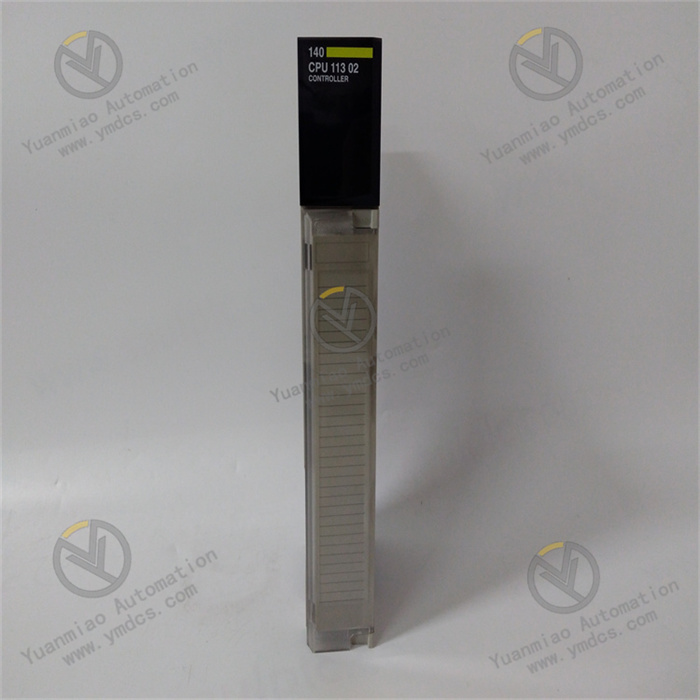
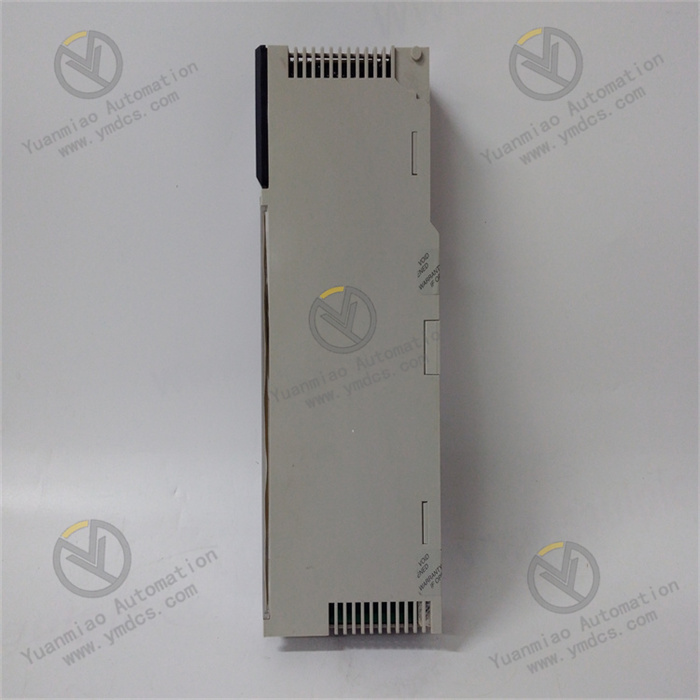
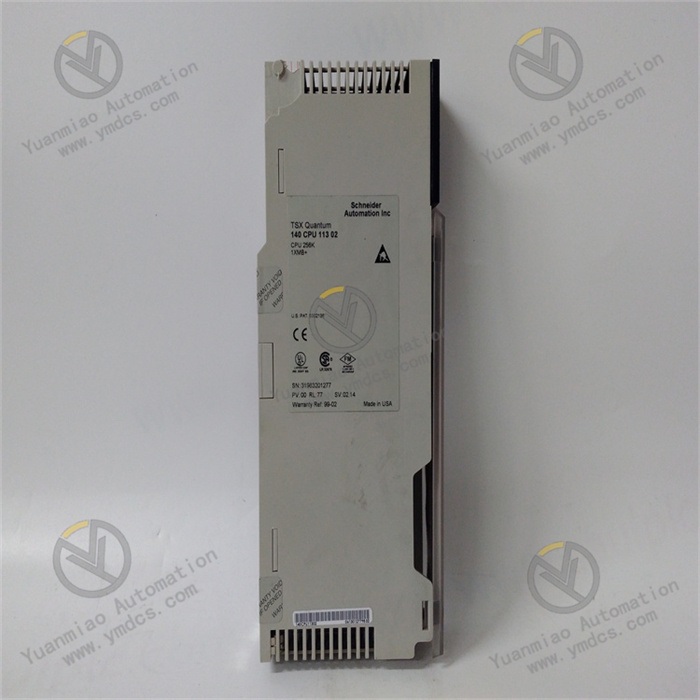
Schneider 140CPU11302
1. Overview
Schneider 140CPU11302 is a Concept-class Central Processing Unit (CPU) module. As the core control unit of the PLC system, it is responsible for executing basic control logic, processing on-site I/O signals and realizing basic inter-device communication. Suitable for small and medium-sized industrial automation control tasks, it is a key component for logic control and data interaction in industrial automation systems.It runs control programs complying with industrial standards, efficiently processes on-site discrete and analog signals from I/O modules, and performs sequential control, timing control and simple data calculation. Through built-in communication ports, it achieves basic data interaction with remote I/O stations, HMIs, intelligent instruments and other equipment. Supported by stable processor performance and reasonable memory configuration, it ensures reliable execution of control instructions and stable system operation.Adopting industrial-grade structural design, this module is equipped with fault diagnosis, power-off data retention and electromagnetic interference resistance functions. It supports online programming and debugging, and can be seamlessly integrated into Schneider Quantum series PLC systems. It is widely used in small and medium industrial scenarios including basic manufacturing automation, power monitoring, petrochemical auxiliary control and metallurgical auxiliary systems, meeting requirements of basic control logic and simple multi-device coordinated control.
2. Product Specifications
| Parameter Name | Specifications |
|---|---|
| Model | 140CPU11302 |
| Manufacturer | Schneider Electric |
| Product Series | Schneider Modicon Quantum series PLC |
| Product Type | Concept-class Central Processing Unit (CPU) module, 80186 architecture processor |
| Compatible Devices | Compatible with Quantum series racks (e.g. 140XBP00400), 140 series power modules, I/O modules and communication modules; supports programming and debugging via ProWORX 32 and Concept software |
| Processor & Memory | 80186 microprocessor, 20MHz clock frequency; built-in 109kB RAM for user logic, data storage and system overhead; equipped with 1.2Ah lithium battery for power-off data retention |
| Communication Parameters | Built-in 1 Modbus Plus (MB+) port and 1 Modbus RTU (RS232) port for basic data interaction with external devices; no built-in Ethernet port |
| I/O Expansion Capacity | Up to 2048 discrete I/O points; supports connection of local and remote I/O, and distributed I/O expansion (max. 63 distributed stations, 31 remote stations); total I/O word length up to 500 words |
| Physical Parameters | Dimensions: 190mm × 143mm × 33mm; Weight: approx. 0.8kg; Protection class: IP20 (for internal cabinet installation) |
| Power Supply Parameters | Powered by PLC rack backplane; bus current consumption approx. 780mA; compatible with 24VDC power supply, requires dedicated Quantum power supply modules |
| Environmental Parameters | Operating temperature: -20℃ to +60℃; Relative humidity: ≤ 85% (non-condensing); excellent electromagnetic interference resistance, complying with CE certification standards |
| Core Functions | Control logic execution, data calculation, I/O scanning, basic multi-protocol communication, fault diagnosis, power-off data retention, online programming and debugging, precise timing (clock drift: ±8s per day) |
3. Technical Features
- Stable processing performance: Adopts 80186 microprocessor with 20MHz clock frequency, featuring reliable logic operation and data processing capability. It efficiently runs small and medium control programs to execute basic tasks such as sequential control and timing control with stable response speed, meeting real-time requirements of small and medium automation systems.
Reasonable memory configuration and data protection: Built-in 109kB RAM satisfies demands of basic user logic storage, data caching and system operation. Equipped with 1.2Ah lithium battery for power-off data retention, it prevents loss of critical programs and data during sudden power failure and improves system reliability.
- Basic communication and flexible expansion: Integrated dual ports of Modbus Plus and Modbus RTU realize direct basic data interaction with HMIs and intelligent instruments to meet communication demands of small systems. It supports distributed and remote I/O expansion, allowing flexible increase of I/O points and stations according to on-site requirements.
Convenient programming and debugging: Compatible with dedicated software including ProWORX 32 and Concept with user-friendly programming environment and abundant function libraries for easy program development and modification. It supports online programming and debugging, enabling real-time monitoring of program status and quick troubleshooting of logic errors to reduce debugging costs.
- Industrial-grade reliability: Built with industrial structure, it operates stably from -20℃ to +60℃ with strong EMI resistance and CE certification. It adapts to harsh conditions in manufacturing, power and petrochemical industries with long service life and low failure rate.
- Practical auxiliary functions: Equipped with precise timing function with clock drift limited to ±8s per day to meet basic sequential control requirements. Built-in fault diagnosis timely reports module failures for quick on-site troubleshooting and higher maintenance efficiency. Keyless design ensures simple operation for basic control applications.
4. Application Scenarios
(1) Basic Manufacturing Automation
Widely applied in small and medium production lines of mechanical processing, electronic manufacturing and light industry. As the core control unit, it executes basic control logic, collects signals from push buttons and limit switches, and realizes production line start-stop control, simple process linkage and fault alarming with outstanding cost performance.
(2) Power Monitoring
Adapted to small and medium substations and power distribution rooms. As the main controller, it collects circuit breaker status and power parameters, executes basic logic control and protection instructions, and realizes data interaction with monitoring equipment via Modbus protocol for basic power system monitoring and management.
(3) Petrochemical & Metallurgical Auxiliary Systems
Applied to auxiliary petrochemical units and metallurgical auxiliary systems such as batching and conveying equipment. It collects operation status signals of on-site pumps and valves, and performs simple start-stop control and process linkage. With stable performance, it adapts to harsh industrial environments and ensures smooth operation of auxiliary production processes.
(4) Other Small and Medium Industrial Scenarios