Description
1. Product Overview
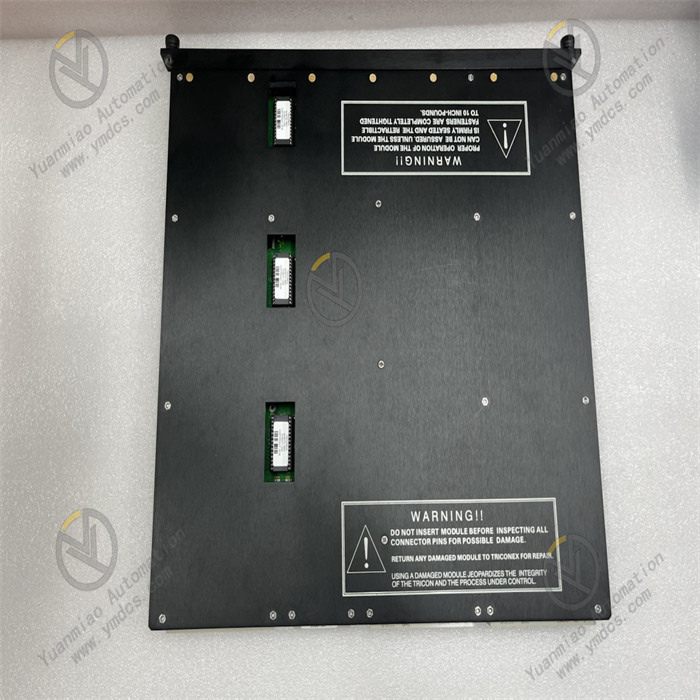
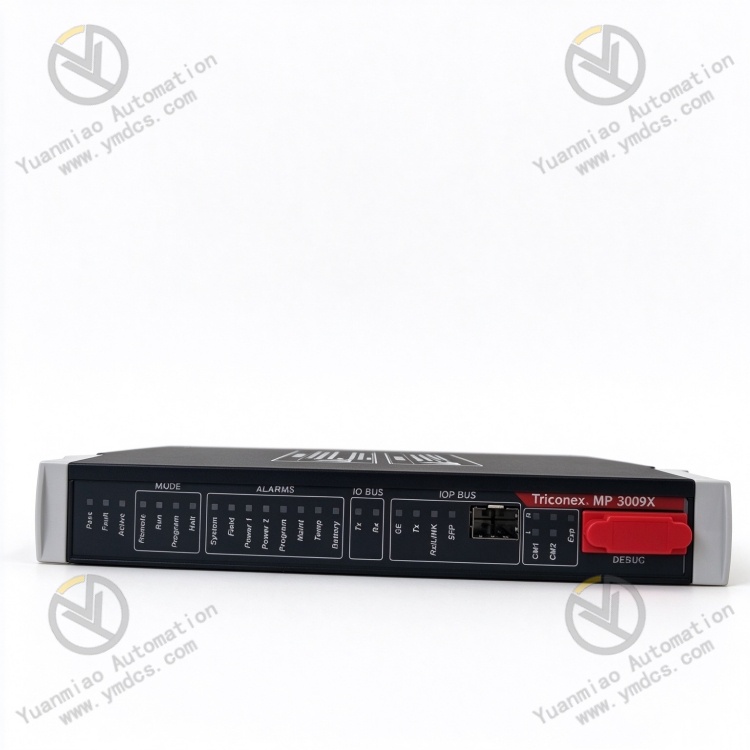
Triconex 3009X is an Enhanced Intelligent Communication Module (EICM) developed by Triconex, now part of Schneider Electric Triconex safety‑system product portfolio. Belonging to the Triconex TMR safety‑system communication hardware product line, it is widely deployed alongside Triconex Trident / Tricon series TMR safety‑PLC systems, and acts as the core communication gateway hardware for data exchange between SIS/ESD safety systems and plant‑wide DCS/SCADA/MES / operator workstations.
It has passed a full set of industrial‑grade and functional‑safety‑oriented tests including full‑load burn‑in, thermal cycling, vibration‑shock testing, dielectric‑withstand testing, electromagnetic‑interference evaluation, communication‑redundancy‑switchover verification and fault‑injection testing. Supporting 7×24‑hour year‑round continuous full‑load operation, it withstands harsh cabinet‑level conditions such as elevated enclosed‑space temperature, dust‑humidity exposure, thermal cycling, strong electromagnetic interference and mains‑voltage fluctuations.
2. Functional Features
2.1 TMR 3‑Channel Redundant Communication, Single‑Point‑Failure‑Free Communication Links
Within Triconex TMR systems, the 3009X EICM is deployed under 3‑channel redundant architecture: three EICM units correspond to three main processors respectively to establish three independent physical communication links for external connections. The three links simultaneously receive command data from upper‑level systems; main processors execute commands after TMR 2‑out‑of‑3 voting. Meanwhile, data output from main processors is transmitted in parallel to upper‑level systems via three EICM modules, and upper‑level systems adopt valid data validated by 2‑out‑of‑3 voting. Failure of any single EICM, communication cable/fibre or network port leaves the other two links fully operational, ensuring non‑interrupted communication, zero‑packet loss and zero‑command loss. It represents one of the most reliable safety‑communication architectures deployed within global SIS/ESD applications.
2.2 Multi‑Protocol Industrial Communication Gateway for Seamless Integration with Plant‑Automation Systems
The 3009X supports mainstream industrial communication protocols including Modbus RTU/TCP, EtherNet/IP, Profibus DP, IEC 61850 and Triconex proprietary TriStation protocol, enabling direct connection to plant‑side DCS, SCADA, MES, operator and engineering workstations. Built‑in protocol‑conversion and data‑mapping engines map internal TMR backplane I/O points, safety status and alarm events onto registers / tags compliant with standard protocols, facilitating bidirectional real‑time data exchange between safety systems and plant process‑control systems. No extra gateway or protocol‑converter hardware is required, which greatly simplifies integration topology between SIS and DCS and reduces link complexity and potential fault points.
2.3 High‑Speed Real‑Time Data Exchange with Millisecond‑Scale Communication Refresh
Equipped with high‑performance industrial communication processors and high‑speed backplane interfaces, the module delivers millisecond‑scale data refresh between backplane and main processors. External Ethernet ports support 10/100 Mbps auto‑negotiation, with external‑data refresh cycles down to tens of milliseconds, satisfying real‑time requirements for SIS/ESD emergency alarms, interlock actions and process‑variable monitoring. On‑board data‑buffering and flow‑control mechanisms maintain stable communication under high‑traffic conditions such as bulk configuration downloads from upper‑level systems or network storms, ensuring critical alarm‑event retention and unblocked safety‑control links.
2.4 On‑Board Self‑Diagnostics and Status Indicators for Precise Communication‑Fault Localisation
The 3009X implements multi‑layer on‑board self‑diagnostics covering CPU, backplane communication, external network ports, protocol stacks, power‑supply circuits and data buffers. Multiple front‑panel LEDs provide real‑time indication of power‑supply health, run status, backplane‑link status, external‑link status, TX/RX data activity and fault alarms. With TriStation 1131 engineering software, maintenance personnel can remotely retrieve module diagnostic words, communication‑error counters, CRC‑check errors, packet‑loss statistics and port status, to accurately isolate fault sources (module itself / cables / switches / upper‑level systems) without manual segment‑by‑segment field inspection, shortening troubleshooting and repair turnaround times.
2.5 Modular Hot‑Swap Design for Efficient Maintenance‑Driven Replacement
Adopting standard plug‑in mechanics for Triconex TMR‑system racks, the module achieves accurate rack alignment, simple handling and secure latching. Faulty EICM units can be hot‑swapped online without system shutdown, safety‑logic modification or re‑configuration. After replacement, the new module automatically synchronises configuration parameters from the corresponding main processor and restores communication seamlessly. Form‑factor, connector pin‑out and front‑panel layout are compatible with other Triconex‑series communication modules, delivering good spare‑part commonality and improving efficiency for field commissioning, retrofits and emergency repairs.
2.6 Industrial‑Grade High Noise Immunity and Stable Wide‑Temperature Operation
Built upon Triconex industrial‑hardened electrical architecture with multi‑layer electromagnetic shielding, the module exhibits excellent EMC performance. External communication interfaces incorporate galvanic isolation and surge‑suppression hardware to defend against Ethernet‑side transients, variable‑frequency‑drive harmonics, power‑cable‑coupled interference and lightning‑induced surges encountered in complex industrial electromagnetic environments. Its operating‑temperature range covers typical industrial‑cabinet conditions. Tolerant of high‑temperature, low‑temperature, high‑humidity and ageing‑prone environments, it sustains long‑term operation under harsh cabinet conditions including high enclosed‑space temperature, dust‑humidity exposure, thermal cycling and continuous vibration, without communication outages, excessive CRC errors or link jitter.
3. Technical Specifications
3.1 Core Compatibility Parameters
| Item | Specification |
|---|---|
| Full Part Number | 3009X |
| Brand | Triconex (Schneider Electric) |
| Product Family | Triconex 3000 series / EICM Enhanced Intelligent Communication Module |
| Module Type | Enhanced Intelligent Communication Module (EICM) |
| Safety Rating | IEC 61508 SIL3/SIL4 TMR certified; TÜV‑Rheinland safety certification |
| Redundancy Architecture | TMR 3‑channel redundant communication; 2‑out‑of‑3 (2oo3) voting; disturbance‑free communication upon single‑module failure |
| Supported Systems | Triconex Trident / Tricon TMR safety‑PLC; SIS/ESD/BMS/F&G systems |
| Associated Hardware | Triconex rack backplane, main‑processor modules (MP3101S2 etc.), power‑supply modules, I/O modules, switches / routers |
| Core Functions | Multi‑protocol industrial communication, TMR 3‑channel redundant communication, data‑mapping conversion, communication self‑diagnostics, safety‑data verification |
| Typical Applications | Communication between petrochemical SIS/ESD and DCS/SCADA; nuclear‑power protection; offshore platforms; LNG; BMS; external‑data‑exchange for F&G fire‑and‑gas systems |
3.2 Electrical and Communication‑Performance Parameters
| Item | Specification |
|---|---|
| Backplane Interface | Triconex TMR rack‑backplane interface for communication with corresponding main‑processor modules |
| Supported External Protocols | Modbus RTU/TCP, EtherNet/IP, Profibus DP, IEC 61850, TriStation proprietary protocol |
| External Physical Interfaces | Industrial Ethernet ports (10/100 Mbps auto‑negotiation), galvanically isolated, surge‑protected |
| Redundancy Scheme | 3‑channel parallel redundancy; 2‑out‑of‑3 voting; single‑module / single‑link failure does not interrupt communication |
| Communication Refresh | Millisecond‑scale backplane cycle; external‑data refresh down to tens of milliseconds |
| Data‑Protection Mechanisms | CRC checksum, data‑sequence numbering, command‑validity verification, communication‑timeout detection, illegal‑command rejection |
| Commissioning Software | Triconex TriStation 1131 engineering software; supports communication‑configuration, online monitoring and fault diagnostics |
| Power Supply | Powered by Triconex rack redundant backplane power supplies; wide‑input‑voltage range |
| Electrical Stability | 7×24‑hour continuous operation; free of communication outages, excessive CRC errors and link jitter |
3.3 Environmental and Mechanical Parameters
| Item | Specification |
|---|---|
| Operating Temperature | Industrial wide‑temperature cabinet‑grade design for enclosed‑cabinet service conditions |
| Storage Temperature | Qualified for extreme‑temperature storage and transportation |
| Operating Humidity | 5 %‑95 %RH (non‑condensing); tolerant of dusty high‑humidity cabinet environments |
| Environmental Resistance | Dust‑proof, moisture‑resistant, oil‑tolerant, thermal‑ageing‑resistant, vibration‑resistant, high‑EMI‑immunity |
| Mounting Method | Plug‑in installation onto Triconex TMR standard racks; online hot‑swap supported |
| Mechanical Construction | Industrial flame‑retardant reinforced PCB, metal front panel; anti‑vibration, anti‑loosening, wear‑resistant, ageing‑resistant, flame‑retardant and moisture‑resistant |
4. Hardware Configuration and Structural Advantages
4.1 Core Hardware Configuration
The 3009X EICM communication module adopts proven Triconex TMR‑system communication hardware architecture. Key components include high‑performance industrial communication processors, backplane‑communication circuitry, external‑Ethernet PHY and transformer‑based isolation circuits, protocol‑processing and data‑buffer memory units, power‑management units, status‑LED arrays and external RJ45 / fibre‑optic interfaces. Internal isolated‑power‑domain design fully separates backplane‑side power supply from external‑port power supply. Galvanic isolation and surge‑suppression hardware on external network ports block Ethernet‑side surges and ground‑loop currents from propagating into the TMR safety‑system backplane.
The rear‑side gold‑plated Triconex‑TMR‑standard backplane connector ensures reliable mating with rack backplanes. The front panel hosts multi‑group LED indicators (power, run status, backplane‑communication, external‑link status, TX/RX activity, fault) and external Ethernet interfaces (RJ45 or fibre), facilitating on‑site status inspection and wiring maintenance. The main PCB features industrial flame‑retardant reinforced construction. All components pass industrial‑temperature‑grade screening and full‑load‑burn‑in testing, optimised for long‑term unattended petrochemical‑cabinet operation, strong electromagnetic interference and thermal‑cycling environments.
4.2 Structural and Engineering‑Related Advantages
The module implements Triconex TMR‑standard modular rack mechanics. Three 3009X EICM units are installed in communication slots adjacent to corresponding main‑processors per TMR design. Three external cables / fibre links connect to independent switch ports to build a 3‑channel physically isolated redundant communication network. Dedicated TriStation 1131 engineering software unifies communication‑parameter configuration, protocol mapping, point‑list management, online‑communication monitoring and fault‑recording functions. All communication‑configuration parameters and firmware revisions can be backed‑up and archived. After replacement of a faulty EICM, the new unit automatically synchronises configurations without manual re‑commissioning.
Standardised hardware‑and‑software architecture lowers training overhead and spare‑part diversity for maintenance staff. For legacy Triconex TMR installations that have been in service for years, spare‑part availability and fault‑replacement capability of the 3009X EICM directly determine continuous stable operation of data links between SIS/ESD and plant‑wide DCS/SCADA systems. It constitutes a key strategic spare part for long‑term maintenance within high‑risk industries such as petrochemicals, nuclear power and offshore platforms.
5. Operating Principle
As an external communication gateway for Triconex TMR systems, the 3009X EICM implements a closed‑loop communication workflow: backplane‑data retrieval from main processors → protocol conversion and data mapping → external‑Ethernet transmission to upper‑level systems → 2‑out‑of‑3 voting of upper‑level commands before delivery to main processors → communication self‑diagnostics and redundancy fault tolerance. This workflow enables bidirectional real‑time data exchange between SIS safety systems and plant‑wide DCS/SCADA/MES platforms.
During operation, three 3009X EICM modules read I/O status, process data, alarm events and diagnostic information in parallel from corresponding main processors via the Triconex backplane bus. Internal protocol‑processing units convert TMR backplane‑data formats into register / tag formats compliant with standard industrial protocols (Modbus TCP, EtherNet/IP etc.), and transmit processed data to plant‑DCS, SCADA and operator stations via external Ethernet ports. Identical data is sent over three external communication links; upper‑level systems adopt valid data validated by 2‑out‑of‑3 voting, so single‑link failure does not compromise data integrity.
For reverse‑direction communication, remote‑operation commands, setpoint modifications and configuration downloads issued by upper‑level systems arrive at three EICM modules simultaneously via three external communication links. The three EICM units forward data to corresponding main processors over the backplane. Main processors execute corresponding operations and return execution results only after confirming command consistency via TMR 2‑out‑of‑3 voting. Even if one communication link suffers interference, tampering or packet loss, valid data from the other two links guarantees correct command execution.
Continuous on‑board self‑diagnostics monitor health status of CPU, backplane communication, external network ports, protocol stacks, data buffers and power‑supply circuits. Alarms are triggered via front‑panel LEDs and operator‑station alerts upon anomaly detection. Maintenance personnel may hot‑swap faulty EICM units online. After power‑up, the replacement module automatically synchronises configuration parameters from the corresponding main processor and restores communication seamlessly. Thanks to TMR 3‑channel‑redundant architecture, failure of one EICM, disconnection of one cable or fault of one switch port will not interrupt communication between SIS and DCS, ensuring year‑round stable online performance of safety systems.
6. Troubleshooting
6.1 Total External‑Communication Outage or Stale Upper‑Level‑System Data
| Probable Cause | Diagnostic Approach | Remedial Action |
|---|---|---|
| Hardware failure or self‑diagnostic fault of 3009X EICM module | Inspect front‑panel LED status; retrieve diagnostic words and fault codes via TriStation 1131 | Perform compliant online hot‑swap replacement of 3009X module; new unit automatically synchronises configurations and restores communication |
| Loose, broken or oxidised external cables / fibre links | Check front‑panel LINK indicator; test cable / fibre continuity and link quality | Retighten connectors; replace faulty cables / fibre; clean oxidised connectors |
| Faulty switch port or abnormal network‑device behaviour | Inspect status of corresponding switch port; perform cross‑port testing | Reassign switch port; troubleshoot switch / router operation |
| IP‑address conflict, incorrect subnet‑mask or gateway configuration | Cross‑validate EICM communication‑configuration parameters against upper‑level‑system settings | Re‑configure network parameters via TriStation; resolve IP‑address conflicts |
6.2 Sharp Increase of Communication CRC Errors or Packet Loss
| Probable Cause | Diagnostic Approach | Remedial Action |
|---|---|---|
| Field‑site electromagnetic interference inducing communication‑link bit errors | Observe whether faults coincide with start‑stop cycles of frequency converters or high‑power equipment | Verify cable‑shield‑earthing practice; physically separate routing of signal cables and power cables; install supplementary isolation hardware |
| Poor‑quality cables, excessive cable length or bad‑connector crimping | Evaluate cable length, attenuation and connector‑crimp quality | Deploy qualified shielded cables; re‑terminate RJ45 connectors; migrate to fibre optics for long‑distance transmission |
| Network storm or bandwidth congestion on switches | Review switch‑port traffic statistics and error counters | Eliminate network loops; implement VLAN segmentation; optimise network topology |
| On‑board buffer overflow or protocol‑stack anomaly | Retrieve module diagnostic words and buffer‑utilisation statistics via TriStation | Reduce refresh frequency of non‑critical data; restart or replace module per operating procedures |
6.3 No Response or Response Timeout for Commands Issued from Upper‑Level Systems
| Probable Cause | Diagnostic Approach | Remedial Action |
|---|---|---|
| Main processor under bypass / maintenance mode and rejecting command execution | Inspect main‑processor LED status and TriStation diagnostic logs | Verify main‑processor operating status; disable unnecessary maintenance / bypass modes |
| Incorrect point‑list mapping or misconfigured register‑address assignment | Cross‑check EICM communication point‑list against upper‑level‑system address mapping tables | Correct point‑list mapping; re‑download communication‑configuration via TriStation |
| Inconsistent command voting caused by failure of one among three EICM units | Compare status of three EICM modules and main‑processor voting results | Perform online hot‑swap replacement of faulty EICM; system automatically restores 3‑channel voting logic |