Description
1. Overview
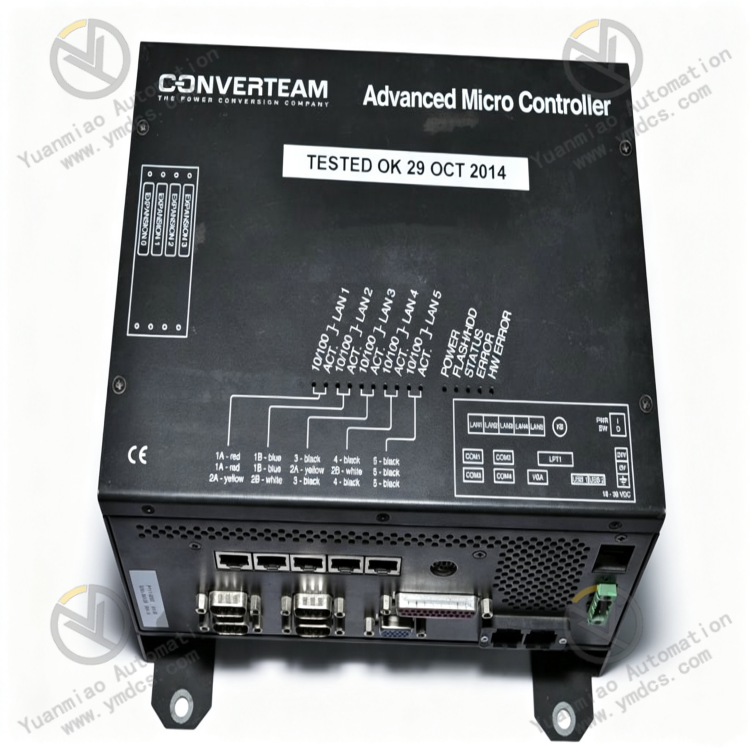
CONVERTEAM P111‑6052 is an industrial‑grade advanced embedded microcontroller module under CONVERTEAM (formerly Alstom, now GE Power Conversion). Developed for heavy‑duty power equipment, generator sets, marine power, oil‑gas and mining harsh‑condition applications, it serves as the core master unit for power control systems, unit alarm systems and automatic acquisition‑control systems. Adopting high‑performance 32‑bit ARM architecture processor, this module integrates high‑speed computation, precise logic control, multi‑signal acquisition, field‑bus communication, condition monitoring and fault management. It independently performs speed regulation, status acquisition, alarm interlock, data interaction and condition optimization for power equipment, and is widely applied to land‑based & marine heavy‑duty power automatic management systems.
The P111‑6052 microcontroller features industrial wide‑temperature hardware architecture, full galvanic isolation protection, anti‑vibration and anti‑EMI design for long‑term 7×24‑hour heavy‑duty continuous operation. Compared with conventional general‑purpose controllers, it is optimized with dedicated power‑equipment control algorithms, delivering high computation accuracy, fast response, outstanding operational stability, comprehensive fault self‑diagnosis and zero parameter drift over long runtime. It perfectly meets the requirements of refined control and intelligent maintenance for generator sets, marine power units and industrial motor drive systems, acting as a key precision master component for high‑end industrial power automation systems.
2. Functions and Features
2.1 Core Functions
High‑precision closed‑loop control for power equipment: Embedded with dedicated power‑equipment control algorithms, it enables accurate closed‑loop regulation of motor speed, position and torque. It supports constant‑frequency‑constant‑voltage control for generator sets, load adjustment of power units and variable‑frequency motor drive control. With rapid dynamic response and superior steady‑state control accuracy, it effectively suppresses condition fluctuation and load disturbance.
Full‑range operating‑condition data acquisition: Synchronously acquires multi‑channel analog and digital signals, and collects real‑time parameters including unit speed, pressure, temperature, load power, current‑voltage and operating status to realize blind‑spot‑free real‑time monitoring of power‑equipment conditions.
Intelligent alarm and safety interlock protection: Integrates multi‑level over‑limit protection, equipment fault monitoring and logic interlock functions. It accurately identifies hazards such as over‑temperature, overspeed, overload, low voltage, sensor anomaly and communication failure, and automatically triggers alarm, load‑shedding and shutdown interlock actions to fully guarantee safe operation of power equipment.
Multi‑interface high‑speed communication interaction: Natively equipped with Ethernet, VGA and other expansion interfaces, compatible with multiple standard industrial communication protocols. It seamlessly connects local touch terminals, PLC/DCS control systems and remote O&M platforms to realize real‑time parameter uploading, remote commissioning, command issuing and data linkage interaction.
Autonomous logic computation and condition scheduling: Supports custom control logic, sequential programming and condition‑strategy configuration. It automatically adapts full‑process condition scheduling including start‑stop, no‑load, full‑load, variable‑load and fault shutdown according to equipment scenarios, load characteristics and process requirements, and accommodates unattended automatic operation.
In‑depth fault diagnosis and data traceability: Provides fault‑code storage, time‑series condition recording, fault freeze and operation log retention. It precisely locates hardware faults, wiring anomalies, control‑logic deviation and signal failure, and supplies complete data support for fault review, equipment traceability and performance optimization.
Online parameter calibration and program adaptation: Supports online parameter calibration, control‑curve optimization, protection‑threshold adjustment and program iteration via host software. It is adaptively configured for different unit models and working‑condition requirements to achieve refined equipment management and performance improvement.
Long‑term data buffering and power‑off data retention: Built‑in high‑speed storage unit permanently saves operating parameters, fault data and configuration parameters upon power loss. It automatically buffers condition data during short‑term communication interruption and completes data re‑transmission after link recovery to ensure data integrity and continuity.
2.2 Product Characteristics
Industrial‑military grade hardware configuration: Adopts high‑performance 32‑bit ARM industrial processor with powerful computing capacity. It stably runs complex power‑control algorithms and multi‑task parallel computation, avoiding control lag and computation stagnation.
Strong adaptability to harsh environments: The complete unit passes high‑low‑temperature cycling, vibration‑shock, damp‑heat aging and EMC tests. It withstands high humidity, dust‑oil pollution, heavy vibration and strong electromagnetic interference, suitable for vessels, offshore platforms, oil fields and field mining sites.
High‑reliability long‑cycle operation: Fully‑integrated circuit‑only structure without mechanical wearing parts. Core components adopt high‑spec industrial‑grade materials for ultra‑low failure rate. It supports 7×24‑hour uninterrupted heavy‑duty operation, and its service life matches that of power units.
Comprehensive hardware protection mechanism: Built‑in multi‑protection circuits for over‑voltage, under‑voltage, over‑current, surge, reverse polarity, signal isolation and electromagnetic shielding. It resists on‑site power‑supply fluctuation, line noise and EMI, preventing hardware breakdown, program disorder and data distortion.
Modular compact integrated design: Lightweight integrated module with neat layout and compact dimension for standard industrial cabinet mounting. Easy assembly‑disassembly and standardized wiring enable rapid retrofit, module replacement and system upgrade for legacy control systems.
Visual expansion compatibility: Equipped with VGA visual expansion interface for external display terminals, supporting on‑site condition viewing, parameter commissioning and fault query, greatly improving field‑maintenance convenience.
High compatibility and expandability: Standardized industrial communication and I/O interfaces compatible with mainstream industrial automation systems. It flexibly connects various power equipment, drive modules and monitoring terminals with abundant system‑adaptation and secondary‑development potential.
Low‑maintenance operation: Stable performance with no consumable parts. Frequent calibration and adjustment are not required in daily service; only regular dust removal and wiring inspection are needed, substantially cutting O&M costs and labor workload.
3. Technical Specifications
| Item | Specification |
|---|---|
| Model | P111‑6052 |
| Brand / Manufacturer | CONVERTEAM (Former Alstom, GE Power Conversion) |
| Device Type | Industrial advanced embedded microcontroller module (power‑system master control unit) |
| Core Architecture | 32‑bit high‑performance ARM industrial processor |
| Core Functions | Precise power‑equipment control, condition acquisition, alarm interlock, bus communication, fault diagnosis, parameter configuration |
| Power Supply | DC 18V~36V industrial wide‑range power input |
| Hardware Interfaces | Ethernet port, VGA expansion interface, multi‑channel analog / digital I/O interfaces |
| Communication | High‑speed Ethernet, multi‑protocol bidirectional data exchange, supporting remote commissioning & maintenance |
| Protection Features | Galvanic isolation, surge protection, reverse‑polarity protection, over‑/under‑voltage & over‑current protection, electromagnetic shielding |
| Diagnostic Functions | Power‑on hardware self‑test, link‑fault diagnosis, anomaly monitoring, fault‑code storage & traceability |
| Operating Temperature | -25℃~+70℃, continuous industrial wide‑temperature operation |
| Storage Temperature | -40℃~+85℃ |
| Ambient Humidity | 5%~95%RH, non‑condensing |
| EMC Level | Marine / industrial‑grade electromagnetic compatibility, resistant to heavy vibration and strong EMI |
| Overall Dimension | 263mm × 58mm × 28mm |
| Unit Weight | 0.43kg |
| Operational Properties | High computation accuracy, fast response, stable control, low failure rate, long‑term low‑maintenance, zero parameter drift |
4. Working Principle
The CONVERTEAM P111‑6052 microcontroller operates on core principles: multi‑signal acquisition, algorithm‑based closed‑loop calculation, precise logic control, safety interlock protection and bus‑based data interaction. Acting as the computing and control hub of the whole power‑automation system, it realizes intelligent, accurate and safe full‑process management of power equipment.
After power‑on, the module completes hardware self‑check, interface verification and program initialization. It enters standby status only after power‑supply, hardware and communication links are confirmed normal. During runtime, multi‑channel I/O ports synchronously collect condition signals including unit speed, pressure, temperature, load, electrical parameters and equipment status. All acquired signals go through hardware filtering, galvanic isolation and noise‑reduction validation to eliminate invalid data caused by on‑site EMI, power‑supply ripple and line noise and guarantee signal accuracy and reliability.
With embedded dedicated power‑control algorithms and custom logic programs, the module compares real‑time operating parameters against preset thresholds, outputs control commands via high‑speed calculation, and performs closed‑loop regulation for speed, torque, load and working‑conditions. It achieves constant‑frequency‑constant‑voltage, load balancing and adaptive‑condition operation of units. Meanwhile, the system continuously monitors all safety parameters. Once parameter over‑limit, sensor failure, wiring anomaly, communication outage or equipment fault is detected, multi‑grade protection logic is triggered: alarm output first; load‑shedding and emergency shutdown will be executed if abnormalities persist to avoid equipment safety risks.
During operation, the module continuously records time‑series condition data, fault codes, operation logs and parameter‑change records, supporting fault freeze and data traceability. Via Ethernet and expansion communication interfaces, it conducts bidirectional data exchange with host monitoring systems, PLC, remote O&M platforms and local display terminals: uploading real‑time unit status and fault information, and receiving remote parameter calibration, program debugging and start‑stop commands. The whole system forms a complete closed‑loop of acquisition, calculation, control, protection, communication and storage to ensure long‑term stable, efficient and safe operation of power equipment.
5. Application Scenarios
Automatic control for industrial generator sets: Applied to land‑based industrial gensets, standby power units and main power‑station units. It undertakes core functions of unit start‑stop control, constant‑frequency‑constant‑voltage regulation, load sharing, fault alarm and safety shutdown, supporting unattended automatic O&M.
Power‑system management for vessels and offshore platforms: Deployed for marine main & auxiliary power units and offshore oil‑gas platform power equipment. It adapts to harsh marine conditions including heavy vibration, high humidity, salt‑fog and strong EMI and guarantees stable and safe marine power‑system performance.
Heavy‑duty power equipment for oil‑gas and mining industries: Used for field heavy‑duty power units and motor‑drive equipment in oil fields and mines. Benefiting from wide‑temperature performance, strong anti‑interference and high reliability, it satisfies long‑term continuous‑operation requirements for sites without permanent on‑site maintenance.
High‑end industrial motor‑drive control: Realizes precise regulation of speed, torque and position for high‑power industrial motors and variable‑frequency drive equipment, meeting strict stability & accuracy requirements for power output in precision manufacturing.
Linkage control of industrial automation systems: Interfaces with factory DCS and PLC automation systems to realize data linkage, condition coordination and fault interlock between power equipment and plant‑wide production systems, integrating into industrial intelligent production management.
Upgrade & retrofitting of legacy power‑control systems: Replaces traditional controllers with weak computing capacity, low control accuracy, missing self‑diagnosis and backward communication. It improves control precision, intelligence level and operational reliability without modifying unit mechanical structures.
Equipment performance commissioning and research‑oriented data acquisition: Leverages high‑precision acquisition and computing capability for power‑equipment performance testing, condition calibration, parameter optimization and operating‑data analysis, providing accurate data support for technical transformation, performance upgrade and maintenance optimization.
6. Common Faults and Troubleshooting
6.1 No response upon power‑on, failed startup, blank status
Causes: Abnormal DC supply (under‑voltage / over‑voltage, poor contact); short‑circuit or damaged power‑supply wiring; program freeze or firmware anomaly; failure of main‑board or internal power circuit.
Solutions: Measure DC supply voltage and verify compliance with 18‑36V range; troubleshoot power fluctuation, poor contact and cable damage; check short‑circuit and overload risks in power loop and reorganize wiring; perform full power‑cycle restart to reset system program; refresh firmware and restore factory configuration with host software. Replace original module if failure persists after eliminating external power and wiring issues.
6.2 Poor control accuracy, condition fluctuation, slow regulation response
Causes: Offset calibrated control parameters and abnormal algorithm configuration; I/O signal interference and data distortion; sensor aging and signal failure; program stagnation and logic disorder; mismatch between load profile and control program.
Solutions: Re‑calibrate control parameters and optimize closed‑loop algorithm curves via host software; inspect shielding & grounding of signal cables, mitigate EMI and reorganize wiring; calibrate condition sensors and replace defective ones; restart module to refresh runtime program and reset control logic; fine‑tune parameters according to site‑load characteristics. Replace module if faults remain, indicating hardware performance degradation.
6.3 Communication failure, Ethernet disconnection, no data upload, blank terminal readings
Causes: Damaged Ethernet cable, loose connector and link breakage; incorrect communication configuration (IP, baud rate, protocol); communication‑program anomaly or port hardware failure; upper‑system interface fault; unstable power supply disabling communication circuit.
Solutions: Inspect Ethernet cables and connectors, re‑crimp terminals and replace defective cables; align module communication configuration with upper‑system settings; restart module to refresh communication program and reset network link; troubleshoot faults of monitoring host and PLC; stabilize module power input. Replace module for hardware communication‑port damage after software debugging proves ineffective.
6.4 Frequent alarms, false interlock, unexpected protective shutdown
Causes: Sensor signal drift and line interference generating false over‑limit signals; unreasonable protection‑threshold setting; defective I/O acquisition channels; internal logic disorder; poor grounding inducing signal abnormality.
Solutions: Calibrate temperature, pressure, speed and load sensors one‑by‑one and replace faulty sensors; reorganize signal wiring, implement standard shield‑grounding and keep cables away from strong interference sources to suppress noise; re‑calibrate safety‑protection thresholds to match unit rated conditions; read system diagnostic logs and check I/O channel status; restore default program logic and restart. Replace master‑control module if faults cannot be cleared.
6.5 Parameters cannot be saved, fault logs lost, data cleared after power‑off
Causes: Degradation or damage of internal storage unit; corrupted stored parameters and firmware anomaly; failure of power‑off‑protection circuit; system data disorder caused by long‑time operation.
Solutions: Refresh system firmware via host software, restore factory parameters and reset storage mechanism; inspect power‑off‑protection circuit status; re‑calibrate critical operating parameters and manually save configurations. Replace module if storage‑unit hardware damage is confirmed after repeated refresh & reset.
6.6 No display on VGA port, external terminal not recognized
Causes: Loose or damaged VGA wiring; incorrect display‑output configuration; hardware damage of expansion port; incompatibility or failure of external terminal.
Solutions: Inspect VGA cables and connectors, fasten terminals and replace defective wires; verify display‑output parameters and reset expansion‑port configuration; eliminate faults and compatibility issues of external terminal equipment. Replace module if expansion‑port hardware failure is confirmed after excluding external wiring & device faults.