Description
1. Overview
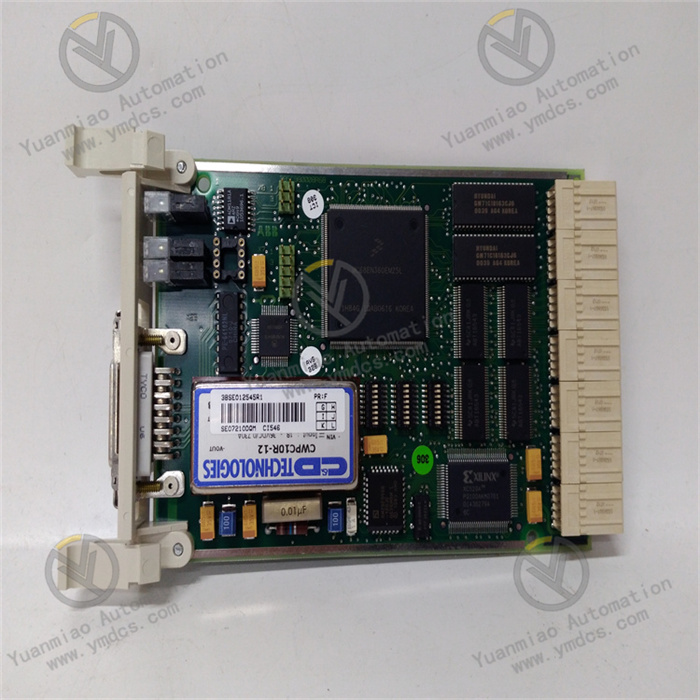
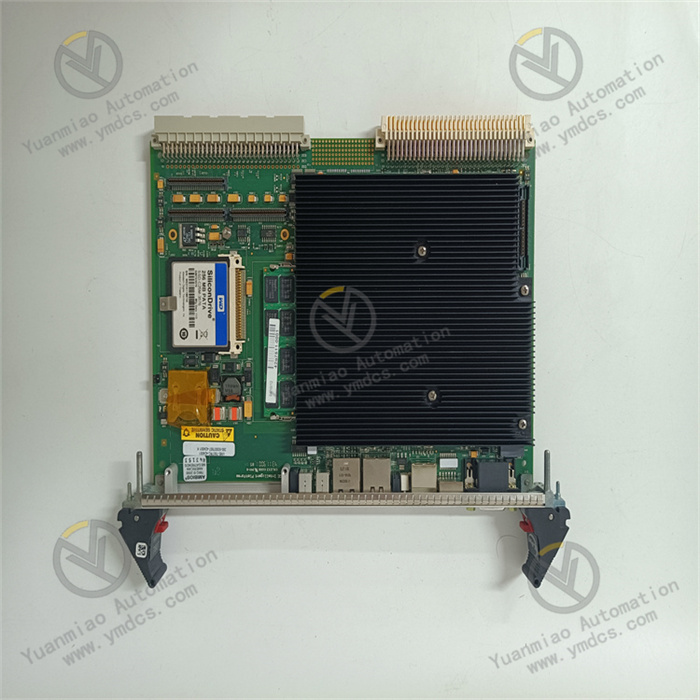
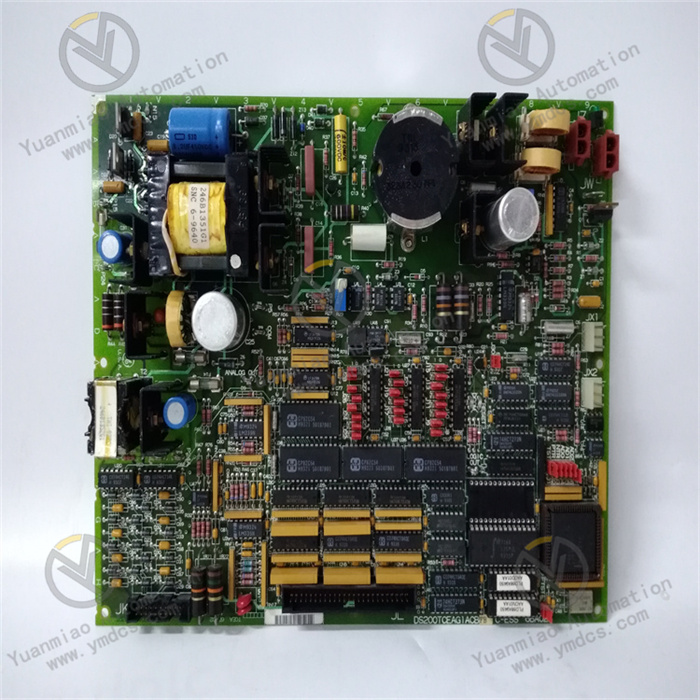
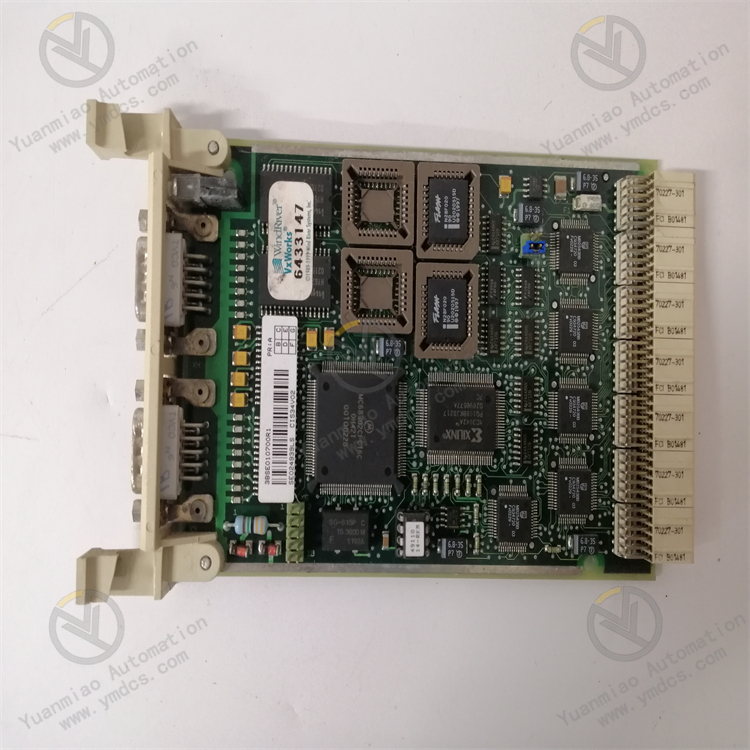
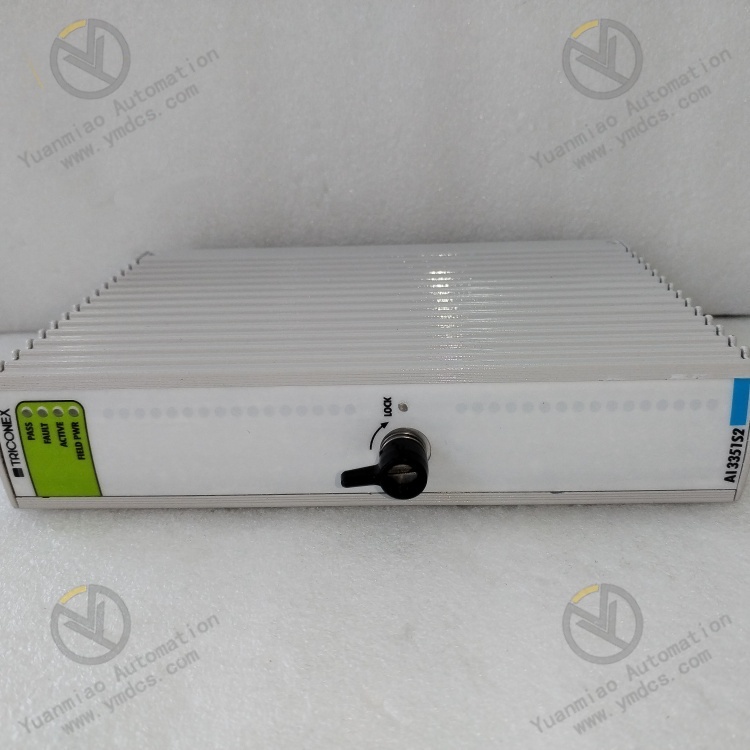
TRICONEX 3351S2 is a TMR (Triple Modular Redundant) analog input module dedicated for Schneider‑Electric Triconex Trident Safety Instrumented System (SIS). As a core I/O acquisition unit of SIS, it is widely deployed in high‑risk process facilities such as petroleum, chemical, natural gas and thermal power plants.
Adopting Triconex patented TMR triple‑redundant architecture and TFM (Total Fault Management) technology, this module is equipped with 32 shared‑reference analog input channels for standard industrial 4‑20 mA current signal acquisition. It supports 2‑out‑of‑3 voting validation and full‑channel self‑diagnosis to eliminate single‑point failures, complying with SIL3 safety integrity level and IEC61508, IEC61511 standards.
It features hot‑swap online replacement, channel‑to‑bus high‑voltage isolation and programmable digital filtering. Signal pre‑processing, A/D conversion, data voting and fault diagnosis are performed locally on the module to reduce CPU load of the main controller. Capable of 7×24‑hour continuous heavy‑duty operation, it serves as the key acquisition hardware for ESD (Emergency Shutdown), FGS (Fire and Gas), process safety interlock and critical process parameter monitoring.
2. Functions and Features
2.1 Core Functions
32‑channel high‑density analog acquisition32 shared‑reference analog input channels on single module, compatible with 4‑20 mA transmitters and supporting 2‑22 mA over‑range acquisition. It covers measuring points of pressure, temperature, level and flow, reducing cabinet module quantity and wiring cost.
TMR triple‑redundant 2‑out‑of‑3 fault‑tolerant votingEach input signal is fed into three fully independent acquisition and processing chains. Three processors complete A/D conversion respectively. The 2‑out‑of‑3 voting mechanism rejects abnormal data and prevents false or fail‑to‑act caused by single‑point hardware failure or signal interference.
Full‑channel self‑diagnosis and TFM fault managementReal‑time diagnosis of loop open‑circuit, short‑circuit, over‑range and sensor faults. Faulty channel and fault type can be accurately located with fault codes and alarms uploaded, without disturbing acquisition of healthy channels, supporting predictive maintenance.
High‑isolation anti‑interference acquisition2500 VDC channel‑to‑bus isolation suppresses field electromagnetic interference, harmonic noise and ground loop current, adapting to harsh electromagnetic conditions in power and chemical plants.
Intelligent digital filtering & high‑precision acquisitionBuilt‑in programmable digital filter with 16 Hz effective bandwidth filters high‑frequency disturbance. 12‑bit A/D conversion provides full‑scale accuracy of ±0.15% FS to meet high‑precision monitoring requirements for safety loops.
Non‑stop hot‑swap maintenanceOnline hot‑swap is supported under system power‑on. Module replacement will not interrupt acquisition of other channels nor affect safety logic execution, shortening MTTR (Mean Time To Repair).
Local pre‑processing to reduce main controller loadFiltering, A/D conversion, voting and diagnosis are executed on module side. Only valid data is uploaded to ease computing burden of main controller and improve overall system response.
System configuration compatibilityFully compatible with Trident SIS platform. TriStation1131 software enables channel configuration, range calibration, alarm threshold setup and historical data logging for ESD, FGS and process interlock systems.
2.2 Product Characteristics
- SIL3 safety certification: Complies with IEC61508 SIL3 for high‑risk safety instrumented loops.
- High accuracy & long‑term stability: Full‑scale error ≤ ±0.15% FS; minor zero‑point and gain drift over long runtime with good channel‑to‑channel consistency.
- High‑density compact design: 32‑channel single‑module design saves cabinet space and lowers integration & retrofit cost.
- Industrial‑grade EMC immunity: Multi‑stage filtering, galvanic isolation and shielding withstand high temperature, vibration, dust and humid industrial environments.
- Comprehensive loop diagnosis: Detect wire break, short‑circuit, transmitter fault and over‑range with channel‑level fault localization.
- LRU (Line Replaceable Unit): Hot‑swap modular design allows single‑person replacement without plant shutdown.
- High reliability for long‑cycle operation: Components pass strict temperature cycling, vibration and aging tests for continuous plant operation.
- Front‑panel LED status indication: Power, run, fault and channel status are visually displayed locally for fast fault identification.
3. Technical Specifications
| Item | Specification |
|---|---|
| Model | TRICONEX 3351S2 (AI3351S2) |
| Series | Triconex Trident SIS Safety Instrumented System |
| Type | 32‑Channel TMR Triple‑Redundant Analog Input Module |
| Manufacturer | Triconex (Schneider‑Electric, USA) |
| Safety Level | SIL3 (IEC 61508) |
| Channel Quantity | 32 analog input channels, shared reference |
| Standard Input Signal | 4‑20 mA DC |
| Operating Range | 2‑22 mA DC (over‑range support) |
| Max Transient Input Current | 50 mA DC |
| Signal Bandwidth (-3dB) | 16 Hz |
| Source Impedance | 180 Ω |
| A/D Resolution | 12‑bit |
| Accuracy | ±0.15% FS full scale |
| Isolation Voltage | 2500 VDC, channel‑to‑bus isolation |
| Architecture | TMR Triple Modular Redundancy, 2‑out‑of‑3 voting |
| Maintenance | Hot‑swap, non‑stop replacement |
| Diagnosis | Channel‑level self‑diagnosis: open‑circuit, short‑circuit, over‑range, loop fault |
| Operating Temperature | 0℃ ~ +60℃ |
| Storage Temperature | -40℃ ~ +85℃ |
| Humidity | 5%‑95% RH, non‑condensing |
| Weight | Approx. 1.4‑1.5 kg |
| Compatible System | Triconex Trident SIS / ESD / FGS |
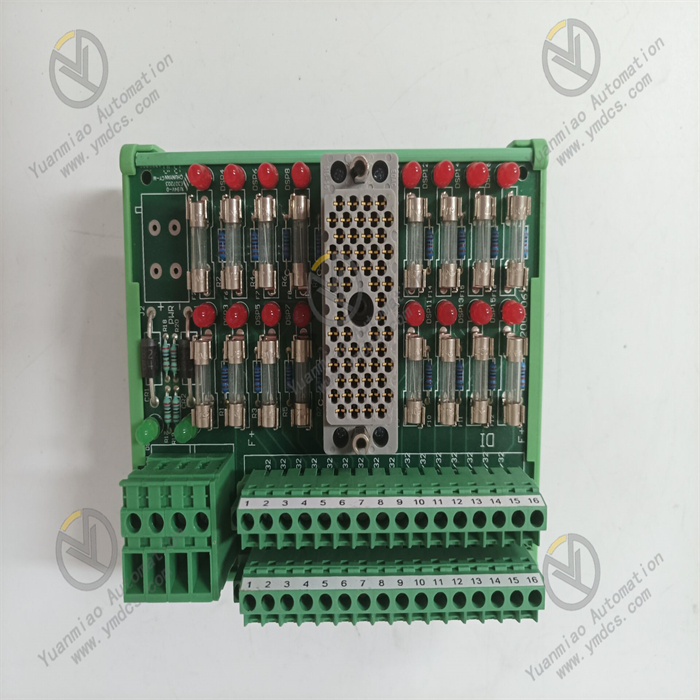
| Terminal Base Unit | 2351 / 2352 terminal assembly |
4. Working Principle
TRICONEX 3351S2 operates on TMR triple‑redundant parallel acquisition, 2‑out‑of‑3 fault‑tolerant voting and full‑loop intelligent diagnosis, eliminating single‑point failure risks at hardware level.
4‑20 mA current signals from field transmitters (pressure, temperature, level, flow) are transmitted via shielded cables to module input channels. Each signal is synchronously distributed to three independent signal‑conditioning and micro‑processor units for parallel processing.
Each processor performs signal filtering, conditioning and A/D conversion to convert analog signals into digital values. Internal proprietary voting algorithm compares three groups of sampled data in real‑time. The 2‑out‑of‑3 fault‑tolerant logic rejects abnormal data caused by drift or interference and outputs consistent valid results.
The TFM total fault management system continuously monitors every field loop. Once open‑circuit, short‑circuit, over‑range or transmitter anomaly is detected, the faulty channel will be flagged, fault codes logged and uploaded to host system without interfering with normal channels.
Valid voted data is transmitted to SIS main controller through isolated high‑speed bus, providing data source for interlock logic, emergency shutdown, process alarm and monitoring.
Hot‑swap replacement is supported. During module replacement, three redundant chains keep working with uninterrupted acquisition and stable safety logic to guarantee continuous and safe plant operation.
5. Application Scenarios
Chemical & Petrochemical SIS Safety MonitoringSafety acquisition for pressure, temperature and level of reactors, distillation columns and furnaces in refining and coal‑chemical plants, supplying safety data for ESD emergency interlock shutdown.
Oil‑Gas Production & Pipeline MonitoringSIL3‑level acquisition for pressure, flow and tank level at oil‑gas fields, gathering stations and long‑distance pipelines to ensure safe production and transportation.
Thermal & Cogeneration Power SISAcquisition of boiler, turbine and auxiliary equipment process points; monitoring and interlock protection for furnace pressure, steam temperature and feed‑water flow.
FGS Fire and Gas SystemAnalog signal acquisition for combustible and toxic gas detectors to realize alarm and interlock actions.
High‑risk Process Interlock ProtectionSIL3‑grade data acquisition for high‑temperature, high‑pressure, flammable‑toxic processes, preventing fail‑to‑act or false interlock caused by acquisition failure.
Legacy SIS System RetrofitReplacement of older analog input modules with limited redundancy and weak diagnosis. Minimal cabinet wiring modification to quickly upgrade system safety performance.
6. Common Faults and Troubleshooting
6.1 No data for single/multiple channels, acquisition failure
Causes: Transmitter damaged with no output; field loop broken, loose or short‑circuited terminals; incorrect channel configuration or disabled channel; module channel hardware damage.
Solution: Measure 4‑20 mA output on‑site and replace faulty transmitter; inspect cables and terminals, tighten connections and repair wiring faults; verify TriStation configuration, ensure channel is enabled and range setting is correct. If no data persists with healthy loop and correct configuration, perform hot‑swap module replacement for hardware failure.
6.2 Data jumping, value fluctuation and unstable acquisition
Causes: Severe electromagnetic interference, poor shield grounding; mismatched loop impedance; signal attenuation from long wiring; improper filter parameter; degraded channel hardware performance.
Solution: Check shielded twisted‑pair cable, implement single‑end grounding and route away from power cables and frequency converters; verify loop impedance; adjust digital filter parameters; perform online module reset. Replace module if fluctuation cannot be eliminated.
6.3 System reports loop open‑circuit / short‑circuit alarm
Causes: Signal wire breakage, oxidized or loose terminals; internal open‑circuit / short‑circuit inside transmitter; insulation damage caused by damp wiring; faulty module detection circuit.
Solution: Inspect field loops, clean oxidized terminals, fasten wiring and repair damaged cables; test and replace defective transmitters; improve moisture protection for field wiring. Replace module if alarm persists despite healthy field loop.
6.4 Over‑range data and over‑limit alarm
Causes: Field process signal out of 2‑22 mA range; abnormal output from faulty transmitter; incorrect system range calibration; module zero‑point offset.
Solution: Confirm actual field process condition; verify transmitter output; re‑execute range calibration and zero‑point adjustment. Replace module if calibration does not resolve issue.
6.5 Module communication loss, no data upload
Causes: Backplane slot contamination/oxidation and poor contact; unstable rack power supply; incorrect bus configuration; damaged module communication unit.
Solution: Power off, clean slot dust and oxidation, re‑seat module; check rack 24 VDC power supply; verify bus parameters. Replace module if communication cannot be recovered.
6.6 Persistent module fault LED, abnormal operation
Causes: Abnormal module firmware; dust and moisture accumulation; inconsistent voting among three TMR chains; component aging and damage.
Solution: Execute online module reset; improve cabinet ventilation and remove dust; review system diagnostic logs for TMR voting mismatch. Replace original spare module if multiple resets fail.