Description
1. Overview
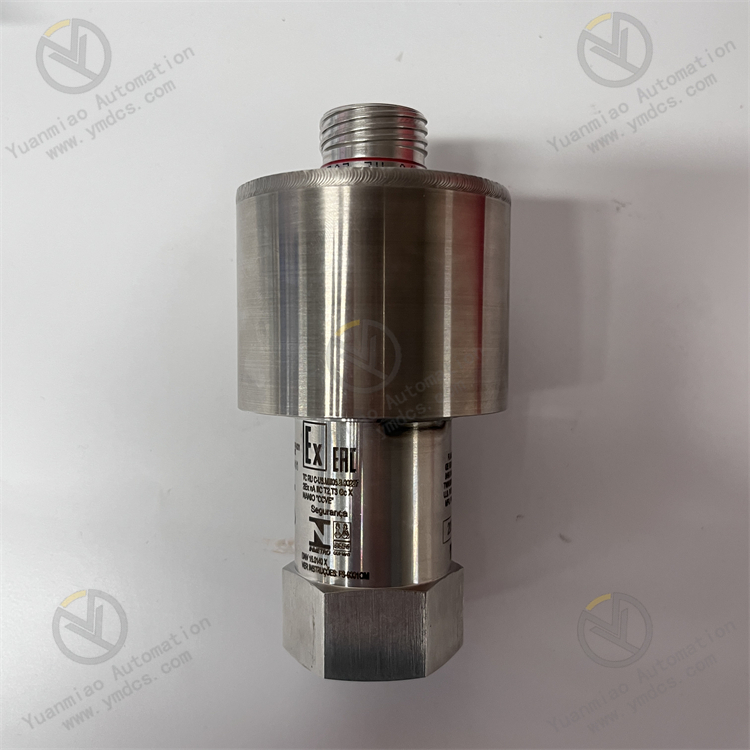
GE 362A1052P004 (complete unit series model RS-FS-9001) is an industrial high-precision Ultraviolet (UV) flame detection sensor. It belongs to GE’s industrial combustion monitoring and unit safety control product portfolio, designed for real-time flame condition monitoring of thermal equipment such as gas turbines, steam turbines, industrial boilers and incinerators.
Based on ultraviolet spectrum detection principle, the sensor accurately captures unique UV signals generated by combustion flames. It can effectively distinguish genuine flames from interfering light sources including ambient lighting, high-temperature afterglow and equipment reflection, eliminating misjudgment and missed detection.
The detector integrates an optical detection unit, signal conditioning circuit, intelligent computing chip and standardized signal output loop. It features fast response, high detection precision, wide environmental adaptability and excellent anti-interference capability. The whole unit adopts a fully sealed stainless steel structure with dust-proof and explosion-proof performance, suitable for harsh operating conditions with high temperature, heavy dust and strong electromagnetic interference in power plants, chemical plants, thermal power stations and large industrial facilities.
Natively compatible with mainstream unit control systems and DCS platforms, the device outputs real-time flame status data via standard 4–20 mA analog signals. It provides core signal support for combustion condition monitoring, flame failure protection, furnace safety monitoring and unit start-stop interlock control, serving as a key front-end sensing device for the Furnace Safety Supervisory System (FSSS) of industrial thermal equipment.
2.1 Dedicated UV Detection Principle for Accurate Identification and Strong Anti-Interference Performance
Adopting narrow-band ultraviolet spectrum detection technology, the sensor only captures UV waveband signals specific to combustion flames. It effectively filters irrelevant interference signals such as sunlight, workshop lighting, infrared radiation from hot furnace walls and equipment reflection.
It can accurately identify open flame, weak flame and transient flameout inside the furnace, thoroughly resolving false and missing alarms of conventional detection equipment, and ensuring authenticity and reliability of flame monitoring.
2.2 Ultra-Fast Response Adapted to Dynamic Unit Operating Conditions
Equipped with high-speed optical sensing components and front-end signal conditioning circuits, the typical response time is ≤50 ms. It instantaneously captures transient condition changes including furnace ignition, stable combustion, flame lifting and flameout.
Flame abnormality signals can be fed back rapidly, reserving sufficient response time for safety logic actions such as flame failure protection, fuel cutoff and interlock shutdown. It effectively avoids safety risks including furnace deflagration and fuel accumulation, and adapts to dynamic operating conditions such as unit start-stop and load variation.
2.3 Industrial-Grade Fully Sealed Structure for Wide Operating Condition Adaptability
Constructed of high-quality stainless steel with hermetic argon-filled sealing technology, the unit features dustproof, moisture-proof, explosion-proof, anti-corrosion and anti-aging properties with an IP65 protection rating.
It can withstand long-term exposure to harsh industrial environments including wide temperature fluctuation from -40℃ to +85℃, heavy dust, high humidity and strong vibration. Resistant to high-temperature furnace radiation and flue gas erosion, it supports 24/7 continuous long-term operation and meets long service life requirements of various large thermal equipment.
2.4 Standardized Signal Output with High System Compatibility
Equipped with standard industrial 4–20 mA current loop output featuring stable transmission and strong anti-line-interference capability. It can be seamlessly connected to GE turbine control systems, various DCS systems, Furnace Safety Supervisory Systems (FSSS) and upper monitoring platforms.
The analog signal feeds back flame intensity and combustion status in real time, enabling the system to accurately judge combustion conditions, realize closed-loop combustion regulation and fault alarming. It is applicable to renovation and matching projects of new and legacy industrial control systems.
2.5 Long-Distance Detection with Wide Monitoring Coverage
The detector supports long-range flame monitoring with a maximum effective detection distance of 9 m (30 ft). The optimized detection angle delivers comprehensive coverage, fully satisfying full-area flame monitoring requirements for large-space furnaces such as large boilers, turbine combustion chambers and industrial incinerators.
A single unit can precisely monitor the flame status of one burner, reducing equipment quantity and simplifying on-site layout.
2.6 Built-In Intelligent Self-Diagnosis for Convenient and Efficient Maintenance
It supports power-on self-test and real-time operational self-diagnosis, automatically monitoring potential risks including contaminated optical probe, circuit fault, abnormal power supply and faulty signal loops.
Device faults can be indicated via output signal status, enabling maintenance personnel to rapidly locate fault points without frequent disassembly and inspection, greatly lowering daily maintenance workload and repair costs.
2.7 Standardized Mechanical Interface for Easy Installation and Replacement
The device adopts a standard 3/4-inch NPT stainless steel threaded interface with stable installation and strong vibration resistance, compatible with standard furnace mounting bases.
Thanks to standardized dimensions and interface definitions, faulty legacy units can be directly replaced in situ without modifying mounting bases or wiring. The unit can be commissioned and put into service after power-up, achieving high maintenance efficiency and low renovation cost.
3. Specification Parameters
3.1 Basic Assembly Parameters
- Model: 362A1052P004
- Series: RS-FS-9001
- Manufacturer: GE General Electric
- Device Type: Industrial Ultraviolet Flame Detector (Flame Scanner)
- Detection Principle: Narrow-band Ultraviolet (UV) Spectrum Detection
- Core Functions: Real-time furnace flame monitoring, flame intensity acquisition, flame/open-flame discrimination, combustion status feedback, fault self-diagnosis, system signal output
- Applicable Equipment: Gas turbines, steam turbines, industrial boilers, CHP units, industrial incinerators, thermal combustion equipment
- Compatible Systems: Furnace Safety Supervisory System (FSSS), turbine control systems, power plant DCS, industrial combustion monitoring systems
- Application Scenarios: Matching for new combustion monitoring systems, replacement of outdated flame detectors, optimization of furnace flame failure protection, precision monitoring renovation of combustion conditions
3.2 Detection & Electrical Parameters
- Detection Mode: Narrow-band ultraviolet spectrum induction detection
- Maximum Effective Detection Distance: 9 m (30 ft)
- Response Time: Typical value ≤50 ms for instantaneous capture of flame transient variations
- Output Signal: Standard industrial 4–20 mA current loop (linear output corresponding to flame intensity)
- Operating Power Supply: 24 V DC (±10%) wide voltage, low power consumption and stable operation
- Signal Characteristics: High linearity, free of signal drift, resistance to attenuation for long cable runs and electromagnetic crosstalk
- Electrical Protection: Built-in overvoltage, overcurrent, ESD and surge protection, adaptable to industrial electrical disturbances
3.3 Environmental Parameters
- Operating Temperature: -40℃ ~ +85℃, suitable for wide temperature fluctuation around furnaces
- Storage Temperature: -40℃ ~ +85℃
- Operating Humidity: 5% ~ 95%RH (non-condensing)
- Protection Class: IP65, dustproof, waterproof and resistant to flue gas erosion
- Housing Material: Sealed stainless steel housing with argon-filled hermetic process, anti-corrosion, anti-oxidation and anti-aging
- EMC Level: Compliant with high-end industrial EMC standards, resisting strong electromagnetic radiation and equipment vibration in power plants
3.4 Mechanical & Installation Parameters
- Mechanical Interface: Standard 3/4-inch NPT stainless steel thread
- Overall Dimension: 221 mm × 109 mm × 102 mm (8.7 in × 4.3 in × 4.0 in)
- Mounting Method: Threaded fixed in-situ installation, compatible with standard furnace mounting bases
- Structural Features: Fully sealed integrated construction, no moving mechanical parts, low failure rate and excellent vibration resistance
- Maintenance Features: Support fault self-diagnosis and real-time status feedback; no frequent routine calibration required, easy replacement
After power-up, the GE 362A1052P004 flame detector firstly completes full-unit hardware self-test, optical probe initialization and signal loop calibration. It enters regular flame monitoring mode after passing self-inspection.
Relying on built-in high-precision UV optical sensing components, the device selectively captures unique ultraviolet spectrum signals generated by furnace combustion flames, effectively shielding infrared radiation, ambient light and equipment reflection interference.
Raw optical signals are filtered, shaped, amplified and precisely conditioned before being transmitted to the core computing chip. Using proprietary flame recognition algorithms, the chip intelligently judges flame presence, flame intensity and combustion stability, and linearly converts flame status parameters into continuous standard 4–20 mA analog signals for transmission to the upper-level control system.
Under normal combustion conditions, the unit continuously outputs current signals corresponding to flame intensity, providing accurate data support for system combustion analysis, load regulation and steady-state monitoring. When flame lifting, flameout or abnormal combustion occurs inside the furnace, the detector captures sudden condition changes within milliseconds and changes output signals to feed back fault information promptly.
Meanwhile, the device continuously monitors hidden risks such as probe contamination, circuit failure and abnormal power supply, actively reporting equipment anomalies. It coordinates with the control system to execute safety actions including flame failure protection, fuel cutoff and alarm interlock, comprehensively safeguarding safe combustion operation of thermal equipment.
5.1 Flame Monitoring for Turbines and Generator Units
Widely applied to combustion chamber flame monitoring of gas turbines and combined-cycle generator units. It feeds back ignition, stable combustion and flameout status in real time, supplying core signals for unit start-stop interlock, closed-loop combustion regulation and flame failure protection logic to ensure stable and safe operation of generating units.
5.2 Furnace Safety Monitoring of Industrial Boilers
Suitable for full-area flame monitoring of large industrial boilers and CHP boilers. It accurately identifies flame status of individual burners and effectively eliminates safety hazards such as deflagration and backfire caused by fuel accumulation after furnace flameout, forming a core monitoring barrier for boiler Furnace Safety Supervisory Systems (FSSS).
5.3 Combustion Condition Monitoring for Industrial Thermal Equipment
Applicable to flame status monitoring of various thermal combustion equipment including chemical incinerators, industrial heating furnaces and kilns. It feeds back combustion stability in real time, assisting the system in optimizing fuel-air ratio, lowering energy consumption and improving combustion efficiency for continuous industrial production.
5.4 Upgrade and Replacement of Legacy Monitoring Systems
A direct in-situ replacement solution for outdated flame detectors suffering from slow response, inaccurate identification, poor anti-interference capability and frequent false alarms. No modification to mounting structure or control loops is needed, enabling low-cost performance upgrade of combustion monitoring systems and improving flame monitoring precision and operational safety of units.
![]()