Description
1. Product Overview
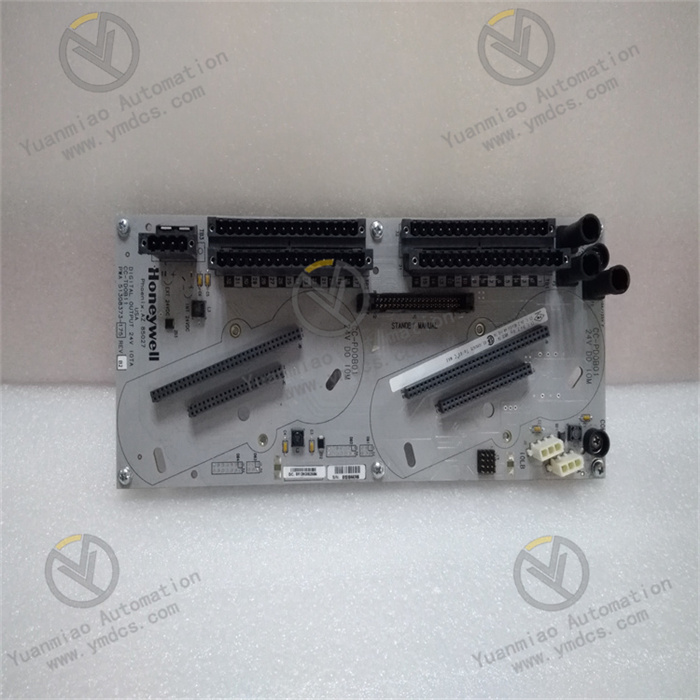
Honeywell CC-TDOB11 is a 24V DC Digital Output IOTA Terminal Module of Honeywell Experion PKS Series C. It matches the C300 Field Controller and serves as dedicated high-density digital output hardware for DCS control systems. Integrated with 32 independent digital output channels, the module is designed to drive low-voltage DC loads such as industrial on-site solenoid valves, relays, indicator lights and small actuators. It is mainly applied to switching logic control scenarios including equipment start-stop control, valve interlock switching, operating status output and audible & visual alarm triggering, acting as the core terminal module for discrete control and interlock logic execution of DCS systems in process industries.
Adopting industrial reinforced isolation circuits and dedicated short-circuit protection design, the CC-TDOB11 supports high-density integrated channel output with strong load capacity, fast response speed and excellent anti-interference performance. Fully compatible with the PKS system bus architecture, it supports online hot-swap maintenance and 7×24-hour non-stop operation. Adaptable to harsh industrial conditions in chemical, power, oil & gas and metallurgy industries, it meets the requirements of large-scale digital interlock and batch equipment start-stop control for big plants, and is also applicable for new system matching, legacy system expansion and hardware replacement technical renovation projects.
2. Functional Characteristics
2.1 32-channel High-density Independent Output for Large-scale Switch Control
The module is equipped with 32 fully independent 24VDC digital output channels. A single module can drive multiple on-site low-voltage actuating loads simultaneously. Channels work independently without mutual interference, greatly saving cabinet installation space and satisfying batch control requirements for dense switch control points in large industrial plants. Each channel supports independent configuration and separate on/off control, and can be flexibly assigned to different interlock loops, equipment start-stop loops and alarm output loops to adapt to complex discrete control logic. It effectively solves the problems of insufficient channels and cumbersome distributed wiring existing in traditional modules.
2.2 Built-in Electronic Short-circuit Protection for High Operational Safety
It natively integrates a dedicated electronic short-circuit protection mechanism to implement real-time monitoring and intelligent protection against short circuit, overload and line faults in 24V DC output loops. When load short circuit or overcurrent abnormality occurs on a single channel, the corresponding channel automatically cuts off output and triggers fault alarm, while other normal channels keep working continuously. It prevents whole-module shutdown and interlock failure caused by single-point faults. It effectively avoids module burnout and loop abnormalities induced by on-site wiring errors and load faults, and greatly improves fault tolerance and operational safety of the DCS digital control system. Note: Short-circuit detection function is unavailable under pulse output configuration mode.
2.3 High-speed Output Response for Precise and Reliable Interlock Execution
The module adopts a hardware-based fast output response mechanism with fast switching action and no software scanning delay, which can precisely fit control scenarios with strict timing requirements such as industrial interlock, emergency shutdown and working condition switching. The output signal features high stability without false triggering, chattering or delayed misoperation. It strictly executes switching on/off actions according to system logic commands to guarantee accurate implementation of plant interlock logic and equipment start-stop logic, and avoid process faults and safety hazards caused by timing deviation.
2.4 Industrial Anti-interference Reinforced Design with Strong Working Condition Adaptability
The whole unit adopts channel-level isolation, multi-stage filtering and optimized EMC design, which can effectively suppress electromagnetic harmonics, voltage transients and signal crosstalk generated by frequency converters, high-voltage motors and high-frequency equipment on industrial sites. The circuit board adopts three-proof coating reinforcement technology with dust-proof, moisture-proof, anti-vibration and temperature change resistance capabilities. It can operate stably for a long time in industrial cabinet environments with dust, humidity and large temperature fluctuation. The output status maintains free of drift and abnormal jump, suitable for year-round uninterrupted continuous production conditions.
2.5 Hot-swap Maintenance & Standardized Architecture for Convenient Maintenance and Wide Compatibility
It is fully compatible with standalone and redundant architectures of Honeywell C300 controllers and matches the dedicated I/O backplane bus of PKS systems, delivering stable communication and strong configuration adaptability. It supports online hot-swap replacement and maintenance. Module inspection, fault replacement and system expansion can be carried out without shutdown or power cut and will not affect the operation of the whole process equipment, greatly reducing production shutdown loss and maintenance costs. Complying with Series C standardized hardware specifications, it is universally adaptable for new and legacy systems with plug-and-play function without complex commissioning. Panel status indicators can intuitively reflect channel output, module operation and fault abnormal status for convenient on-site inspection and troubleshooting.
3. Technical Parameters
3.1 Core Compatibility Parameters
Product Model: CC-TDOB11 Product Series: Honeywell Experion PKS Series C Product Type: 32-channel 24VDC Digital Output IOTA Terminal Module Compatible Device: Honeywell C300 DCS Field Controller Core Functions: 24VDC digital signal output, on-site low-voltage load driving, equipment start-stop control, interlock logic execution, alarm signal output, loop short-circuit and overload protection Application Scenarios: DCS discrete control and interlock systems in petrochemical, coal chemical, power & heat, oil & gas and metallurgy industries
3.2 Output Electrical Performance Parameters
Output Signal Type: 24VDC DC digital switching output Number of Channels: 32 independent output channels Max Output Current per Channel: 0.5A Minimum Load Parameter: 12VDC / 100mA Surge Withstand Capacity: 10A surge current for 4 seconds (10% duty cycle) Protection Mechanism: Built-in electronic short-circuit protection, overload protection, overcurrent protection Response Characteristic: High-speed hardware response, no delayed false triggering, stable output status
3.3 Communication and System Adaptation Parameters
Communication Bus: Dedicated I/O backplane bus for PKS system System Architecture: Support standalone / redundant dual-machine architecture O&M Characteristic: Support online hot swap and non-stop maintenance Configuration Mode: Configurable switching between normal switching output and pulse output Fault Feedback: Independent alarm for single-channel faults to accurately locate abnormal loops
3.4 Structure and Installation Parameters
Installation Method: Embedded installation on backplane slots of standard 9-inch DCS cabinets Structural Form: Series C standardized modular integrated structure Hardware Technology: Industrial anti-aging PCB, three-proof coating protection, reinforced components Layout Feature: High-density channel integration with clearly divided terminals for neat and convenient wiring
3.5 Environmental Working Condition Parameters
Operating Temperature: -40℃~+70℃, adaptable to harsh industrial wide-temperature conditions Storage Temperature: -40℃~+85℃ Operating Humidity: 5%~95%RH (non-condensing), suitable for humid and dusty plant environments Vibration Resistance: Withstand industrial vibration of 5-500Hz with double amplitude of 0.03 inch Shock Resistance: Withstand 10g, 11ms half-sine wave mechanical shock Operation Mode: Support 7×24-hour uninterrupted continuous stable operation all year round
4. Hardware Configuration and Structural Advantages
4.1 Core Hardware Configuration
The Honeywell CC-TDOB11 module is equipped with 32 independent dedicated output driver chips. Each channel circuit is independently designed without coupling interference, ensuring accurate, stable and controllable switching output signals for every channel. Onboard integrated electronic short-circuit and overload protection circuits eliminate the need for external protective devices. It can monitor the current and load status of each output loop in real time, realize precise isolation and independent alarm of faulty channels and prevent the spread of single-point faults. Core control and communication chips adopt industrial high-reliability components. Having passed strict high-low temperature aging, vibration shock and EMC tests, it features stable bus communication without packet loss, accurate output response timing, no performance degradation or parameter drift during long-term operation, fully meeting high-reliability interlock control requirements of industrial DCS systems.
4.2 Structural Design Advantages
The module adopts the standardized industrial modular structure of Honeywell Series C. The high-density channel integration design greatly reduces cabinet space occupation and adapts to dense DCS control cabinet layout. Scientific circuit partition separates the power supply area, bus communication area and multi-channel output area completely, avoiding signal crosstalk and electromagnetic interference at the hardware level. The whole unit adopts fully enclosed protection technology with three-proof coating, which can effectively resist erosion from industrial dust, water vapor and slightly corrosive gas, and has excellent vibration and shock resistance for harsh plant working conditions. The standardized slot mounting structure enables easy disassembly and assembly with firm positioning and supports hot-swap online maintenance without shutdown or power cut. Multiple status indicators are integrated on the panel to display module operation, communication, single-channel output and fault status in real time, facilitating rapid on-site inspection, fault location and maintenance troubleshooting, lowering system maintenance difficulty and shutdown risks.
5. Working Principle
The Honeywell CC-TDOB11 digital output module realizes precise logic control and safety protection of on-site switching equipment via a closed-loop working mechanism: System Command Reception → Bus Data Parsing → Hardware Drive Output → Loop Status Monitoring → Intelligent Fault Protection.
After power-on, the module completes hardware self-check, channel initialization and backplane bus communication handshake, then enters normal operation state. It receives digital logic commands such as switching control, interlock execution and equipment start-stop issued by the C300 controller in real time through the PKS redundant bus. The internal chip parses command signals at high speed, independently controls the on/off status of 32 output channels according to preset configuration parameters, and outputs standard 24VDC switching signals to drive loads including on-site solenoid valves, relays, indicator lights and small actuators, implementing control logic such as process equipment start-stop, valve switching, working condition switching and audible & visual alarm.
During operation, built-in protection circuits of the module monitor the current, load and line status of each output loop in real time. Once abnormalities such as short circuit, overload and overcurrent of a single channel are detected, the module immediately cuts off the output of the faulty channel and uploads fault codes and abnormal information to the upper system synchronously to achieve accurate fault location and isolation, while ensuring other normal channels keep working to prevent paralysis of the overall interlock system.
The module delivers full-process high-speed response without signal delay or false triggering, and can precisely match the timing logic of industrial interlocks. Supported by excellent EMC and environmental adaptability, it ensures stable, reliable and continuous execution of switching control logic under complex industrial conditions, comprehensively supporting stable operation of discrete control and safety interlock functions of DCS systems.
6. Application Scenarios
6.1 Interlock Control Systems for Chemical / Coal Chemical Plants
It is widely used in DCS systems of refining and coal chemical production plants for solenoid valve switching control, emergency interlock cut-off and process equipment start-stop logic control of reactors, distillation columns, conveying units and heat exchange equipment. It is also applicable for plant fault audible & visual alarm output and operating status indication scenarios. It guarantees accurate execution of interlock logic in chemical production and avoids safety risks caused by overpressure, overtemperature and abnormal flow in processes.
6.2 Power & Heat Unit Control Systems
Adaptable to boiler, steam turbine, desulfurization, denitrification and auxiliary machinery control systems of thermal power plants and heating stations, it is used for start-stop switching control, interlock protection and status output of auxiliary equipment such as fans, water pumps, valves and dampers. It precisely executes unit start-stop, working condition switching and fault interlock shutdown logic, ensures stable and controllable auxiliary systems of power & heat units and reliable interlock actions, and meets high safety and high reliability control standards of the power industry.
6.3 Oil & Gas Production and Transmission Control Systems
Applied to automation control systems of oil & gas field production and long-distance pipelines, it undertakes switching control and interlock output for pipeline shut-off valves, pressure regulating valves, on-site alarm devices and wellhead auxiliary equipment. Adaptable to field conditions with complex temperature variation, vibration and electromagnetic interference, it ensures accurate equipment action and reliable interlock during oil & gas production and transportation, and eliminates production hazards induced by pipeline overpressure and equipment anomalies.
6.4 Industrial Automation Discrete Control Systems
Suitable for automated production lines in metallurgy, light industry, fine chemical and other industries, it performs centralized switching control of batches of small actuators, relays and indicator lights to realize automation logic including production line condition switching, equipment linkage and fault alarm. Relying on its 32-channel high-density advantage, it satisfies centralized management and control demands of massive discrete control points and improves the automation control level of production lines.