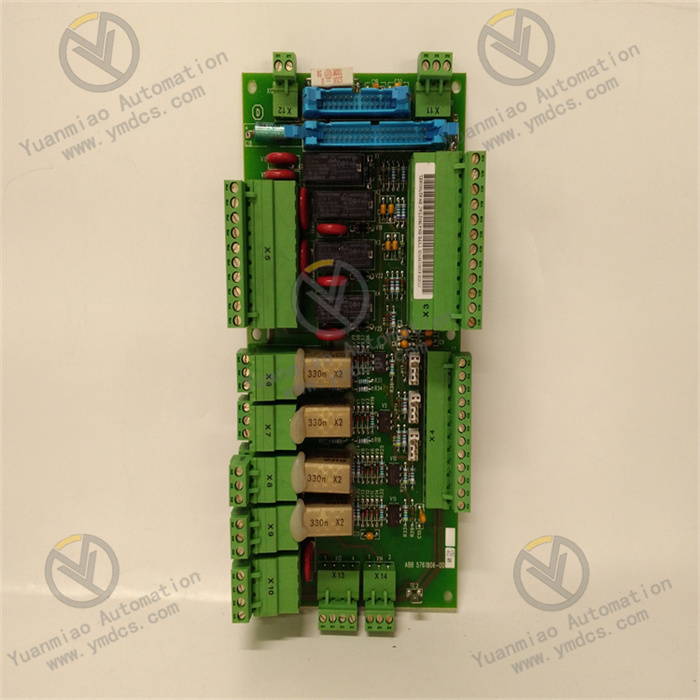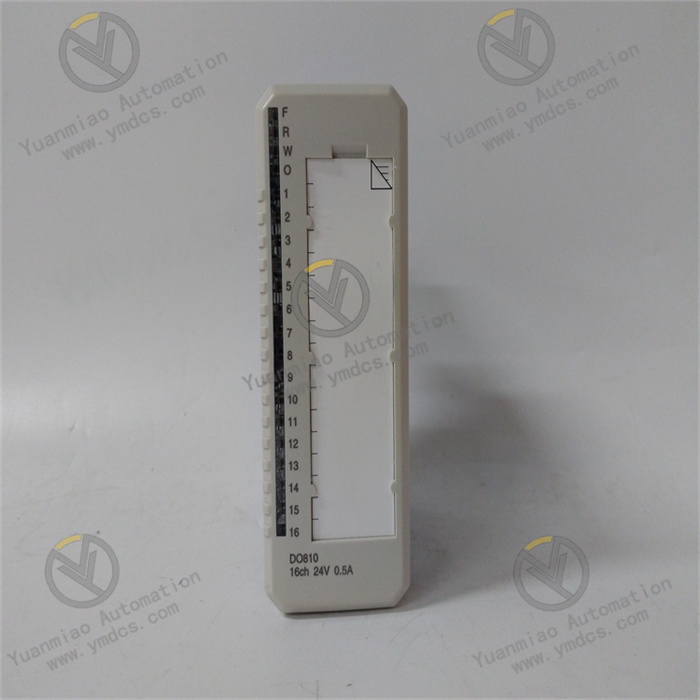
Description
ABB CS512 3BUR980009R1
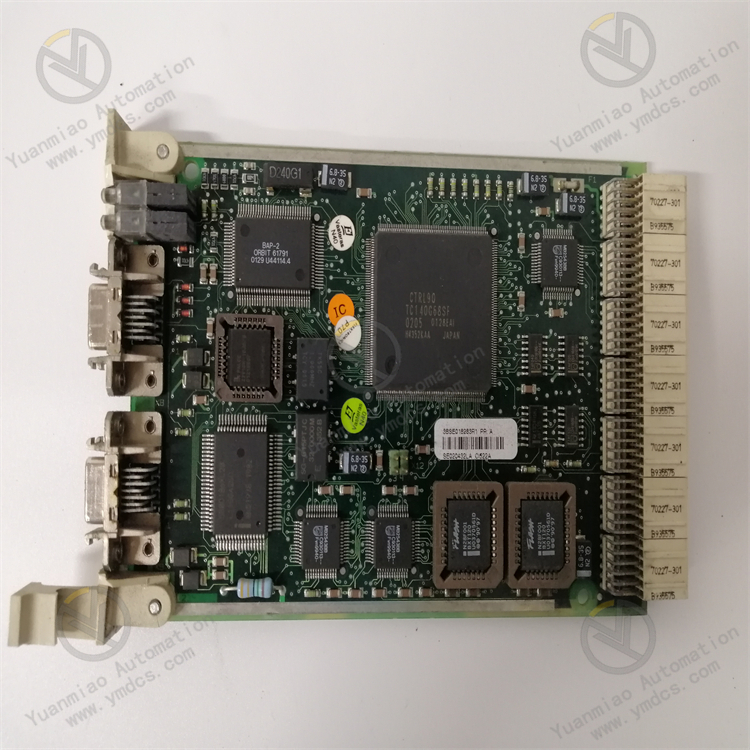
ABB CS512 3BUR980009R1 is an industrial-grade module integrating input/output and communication functions. Its core positioning is to serve as a connection bridge between field devices and PLC/DCS systems. By integrating multiple types of input/output channels and rich communication interfaces, it realizes sensor signal acquisition, actuator drive control and data transmission with upper-level systems. Relying on flexible expansion capability and reliable protection design, it is widely used in industrial scenarios such as small and medium-sized automated production lines, process control equipment, intelligent building control systems and general electromechanical equipment, providing comprehensive connection and control support for the stable operation of automated systems.
I. Product Features
1. Integrated Multi-channel I/O, Adapting to Diverse Control Requirements
2. Rich Communication Interfaces, Ensuring Cross-device Collaboration
3. Multiple Power Supply Modes Available, Adapting to a Wide Range of Scenarios
4. Flexible Expansion Design, Adapting to Scenario Upgrade Requirements
5. Industrial-grade Protection and Safety Design, Ensuring Reliable Operation
II. Technical Parameters
1. Basic Parameters
- Model: ABB CS512 3BUR980009R1
- Product Type: Input/Output Interface Module
- Product Series: Micro 64 Series Industrial Control Card
- Core Functions: Digital/analog signal acquisition, actuator drive control, cross-device data transmission, extended I/O expansion
- Compatible Systems: ABB PLC/DCS systems, mainstream industrial automation control systems
- Communication Protocols: Modbus, Profibus and other industrial standard protocols
- Communication Interfaces: DB-15 (RS-485), RJ-45 (RS-232/Ethernet 10/100 Mbit), USB
- Expansion Capability: Support up to 4 expansion units (digital/analog)
- Installation Method: DIN rail mounting
2. Electrical Parameters
- Supply Voltage: 24V DC or 120/240 VAC (optional)
- Digital Input: 40 channels, input voltage 24V DC
- Digital Output: 24 channels, output type optional (24V DC source output/sink output/relay output)
- Output Current: 24V DC output maximum 0.7 A, relay output maximum 2.0 A
- Analog Expansion Capability: Up to 16 channels of analog input/8 channels of analog output (expansion unit required)
- Communication Rate: Ethernet interface 10/100 Mbit, RS-485 interface supporting standard industrial communication rates
- Protection Function: ESCP electronic short-circuit protection
- Power Consumption: Typical value ≤ 15 W, maximum value ≤ 20 W
3. Environmental Parameters
- Operating Temperature: -20°C ~ +65°C
- Storage Temperature: -40°C ~ +85°C
- Relative Humidity: 5% ~ 95% RH (no condensation)
- Protection Rating: IP20
- Vibration Resistance: Compliant with IEC 60068-2-6 standard (10~500 Hz, acceleration 5 g)
- Shock Resistance: Compliant with IEC 60068-2-27 standard (peak acceleration 30 g, duration 11 ms)
- Electromagnetic Compatibility: Compliant with EN 55011 and EN 55022 industrial electromagnetic interference protection standards
- Certification Standard: CE certification
4. Physical Parameters
- Dimensions: 120mm×80mm×35mm (L×W×H)
- Net Weight: Approximately 0.3 kg ~ 0.4 kg
- Housing Material: Industrial-grade flame-retardant plastic
- Terminal Type: Plug-in anti-misplug terminal
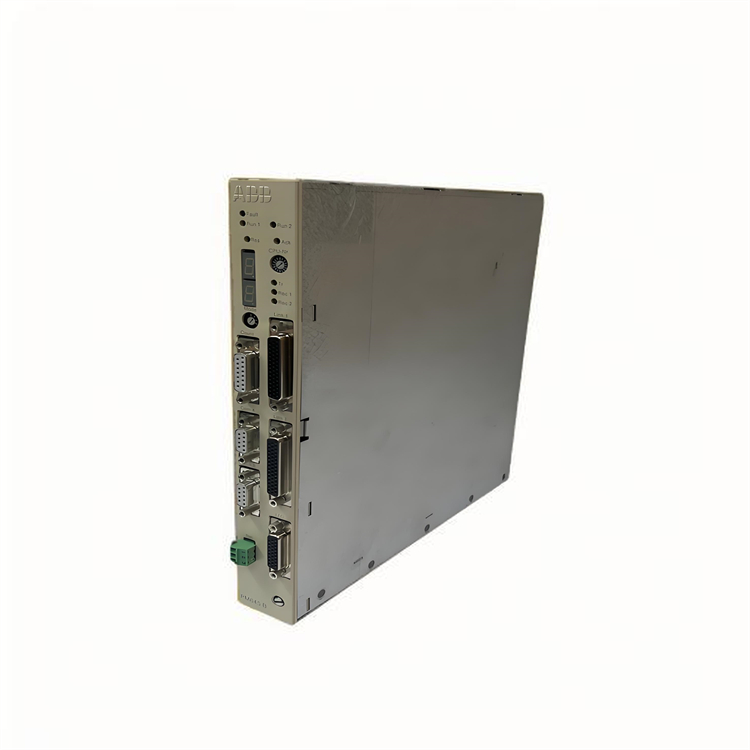
- Status Indicators: Power light (PWR), Run light (RUN), Communication status light (COMM), Fault light (FAULT), I/O channel status light

III. Working Principle
The core working logic of the ABB CS512 3BUR980009R1 input/output interface module is "Power Supply - Signal Acquisition - Data Transmission - Command Execution - Status Monitoring - Fault Protection". It realizes efficient linkage between field devices and control systems through the collaboration of multiple links, with the specific workflow as follows:
- Power Supply and System Initialization: The module is connected to a power supply of corresponding specifications (24V DC or 120/240 VAC). The internal power module performs voltage stabilization, filtering and reverse polarity protection to provide stable power for core components such as I/O channels, communication interfaces and processors. At the same time, it automatically loads preset configuration parameters and communication protocol configurations, completes the self-test of core components and interfaces, enters the ready state after passing the self-test, and establishes a communication link with the upper-level system synchronously.
- Signal Acquisition and Data Processing: It real-time collects status signals of field sensors, limit switches and other devices through 40 digital input channels. If an analog expansion unit is connected, it can collect 16 channels of analog signals (such as pressure, temperature, flow rate, etc.) synchronously. The internal signal processing circuit performs filtering, noise reduction and format conversion on the collected signals to eliminate interference signals, ensuring the accuracy of signal acquisition, and then transmits the processed data to the processor.
- Data Transmission and Command Reception: According to the adapted communication protocol (Modbus/Profibus, etc.), the processor transmits the collected field data to the upper-level PLC/DCS system through interfaces such as RS-485 and Ethernet. Meanwhile, it receives control commands issued by the upper-level system, parses the command content and determines the corresponding output channel and action logic.
- Command Execution and Device Control: According to the parsed control commands, it drives the corresponding actuators to act through 24 output channels. Different output types can adapt to the needs of different devices (e.g., relay output drives contactors, DC output drives solenoid valves, etc.). During the output process, it real-time monitors the current and voltage status of the channels, and prevents short-circuit faults through the ESCP protection mechanism.
- Status Monitoring and Fault Protection: The system real-time monitors its own power supply status, communication link quality, I/O channel working status and expansion unit connection status, and identifies abnormal conditions (such as power supply abnormality, communication interruption, channel short circuit, expansion unit disconnection, etc.) through built-in diagnostic logic. When a fault is detected, it immediately turns on the fault indicator light, records the fault code and fault occurrence time in the internal log, sends alarm information to the upper-level system, and triggers protection mechanisms such as ESCP to cut off the faulty channel to avoid fault expansion.
IV. Common Fault Troubleshooting
| Fault Phenomenon | Possible Causes | Troubleshooting and Solutions |
|---|---|---|
| Power light off, module unresponsive | Supply voltage not meeting requirements; reversed power polarity; poor contact of power supply lines; internal power module failure | Verify the module's power supply specifications and use a multimeter to measure the supply voltage (ensure it is 24V DC or 120/240 VAC). Check the positive and negative power connections (polarity must be distinguished for DC power supply) to avoid polarity reversal. Inspect the terminal connections of the power supply lines, re-plug and tighten them, and check for terminal oxidation or line damage. If the power supply and wiring are normal but the module is still unresponsive, judge that the internal power module is faulty and contact after-sales service for repair or replacement. |
| Abnormal input signal acquisition, inaccurate data | Sensor failure; short circuit/open circuit of input lines; signal interference; analog expansion unit not connected properly | Test the sensor separately to confirm that its output signal is normal. Check the input line connections and repair any short circuits or open circuits. Replace the signal cable with a twisted-pair shielded cable, keep it away from strong interference sources such as frequency converters and high-voltage cables, and ensure single-ended grounding of the shield layer. If an analog expansion unit is used, check the connection between the expansion unit and the main module, re-plug and tighten it, and verify the configuration parameters of the expansion unit. |
| No response from output channels, actuators not functioning | Control commands not issued; short circuit of output channels triggering ESCP protection; poor contact of output lines; actuator failure | Check the control command delivery status through the upper-level system and confirm that the command format and channel address are correct. Check the status of the fault indicator light; if it is a channel short-circuit alarm, check whether the output lines and actuators are short-circuited, repair the fault and restart the module to release the ESCP protection. Inspect the terminal connections of the output lines, re-plug and tighten them. Test the actuator separately to confirm that its power supply and status are normal; replace the actuator if necessary. |
| Unable to establish communication with upper-level system | Mismatched communication parameters; damaged/poor contact of communication cables; communication protocol not configured correctly; communication interface failure | Verify that the communication parameters (address, baud rate, data bits/stop bits, protocol type) of the module and the upper-level system are consistent. Check the communication cables (RS-485/Ethernet), replace damaged cables, re-plug the interfaces to ensure firm contact. Confirm that the communication protocol is correctly enabled through the configuration software. Use a multimeter to measure the pin voltage of the communication interface; if abnormal, judge that the interface is faulty and contact after-sales service for repair. |
| Expansion unit not recognized, no data from expansion channels | Incompatible expansion unit model; damaged/poor contact of expansion connecting cables; power supply failure of expansion unit; configuration parameters not updated | Confirm that the expansion unit is a model compatible with the module (supports up to 4 expansion units of the same series). Check the expansion connecting cables, replace damaged cables, re-plug and tighten the connecting terminals. Check the power supply status of the expansion unit to ensure it is powered normally. Update the module's configuration parameters, add the expansion unit information and restart the module to complete the expansion unit recognition. |