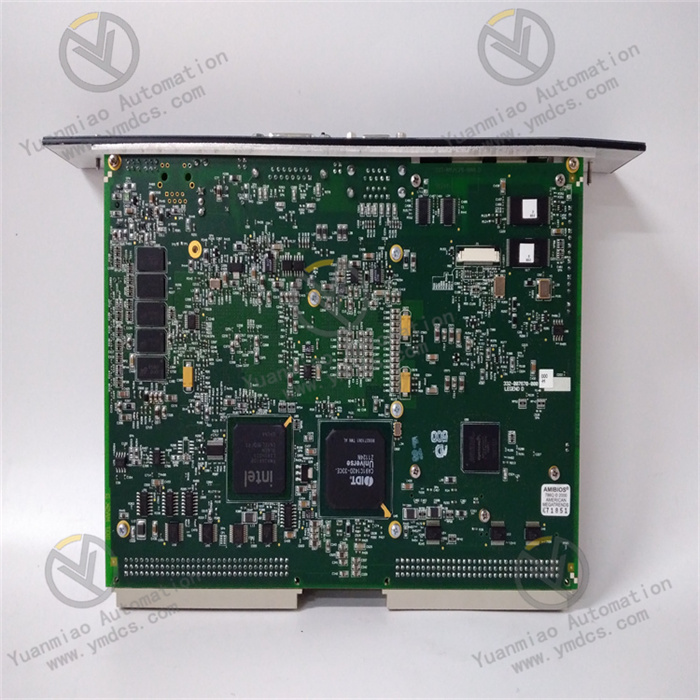
Description
GE IC697CHS770D
I. Overview
GE IC697CHS770D is a high-performance rack assembly and a core hardware carrier of the GE PACSystems RX7i series control systems. Serving as a central platform for module installation, signal transmission, and power distribution, it provides standardized installation interfaces and stable backplane bus connections for RX7i series CPU modules, I/O modules, communication modules, and dedicated function modules. This rack is widely used in large-scale industrial automation scenarios with strict requirements for control system reliability and scalability, such as automotive manufacturing, petrochemicals, metallurgical smelting, power energy, and rail transit.
Adopting a high-strength structural design and high-reliability backplane bus technology, the product features broad module compatibility, high bus transmission rate, stable power distribution, and flexible expandability. It supports multi-rack cascading expansion, allowing flexible configuration of the number and type of modules according to the scale of the control system. Combined with hot-swap compatible design, it provides a solid foundation for system installation and commissioning, operation and maintenance upgrades, and long-term stable operation, making it a core carrier for building large-scale distributed control systems.
II. Technical Parameters
| Parameter Category | Specific Specifications | Description |
|---|---|---|
| Basic Configuration | Number of rack slots: 10 standard slots; Compatible module types: Fully compatible with PACSystems RX7i series modules (CPU, I/O, communication, function modules); Slot types: 1 dedicated CPU slot (Slot 0), 9 universal module slots (Slots 1-9) | The dedicated CPU slot ensures stable connection of the core control module, while universal slots adapt to diverse function modules, meeting the configuration needs of complex systems |
| Backplane Bus | Bus type: GE RX7i high-speed backplane bus; Bus rate: 1.28Gbps (peak); Data transmission method: Parallel + serial hybrid transmission; Bus load capacity: Supports full operation of 10 modules; Bus isolation: Optical isolation between slots (2500V AC) | The high-speed bus ensures real-time transmission of large-volume data; the isolation design prevents signal crosstalk between modules, improving system stability |
| Power Supply Parameters | Power supply interfaces: 2 redundant power input interfaces (DC 5V); Power input range: DC 4.75-5.25V; Maximum power supply current per slot: 10A; Total power supply capacity: 50A (full configuration); Power distribution: Independent slot power supply circuit with overcurrent protection | Redundant power input enhances power supply reliability; the independent circuit design prevents faults of a single module from affecting the overall power supply |
| Expansion Capability | Cascading method: Cascading via IC697CBL703 bus cable; Maximum number of cascaded units: 8 racks; Cascading transmission rate: 1.28Gbps; Cascading distance: Maximum 10 meters per cable, supporting repeater expansion | Multi-rack cascading meets the needs of large-scale distributed systems; the high-speed cascading bus ensures real-time cross-rack data interaction |
| Mechanical Parameters | Dimensions: 483mm×177.8mm×266.7mm (L×W×H); Installation method: 19-inch standard cabinet installation (compliant with IEC 60297); Material: High-strength cold-rolled steel plate (frame) + flame-retardant ABS (panel); Weight: Approximately 7.5kg | Standardized cabinet installation adapts to industrial cabinet layouts; high-strength materials ensure structural stability; flame-retardant design improves safety level |
| Environmental Parameters | Operating temperature: 0℃-60℃; Storage temperature: -40℃-85℃; Relative humidity: 5%-95% (no condensation); Protection class: IP20 (rack body); Vibration resistance: 5-15Hz, 1.5g (peak-to-peak); Shock resistance: 20g (11ms, half-sine wave) | Adapts to harsh industrial on-site environments; vibration and shock resistance meets cabinet installation scenarios, ensuring stable module connection |
| Compatibility & Certification | Compatibility standard: IEC 61131-2; Certifications: UL, CE, CSA, ATEX (optional explosion-proof certification); Hot-swap compatibility: Supports RX7i series hot-swap modules | Multiple certifications adapt to applications in different regions worldwide; hot-swap compatibility improves operation and maintenance convenience |
III. Functional Features
- Full-Compatible Modular Design: It adopts a 10-slot standardized layout, where Slot 0 is a dedicated CPU slot compatible with all models of RX7i series CPU modules (e.g., IC697CPU771, IC697CPU772), and Slots 1-9 are universal slots compatible with the full range of RX7i modules, including digital I/O, analog I/O, communication modules (e.g., Ethernet, PROFIBUS), motion control modules, and process control modules. Modules are installed with a snap-lock structure, ensuring tight contact between modules and the backplane bus while facilitating quick removal and replacement.
- High-Speed and Stable Backplane Bus: Equipped with the RX7i high-speed backplane bus, it achieves a peak transmission rate of 1.28Gbps and adopts a parallel + serial hybrid transmission architecture. The parallel bus is responsible for module power supply and real-time control signal transmission, while the serial bus handles high-speed interaction of large-volume data (e.g., I/O acquisition data, communication data). The bus uses a distributed arbitration mechanism to prioritize the transmission of real-time control commands from the CPU module to each I/O module, avoiding data congestion. Optical isolation of 2500V AC is provided between slots, effectively suppressing electromagnetic interference between modules and ensuring reliable bus data transmission.
- Redundant Power Supply and Safe Distribution: It is equipped with 2 independent DC 5V power input interfaces, supporting redundant power supply from dual power modules. If one power supply fails, the other can switch seamlessly to ensure uninterrupted rack power supply. The power supply system adopts an independent slot power supply circuit design, with each slot equipped with an overcurrent protection device. If a single module experiences a short-circuit fault, only the power supply to that slot is cut off, without affecting the normal operation of other modules, thus reducing the risk of fault propagation. The power input interfaces feature an anti-misinsertion design to prevent equipment damage caused by reversed positive and negative poles.
- Flexible Expansion and Cascading Capability: It supports multi-rack cascading via the dedicated IC697CBL703 bus cable, with a maximum of 8 cascaded racks, forming a large-scale control system with up to 80 modules. This meets the needs of distributed I/O layouts and large-scale process control. The cascading bus transmission rate is consistent with the single-rack backplane bus (1.28Gbps), ensuring no delay loss in cross-rack data transmission. No additional repeaters are required for cascading, and a single cable can transmit up to 10 meters. The transmission distance can be further extended with repeaters, adapting to multi-area layouts in large workshops.
- High-Strength Structure and Environmental Adaptability: The rack frame is made of 1.5mm high-strength cold-rolled steel plate formed by stamping, and undergoes galvanizing anti-rust treatment, capable of withstanding the weight of 7.5kg modules and mechanical stress during cabinet installation. The front panel is made of flame-retardant ABS material, complying with the UL94 V-0 flame-retardant standard, improving the system's fire safety level. The overall structural design provides excellent vibration and shock resistance, adapting to vibration environments such as metallurgy and rail transit. The operating temperature range covers 0-60℃, meeting the needs of most industrial on-site environments.
- Convenient Operation & Maintenance and Hot-Swap Compatibility: The interior of the rack slots uses gold-plated contacts to reduce contact resistance and improve long-term reliability. It supports RX7i series hot-swap modules, allowing compatible modules to be directly plugged in or out while the system is powered on. The replacement process does not affect the operation of the CPU module or other modules, significantly shortening fault handling time. The side of the rack is equipped with a nameplate slot for marking the module model and function of each slot, facilitating maintenance personnel to quickly identify and troubleshoot issues.
IV. Working Principle
- Module Installation and Mechanical Fixation Stage: Various functional modules (CPU, I/O, communication, etc.) are inserted into corresponding slots along the rack slot guides. The connectors at the bottom of the modules are accurately mated with the rack backplane connectors, and the snap-lock devices on the sides of the modules automatically engage to secure the modules to the rack, preventing module loosening or poor contact caused by vibration. The dedicated Slot 0 for the CPU module is equipped with positioning protrusions to ensure the unique installation position of the CPU module and avoid hardware faults due to incorrect insertion.
- Power Distribution Stage: The DC 5V power output from external redundant power modules is connected through the two power input interfaces of the rack, and then divided into 10 independent power supply circuits by the internal power distribution circuit to supply power to the modules in each slot. Each power supply circuit is equipped with a self-recovering overcurrent protector. If the module in the corresponding slot experiences a short circuit or overload, the overcurrent protector automatically cuts off the power supply to that circuit and recovers automatically after the fault is resolved, ensuring normal power supply to modules in other slots. The power distribution circuit adopts a low-impedance design to reduce voltage drop in the power supply line and ensure stable operating voltage for each module.
- Backplane Bus Data Interaction Stage: After the modules are inserted, the bus connectors at their bottoms form electrical connections with the rack backplane bus, constructing a star-shaped data transmission network centered on the CPU module. The CPU module issues control commands to each I/O module through the backplane bus and simultaneously receives collected data and status information uploaded by each module. The backplane bus uses parallel + serial hybrid transmission: the parallel bus transmits real-time control signals (e.g., I/O read/write commands) to ensure control real-time performance; the serial bus transmits large-volume data (e.g., communication data, diagnostic information) to improve data transmission efficiency. The bus arbitration mechanism prioritizes the allocation of communication bandwidth between the CPU and key I/O modules to avoid data conflicts.
- Cross-Rack Cascading Data Transmission Stage: When the system requires multi-rack expansion, the cascading interfaces of each rack are connected via the IC697CBL703 bus cable to construct a cross-rack backplane bus network. The master rack (with the main CPU module installed) sends control commands and configuration parameters to the slave racks through the cascading bus, and the I/O data and status information of the slave racks are uploaded to the main CPU via the cascading bus. The cascading bus uses differential signal transmission technology, which has strong anti-interference capability, ensuring the stability and real-time performance of cross-rack data transmission. The transmission rate is consistent with the single-rack backplane bus without additional delay.
- Fault Isolation and Protection Stage: Each slot on the rack backplane is equipped with an independent optical isolation circuit, which isolates the signal ground of each module from the common ground of the rack, preventing ground loops or electromagnetic interference between different modules from crosstalking through the bus. If a module experiences an electrical fault (e.g., power short circuit, abnormal signal), the isolation circuit prevents the fault signal from spreading to the bus and other modules. At the same time, the fault status of the module is fed back to the CPU through the bus, and the CPU locates the faulty module through a diagnostic program and reports it, facilitating handling by maintenance personnel.
V. Common Faults & Solutions
| Fault Phenomenon | Possible Causes | Solutions |
|---|---|---|
| Modules fail to communicate normally after insertion, and the CPU cannot recognize them | 1. Modules not fully inserted, poor contact of bus connectors; 2. Dust or oxidation on slot connectors; 3. Incompatible module model with the rack; 4. Bus fault or CPU module fault | 1. Reinsert the modules to ensure the snaps are fully locked and the bottom of the modules is attached to the rack; 2. Power off and clean the connector contacts in the slots with anhydrous alcohol to remove dust and oxide layers; 3. Confirm the module is a compatible RX7i series model and check the manual for compatibility; 4. Test the module in another slot; if it still cannot be recognized, check the CPU module or contact GE after-sales to inspect the bus |
| Frequent power failures or overcurrent protection triggering for a module in a specific slot | 1. Short circuit or overload fault of the module in the slot; 2. Damaged overcurrent protector in the slot's power supply circuit; 3. Unstable power input voltage; 4. Poor contact in the slot's internal power supply line | 1. Remove the module, use a multimeter to measure the resistance of the module's power input terminal to check for short circuits, and replace the faulty module; 2. Power off and replace the overcurrent protector corresponding to the slot (professional operation required); 3. Measure the power input voltage to ensure it is within the DC 4.75-5.25V range, and replace the unstable power module; 4. Inspect the internal power supply terminals of the slot and re-tighten loose wires |
| Slave rack modules cannot be recognized after multi-rack cascading | 1. Cascading cable not properly connected or poor contact; 2. Damaged cascading cable; 3. Incorrect master-slave rack address configuration; 4. Faulty cascading interface | 1. Reinsert the cascading cable to ensure both ends are fully inserted and locked; 2. Test with a spare cascading cable to confirm if the original cable is damaged; 3. Check the master-slave rack address configuration via the CPU configuration software to ensure unique and consecutive addresses; 4. Connect the cascading cable to the cascading interface of another rack to check for interface faults, and contact after-sales for repair |
| Module communication interruption or faults occur when the rack vibrates | 1. Modules not fully locked, loose snaps; 2. Unstable rack installation, loose connection with the cabinet; 3. Worn slot guides, unstable module fixation; 4. Oxidized or worn bus connector contacts | 1. Check all module snaps and re-lock loose modules; 2. Tighten the fixing screws between the rack and the cabinet to ensure the rack is stable without shaking; 3. Replace worn slot guides (professional operation required); 4. Power off and clean the bus connector contacts, and replace worn connectors if necessary |
| Redundant power supply switching failure, single power fault causing overall power outage | 1. Redundant power modules not properly connected to the rack; 2. Faulty internal redundant power switching circuit of the rack; 3. Open circuit in one power input line; 4. Faulty power module | 1. Check the connection between the redundant power modules and the rack to ensure both power supplies are properly connected; 2. Contact GE after-sales to inspect the rack's internal switching circuit and repair faulty components; 3. Troubleshoot the power input line and replace the open-circuit cable; 4. Test the two power modules separately and replace the faulty one |
| Excessive backplane bus data transmission delay or packet loss | 1. Overloaded bus (exceeding the maximum number of modules); 2. Poor contact of bus connectors causing signal attenuation; 3. Severe electromagnetic interference at the industrial site; 4. Bus fault | 1. Reduce the number of rack modules and migrate some modules to other racks; 2. Clean the bus connector contacts and reinsert the modules to ensure good contact; 3. Check the rack grounding to ensure the grounding resistance ≤4Ω, and add electromagnetic shielding measures; 4. Contact GE after-sales to inspect the backplane bus and locate the fault point |