Description
1. Product Overview
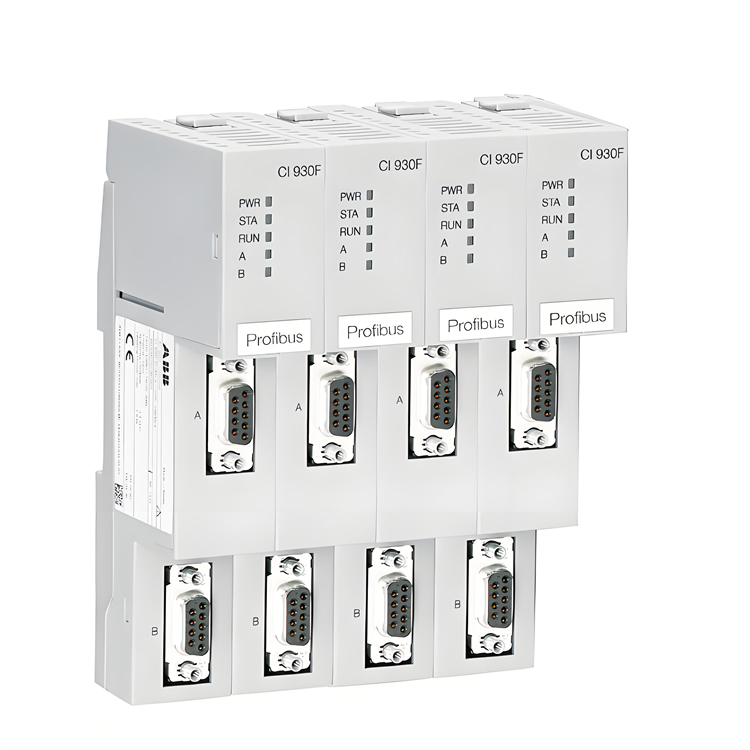
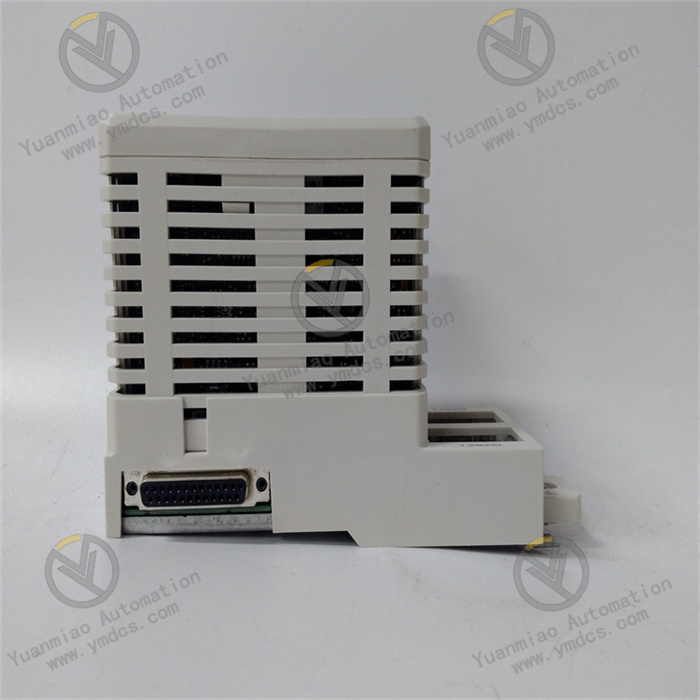
ABB CI867AK01 (Part No. 3BSE092689R1) is a dedicated MODBUS TCP Industrial Ethernet Communication Interface Module for ABB AC800M / 800xA DCS control systems, serving as a core bus‑expansion communication unit of the system. Designed for process‑industry Ethernet networking, this module supports bidirectional MODBUS TCP master/slave communication modes. It is mainly applied for cross‑platform high‑speed data exchange between ABB DCS controllers and third‑party PLCs, instruments, variable‑frequency drives, remote I/Os and host monitoring systems, acting as a critical communication bridge connecting ABB industrial control systems with general industrial Ethernet‑based devices.
The module natively supports module‑level redundancy, on‑line hot‑swap and 10/100 Mbps auto‑negotiating real‑time Ethernet transmission. It features broad compatibility, stable operation, strong anti‑interference performance, simple configuration and excellent expandability. Up to 12 expansion modules can be mounted on a single controller bus. Widely deployed in petrochemical, thermal power, water treatment, metallurgy, light‑industry automation and other sectors, it fits various engineering scenarios including MODBUS TCP bus construction for new‑build DCS systems, communication retrofitting of legacy systems, access expansion for third‑party devices, and spare‑part replacement & stocking.
2. Functional Features
2.1 Standard Bidirectional MODBUS TCP Communication for Cross‑Platform Interconnection
The module implements native standard MODBUS TCP/IP industrial Ethernet protocol with switchable master/slave modes. As a master station, it actively reads and writes data from field slave devices; as a slave station, it responds to instructions from host systems. It perfectly meets access requirements of diverse third‑party industrial devices. It supports batch register reading/writing and high‑speed point‑to‑point data exchange with precise communication timing and high data synchronization. It reliably connects variable‑frequency drives, instruments, analytical equipment, PLCs, SCADA host systems and other general Ethernet‑enabled devices, resolving communication interconnection challenges between DCS and non‑standard field equipment.
2.2 Module‑Level Redundancy for Continuous‑Process Operation
It supports module‑level hot‑standby redundancy architecture. Two modules can run in parallel for redundancy. Upon failure of one module, bumpless automatic switch‑over is performed without interrupting data communication or process control logic. It effectively avoids risks such as device off‑line, data loss and process shutdown caused by single communication‑module faults. The redundancy mechanism is well‑suited for high‑risk continuous‑production scenarios in power and chemical industries, significantly improving fault‑tolerance and operational reliability of the MODBUS TCP bus network.
2.3 On‑Line Hot‑Swap for Non‑Stop Maintenance
Supporting powered on‑line hot‑swap, the module can be replaced, inspected and commissioned while the DCS system and production line keep running. No system power‑off or process shutdown is required. It prevents production losses arising from outages for continuous‑process plants, reduces maintenance risks and costs of the communication system, and adapts to long‑term unattended operation.
2.4 High‑Bandwidth Auto‑Negotiating Ethernet Transmission
Equipped with an independent RJ45 Ethernet port supporting 10/100 Mbps auto‑negotiation, it automatically matches transmission rate according to on‑site network conditions. It handles concurrent data exchange for large‑volume I/O points and multiple devices with low latency, free of stuttering or packet loss. It satisfies high‑speed communication requirements for real‑time industrial data acquisition, closed‑loop process control and equipment interlocking.
2.5 Powerful Bus Expansion Capacity for Flexible Networking
Built upon the CEX high‑speed expansion bus architecture, a single AC800M controller bus accommodates up to 12 communication expansion modules. MODBUS TCP communication points and networking scale can be flexibly expanded for centralized monitoring and control of multi‑device systems ranging from small‑medium to large‑size automation projects. Parallel‑running multiple modules operate without signal conflict or data interference, delivering clear networking topology and convenient expansion.
2.6 Comprehensive Self‑Diagnosis and Industrial‑Grade Stable Operation
Integrated functions cover hardware self‑test, bus status monitoring, network break detection and communication fault alarm. Fault codes and abnormality information can be uploaded in real time to facilitate rapid fault location, tracing and troubleshooting for operators. Adopting industrial‑grade rugged design with dust‑proof, moisture‑proof, vibration‑resistant and EMI‑resistant capabilities, the module fits long‑term closed cabinet operation and supports 24‑hour uninterrupted stable running.
3. Technical Specifications
3.1 Basic Specifications
Model: CI867AK01; Part No.: 3BSE092689R1; Series: ABB AC800M / 800xA DCS System Module; Device Type: MODBUS TCP Industrial Ethernet Communication Module; Operation Mode: Configurable MODBUS TCP Master / Slave; Bus Architecture: CEX High‑Speed Expansion Bus; Weight: approx. 0.7 kg; Mounting: Standard backplane slot‑mount inside control cabinet.
3.2 Communication Parameters
Communication Protocol: Standard MODBUS TCP/IP Industrial Ethernet; Communication Channel: One independent RJ45 port; Transmission Rate: 10/100 Mbps auto‑negotiation; Communication Characteristics: Deterministic data transmission, batch register read/write, low latency & high synchronization; Expansion Capacity: Max. 12 expansion modules per controller bus.
3.3 Redundancy & Maintenance Parameters
Redundancy Function: Support module‑level hot‑standby redundancy with bumpless switch‑over upon fault; Maintenance Feature: On‑line hot‑swap for maintenance & replacement without shutdown; Diagnosis Functions: Hardware fault self‑test, network break detection, communication packet‑loss monitoring, remote fault tracing; System Compatibility: Fully compatible with ABB AC800M Controllers and 800xA control platform.
3.4 Electrical Parameters
Power Supply: Powered uniformly via CEX backplane bus; no external power supply required. Built‑in voltage regulation, filtering, surge protection and ESD protection circuits. It withstands grid fluctuation and industrial electromagnetic interference to guarantee stable power feeding and avoid communication interruption or module failure caused by electrical anomalies.
3.5 Environmental Parameters
Operating Temperature: ‑20℃ ~ +55℃; Storage Temperature: ‑40℃ ~ +70℃; Environmental Resistance: Dust‑proof, moisture‑proof, vibration‑resistant, shock‑resistant, EMI‑resistant; suitable for closed industrial cabinet environment; Operation Mode: 24‑hour uninterrupted operation all‑year round.
3.6 Load & Networking Parameters
I/O Handling Capacity: Max. 128 I/O points data exchange per module; Networking Scale: Support multi‑device parallel networking for centralized access of large‑scale MODBUS TCP devices; Transmission Reliability: High‑accuracy data exchange, free of data deviation and signal crosstalk.
4. Hardware Configuration & Structural Advantages
4.1 Dedicated Chip Architecture Optimized for MODBUS TCP Protocol
Adopting ABB industrial‑grade dedicated communication processor chip optimized for MODBUS TCP, it features fast data parsing, ultra‑low communication latency and precise register access. It meets high real‑time requirements of industrial high‑speed data acquisition, equipment interlocking and closed‑loop control, eliminating common defects of generic communication modules such as transmission delay, packet loss and parsing errors.
4.2 Dual Master‑Slave Compatibility for Broad Adaptability
Freely configurable for master or slave mode. It can poll field slave devices such as instruments, VFDs and remote I/Os, or respond to read‑write requests from host SCADA and third‑party main control systems. One module adapts to multiple networking topologies and greatly improves device compatibility for both new‑build and revamping automation projects.
4.3 Independent Expansion‑Bus Architecture for Efficient & Reliable Networking
Based on high‑speed CEX expansion bus with sufficient bandwidth and high throughput. Multiple modules run in parallel without mutual interference and handle data traffic of multi‑channel MODBUS TCP devices simultaneously. It delivers concise and efficient networking and satisfies complex multi‑point & multi‑device networking requirements for large‑scale automation systems.
4.4 Multi‑Level Electrical Protection with Strong Anti‑Interference Performance
Multi‑level isolation protection circuits for over‑voltage, under‑voltage, surge, ESD and electromagnetic interference are integrated inside. It isolates on‑site noise, potential fluctuation and line surge impact, protects core communication circuits, and prevents module damage, communication drop‑out and data abnormality caused by on‑site electrical disturbances.
4.5 Compact Standardized Industrial Form Factor
Standard plug‑in modular design with compact footprint and low cabinet space occupation, matching dense wiring layout of DCS cabinets. Hot‑plug‑gable structure enables easy assembly/disassembly and reliable contact resistant to long‑term loose‑connection risk, facilitating installation, commissioning and later‑stage maintenance.
5. Application Scenarios
- Process‑Industry DCS System Networking: Build MODBUS TCP bus for AC800M / 800xA DCS in chemical, coal‑chemical, oil‑gas and water‑treatment plants to connect VFDs, smart instruments, analytical devices and remote I/Os.
- Power‑Energy Automation Systems: Communication networking for auxiliary control systems of thermal power plants, heat‑supply plants and substations for data acquisition and interlocking control of auxiliary equipment, smart meters and on‑line monitoring devices.
- Multi‑Brand Device Interconnection: Cross‑brand data exchange and protocol interconnection between ABB DCS and third‑party PLCs, host SCADA systems and intelligent automation equipment.
- High‑Reliability Redundant‑Communication Retrofit: MODBUS TCP communication redundancy upgrade for high‑risk‑process systems by deploying dual‑module hot‑standby architecture to enhance safety of continuous production.
- Legacy‑System Upgrade & Expansion: Ethernet migration from traditional serial MODBUS, replacement of aged communication modules, bus networking renovation and I/O‑point expansion projects.
6. Product Advantages
- Dual master‑slave mode delivers outstanding networking flexibility: Switchable master/slave mode adapts to complex networking topologies, addresses interconnection challenges between new & legacy systems as well as multi‑brand equipment, and improves networking adaptability of automation systems.
- Redundancy plus hot‑swap ensures high maintenance safety: Module‑level bumpless redundant switch‑over and non‑stop hot‑swap maintenance eliminate shutdown risks induced by communication faults. It fits high‑risk continuous‑production processes and cuts production loss and maintenance costs.
- High‑speed & reliable transmission with excellent control accuracy: 10/100 Mbps auto‑negotiating Ethernet plus dedicated protocol optimization realizes low‑latency, high‑synchronization and loss‑free transmission, meeting stringent communication requirements of high‑precision industrial data acquisition, equipment interlocking and closed‑loop process control.
- Strong expandability with outstanding cost‑effectiveness for engineering applications: Up to 12 modules supported per controller with strong I/O handling capacity. It fits new‑build, revamping and expansion projects of all sizes. Industrial‑grade high‑reliability design ensures low failure rate and long service life with superior practical value and cost‑performance for engineering deployment.