Description
1. Overview
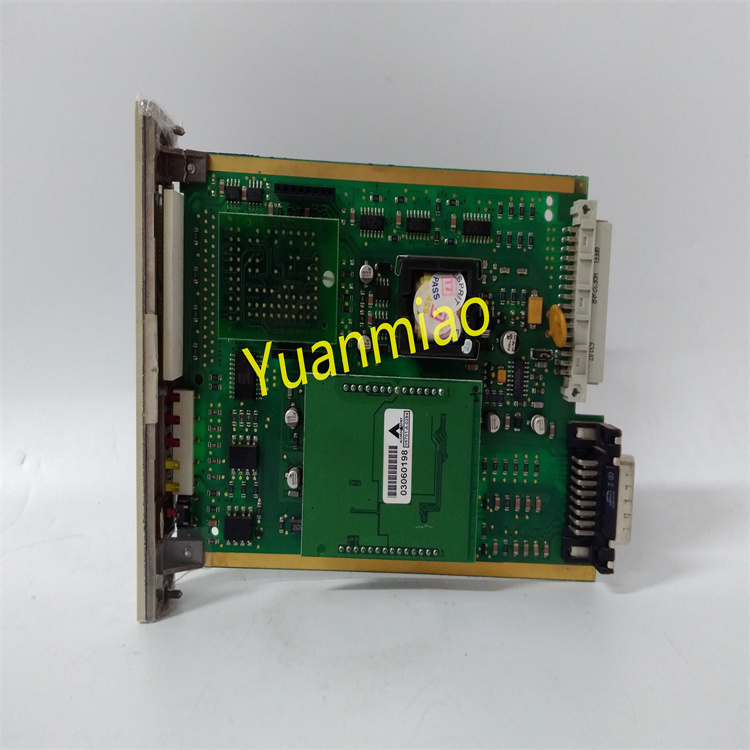
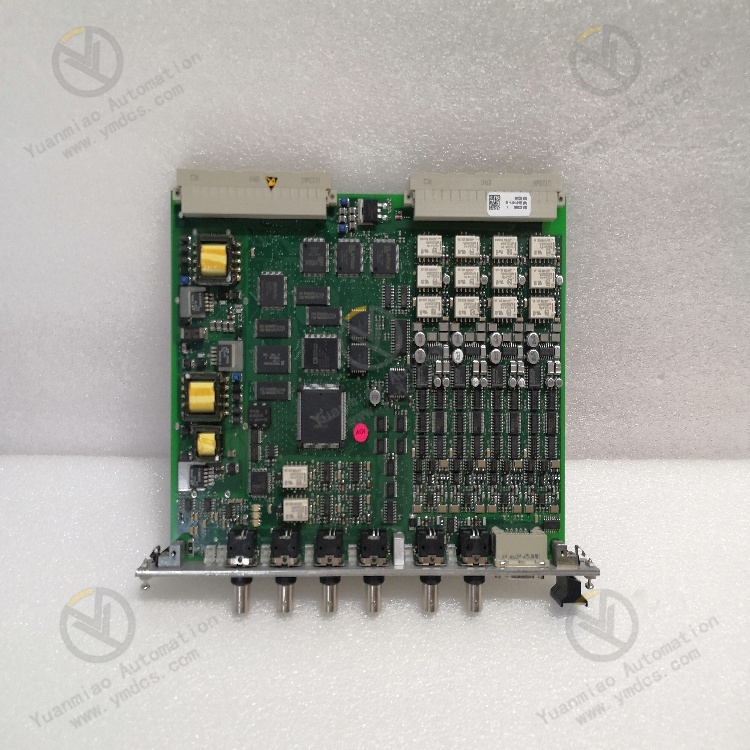
Vibro-Meter MPC4 200-510-078-115 is a high-performance multi-channel machinery protection and condition monitoring card belonging to the VM600 Mk2 series, a dedicated core monitoring module for industrial rotating machinery.
As an optimized upgraded version, it features improved anti-interference circuits at the bottom layer and enhanced DSP digital signal processing algorithms, greatly boosting signal-to-noise ratio and measurement accuracy during long-distance signal transmission.
Equipped with 4 dynamic signal input channels and 2 tacho signal input channels, it supports acquisition and calculation of multi-dimensional mechanical parameters including vibration, displacement, velocity, acceleration and shaft position, while integrating real-time condition monitoring, over-limit alarm, interlock protection and data diagnosis & traceability.
It is capable of standalone operation; it can execute protection logic independently even if the rack communication module fails, without compromising unit safety interlock actions.
Widely deployed on critical rotating equipment such as steam turbines, generators, compressors and pumps in power, petrochemical, oil & gas and heavy industries, it serves as an intelligent core card for machinery safety protection and predictive maintenance of large-scale units.
2.1 Multi-Channel Integrated Monitoring with Comprehensive Parameter Coverage
A single card integrates 4 programmable dynamic signal channels and 2 tacho channels to synchronously collect, calculate and monitor a full range of mechanical operating parameters, including vibration amplitude, vibration velocity, vibration acceleration, relative shaft displacement, shaft eccentricity, thrust bearing position, casing expansion and dynamic pressure.
It outputs advanced diagnostic data such as Smax peak value, phase, shaft orbit and frequency domain analysis to fully reproduce the operating status of rotating machinery. It meets refined requirements for precision monitoring and fault diagnosis, and fits full-condition monitoring scenarios for large and complex rotating equipment.
2.2 Upgraded DSP Algorithm with Superior Measurement Accuracy and Anti-Interference Performance
This customized model optimizes digital signal processing algorithms and hardware filter circuits, incorporating programmable wideband and narrowband digital filtering units together with high-precision AD sampling modules. It effectively filters electromagnetic noise and transmission interference on site, significantly improving signal-to-noise ratio and measurement stability for long-distance sensor transmission.
Multi-channel synchronous sampling and calculation deliver fast response and high precision, enabling accurate capture of subtle fault precursors such as transient vibration fluctuation, abnormal rotating speed and shaft misalignment, eliminating measurement distortion, false alarms and missed alarms.
2.3 Independent Fault-Tolerant Architecture for Safe and Reliable Protection Logic
Adopting a hardware-level independent protection architecture with strong fault tolerance, the card can complete signal acquisition, logical judgment and relay interlock output autonomously even if the rack CPU or communication module malfunctions, continuously executing machinery protection functions and fundamentally eliminating the risk of protection failure caused by communication breakdown.
Two programmable threshold levels (alarm and danger) are supported. Relay output can be customized for normally open/normally closed and latching/non-latching modes to adapt to interlock control logic of different units, ensuring accurate shutdown and safety protection upon equipment faults.
2.4 Full Compatibility with Various Sensor Types for Broad Adaptability
Natively compatible with mainstream industrial monitoring sensors, it accepts input from eddy current displacement probes, IEPE piezoelectric acceleration sensors, magnetoelectric velocity sensors and tacho pulse sensors, applicable to monitoring scenarios of shaft displacement, casing vibration and rotational speed.
Built-in sensor excitation power supply and signal conditioning circuits realize signal shaping, amplification, filtering and normalization without external conversion modules, suitable for renovation of legacy monitoring systems and supporting new construction projects.
2.5 Industrial Modular Design for Convenient and Efficient Maintenance
Designed as a standard rack-mount hot-swappable module, it allows online disassembly, replacement and maintenance without unit shutdown, minimizing production losses caused by downtime.
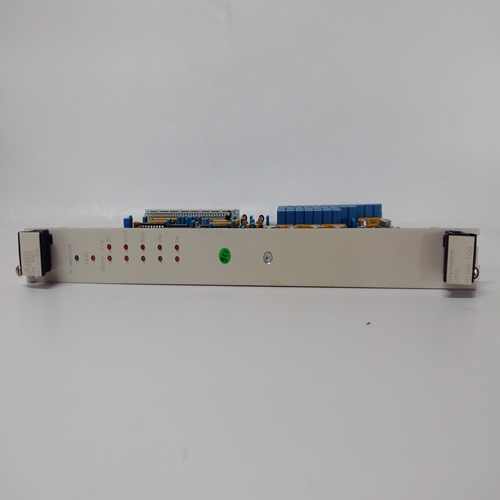
LED indicators on the front panel intuitively display module operation, signal exceptions, sensor faults and interlock alarm status.
A comprehensive built-in self-diagnosis system detects hardware faults, channel abnormalities, sensor open/short circuits and signal distortion in real time to pinpoint fault locations. Combined with background data logs, it enables rapid fault tracing and simplifies routine inspection and troubleshooting greatly.
3. Specification Parameters
3.1 Basic Model Information
- Model: MPC4 200-510-078-115
- Brand & Series: Meggitt Vibro-Meter VM600 Mk2 Machinery Monitoring System
- Module Type: Multi-Channel Machinery Protection & Condition Monitoring Card
- Channel Configuration: 4 dynamic measurement channels + 2 tacho measurement channels
- Core Functions: Vibration / displacement / rotational speed monitoring for rotating machinery, parameter calculation, over-limit alarm, interlock protection, fault diagnosis and data uploading
- Applicable Equipment: Large rotating units including steam turbines, generators, compressors, fans and industrial pumps
3.2 Measurement & Signal Parameters
- Measurable Quantities: Vibration acceleration, vibration velocity, vibration displacement, shaft eccentricity, shaft position, casing expansion, dynamic pressure, rotational speed
- Supported Sensors: Eddy current probes, IEPE acceleration sensors, magnetoelectric velocity sensors, TTL tacho pulse sensors
- Signal Processing: Programmable digital filtering, signal shaping & amplification, multi-channel synchronous sampling, high-speed DSP computation
- Advanced Algorithms: Smax calculation, phase analysis, shaft orbit generation, frequency domain diagnostic analysis
- Output Configuration: 4 alarm relay outputs + 1 common fault relay output with customizable modes
3.3 System & Communication Parameters
- Compatible System: Complete VM600 Mk2 machinery condition monitoring system from Vibro-Meter
- Operation Architecture: Independent hardware protection logic capable of standalone operation without system communication
- Data Functions: Real-time parameter upload, over-limit event recording, fault data storage and operation trend tracing
- Configuration Method: Parameter setting, threshold definition and logic customization via dedicated configuration software
3.4 Environmental Parameters
- Operating Temperature: 0 ℃ ~ +60 ℃
- Storage Temperature: -20 ℃ ~ +70 ℃
- Operating Humidity: 5% ~ 95% RH (non-condensing)
- EMC Compliance: Meets industrial electromagnetic compatibility standards for heavy EMI environments in power plants and chemical plants
- Operation Mode: 24-hour non-stop continuous industrial operation for long-term unattended unit supervision
3.5 Mechanical & Maintenance Parameters
- Mounting Method: Standard rack installation for VM600 system frames
- Maintenance Feature: Hot-swappable for online replacement without system shutdown
- Status Indication: Front-panel LEDs for running status, alarms, faults and channel abnormalities
- Diagnostic Functions: Hardware self-test, sensor loop fault detection, abnormal signal tracing and event logging
- Protection Configuration: Two-level programmable alarm thresholds and customizable relay output logic
Relying on high-precision DSP digital processing and independent hardware protection architecture, the Vibro-Meter MPC4 200-510-078-115 implements a closed-loop monitoring and protection workflow: sensor signal acquisition → signal conditioning & filtering → parameter calculation & analysis → condition judgment & alarming → interlock protection output → data traceability.
After power-on initialization, the card performs hardware self-test, channel verification and sensor loop detection. It enters normal monitoring mode only after confirming healthy status of the module, channels and sensing loops.
During operation, the 4 dynamic channels and 2 tacho channels synchronously collect various sensor signals from the unit. Optimized filter circuits and DSP algorithms conduct noise reduction, waveform shaping and calibration to accurately compute core operating parameters such as vibration, displacement, rotational speed and phase, as well as advanced diagnostic data including shaft orbit and peak values.
The module compares measured values with preset alarm and danger thresholds in real time to evaluate unit operating conditions.
When potential faults such as excessive vibration, shaft misalignment, abnormal speed or equipment looseness occur, the module executes graded responses: minor violations trigger local LED alarms and background event logging; severe violations drive relay interlock signals to initiate unit alert, load reduction or emergency shutdown, preventing severe accidents including shaft abrasion, equipment damage and turbine overspeed.
Even if system communication or rack master modules fail, the card maintains independent protection logic to secure unit operation. Meanwhile, operating data and fault timestamps are recorded throughout the runtime to provide accurate evidence for fault analysis, condition assessment and predictive maintenance.
5.1 Monitoring and Protection for Turbo-Generator Sets in Power Industry
Widely applied to core main equipment including steam turbines, generators and boiler feed pump turbines in thermal power, cogeneration and new energy power stations. It monitors key parameters such as bearing vibration, shaft vibration, axial displacement, differential expansion and rotational speed, providing safety supervision and interlock protection during unit startup, load adjustment and steady-state operation. It effectively avoids unit shutdown and equipment damage caused by shaft system failures and ensures stable and efficient operation of power generation units.
5.2 Large Compressor Unit Systems in Petrochemical Industry
Suitable for critical rotating equipment such as centrifugal compressors, reciprocating compressors and process pumps in chemical and petrochemical plants. Targeting continuous production requirements of chemical processes, it accurately identifies hidden hazards including abnormal vibration, shaft offset and unstable operation. Graded alarms and interlock protection prevent unplanned shutdown of process units, securing continuous production and reducing economic losses from unexpected outages.
5.3 Oil & Gas Storage, Transportation and Natural Gas Processing Facilities
Deployed on large fans, compressors and transfer pump units in gas booster stations of long-distance pipelines, oil & gas depots and natural gas purification plants. With excellent anti-interference capability and high measurement precision adapted to complex electromagnetic environments in field and plant areas, it guarantees safe and stable operation of core oil & gas transportation equipment and eliminates risks of supply interruption and safety incidents arising from equipment faults.
5.4 Heavy-Duty Rotating Equipment Systems for Metallurgy & Heavy Industry
Applicable to rolling mill units, large induced draft fans, dust removal fans and heavy-duty pumps in metallurgical sectors. It withstands harsh site conditions including vibration, dust and strong electromagnetic interference, enabling real-time condition monitoring and fault prediction. Potential risks such as equipment aging, component wear and unstable operation are detected in advance to improve reliability and service life of heavy industrial machinery.
5.5 Intelligent Condition-Based Maintenance Systems for Industrial Units
As a core acquisition and protection terminal for rotating machinery condition monitoring systems, it transmits real-time operating data, fault warnings and trend analysis to intelligent operation & maintenance platforms. It supports unit condition evaluation, lifespan prediction, fault root cause analysis and predictive maintenance, facilitating digitalized and unattended intelligent asset management for industrial enterprises.
![]()