I. Basic Information
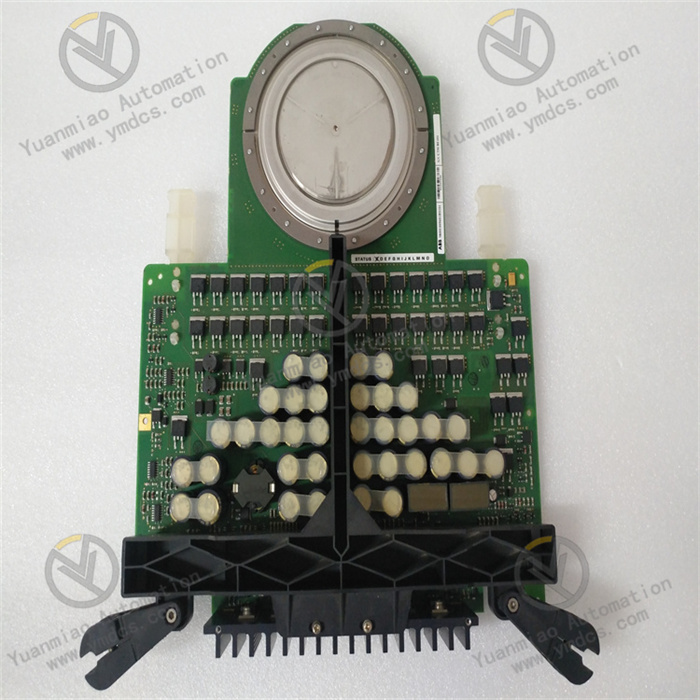
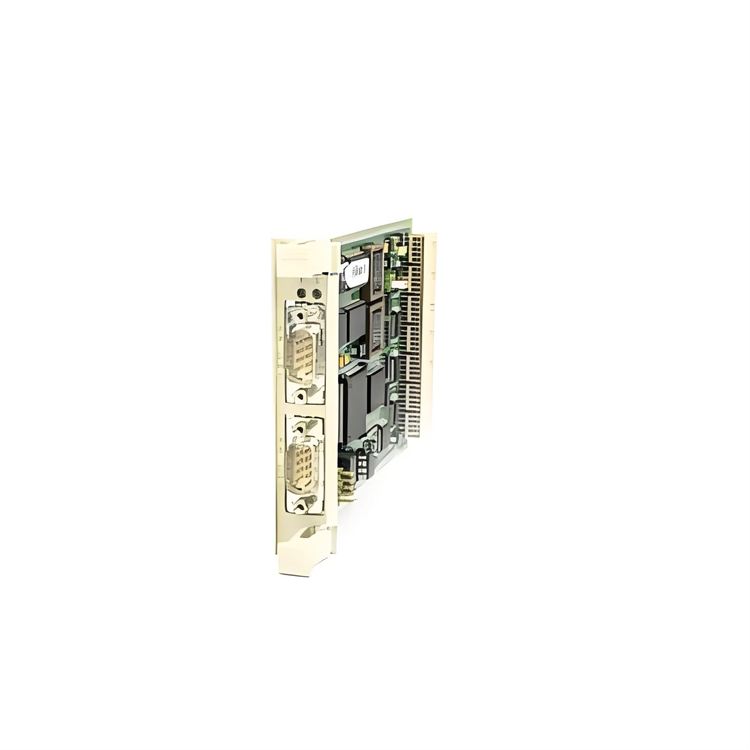
Full Model:IS215WEPAH2BB
Brand & Origin:GE General Electric, USA
Product Positioning
As a dedicated WEPA wind energy pitch analog I/O board for GE Mark VIe wind turbine control systems, it serves as the core signal acquisition and closed-loop drive hardware for wind turbine pitch control systems, specially optimized for harsh nacelle working conditions of wind farms. It undertakes core tasks such as high-speed acquisition of wind turbine blade pitch angle signals, analog instruction output for pitch drivers, pitch loop condition monitoring, fault diagnosis and signal fault-tolerant processing, accurately adapting to key control logic such as dynamic adjustment of wind turbine pitch axis, attitude correction and safety feathering. Different from conventional thermal power I/O boards, this board optimizes the hardware architecture for wind power working conditions including high vibration, strong gust impact and frequent start-stop. It natively supports simplex and TMR triple redundant architectures, acting as a core special spare part for Mark VIe control systems of large onshore and offshore wind turbines, widely used in fault replacement, redundancy upgrading and control accuracy optimization technical transformation of wind turbine pitch systems.
Hardware Architecture
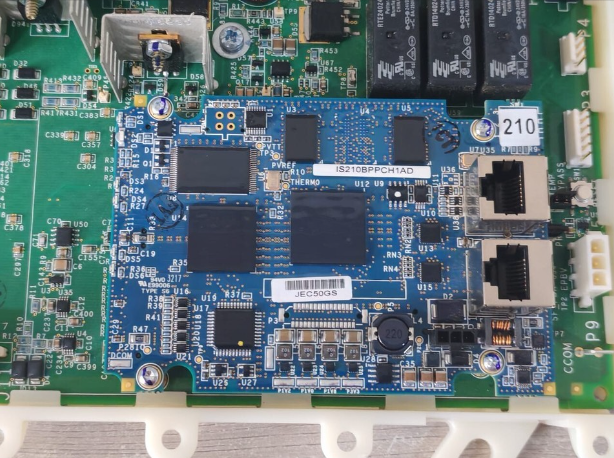
It adopts a wind power dedicated reinforced embedded board architecture, integrating a high-speed analog sampling core, independent pitch signal conditioning loop, high-power drive output unit, on-board MOV surge suppression array, hardware fault self-inspection and redundancy synchronization circuit. The highly integrated design independently completes pitch sensor signal acquisition, filtering shaping, analog-to-digital conversion, as well as main control instruction digital-to-analog conversion and power amplification output, fully adapting to the high-frequency dynamic regulation requirements of wind turbine pitch systems. Adopting military-grade gold-plated PCB technology, full-domain electromagnetic shielding wiring and strong and weak current layered isolation structure with three-proof protective coating, it is specially optimized for special wind turbine nacelle working conditions such as high vibration, high humidity, large temperature difference span and strong lightning surge interference. Built-in multiple hardware protection and link fault tolerance mechanisms support redundant signal synchronous verification, instantaneous interference elimination and faulty link isolation, featuring high sampling rate, fast dynamic response, strong anti-surge capability and stable operation without drift under long-term vibration conditions.
Mounting Specification
It adopts embedded installation in standard rack slots of Mark VIe wind power control systems, compatible with dedicated wind turbine control cabinet slots. The snap-on locking structure has excellent anti-vibration and anti-loosening performance, which can withstand long-term high-frequency mechanical vibration caused by wind turbine start-stop and gust impact. Equipped with indicator lights for operation status, channel fault and redundancy synchronization, it can real-timely feed back wind turbine pitch loop operation status, signal abnormality, link desynchronization, hardware faults and other information, supporting rapid on-site inspection, channel verification and accurate fault location. The standardized board size and original factory interface definition adapt to the all-weather operation environment of closed wind turbine nacelles with large temperature fluctuation, supporting online non-stop maintenance and replacement of the system, fully complying with GE original installation and operation specifications for wind turbine control systems.
Compatible Systems
Natively and exclusively compatible with the full range of GE Mark VIe wind turbine distributed control systems, it perfectly adapts to wind power dedicated main control processors, IONet/UDH high-speed backplane buses and upper configuration platforms. It natively matches the high-speed sampling timing, dynamic regulation logic and TMR triple redundant control protocol of wind turbine pitch systems, plug-and-play without additional protocol conversion and parameter adaptation. It can be seamlessly connected with wind turbine pitch angle sensors, pitch servo drivers and attitude detection units, supporting precise closed-loop regulation of pitch, fault interlock protection and undisturbed redundant switching, adapting to unit operation and maintenance replacement and system upgrading and transformation scenarios for large onshore wind farms and offshore wind power projects.
Product Characteristics
It is an original high-dynamic performance I/O board dedicated to wind power. Before delivery, it has completed full verification including high-speed sampling aging, high and low temperature cycle impact, lightning surge test, EMC electromagnetic compatibility and TMR redundancy synchronization, with excellent hardware dynamic response performance, high signal synchronization accuracy and strong adaptability to harsh working conditions. Supporting dual configuration of simplex and triple redundancy architectures, it adapts to system reliability requirements of different levels of wind farms. The ultra-high channel sampling rate perfectly matches the high-frequency dynamic regulation working conditions of wind turbine pitch control. The on-board multiple MOV surge suppression devices effectively resist lightning induction and grid surge interference on wind power sites. Low-delay signal transmission and instruction output ensure real-time and accurate pitch adjustment following gust changes. Old boards with lagging response, signal drift, redundant desynchronization and frequent alarms can be replaced in situ without modifying wiring and programs, greatly reducing wind turbine downtime maintenance costs.
II. Technical Specifications
1. Core Sampling & Dynamic Parameters
Sampling Performance: Equipped with a wind power dedicated high-speed sampling core, the maximum single-channel sampling rate reaches 5000Hz, and the 16-channel synchronous sampling rate is ≥2000Hz, supporting differentiated rate configuration of channel groups to accurately adapt to the high-frequency dynamic regulation requirements of wind turbine pitch systems without signal lag and action delay. The system software frame rate supports multiple gear configurations of 10ms, 20ms and 40ms, adapting to wind turbine pitch control strategies under different wind speed conditions, ensuring the real-time performance and stability of unit regulation under high and low wind speed operating states. It features fast signal processing response and excellent dynamic following performance, fully meeting the high-frequency regulation scenarios of wind turbine gust mutation, start-stop switching and load fluctuation.
2. Electrical & Protection Parameters
Power Supply Specification: The rated system supply voltage is 125VDC, compatible with 24VDC/48VDC auxiliary power supply of wind power racks. The wide voltage adaptation range can withstand grid fluctuation and instantaneous voltage surge on wind power sites. The on-board built-in 4-6 MOV metal oxide varistor array forms multi-stage hardware surge suppression protection, specially optimized for wind power lightning induction interference and instantaneous high-voltage impact in nacelles, effectively avoiding board burnout, signal disorder and pitch misoperation caused by surge. Featuring low power consumption design, it generates low heat under high-load dynamic operation with no hardware aging or performance attenuation after long-term high-frequency operation. The power supply loop integrates multi-stage protections including overvoltage, undervoltage, overcurrent, short circuit and static electricity with extremely high electrical stability.
3. Signal & Impedance Parameters
Compatible Signal Types: Compatible with standard analog signals of wind turbine pitch systems, supporting collection and output of 4~20mA current signals and 0~10V voltage signals, perfectly matching the signal specifications of pitch angle sensors, pitch servo drivers and attitude detection modules. The input impedance parameters are accurately adapted to the long-distance wiring working conditions of wind turbines, with current input impedance ≤50Ω and voltage input impedance ≥10MΩ, effectively avoiding signal attenuation, voltage drop distortion and interference crosstalk caused by long-distance cabin cables. All channels have excellent signal linearity with no inflection point or offset in the whole dynamic regulation process, ensuring accurate regulation and smooth action of pitch angle.
4. Redundancy & Communication Parameters
Redundancy Architecture: It natively supports two operating modes: Simplex and TMR triple redundancy, which can be flexibly configured and adapted according to the safety level of wind farm units. In TMR triple redundancy mode, multi-board data realizes real-time synchronization and cross fault verification. Single-board faults will not affect system operation, completely eliminating shutdown and safety hazards caused by single-point faults. Communication Bus: Adapts to Mark VIe wind power dedicated IONet/UDH high-speed backplane bus with extremely low bus transmission delay and high timing synchronization accuracy, ensuring real-time interaction of multi-channel pitch data, main control instructions and redundant status. The bus has strong anti-interference ability, adapting to strong electromagnetic interference working conditions in nacelles.
5. Environmental Operating Parameters
Operating Temperature:-40℃~+70℃
Storage Temperature:-40℃~+70℃
Operating Humidity:5%~95% RH, non-condensing
The whole machine has passed wind power industry special authoritative certifications including EMC electromagnetic compatibility, lightning surge, vibration and impact resistance, and insulation voltage resistance. The military-grade three-proof coating provides reinforced protection with excellent performance of anti-vibration, anti-humidity, anti-salt spray, anti-high and low temperature impact and anti-lightning interference. It can long-term withstand harsh working conditions of wind turbine nacelles such as high-frequency mechanical oscillation, large day and night temperature difference, high humidity condensation and field strong electromagnetic interference, adapting to the 24/7 uninterrupted operation requirements of wind turbine units all year round. The protection level meets the industrial IP20 standard, satisfying the closed operation protection requirements of control cabinets.
III. Key Features
1. Ultra-High Dynamic Sampling Response for Wind Turbine High-Frequency Pitch Control
Relying on the maximum 5000Hz single-channel high-speed sampling capability and multi-gear adjustable system frame rate, it can capture tiny changes in pitch angle caused by sudden wind speed changes and unit vibration within milliseconds, and quickly complete signal acquisition, operation correction and instruction output. Compared with conventional industrial control I/O boards, the dynamic response speed is greatly improved, thoroughly solving industrial pain points of traditional boards such as lagging response, untimely pitch adjustment leading to unit vibration, load fluctuation and low wind energy utilization. It accurately meets the core control requirements of real-time wind speed optimization, gust suppression and smooth grid connection of wind turbines, greatly improving unit power generation efficiency and operation smoothness.
2. Wind-Specific Surge Protection to Withstand Harsh Field Electromagnetic Interference
The on-board dedicated MOV surge suppression array adopts a customized protection scheme for special wind power working conditions such as field lightning induction, instantaneous grid surge and high-frequency converter interference in nacelles, forming a multi-layer hardware barrier. It can effectively absorb instantaneous high-voltage impact and filter high-frequency electromagnetic clutter, eliminating frequent wind power field faults such as board breakdown caused by surge, signal jump, pitch misoperation and system flash disconnection. It solves the pain point that ordinary industrial control boards cannot adapt to harsh wind power interference conditions, greatly improving the operation stability and anti-interference ability of wind turbine pitch control systems in complex field environments.
3. Dual-Architecture Redundancy Adaptation to Maximize Unit Operation Safety
It supports dual-mode configuration of simplex and TMR triple redundancy, adapting to the reliability design standards of different wind farms and different units. In TMR triple redundancy operation mode, multiple boards perform synchronous acquisition, cross verification and redundant output. In case of channel abnormality, hardware fault and signal distortion of a single board, the system automatically eliminates faulty data and switches to the normal redundant link for undisturbed control, completely avoiding major risks such as pitch runaway, emergency feathering and unit shutdown tripping caused by single-point faults. It serves as the core guarantee hardware for control systems of high-reliability wind farm units such as offshore wind power.
4. Strong Working Condition Adaptability to Withstand Wind Turbine High-Frequency Vibration and Temperature Difference
Adopting wind power special reinforced structure and military three-proof technology, the hardware structure, circuit layout and component selection are optimized for wind turbine nacelle working conditions of high-frequency vibration, ultra-large temperature difference and high humidity. No circuit desoldering, parameter drift or signal attenuation occurs during long-term continuous oscillation operation; the sampling accuracy and output linearity remain stable under extreme high and low temperature environments without temperature drift distortion and performance attenuation. It perfectly adapts to harsh scenarios such as onshore wind sand, low temperature and high temperature, as well as offshore salt spray, high humidity and strong interference. The board has extremely low failure rate and long service life, greatly reducing operation and maintenance frequency and cost of wind farm units.
5. Non-Destructive In-Situ Replacement for Efficient Wind Power O&M and Transformation
The board interface definition, electrical parameters, bus protocol and redundant configuration logic are fully consistent with GE Mark VIe wind power system original factory standards. Old WEPA pitch boards with lagging response, signal drift, redundant desynchronization, frequent alarms and invalid surge protection can be directly replaced in situ. No modification of cabin wiring, reconstruction of wind turbine control programs and recalibration of redundant parameters are required. The board can be put into full-load operation after power-on bus handshake and redundant synchronization self-inspection, greatly shortening wind turbine downtime maintenance duration, adapting to full scenarios of hardware upgrading, redundant system transformation and faulty board replacement of old wind farms.
IV. Working Principle
GE IS215WEPAH2BB is a dedicated WEPA pitch analog I/O board for Mark VIe wind power control systems. As the core signal interaction and drive hub of wind turbine pitch systems, it is embedded installed in standard rack slots. After accessing 125VDC system working power supply and IONet/UDH backplane bus, it automatically completes hardware self-test, surge protection loop initialization, channel calibration, redundant mode matching and bus synchronization upon power-on, and enters high-speed sampling and dynamic regulation operation state after normal initialization.
During normal unit operation, the board continuously collects 4~20mA/0~10V analog signals from wind turbine blade pitch angle sensors at a high frame rate. After preprocessing such as independent isolation and filtering, surge suppression, signal shaping and high-precision AD conversion, it uploads standardized digital signals to the Mark VIe wind power main control processor in real time. Combined with wind speed, unit speed and load working conditions, the main control calculates wind turbine pitch regulation instructions and issues them to this board. After high-speed DA conversion and signal amplification conditioning, accurate analog drive signals are output to control the pitch servo driver to complete closed-loop actions such as blade angle fine adjustment, attitude correction and wind speed adaptive pitch regulation, realizing optimal wind energy capture and stable operation of the unit.
In the whole operation process, the board hardware loop real-timely monitors channel signal status, bus synchronization condition, surge impact, hardware temperature and load status, and continuously performs fault self-inspection and data verification. In case of abnormal single-channel signals, line interference, instantaneous surge and link desynchronization, the hardware immediately completes interference elimination, fault isolation and data error correction; in TMR redundant mode, it automatically completes cross comparison of multi-board data and shields faulty point data, ensuring uninterrupted pitch control logic and deviation-free action. Relying on high-speed dynamic response, strong anti-interference ability and redundant fault tolerance, it continuously ensures accurate, stable and safe operation of wind turbine pitch systems.
V. Application Scenarios
1. Core Control of Wind Turbine Pitch System: Adapted to Mark VIe systems of large onshore and offshore wind turbines, undertaking core tasks of high-speed blade pitch angle acquisition, pitch instruction output and attitude closed-loop regulation, serving as the key hardware for stable operation of wind turbine pitch systems.
2. Fault Replacement and Maintenance of Old Wind Farm Boards: In-situ replacement of aging WEPA pitch I/O boards with slow response, signal drift, redundant desynchronization and invalid surge protection, quickly restoring the pitch regulation accuracy and operation stability of units.
3. Wind Power Control System Redundancy Upgrading and Transformation: Used for upgrading ordinary simplex control systems to TMR triple redundant architecture, improving unit anti-fault capability, operation safety and grid connection stability, adapting to reliability transformation requirements of high-level wind farms.
4. Unit Supporting Under Complex Field Working Conditions: Specially adapted to wind farm working conditions with large field temperature difference, high humidity, frequent lightning and strong electromagnetic interference, providing high-reliability and anti-interference signal acquisition and drive support for wind turbine high-frequency dynamic pitch control.