Description
1. Product Overview
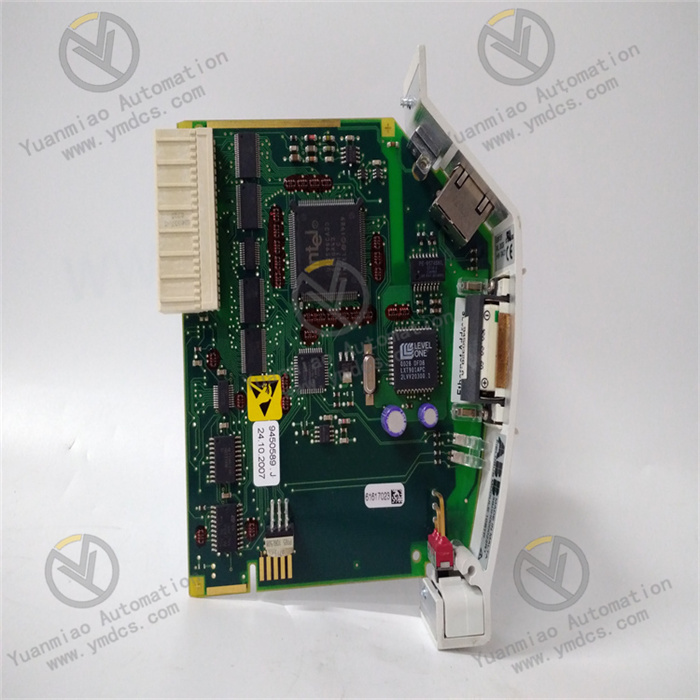
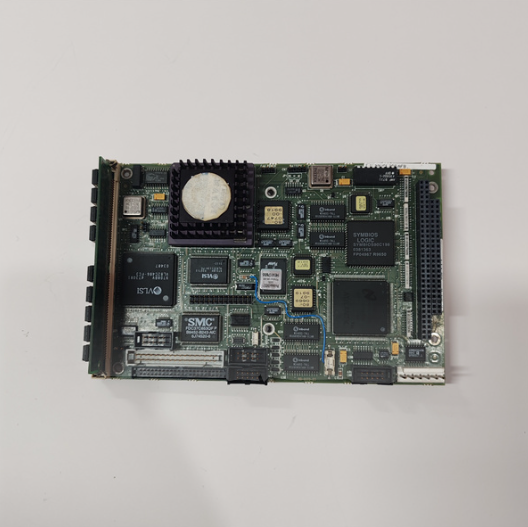
GE DS200UCPBG6AFB is a Mark V Series I/O Engine CPU Main Control Board, serving as the core arithmetic and processing unit of the Speedtronic Mark V Turbine Control System. It undertakes key tasks including unit control logic operation, centralized acquisition and processing of field I/O signals, multi-module data interaction, control instruction issuance, operating data storage and fault diagnostic logging. It acts as the core hardware hub for the main control systems of gas turbine and steam turbine generator units.
Equipped with an industrial high-performance processor and a standard expandable memory architecture, this board integrates multiple standard industrial communication interfaces and supports dual redundant hot-standby operation. It can perform high-speed arithmetic processing on massive process signals such as rotational speed, temperature, pressure and interlock digital signals in real time, and accurately execute core unit control strategies including speed regulation, load control, sequence start-stop and interlock protection. Capable of stable 24/7 continuous operation under harsh plant conditions featuring high temperature, dust, strong electromagnetic interference and long-term vibration, it is widely deployed in legacy Mark V control systems of thermal combined-cycle power plants and petrochemical gas-driven compressor units. It is a critical spare part for unit overhauls, faulty hardware replacement and system operation & maintenance capacity expansion.
2. Hardware Structure and Composition
High-performance Core Arithmetic Processing Unit
Adopting a dedicated industrial processor with large-capacity program flash memory and operating memory, the board is fitted with a DIMM memory expansion slot for flexible memory capacity upgrade. It meets the high-speed computing requirements of complex turbine control logic and multi-loop closed-loop regulation algorithms, delivering millisecond-level real-time response to guarantee calculation accuracy for key control loops such as unit speed, load and fuel regulation, and avoid unit parameter fluctuations caused by control lag. An independent heat dissipation module with temperature-controlled cooling structure is integrated to effectively restrain chip temperature rise under high-load operation and prevent faults including thermal throttling and hardware crash.
Multi-channel Isolated Communication Interfaces
Multiple standard communication ports including RS232, RS485 and Industrial Ethernet are integrated to enable bidirectional data exchange among engineering workstations, operator HMIs, various I/O terminal boards, protection boards and upper monitoring systems. Compatible with mainstream industrial communication protocols, the board supports downloading of control programs and parameter setpoints, as well as real-time uploading of unit operating conditions, fault alarms and historical event logs, ensuring reliable data transmission both within the control system and between the system and upper monitoring platforms.
Centralized I/O Signal Processing Circuit
Connecting to the Mark V rack backplane via standard backplane connectors, the board centrally collects all field signals including digital, analog and pulse speed signals, and implements signal filtering, optoelectronic isolation, range conversion and fault verification. It then outputs drive commands to field actuators such as valves, solenoid valves and relays according to preset control logic to realize unit sequence start-stop, closed-loop regulation of process parameters and safety interlock triggering. Abnormal signals can be marked, latched and uploaded as alarms.
Board-level Regulated Power Supply and Protection Circuit
Designed for standard 24VDC cabinet power input, the board incorporates multiple isolated DC-DC conversion, voltage regulation and current-limiting circuits to convert input voltage into various stable operating voltages required by the main control chip, communication modules and memory units. Equipped with multi-level hardware protection against overvoltage, undervoltage, overcurrent, reverse polarity and surge transients, it safeguards hardware against damage from grid voltage fluctuation, instantaneous lightning surges and incorrect wiring, adapting to industrial scenarios with unstable DC power supply in power plants.
On-board Status Diagnosis and Configuration Components
3. Technical Specifications
(1) Electrical Parameters
(2) Environmental Parameters
(3) Mechanical Parameters
4. Product Functions and Features
Dual Redundant Hot-standby Architecture Greatly Improves Unit Operational Reliability
Two DS200UCPBG6AFB boards of the same model can be deployed as a redundant pair. When the primary controller is running normally, the standby board synchronizes all control programs, operating parameters and field collected data in real time. In case of hardware failure, communication interruption or program crash of the primary CPU, the standby board achieves disturbance-free millisecond-level automatic switchover to take over control tasks without sudden changes to unit regulation parameters. This effectively avoids unplanned unit shutdown caused by single-point main control failure and ensures continuous and stable grid-connected operation of generator sets.
Full-range Real-time Signal Processing and High-precision Closed-loop Control
The board can centrally acquire thousands of process signals including unit speed, oil temperature, oil pressure, vibration, exhaust temperature, valve opening and various emergency stop interlock signals, and implement signal filtering, fault identification and range conversion. Adopting built-in turbine-specific control algorithms, it realizes high-precision multi-loop regulation including speed closed-loop, load closed-loop, fuel pressure closed-loop and anti-surge control. Featuring strong load disturbance rejection capability, it steadily suppresses unit parameter deviation induced by grid load fluctuation and working condition disturbance to guarantee safe and stable operation of generator units.
Comprehensive On-board Self-diagnosis and Fault Trace Logging
The board continuously monitors supply voltage, processor status, memory read-write performance, each channel’s communication link and the integrity of field input signals. Once faults such as hardware abnormality, circuit disconnection, parameter out-of-limit and communication loss are detected, fault codes, occurrence time and unit operating parameters at the moment of failure are latched and stored locally, meanwhile alarm messages are pushed to the upper monitoring system. Maintenance personnel can retrieve historical fault records and operation logs via dedicated commissioning software to quickly locate root causes and shorten unit maintenance downtime.
High Compatibility with the Entire Mark V Control System Series
As the native core CPU board for the GE Mark V platform, it is seamlessly compatible with all series I/O boards, protection boards and communication terminal boards of this product line. Standardized hardware slots, backplane bus protocols and communication specifications enable direct replacement of legacy faulty boards with identical spare parts. Supported by GE official configuration software, it allows control logic downloading, parameter tuning, firmware upgrade and channel calibration, delivering outstanding compatibility for legacy power plant overhaul, capacity expansion and hardware spare part replacement projects.
Industrial Wide-temperature and Electromagnetic Interference Resistant Hardware Design
5. Applicable Working Conditions and Application Scenarios
- Deployment of core arithmetic hardware for gas turbine and steam turbine main control systems adopting the GE Mark V control system in thermal and gas combined-cycle power plants.
- CPU redundancy expansion and faulty spare part replacement for Mark V main control cabinets of gas-driven compressor units and oilfield self-provided generator sets in the petroleum and natural gas industry.
- Hardware maintenance and upgrading renovation of main control systems for large industrial rotating equipment such as waste heat power generation units and blast furnace blower driving turbines.
- Replacement and renewal of aging and faulty main control boards with identical models during annual overhauls of legacy GE turbine control systems.
- Supporting hardware renovation scenarios including adding new control loops, optimizing redundant control architecture and expanding upper monitoring communication points for power plant control systems.