Description
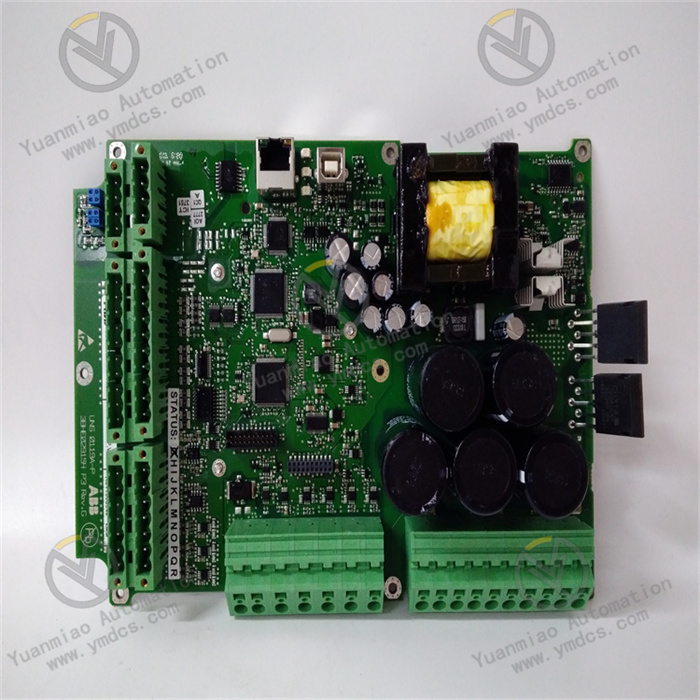
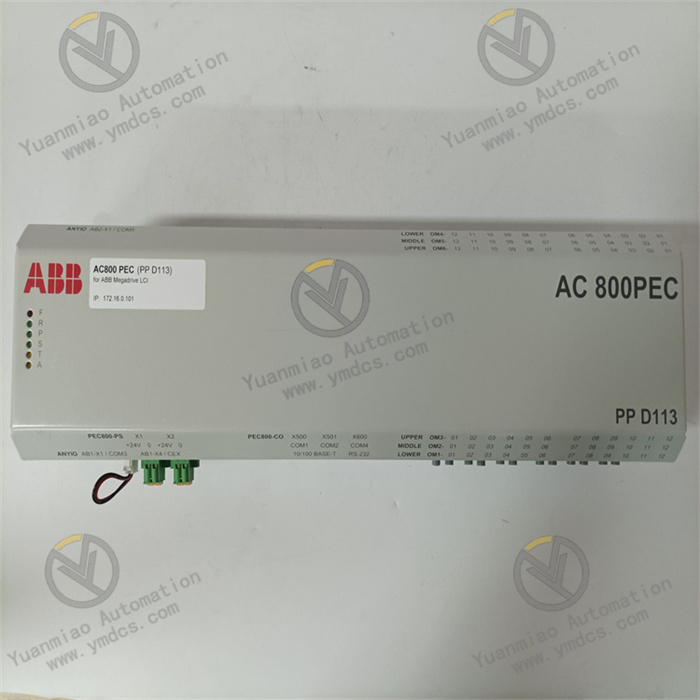
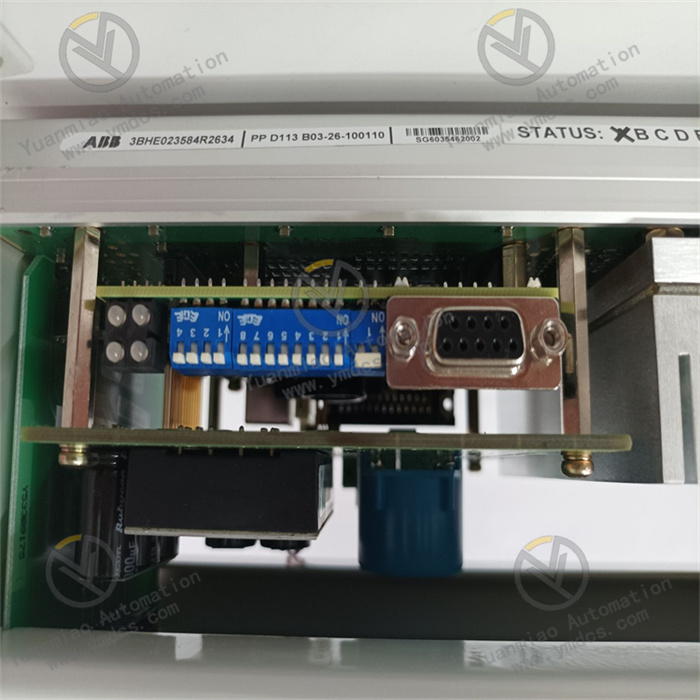
ABB PPD113B01-26-111000
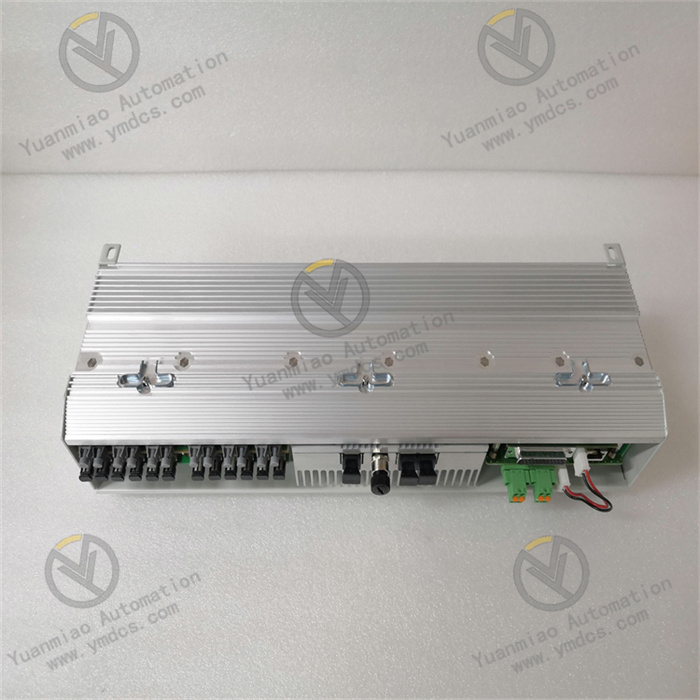
ABB PPD113B01-26-111000 is a high-performance industrial controller module belonging to the ABB AC 800PEC system. It is designed as a high-precision positioning and rapid control module, serving as a key core component in industrial automation control systems, static excitation systems, and high-power rectifier equipment. This product is specially engineered for high-precision control, fast response, and stable interlocking in complex industrial scenarios. It features microsecond-level control cycles, high-speed communication, comprehensive fault diagnosis, and safety protection. Having passed strict industrial-grade testing and certification, it can operate continuously and stably under harsh working conditions, providing reliable support for high-precision control requirements in power, metallurgy, intelligent manufacturing, and other industries. It is widely used in high-power, high-precision control applications such as generator excitation, electrolysis, and rolling mills.
1. Product Overview
This product is an integrated high-performance positioning and control module, positioned as the core for rapid control, precise positioning, and signal interaction in industrial automation applications. It combines high-precision control, high-speed communication, and flexible adaptability, and can be seamlessly integrated into the ABB AC 800PEC system and various industrial automation control systems to meet complex control requirements such as high-power rectification, servo/stepper positioning, and static excitation. It is a dedicated high-performance positioning and control component for the AC 800PEC platform, specifically designed to implement rapid control and positioning tasks.
It can independently perform high-precision positioning and rapid control, or work with other ABB modules, sensors, and actuators to build a complete industrial automation control network and achieve precise interlocking and efficient operation of equipment. It also has built-in fault detection and diagnosis functions to monitor equipment status and report faults, further improving system reliability and stability.
2. Technical Parameters
| Parameter Category | Details / Description |
|---|---|
| Model (including material code) | PPD113B01-26-111000 (material code), complete associated model 3BHE023784R2630 (current version) |
| Manufacturer | ABB (ABB Group, Switzerland) |
| Product Category | Industrial-grade controller module, high-performance positioning/control module for ABB AC 800PEC system for rapid control and positioning; can serve as a central processing unit for high-speed data processing and logic control; can be used as a core component of excitation controllers in some applications |
| Core Functions | Static excitation control, high-power rectifier control, servo/stepper positioning, high-precision motion control, signal acquisition and command output, fault detection and diagnosis, high-speed data processing, logic control; supports programmable configuration; can implement excitation-related functions such as automatic voltage regulation and reactive power control (for excitation applications); supports remote monitoring and control |
| Control Cycle | As low as 100 μs, with microsecond-level fast response capability; suitable for high-precision, high-speed control scenarios; can quickly process sensor data and execute control commands to ensure control accuracy and real-time performance |
| Communication Interfaces & Protocols | Supports PROFIBUS DP fieldbus; equipped with optical fiber I/O interfaces for high-speed data transmission and electrical isolation to ensure communication stability and security; supports multiple communication methods for data exchange with other equipment or control systems; suitable for industrial networking; can be integrated with SCADA, PLC, and other control systems for data sharing and remote operation |
| I/O Interfaces | Equipped with multiple digital input and output channels to receive sensor data and output control signals; supports accurate signal interaction with peripheral equipment to meet multi-device interlocking control requirements; some channels support analog input and output for collecting key parameters such as voltage and current (for excitation applications) |
| Programming Support | Complies with IEC 61131-3 programming standards; allows custom control strategies and behavior according to actual control requirements to adapt to different applications; users can configure controller parameters via programming to meet personalized control needs; programmed configuration enables automatic control logic and reduces manual intervention |
| Operating Temperature | Industrial-grade wide-temperature design: -20°C ~ +60°C; Storage temperature: -40°C ~ +85°C; meets operating requirements in various industrial sites; adapts to harsh high/low-temperature conditions such as metallurgy and power applications |
| Humidity Range | 5% ~ 95% RH (non-condensing); suitable for humid industrial environments; avoids humidity impact on module operation; adapts to industrial sites with varying humidity such as chemical and water treatment applications |
| Power Supply | Standard 24 V DC power supply for industrial standard applications; low power consumption, stable and reliable operation; supports wide-range 12–48 V DC input in some scenarios to adapt to grid voltage fluctuations and unstable power supply on-site, ensuring continuous operation |
| Safety Protection | Multiple safety protection functions including overcurrent, overvoltage, overheating, and communication abnormality to ensure safe operation of the module and the entire control system; for excitation and power systems, complies with IEC 61850, SIL, and other safety certifications and industrial safety standards; provides dedicated protection such as over-excitation, under-excitation, and loss-of-field (for excitation applications) to prevent equipment damage and production accidents |
| Weight | Approx. 0.25 kg; compact size (reference dimensions 170 mm × 105 mm × 32 mm); easy installation, disassembly, and maintenance; suitable for space-limited industrial control cabinets and flexible deployment in various industrial equipment |
3. Features
1. High‑Precision and Rapid Control Capability
The module features a microsecond-level control cycle (as low as 100 μs), high computing speed, and fast response. It uses a 32-bit RISC processor with high-speed algorithms to accurately capture on-site signal changes and quickly execute control commands, making it suitable for high-precision, high-speed applications such as static excitation, high-power rectification, and servo/stepper positioning. It supports the IEC 61131-3 programming standard, allowing users to customize control strategies and behavior to flexibly adapt to different industrial scenarios. Parameters such as target position, speed limit, and acceleration can be set via programming to improve the pertinence and practicality of the control system and ensure accurate and stable equipment operation. It also provides high-speed data processing capability to quickly process data from various input modules and perform real-time logic operations to meet complex control requirements. Especially in excitation applications, it can precisely regulate excitation current to achieve core functions such as voltage stabilization and reactive power control, ensuring stable operation of generators and other equipment.
2. High‑Speed Communication and Reliable Integration Capability
Equipped with a PROFIBUS DP fieldbus interface and optical fiber I/O interfaces, optical fiber communication enables high-speed data transmission and electrical isolation, effectively avoiding electromagnetic interference and ensuring stable and secure data exchange. The bus speed supports multi-node networking and interlocking with hundreds of nodes. It supports seamless integration with the ABB AC 800PEC system and can be easily connected to existing industrial automation control systems to achieve efficient interlocking with host computers, sensors, actuators, and other equipment, breaking communication barriers and building an integrated high-precision control network. Standardized interfaces ensure compatibility with other ABB modules and third-party control equipment. Optical fiber links, power supply, and communication interfaces must be verified to match the system during configuration to ensure stable integration and meet the integration needs of different industrial control systems. It supports multiple communication methods and can be integrated with SCADA systems for remote monitoring and operation, further improving integration flexibility and compatibility, reducing on-site operation workload, and enhancing maintenance efficiency.
3. Comprehensive Fault Diagnosis and Safety Protection
Built-in comprehensive fault detection and diagnosis functions monitor the module’s own operation, communication, power supply status, and signal status of connected equipment in real time. It can promptly identify various faults such as current deviation, sensor break, communication failure, and power abnormality, and issue alarms through LED status indicators and alarm relay outputs. Fault information is uploaded to the host computer or DCS system to help staff quickly locate and troubleshoot problems, reduce downtime, and improve system operation and maintenance efficiency. It also provides multiple safety protection mechanisms against overcurrent, overvoltage, overheating, and communication abnormalities. In excitation applications, it also implements dedicated protections such as over-excitation, under-excitation, and loss-of-field to prevent rotor overcurrent damage, motor loss-of-field step-out, and other issues. It fully safeguards the safe operation of the module, equipment, and the entire control system, complies with industrial safety standards and relevant certifications, and reduces potential production safety risks.
4. Industrial‑Grade Reliability and Environmental Adaptability
Adopts high-quality industrial-grade components and has passed strict industrial-grade testing and certification. The components feature long service life and high mean time between failures (MTBF), meeting long-term stable operation requirements in industrial sites and reducing equipment failure rates and maintenance costs. The module uses a fanless fully sealed design to effectively prevent dust and moisture from entering the internal circuit and affecting operation. It also provides excellent electromagnetic interference immunity to resist strong electromagnetic interference on-site, ensuring control accuracy and communication stability. The industrial-grade wide temperature (-20°C ~ +60°C) and wide humidity (5% ~ 95% RH, non-condensing) design adapts to harsh industrial conditions such as extreme temperatures, humidity, and dust. It suits on-site environments in power, metallurgy, chemical, and other industries and operates stably without additional protection measures, ensuring production continuity. It is especially suitable for high-temperature, dusty metallurgical sites and humid chemical applications.
5. Easy Installation, Maintenance, and Adaptability
4. Application Scenarios
Power Industry: Mainly used in static excitation systems of generators in thermal power plants and hydropower stations to perform excitation current regulation, voltage stabilization, reactive power control, and other tasks. It precisely controls the excitation current of generator rotor windings to ensure stable generator terminal voltage and improve power system operation stability. It can also be used for substation DC panel control and high-power rectifier equipment control to meet the high-precision control requirements of power systems. In some applications, it can serve as a core component of excitation controllers to implement automatic voltage regulation, loss-of-field protection, and other functions to ensure safe and efficient power production.
Metallurgy Industry: Applied in main drive systems of rolling mills, electric arc furnace control, electrolytic equipment control, and other scenarios in iron and steel plants and non-ferrous metal smelters. Through high-precision current control and positioning, it achieves rolling precision adjustment, electric arc furnace power control, and electrolytic process parameter regulation, preventing equipment overload burnout and improving metallurgical production efficiency and product quality stability. It adapts to harsh high-temperature, dusty industrial environments and ensures production continuity. It can be integrated with on-site DCS systems for remote monitoring and control.
Manufacturing and Intelligent Manufacturing: Suitable for automated production lines in paper, cement, automobile manufacturing, and other industries. It is used for speed and current control of high-power fans and water pumps, and high-precision positioning control of robot servo systems to prevent equipment stalling and overload, improving production line automation and operation efficiency. It can also be used in automated sorting systems and clean workshop equipment control. With its compact structure and high reliability, it adapts to installation and control requirements in different production scenarios. It can be seamlessly integrated with ABB robots and PLC systems to simplify communication settings and improve system interlocking efficiency.
- New Energy Industry: Used for output current monitoring and regulation of wind power converters and photovoltaic inverters, and charge/discharge current control of energy storage systems. High-precision control ensures stable output and grid-connection safety of new energy power generation. It also meets the excitation control requirements of new energy equipment to achieve reactive power regulation and improve the operation efficiency and stability of new energy power generation systems.