Description
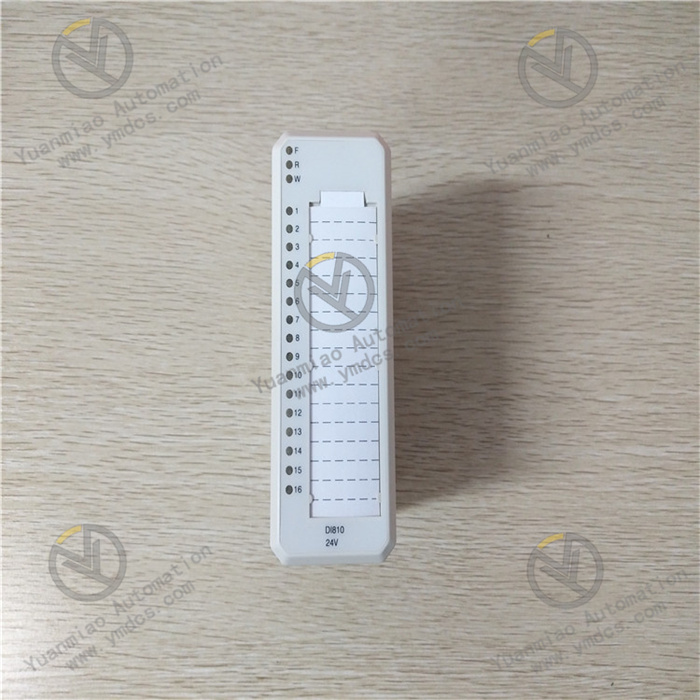
ABB UNS0861A-P,V1 HIEE305084R0001
1. Product Description
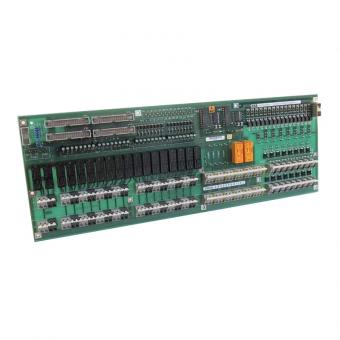
ABB UNS0861A‑P, V1 (Order No. HIEE305084R0001) is a dedicated power supply module for the UNITROL F series high‑voltage excitation systems. It is specially designed for generator excitation control units and serves as the core unit ensuring stable power supply and reliable operation of the excitation system.
The module is suitable for harsh power generation environments including diesel, hydro, thermal power plants and large‑scale industrial captive power plants. It converts direct/alternating current into stable direct current required by the system, providing continuous and clean power for excitation controllers, signal processing units and auxiliary modules.
2. Technical Specifications
| Parameter Category | Details |
|---|---|
| Model / Order No. | Model: UNS0861A‑P, V1; Order No.: HIEE305084R0001; Type: Power supply module for UNITROL F series excitation systems |
| Manufacturer | ABB |
| Core Functions | 1) Wide‑range input: Supports DC 24V~48V input, suitable for low‑voltage DC systems in power plants;2) Stabilized output: Provides multiple stable DC outputs to meet power supply demands of excitation controllers and modules;3) Redundant protection: Built‑in overvoltage, overcurrent, short‑circuit and reverse‑polarity protection, supports redundant backup;4) Status monitoring: Integrated power status indicators and fault alarm interface for real‑time operation monitoring;5) System compatibility: Compatible with UNITROL F series excitation controllers, supports hot‑swap replacement;6) Easy maintenance: Auto‑configuration function, field‑replaceable electronic modules to improve O&M efficiency. |
| Electrical Parameters | Input voltage: DC 24V~48V (wide‑range adaptation, compatible with voltage fluctuations in power plant DC systems);Output power: ≥120W (multi‑channel output distributed as required);Output accuracy: ±1% (regulated);Response time: ≤100ms (under load sudden change);Protection types: Overvoltage / overcurrent / short‑circuit / reverse‑polarity protection. |
| Communication / Interface | Local interface: Front plug‑in terminals (AWG 22~14) for power input, output and fault alarm wiring;Expansion interface: Optional RS‑485 communication interface for remote monitoring of power status (for system linkage);Plug‑in terminal design for easy on‑site wiring and maintenance. |
| Physical Characteristics | Mounting: Standard 3U rack mounting (DIN 41494), suitable for UNITROL F system cabinets;Dimensions: 300mm×200mm×200mm, compact design to save space;Ingress protection: IP20 (module body);Housing: Industrial‑grade flame‑retardant material, vibration and shock resistant;Net weight: 1kg, original sealed packaging. |
| Environmental Adaptability | Operating temperature: -25℃~+60℃ (covers extreme temperatures in power plant equipment rooms);Storage temperature: -40℃~+85℃;Relative humidity: 5%~95% (non‑condensing);Vibration resistance: 2g (10~500Hz), compliant with IEC 60068‑2‑6;EMC: Level 4 certification, strong immunity to electromagnetic interference, suitable for harsh EMI environments in power plants. |
| Reliability | MTBF ≥ 500,000 hours;Supports hot‑swap replacement, maintenance downtime ≤ 10 minutes;Redundant configuration: Dual‑module redundancy supported, switchover time ≤ 500ms, avoiding power loss of excitation system caused by single‑point failure;Comprehensive self‑diagnosis function to reduce troubleshooting difficulty;1‑year warranty, brand‑new original product, suitable for on‑site emergency repair. |
3. Functions & Features
(1) Wide Voltage Adaptation & Stable Power Supply
- Wide‑range input: Compatible with DC 24V~48V input, tolerates voltage fluctuations in low‑voltage DC systems of power plants. It can be directly connected to the on‑site DC circuit without additional power adapters. Different from the 110V~220V high‑voltage input of Version V2, it is more suitable for low‑voltage excitation control applications.
- High‑precision voltage regulation: Output voltage accuracy ±1%, response time ≤100ms under load sudden change, providing stable power for excitation controllers and avoiding abnormal excitation parameters caused by voltage fluctuations, ensuring stable output voltage and frequency of the generator.
- Redundant protection design: Built‑in multiple protection mechanisms that automatically cut off output and alarm when triggered, preventing module damage or interference with excitation system operation. Dual‑module redundancy is supported for seamless switchover upon failure to ensure continuous power supply and reduce production downtime risk.
(2) Strong Environmental Adaptation & Anti‑Interference
- Wide temperature & vibration resistance: Operating temperature -25℃~+60℃, withstands high/low temperatures and vibration in power plant equipment rooms with long‑term stable performance, suitable for both outdoor and indoor power plant environments.
- High anti‑interference capability: Passes EMC Level 4 certification, effectively resists strong electromagnetic interference during generator operation, avoids malfunctions and communication anomalies, ensures accurate excitation control signals, and is suitable for harsh EMI environments with multiple inverters and high‑power motors.
- Industrial‑grade durability: Uses long‑life industrial components, flame‑retardant and shock‑resistant housing, adapts to dusty environments in power plant equipment rooms, and reduces maintenance costs. Original sealed packaging ensures safety during transportation and storage, meeting emergency repair requirements.
(3) Intelligent Monitoring & Easy Maintenance
- Full‑status monitoring: Integrated power status indicators (run / fault / overload), supports fault alarm contact output that can be remotely uploaded to DCS/SCADA systems for early fault warning and timely troubleshooting.
- Hot‑swap maintenance: Supports hot‑swap replacement without shutdown, on‑site maintenance time ≤10 minutes, greatly reducing generator downtime losses. Plug‑in terminals and field‑replaceable electronic modules further improve O&M convenience and save time.
- Remote linkage: Optional RS‑485 interface supports remote monitoring and configuration of power parameters, meeting the remote operation and maintenance requirements of modern power plants and reducing on‑site workload.
(4) Deep Compatibility & Seamless Integration
- UNITROL F series adaptation: Specially designed for UNITROL F series excitation controllers, cooperates with modules such as UNS0862A‑P (analog I/O) and UNS0865A‑P (voltage regulator) to build a complete excitation control system, realizing seamless connection of power, control and signal loops.
- Seamless system connection: Supports access to ABB AC 800M, Freelance 800F and other DCS systems, enabling remote monitoring and data sharing of excitation power status, improving the automation level of power plants. Complies with relevant safety standards and can be used for power supply of safety‑critical loops.
4. Applications
- Diesel generator excitation: Ensures stable power supply for diesel generator excitation systems, maintains stable output voltage and frequency, suitable for emergency and backup power units, especially for low‑voltage excitation control.
- Hydro generator excitation: Supplies power for hydro‑generator excitation control units, adapts to wide‑temperature and high‑humidity environments in outdoor hydropower station equipment rooms, ensures accurate excitation parameters, and withstands complex outdoor electromagnetic environments.
- Thermal generator excitation: Suitable for low‑voltage excitation systems of thermal power units, operates stably in high‑temperature and high‑interference equipment rooms, supports generator grid connection and voltage regulation, and reduces O&M costs.
- Industrial captive power plants: Used for generator excitation control in factory and park captive power plants, ensuring continuous power supply and production safety in metallurgy, chemical, mining and other low‑voltage excitation applications, meeting emergency repair needs.
- New energy power generation auxiliary: Applied in low‑voltage excitation systems of photovoltaic and wind power generators, ensuring stable excitation systems and supporting safe new energy grid connection, adapting to remote O&M requirements of new energy stations.
5. FAQs & Troubleshooting
1. Module fails to power on, no indicators lit
Possible causes: No input power / reverse polarity, input voltage out of DC 24V~48V range, loose input terminal, internal fuse blown.Solutions: ① Verify DC 24V~48V input power and correct polarity; ② Measure input voltage with multimeter to ensure it is within rated range, check upstream DC system if abnormal; ③ Tighten input/output terminals and clean oxidized contacts; ④ Check internal fuse, replace with same rating if blown (after troubleshooting short circuit); ⑤ For brand‑new modules, inspect packaging seal to exclude transport damage.
2. Large output voltage fluctuation exceeding ±1% accuracy
Possible causes: Overload, excessive input voltage fluctuation, faulty voltage regulation module, poor wiring connection.Solutions: ① Calculate total output load to avoid exceeding rated power (≥120W), add power module or split load if overloaded; ② Check input power stability, install voltage stabilizer if needed; ③ Monitor output voltage in real time with multimeter, contact ABB authorized service for inspection if abnormal; ④ Tighten output wiring to avoid voltage fluctuation caused by contact resistance; ⑤ Check installation of electronic modules and recalibrate parameters using auto‑configuration function.
3. Module frequently triggers overvoltage / overcurrent protection
Possible causes: Load short circuit / overload, abnormal input voltage fluctuation, poor heat dissipation, unreasonable protection threshold.Solutions: ① Disconnect output load, check for short circuit channel by channel, replace damaged load; ② Check input power, install surge protector to suppress fluctuations; ③ Improve cabinet ventilation and clean dust to ensure good heat dissipation; ④ Contact technicians to adjust protection thresholds to avoid false tripping; ⑤ Check module grounding to enhance anti‑interference performance.
4. Redundant module fails to switch, system loses power after main module fault
Possible causes: Incorrect redundancy configuration, redundant module not powered, faulty switch bus, hardware abnormality of redundant module.Solutions: ① Check redundancy parameters to ensure identical model (UNS0861A‑P,V1) and version of both modules, reasonable switchover time; ② Verify power supply of redundant module and ensure standby status; ③ Check switch bus wiring for proper connection; ④ Contact service for hardware inspection if redundant module still abnormal; replacement is available under warranty.
5. Module operates normally but remote status monitoring unavailable
Possible causes: Mismatched RS‑485 communication parameters, wrong wiring, faulty communication interface module, remote monitoring not enabled.Solutions: ① Verify communication baud rate, address and other parameters consistent with host system; ② Check RS‑485 wiring (A/B lines) and install 120Ω terminal resistor; ③ Replace communication interface module and check communication loop; ④ Enable remote power status monitoring in configuration software; ⑤ Check connection between communication module and electronic module to ensure normal signal transmission.