Description
ABB UNS2881b-P,V1 3BHE009319R0001
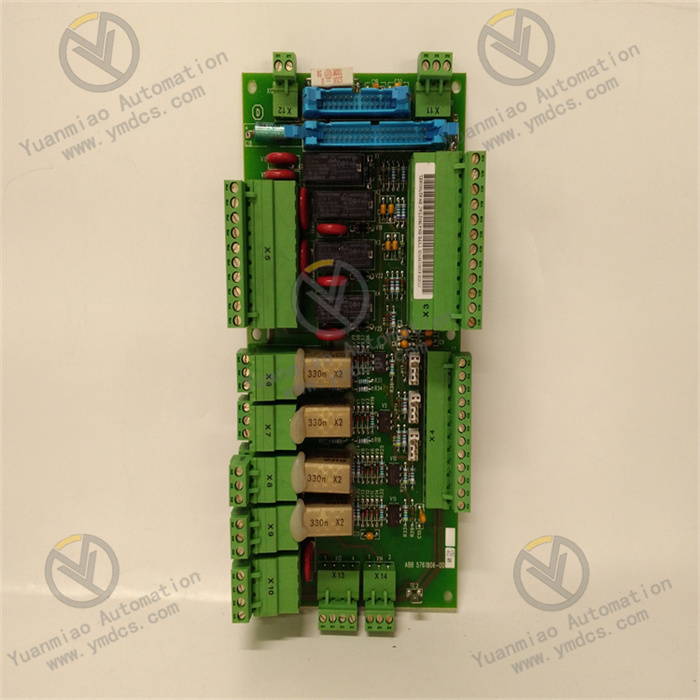
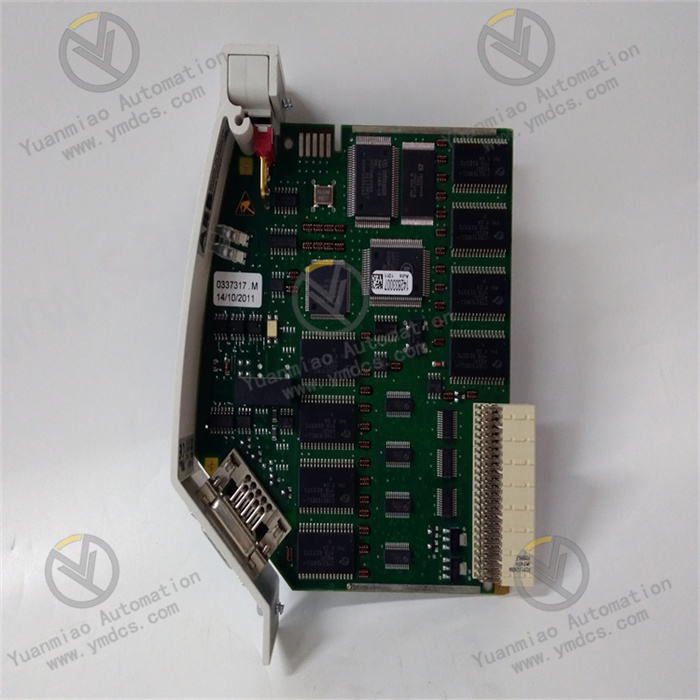
ABB UNS2881b‑P, V1 (Order No.: 3BHE009319R0001) is an industrial automation control module, belonging to the I/O module series of the AC500‑S PLC. It is also compatible with industrial automation control systems and the System 800xA system. Positioned as a digital I/O control module, its core functions are to acquire and output digital signals on industrial sites, perform key tasks such as data processing, generation and execution of control commands, and information exchange between devices. It supports seamless communication with PLCs, DCS systems, sensors, actuators and other equipment.
Constructed with high‑quality electronic components and advanced manufacturing processes, it features high reliability, strong anti‑interference performance and flexible adaptability, enabling long‑term stable operation in harsh industrial environments such as chemical, metallurgical, power and intelligent manufacturing facilities. As a standard original spare part from ABB, it is available in multiple supply types with comprehensive after‑sales support, serving as a core component for precise control and efficient operation of industrial control systems.
1. Specifications and Physical Parameters
1.1 Operation and Communication Parameters
- I/O channel configuration: 16 digital input channels and 16 digital output channels. Digital inputs can receive switching signals from pushbuttons, proximity switches and similar devices; digital outputs can drive relays, indicator lights and other equipment to meet signal interaction requirements in various scenarios.
- Communication interface: Supports the PROFIBUS DP industrial standard communication protocol with rich communication capabilities, enabling stable and efficient data exchange with PLCs, DCS systems and other equipment for data sharing and coordinated operation, facilitating centralized monitoring and unified management.
- Power supply: 24 VDC industrial standard power input, compatible with mainstream industrial power systems, with certain tolerance to voltage fluctuations. Low power consumption under normal operation helps reduce system energy consumption and module heating.
- Output current: Up to 2 A per channel, providing sufficient driving capacity for various industrial actuators.
- Protection functions: Built‑in overvoltage, overcurrent and short‑circuit protection, effectively preventing module damage caused by external faults or wiring errors and improving system operational safety.
Control logic: Supports multiple programming languages including ladder diagram (LD), function block diagram (FBD) and structured text (ST), allowing customized programming according to different industrial control requirements to implement complex control functions such as logic control and sequential control.
1.2 Physical and Installation Parameters
- Dimensions: Compact structure with dimensions of 35 mm × 90 mm × 25 mm. The small size enables easy installation in space‑limited industrial control cabinets and saves installation space.
- Net weight: Approximately 0.2 kg, lightweight for convenient installation and handling, reducing labor intensity during installation.
- Mounting: Standard rack DIN‑rail mounting, compatible with conventional layouts in industrial control cabinets, easy to install and adaptable to different cabinet configurations.
- Connector: Industrial‑grade anti‑loosening design ensures stable connection under long‑term vibration and avoids signal transmission interruptions.
Markings: The module surface is printed with clear model, order number and ABB brand identifiers for on‑site identification, model verification and operation and maintenance management.
1.3 Environmental and Protection Parameters
- Operating temperature: -20°C to +60°C. Wide‑temperature design adapts to temperature conditions in different regions and industrial scenarios, ensuring stable operation in both cold and hot environments.
- Relative humidity: 0%–95% (non‑condensing), allowing normal operation in high‑humidity environments such as food processing workshops, paper mills and chemical workshops.
- Protection degree: Enclosure protection class IP20 or higher, effectively preventing dust from entering the module and protecting internal circuit components, while avoiding human contact with live parts for safe use.
- Electromagnetic immunity: Excellent resistance to electromagnetic interference, capable of withstanding strong electromagnetic environments from inverters, high‑power motors and other on‑site equipment, ensuring stable signal acquisition and output in compliance with industrial electrical safety standards.
- Vibration / shock resistance: Robust structure adapts to typical vibration and shock conditions in industrial sites, reducing the risk of module damage and ensuring long‑term stable operation.

2. Functions and Features
Efficient data processing and analysis: Equipped with a high‑performance processor with strong data processing and analysis capabilities, enabling fast handling of massive data from various sensors and equipment. It efficiently completes both real‑time data calculation and in‑depth analysis of complex data, providing reliable support for precise decision‑making in control systems and ensuring accurate and efficient industrial production processes.
Flexible control logic configuration: Supports multiple programming languages and logic configuration methods. Engineers can perform customized programming according to control requirements of different production processes to implement complex control functions such as logic control, sequential control and closed‑loop control, improving the automation level and flexibility of industrial production.
Stable communication and coordinated operation: Through the PROFIBUS DP communication interface, it establishes stable communication with PLCs, DCS systems, sensors, actuators and other equipment, enabling data sharing and coordinated operation among devices. This ensures smooth information flow across the entire industrial control system, facilitates centralized monitoring and unified management, and improves overall system efficiency.
Comprehensive fault diagnosis and safety protection: Built‑in complete fault diagnosis system monitors the operating status of the module itself and connected equipment in real time. Once abnormalities such as communication interruption, equipment failure or out‑of‑tolerance parameters are detected, it immediately issues an alarm signal and takes protective measures such as output disconnection and safe mode activation to prevent fault escalation. Detailed fault records are stored for quick troubleshooting by maintenance personnel.
- High reliability and easy maintenance: Uses high‑quality electronic components and advanced manufacturing processes with strict testing and quality control. It features rustproof, waterproof and dustproof properties, a fanless design relying on structural heat dissipation, and a long mean time between failures (MTBF). The modular design allows easy installation and removal, supporting online replacement under system safety conditions to reduce operation and maintenance costs.
- Wide compatibility: Seamlessly compatible with ABB AC500‑S series PLCs, as well as industrial automation control systems and System 800xA. It can be directly connected without additional conversion modules, offering strong versatility for various industrial control scenarios.
3. Application Scenarios
Chemical production process control: Used for controlling reactors, agitators, pipeline valves and other equipment in chemical production. By collecting on‑site switching signals and applying preset control logic, it precisely adjusts equipment operating status to ensure optimal production conditions, improve product quality and efficiency, and safeguard production safety.
- Metallurgical production automation: Applied in steelmaking, ironmaking, rolling and other metallurgical processes. It collects real‑time switching signals such as furnace temperature, molten steel level and rolling mill speed to control related equipment, achieving precise control of metallurgical production, ensuring product quality and enhancing production efficiency.
Power generation and distribution control: Used for controlling generator sets, transformers, switchgears and other equipment in power systems. It monitors switching parameters of the power system and adjusts equipment status timely to ensure stable power system operation, improve power supply reliability and power quality.
- Intelligent manufacturing plants: Coordinates and controls robots, conveyors, processing equipment and other components on production lines in intelligent factories, automating and intelligentizing production processes. By collecting real‑time switching data during production, it optimizes workflows, increases productivity and product quality, and reduces production costs.
- General industry: Widely used in machine control, process control, discrete manufacturing, packaging and other industrial scenarios. It can be used for single‑equipment control or multi‑machine group control, replacing traditional relay circuits to implement logic and sequential control, reducing electrical wiring and switching contacts and lowering failure rates.
4. Operating Notes
Pre‑installation preparation: Verify the module model (UNS2881b‑P, V1) and order number (3BHE009319R0001), and confirm compatibility with the AC500‑S series PLC and the applied control system. Disconnect power and ensure complete discharge of capacitors in related circuits (at least 5 minutes) to avoid electric shock or module damage from residual voltage. Wear insulated gloves; hot‑plugging of the module or wiring is strictly prohibited.
Wiring specifications: Strictly distinguish digital input, digital output, power and grounding terminals; incorrect or reverse connection is forbidden. Use dedicated shielded communication cables with single‑end grounding and minimize cable length to reduce electromagnetic interference. Connecting high‑voltage power to signal terminals is prohibited. Tighten terminal screws after wiring to ensure good contact and avoid signal distortion or module faults caused by poor connection.
Parameter and programming management: Perform module configuration, programming and parameter setup via dedicated programming software. Familiarize yourself with the software manual and module characteristics before programming, and draft ladder diagrams first to reduce errors. After programming, conduct no‑load debugging before connecting equipment for testing. Set and regularly update relevant protection parameters; modifying key control parameters during operation is strictly prohibited.
Environmental control: Install in enclosed, dry and ventilated industrial cabinets; avoid direct sunlight, dust accumulation and exposure to corrosive or flammable gases. Keep away from strong electromagnetic interference sources such as inverters and high‑voltage busbars to prevent signal acquisition and output distortion. Maintain ambient temperature between -20°C and +60°C and humidity at 0%–95% (non‑condensing). Reserve sufficient heat dissipation space inside the cabinet and do not block the module heat dissipation surface.
- Routine maintenance and safe operation: Regularly clean dust from the module surface and terminals using dry compressed air or a soft brush to keep the module clean. Inspect module mounting, connectors and terminal connections monthly for looseness or oxidation and address issues promptly. Monitor module status and fault records daily through the control system for timely troubleshooting. Disconnect main and backup power supplies before maintenance and wait for complete discharge of internal capacitors. Unauthorized circuit modification or use of non‑original components is strictly prohibited, as this will void the warranty and create safety hazards. Store spare modules in a dry, ventilated environment and perform power‑on testing every 6 months to ensure proper functionality. Avoid applying excessive pressure, placing heavy objects on the module or squeezing cables to prevent damage.