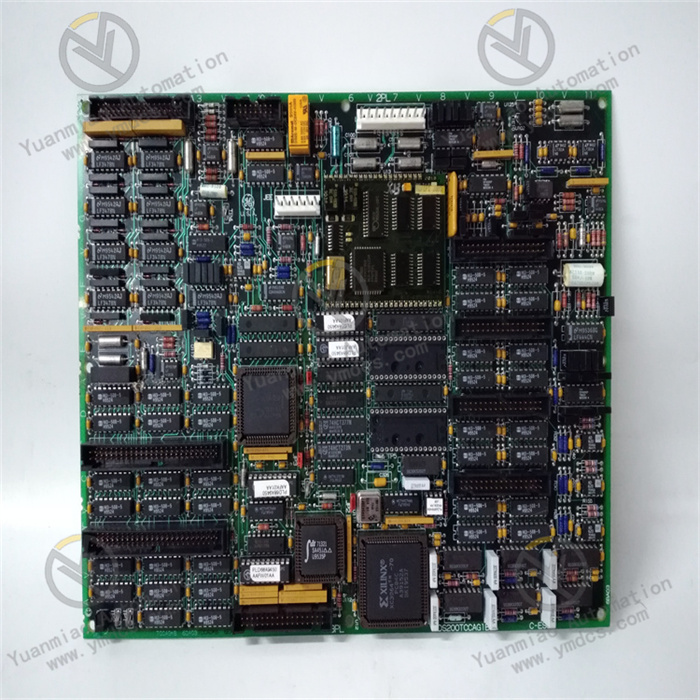
Description
1. Overview
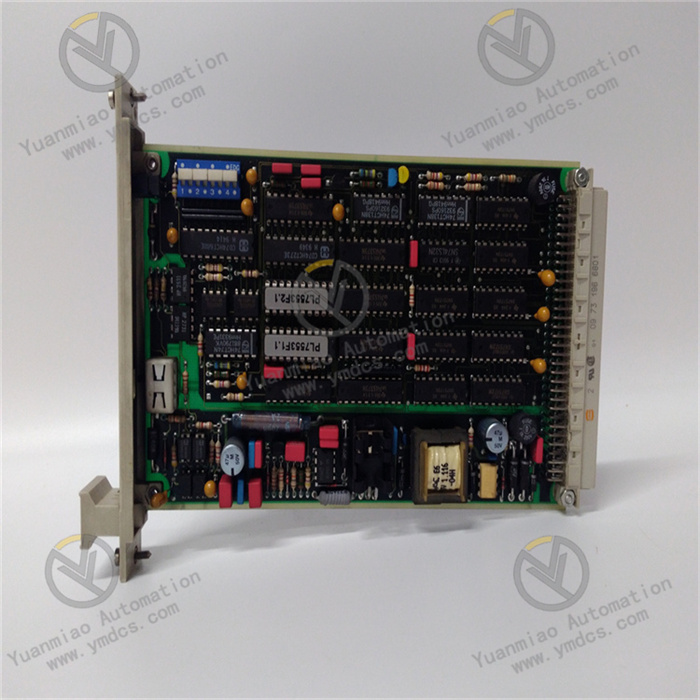
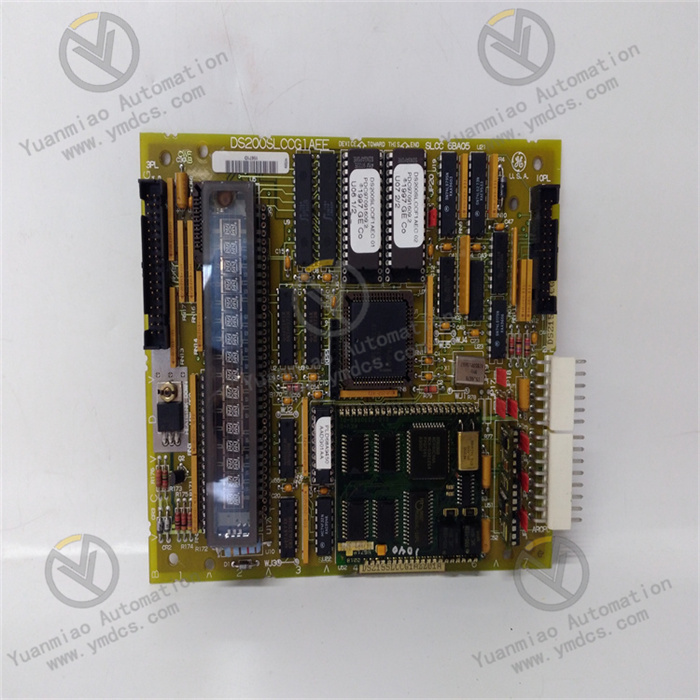
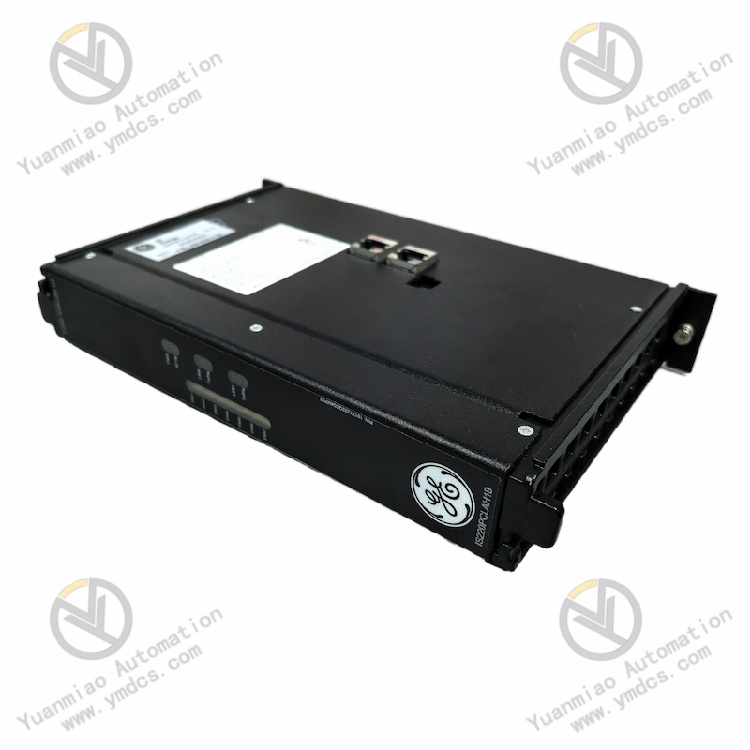
The IS220PCLAH1B is a Core Analog Input/Output (Core Analog I/O) module developed by General Electric (GE) exclusively for the Speedtronic Mark VIe turbine control system. As mission-critical master-level I/O hardware of the system, it is widely compatible with aero-derivative gas turbines, heavy-duty gas turbines, steam turbines and auxiliary automation control systems of power plants. Integrating high-precision analog signal acquisition and analog drive output capabilities, this module acts as the central connecting hub linking field analog sensing equipment, executing regulating actuators and the system main controller. It undertakes core tasks including collection of unit process analog signals, data preprocessing, logical computation, analog command output, signal link monitoring and fault tolerance protection, delivering full-process precise signal support for unit condition monitoring, load regulation, closed-loop control and over-limit protection.
Different from conventional general-purpose I/O modules, the IS220PCLAH1B is custom optimized to meet stringent operating requirements of turbine units: dynamic load variation, high-precision regulation and highly reliable continuous operation. It adopts high-resolution analog-to-digital/digital-to-analog conversion architecture, multi-channel independent signal processing, graded electromagnetic isolation, high-speed real-time operation circuits and low-drift signal conditioning technology, featuring prominent strengths including high acquisition resolution, superior output linearity, fast dynamic response, minor temperature drift error, strong anti-interference capacity and high operational fault tolerance. The module has passed a complete set of power-industry reliability tests including high & low temperature cycling, damp-heat durability, mechanical vibration shock, Electromagnetic Compatibility (EMC) and long-term energized aging. It can steadily operate under harsh cabinet conditions in power plants: enclosed high temperature, high humidity with condensation, dust accumulation, intensive electromagnetic radiation, disturbance caused by frequent unit startup/shutdown, and 24-hour nonstop continuous operation. Identical structural dimensions, slot specifications, electrical logic and bus protocols to legacy modules of identical dimensions in the IS220 series enable non-destructive in-situ upgrade replacement. It is extensively applied in new construction matching of Mark VIe systems in power plants, iterative replacement of aging I/O modules, precision optimization of unit control, troubleshooting of analog control loop faults, hardware technical renovation and system expansion projects of turbine control systems.
2.1 Integrated Analog Input & Output for High Integration
Combining multiple high-precision analog input and output channels, the module requires no separate acquisition or output cards. A single module completes collection of turbine process parameters such as temperature, pressure, flow, vibration and liquid level; meanwhile, it outputs standard 4–20 mA / 0–10 V analog regulation commands to drive field regulating equipment including valves, actuators and governors. The integrated all-in-one design greatly simplifies cabinet I/O architecture, reduces the number of boards and wiring layers, lowers hardware failure points and line interference risks, and elevates integration level and operational stability of the entire control system.
2.2 High-Resolution Signal Conversion Ensures Superior Control Precision
Equipped with industrial-grade high-precision ADC (Analog-to-Digital Converter) and DAC (Digital-to-Analog Converter) chips plus dedicated signal conditioning circuits, it delivers ultra-high signal acquisition resolution and full-range linear output performance. Algorithms are optimized for subtle operating condition fluctuations and refined load regulation demands of turbine units, effectively eliminating common drawbacks of conventional modules: insufficient resolution, linear distortion, regulation lag and zero drift. Minor parameter variations of units can be captured accurately, with smooth and stable regulation commands generated. Steady-state operational precision and dynamic response performance of units are guaranteed, satisfying control requirements of generator sets for precise frequency modulation, peak shaving and accurate operating condition matching.
2.3 Independent Channel Isolation Enhances Anti-Interference Performance and Fault Tolerance
All analog input and output channels adopt mutually independent electrical isolation architecture, with standalone signal processing and protection for each channel and zero crosstalk between channels. The PCB integrates multi-stage high-frequency filtering, surge suppression, electrostatic protection and electromagnetic shielding circuits to effectively isolate complex interference on power plant sites: crosstalk from power cables, pulse disturbance from switching operations, ground circulating current, intensive electromagnetic radiation and line induced voltage. Single-channel faults can be independently isolated and locked without spreading to other channels or main control logic of the system. Latent faults including unit regulation fluctuation, parameter jitter and spurious protection action caused by single-point signal anomalies are fundamentally eliminated, making the module well-suited for harsh industrial conditions in power plants with heavy interference, abundant harmonics and frequent vibration.
2.4 High-Speed Real-Time Operation Enables Rapid Dynamic Response
Embedded with a high-performance processing unit, the module supports high-speed signal sampling, real-time data computation, logical judgment and command output with short cycles for signal collection, parsing and command refreshment and fast dynamic response. It accurately meets rapid control requirements under dynamic conditions such as unit startup/shutdown, load change, operating condition switching and fault transients. Regulation commands issued by the main control system are responded to promptly, and field actuators are driven to act quickly to eliminate control lag, ensuring control stability and tracking performance of units under dynamic operating conditions.
2.5 Full-Dimensional Self-Diagnosis Supports Controllable Operational Safety
Comprehensive self-diagnosis functions are integrated: full hardware self-test upon power-up, real-time channel status monitoring, over-range signal identification, open/short-circuit line fault discrimination, conversion precision self-inspection and bus communication verification. Hidden hazards such as module hardware abnormalities, channel failure, excessive signal drift, line faults and communication anomalies can be automatically identified. Operation logs are retained and fault alarm information uploaded in real time to accurately locate faulty channels and root causes. Risks of out-of-control unit conditions, regulation deviation and spurious protection action triggered by distorted signals or abnormal commands are effectively avoided, and troubleshooting & handling time is drastically shortened to accommodate unattended and long-cycle nonstop operation needs of power plants.
2.6 Native Standard Bus Compatibility Delivers Exceptional System Compatibility
Natively compatible with the proprietary industrial bus protocol of GE Mark VIe systems, it supports high-speed stable data exchange with system main controllers, communication modules and other I/O modules, featuring stable communication handshaking with zero packet loss and latency during data transmission. Slot definitions, hardware interfaces, communication logic and configuration parameters are fully consistent with legacy modules of identical specifications in the IS220 series, supporting direct plug-and-play non-destructive in-situ upgrade replacement. No cabinet structure renovation, revision of system configuration or re-commissioning of control logic is required; the module can be commissioned after passing power-on self-test, greatly cutting costs for technical renovation and operation & maintenance.
3. Specification Parameters
3.1 Basic Parameters
- Model: IS220PCLAH1B
- Manufacturer: General Electric (GE)
- Device Type: Core Analog Input/Output I/O Module for Mark VIe Systems
- Compatible Systems: GE Speedtronic Mark VIe aero-derivative/heavy-duty gas turbine & steam turbine control systems, power plant process DCS industrial control systems
- Core Functions: High-precision multi-channel analog signal acquisition, signal conditioning & preprocessing, high-speed ADC/DAC conversion, analog regulation command output, channel electrical isolation, signal link monitoring, fault self-diagnosis, bus data interaction, coordinated computation of control logic
- Application Scenarios: New construction matching of Mark VIe systems in power plants, replacement & upgrade of legacy analog I/O modules, precision optimization of unit control, troubleshooting of interference faults on analog control loops, hardware technical renovation and system expansion projects of turbine units
3.2 Electrical and Channel Performance Parameters
- Input Signal Types: Standard 4–20 mA DC current signals, 0–10 V DC voltage signals, compatible with transmitters for temperature, pressure, flow, vibration and liquid level
- Output Signal Types: Standard 4–20 mA DC current commands, 0–10 V DC voltage commands, compatible with various valves, actuators and speed-governing actuators
- Channel Characteristics: Multi-channel independent isolation design with standalone conditioning and protection per channel; zero crosstalk and mutual interference between channels
- Conversion Precision: High-resolution ADC/DAC conversion with excellent full-range linearity, low temperature drift and minor zero-point error, stable long-term precision
- Response Performance: High-speed sampling refresh and rapid command response with zero control lag, suitable for dynamic load change control conditions of units
- Isolation Performance: Full electrical isolation between channels as well as input and output to effectively block electromagnetic crosstalk, ground circulating current and transient voltage interference
- Protection Mechanism: Integrated multi-level protection against overvoltage, overcurrent, surge, electrostatic discharge and over-range values to prevent module and control loop damage caused by line anomalies
- Communication Mode: Compatible with the proprietary bus of Mark VIe systems for high-speed stable data exchange, supporting real-time parameter uploading, command distribution and configuration setup
- Operation Mode: Supports 24-hour uninterrupted continuous energized operation, applicable to all working conditions including steady-state unit operation, load fluctuation, startup/shutdown switching and fault transients
3.3 Environmental Operating Parameters
- Operating Temperature: -30℃ ~ +65℃, adaptable to extreme cabinet temperature fluctuation and long-term enclosed high-temperature continuous operation
- Storage Temperature: -40℃ ~ +85℃, meeting environmental requirements for long-distance equipment transportation and long-term equipment shutdown storage
- Operating Humidity: 5% ~ 95%RH (non-condensing); excellent moisture resistance to prevent short-circuit damage and performance degradation caused by dew formation
- Ingress Protection Rating: High-grade industrial protection with dust-proof, moisture-proof, anti-corrosion, mechanical vibration resistance and anti-aging performance
- EMC Compliance: Complies with high-end anti-interference EMC standards for power industries, adapted to complex power plant conditions featuring intensive electromagnetic fields and dense harmonics
3.4 Structural and Maintenance Parameters
- Structure Form: Compact plug-in modular structure manufactured with precision SMT PCB technology, featuring neat layout, uniform heat dissipation and strong vibration resistance
- Mounting Method: Slot plug-in installation for standard Mark VIe system cabinets with precise alignment, stable gold finger contact and convenient installation
- Version Compatibility: Fully compatible with legacy analog I/O modules of identical dimensions in the IS220 series, supporting non-destructive in-situ replacement and upgrade iteration
- Maintenance Features: Automatic full-channel hardware self-test upon power-up, real-time operating condition monitoring, automatic fault log archiving, no routine precision calibration or parameter commissioning required
- Operational Advantages: Stable acquisition & output precision, drift-free signals, zero channel crosstalk, fast response speed, ultra-low failure rate, long-cycle maintenance-free service
After power-on, the IS220PCLAH1B core analog I/O module automatically completes hardware initialization, bus link handshake, full-channel status self-test, inspection of signal conversion circuits and matching of operating parameters. Upon successful full-dimensional self-inspection and normal communication & hardware conditions, the module connects formally to the I/O bus link of the GE Mark VIe turbine control system and enters steady operation for analog signal collection, computation and command output.
Signal Acquisition Phase: Standard analog signals output by field sensing transmitters are fed into corresponding input channels of the module. All incoming signals first undergo preprocessing including front-end surge suppression, electrostatic discharge and multi-stage electromagnetic filtering to eliminate power-frequency clutter, electromagnetic crosstalk, line induced interference and transient voltage fluctuation. Purified preprocessed signals are sent to the high-precision ADC unit for accurate conversion from analog signals to digital signals. Meanwhile, embedded temperature compensation and linear correction algorithms correct signal attenuation, drift and distortion induced by long-distance wiring and ambient temperature variation. Finally, standardized digital process data are uploaded to the main controller via the system bus for system condition evaluation, parameter calculation, load regulation logic and over-limit protection judgment.
Command Output Phase: The module receives digital regulation commands issued by the system main controller, which are accurately converted into standard 4–20 mA / 0–10 V analog regulation signals via the high-speed DAC unit. After signal shaping, power amplification and impedance matching, signals are output to field actuators to drive actions such as valve opening adjustment, speed regulation and pressure control, realizing closed-loop precise control of unit load, operating conditions and parameters. All input and output channels adopt an independent isolated processing architecture with no mutual interference during operation, thoroughly eliminating signal crosstalk and data distortion during concurrent multi-channel acquisition.
Hardware, channel continuity, signal amplitude, conversion precision, line conditions, bus communication and operating parameters are monitored in real time throughout operation with comprehensive self-diagnosis, fault tolerance and anomaly protection capabilities. Once hidden hazards such as over-range signals, open/short-circuited lines, abnormal channels, communication fluctuation, hardware faults and excessive value drift are detected, the faulty channel is locked immediately with fault logs retained and system alarms uploaded. A channel isolation protection mechanism is triggered simultaneously to restrict spread of single-point faults and sustain stable operation of healthy channels. Risks including unit monitoring blind zones, failed regulation and spurious protection action are effectively avoided, comprehensively ensuring accurate, stable and reliable operation of analog acquisition and regulation links of the Mark VIe turbine control system.
5.1 Precise Collection and Closed-Loop Control of Core Unit Parameters
As the core analog I/O hardware of Mark VIe turbine control systems, it undertakes collection of key process parameters of gas turbines, steam turbines and supporting auxiliary equipment, and is responsible for analog command output of core closed-loop control including unit load regulation, pressure control, temperature management and flow ratio allocation. Benefiting from high-precision signal conversion and fast dynamic response, accurate parameter collection and reliable regulation tracking are guaranteed under all operating conditions including unit startup/shutdown, load variation and steady-state operation, delivering core hardware support for safe and stable unit operation, energy-efficient dispatching and precise load regulation.
5.2 Targeted Renovation of Analog Control Loop Faults
Widely deployed for optimization renovation of aging turbine control loops in power plants, it addresses common defects of outdated I/O modules: low precision, severe temperature drift, slow response lag, heavy channel crosstalk, weak anti-interference performance and violent regulation fluctuation. Hardware replacement comprehensively optimizes quality of analog signal acquisition and output, eliminating latent faults such as parameter jitter, inaccurate data, regulation chattering and false alarms induced by electromagnetic interference and line disturbance, and significantly elevating overall operational stability and control precision of units.
5.3 Precise Dynamic Control Adaptation for Complex Operating Conditions
Benefiting from multi-channel independent electrical isolation, multi-stage electromagnetic protection, high-speed response and low-drift high-precision architecture, the module is highly adapted to harsh field conditions of power plant turbines: intensive electromagnetic radiation, frequent switching operations, dense grid harmonics, drastic ambient temperature fluctuation and recurring equipment vibration. Various external interference is effectively resisted to guarantee distortion-free and low-drift stable signal transmission plus accurate command output under complex scenarios including dynamic unit load change, operating condition switching and fault transients, meeting high-reliability, high-precision and dynamic control operation requirements of power plant units.
5.4 Non-Destructive Maintenance and Iterative Upgrade of Legacy Systems
It enables complete in-situ upgrade replacement for aging identical analog I/O modules suffering aging failure, degraded precision, frequent channel faults, weakened anti-interference performance and poor control stability. No cabinet wiring renovation, revision of system configuration logic or recalibration of control parameters is required. Low-cost and high-efficiency hardware iteration rapidly recovers overall performance of unit control systems while accommodating system expansion demands such as additional process measuring points and regulation loops.
![]()