Description
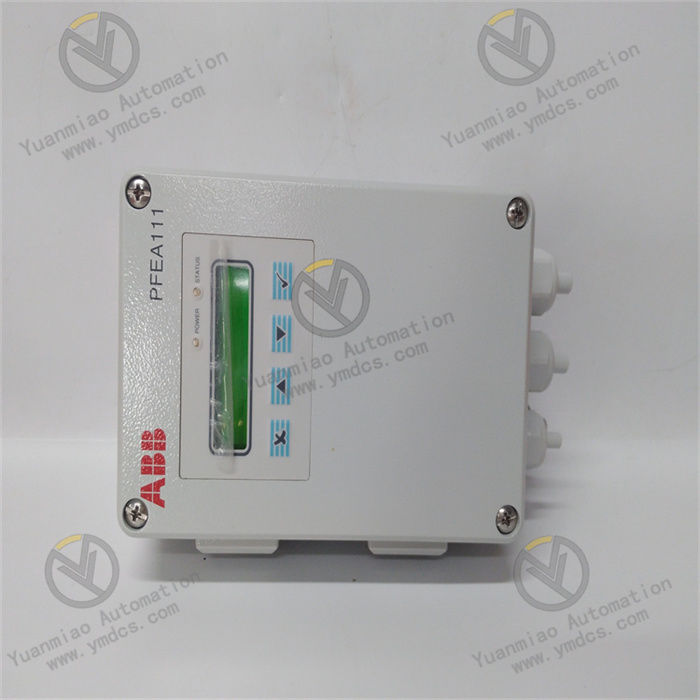
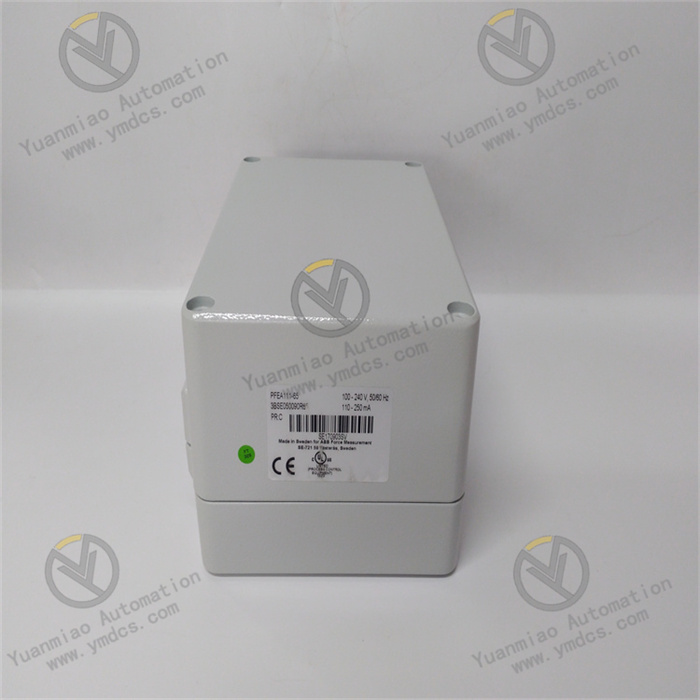
ABB PFEA111-65 3BSE050090R65
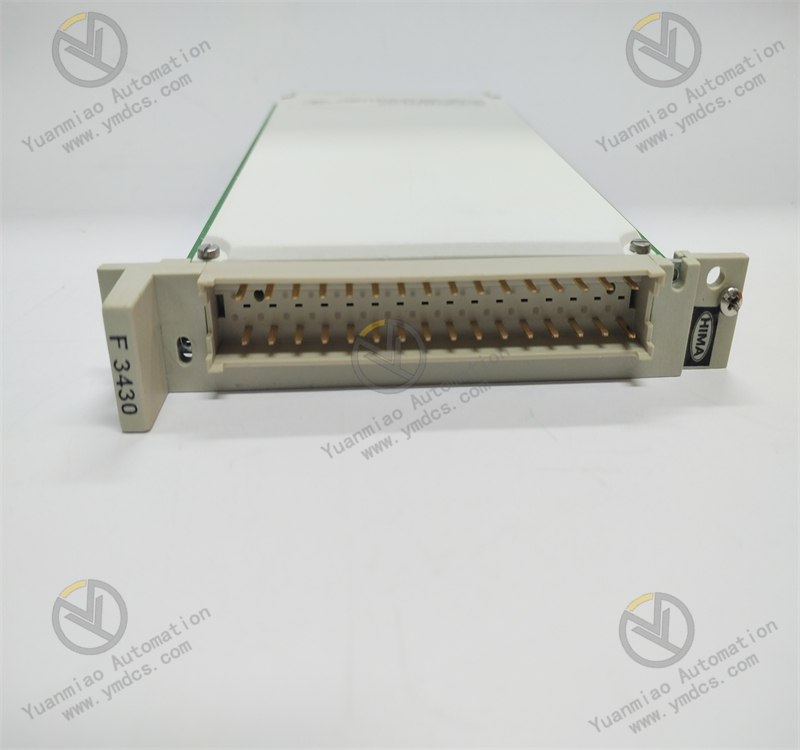
ABB PFEA111-65 (Order No.: 3BSE050090R65) is a multi‑function tension sensing controller, serving as core equipment for precise tension control in industrial production. It integrates five key capabilities: high‑precision measurement of ±0.2%, dual‑sensor redundancy, multi‑protocol communication compatibility, PID closed‑loop control, and strong environmental adaptability. As a critical part of ABB’s industrial automation tension control solutions,This controller is mainly responsible for tension signal acquisition, real‑time calculation, closed‑loop regulation, and fault warning. It accurately monitors and controls tension for various webs and strips, effectively reducing scrap rates caused by tension fluctuations in industrial applications. It is widely used in metal rolling, textile printing and dyeing, packaging machinery, wind power, and other industrial fields. Compatible with various PLC and DCS systems, as well as ABB pressure sensing elements such as PFTL101A and PFVL141V, it provides reliable tension control to ensure stable production and improved product quality.
The controller performs four core tasks: tension signal acquisition, PID closed‑loop regulation, redundant switching, and fault alarm. Its main functions include receiving tension signals from load cells (such as ABB PFTL101A horizontal load cells) via two independent weighing sensor inputs, removing mechanical vibration interference through adjustable filtering, and analyzing tension data using the built‑in high‑precision arithmetic unit.
Based on the internal PID control algorithm, it adjusts the output of inverters, servo motors, and other actuators in real time to keep tension fluctuations within preset limits, with a response time ≤ 50 ms. It also supports dual‑sensor redundant switching: if the primary sensor signal becomes abnormal, the system automatically switches to the backup sensor within 10 ms to ensure continuous tension measurement and control.
The controller is deeply integrated into the industrial automation ecosystem, supports major industrial communication protocols, offers flexible expansion, and can be seamlessly integrated into various production line control systems. It complies with industrial control equipment standards and ensures long‑term stable operation in harsh industrial environments.
It features an industrial‑grade compact design suitable for installation in industrial control cabinets. The rear panel is equipped with an 8‑pin quick‑connect connector for convenient wiring of power, signals, and communication lines, improving installation and maintenance efficiency. The housing uses industrial‑grade protective material with an IP20 rating, providing excellent dust and moisture resistance for cabinet mounting.
It supports online parameter configuration and tuning; key settings such as PID parameters and filter bandwidth can be adjusted via system software, allowing basic operation and maintenance without specialized tools. Its compact size and light weight enable dense installation and deployment in limited spaces, adapting to production lines of various scales. With an FBP bus adapter, it can expand up to 7 remote I/O modules to meet distributed control requirements for large production lines.
1. Technical Specifications
- Power SpecificationsSuitable for industrial standard power supply (configurable based on on‑site conditions).Equipped with over‑voltage, over‑current, and reverse polarity protection to prevent damage from power anomalies and enhance operational safety.Low power consumption for long‑term continuous operation.Electrical isolation between power circuits and signal/communication circuits to suppress power‑side interference and ensure tension measurement accuracy.
- Tension Measurement and Control ParametersMeasurement accuracy: ±0.2%, enabling precise detection of small tension variations and reducing scrap rates.2 independent weighing sensor inputs for dual‑sensor redundancy.Built‑in PID control algorithm with response time ≤ 50 ms for real‑time closed‑loop tension control.Adjustable filter bandwidth: 0.1–100 Hz to filter mechanical vibration interference.Tension control range configurable to suit different materials and web/strip specifications.
- Communication and Compatibility ParametersSupports major industrial protocols: Modbus RTU, Ethernet/IP, DeviceNet, Profibus‑DP; CANopen can be added via expansion.Enables seamless integration with PLCs and DCS systems (e.g., Siemens S7‑1500) with high‑speed data update down to 2 ms in some applications.Compatible with ABB load cells including PFTL101A and PFVL141V without additional signal conversion.Supports expansion of up to 7 remote I/O modules with an FBP bus adapter for large‑scale distributed systems.
- Environmental ParametersOperating temperature: -20°C to +60°C.Operating humidity: 5% to 95% RH (non‑condensing).Protection class: IP20 (cabinet installation).EMC performance compliant with EMC Level 3 certification.Vibration and shock resistance suitable for harsh environments such as metal rolling and textile mills.Natural convection cooling, no fans, maintenance‑free.
- Physical and Installation ParametersCompact, lightweight design for dense and space‑limited installation.8‑pin quick‑connect connector for fast wiring.Fits standard industrial control cabinets without adapters.Front panel status LEDs for power, operation, fault, and sensor status for basic fault diagnosis.
2. Features
- High‑precision tension measurement for reduced scrapAccuracy of ±0.2% detects fine tension changes and solves high scrap rates caused by fluctuations exceeding ±1%. Adjustable filtering further improves stability and accuracy, significantly enhancing product quality.
- Dual‑sensor redundancy for continuous operationTwo independent sensor inputs with automatic primary/backup switching within 10 ms if the main sensor fails. Prevents downtime such as breakouts in continuous casting and improves system availability.
- Fast, accurate PID closed‑loop controlBuilt‑in PID algorithm with ≤ 50 ms response time adjusts inverter and servo outputs dynamically to maintain stable tension across varying operating conditions, such as stable fabric tension in textile processing.
- Multi‑protocol support for easy integrationNative support for Modbus RTU, Ethernet/IP, and other standards enables smooth connection to PLCs and DCS. Direct compatibility with ABB load cells simplifies system design. Remote I/O expansion supports large distributed lines.
- Robust and easy to maintainIP20, wide temperature range, and high EMC performance ensure reliable operation in harsh environments. Online parameter setting, clear LED indicators, and full diagnostics speed up troubleshooting. Quick connectors reduce installation and replacement time.
3. Operating Principle
- Initialization and Link EstablishmentAfter power‑on, the unit performs self‑tests and initializes arithmetic, communication, and sensor channels. It connects to load cells, actuators (inverters, servos), and control systems (PLC/DCS) via quick connectors, loads configuration parameters and tension setpoints, and enters standby mode.
- Tension Signal Acquisition and ProcessingTension signals are received from load cells (e.g., PFTL101A) through dual isolated inputs. The adjustable 0.1–100 Hz filter removes on‑site vibration noise. Signals are amplified and digitized for precise tension calculation.
- Tension Calculation and Closed‑Loop RegulationActual tension is compared with the setpoint. The PID algorithm computes the correction and outputs a control signal to the actuator to maintain tension within the target band.
- Redundancy and Fault MonitoringThe system continuously monitors signal quality from both sensors. If the primary channel fails (open circuit, distortion), it switches to the backup within 10 ms. Power, communication, and internal status are also supervised.
- Alarm and Fault HandlingFaults are indicated by LEDs and reported to the PLC/DCS. Fault protection logic prevents runaway tension and production incidents. The unit automatically resumes normal operation once faults are cleared.
4. Applications and Examples
- Metal RollingUsed in tension control for aluminum and steel strip winding. Connected to two ABB PFVL141V load cells, it monitors rolling force up to 56 MN. PID control adjusts reel speed to keep tension variation within ±0.15%, preventing stretching, necking, and breakage.
- Textile Printing and DyeingUsed for web synchronization and tension control with PFTL101BE load cells, maintaining fabric tension at 50 N ± 2 N to avoid stretching or slipping. Filtering reduces fluctuation from ±5 N to ±0.8 N, greatly improving dyeing uniformity.
- Packaging MachineryApplied to film unwind and longitudinal sealing tension. Communicates with PLC via Ethernet/IP to keep film tension variation within ±0.2 N, ensuring flat, wrinkle‑free film and better seal quality.
- Wind PowerUsed in safe cable reeling applications. It monitors cable tension and triggers emergency braking if abnormal fluctuations are detected, preventing over‑stretching and breakage. It operates reliably in high‑vibration, wide‑temperature wind turbine environments.