Description
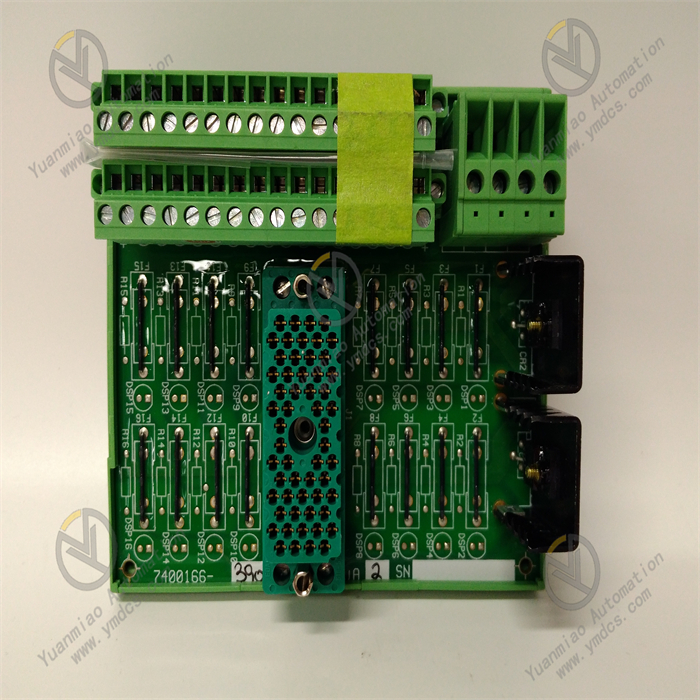
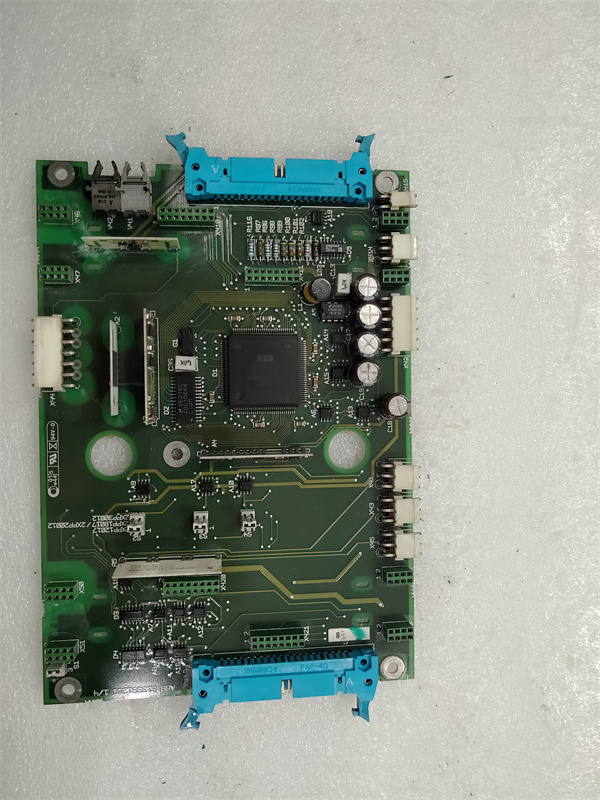
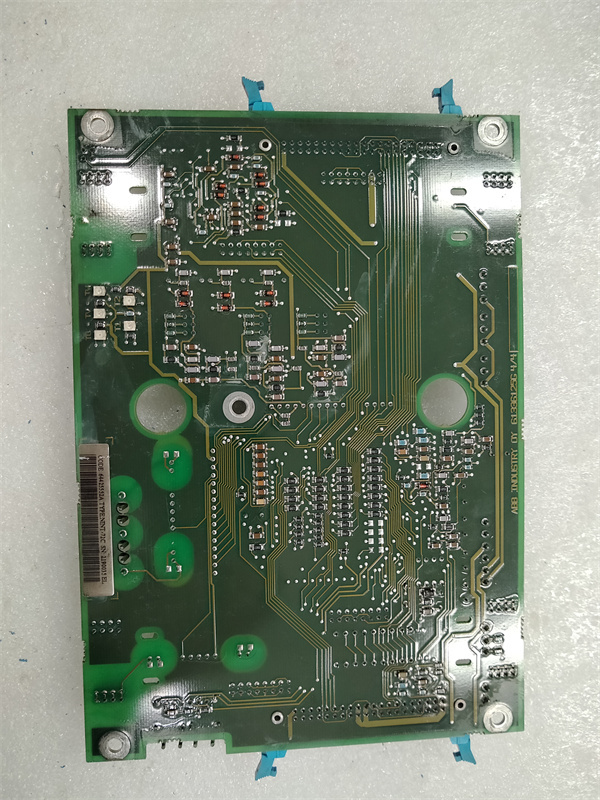
ABB NINT-72C
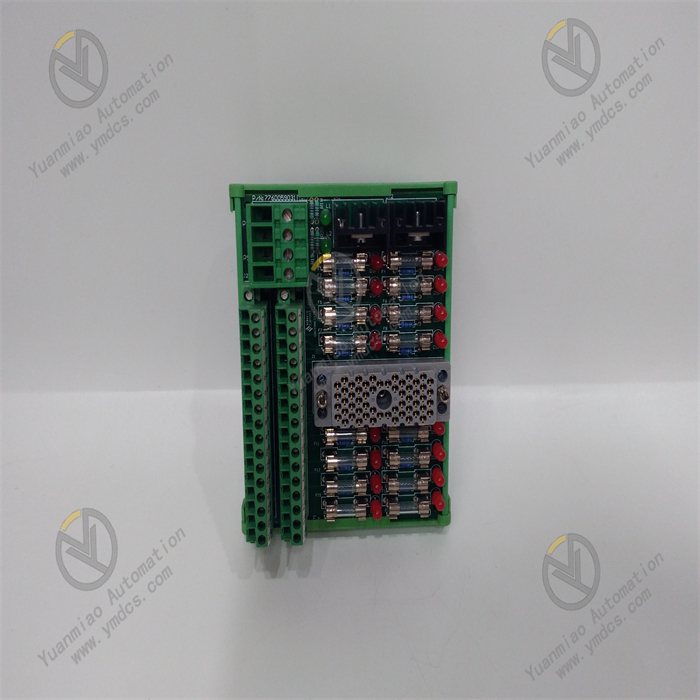
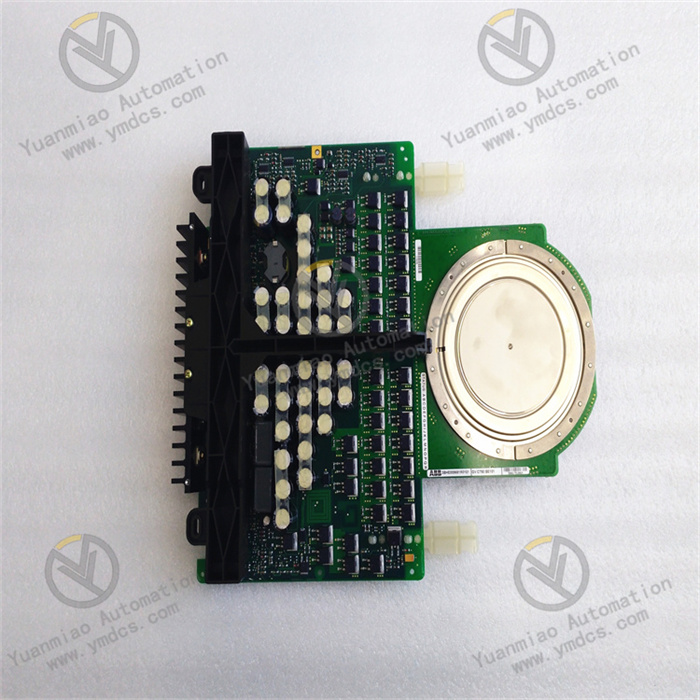
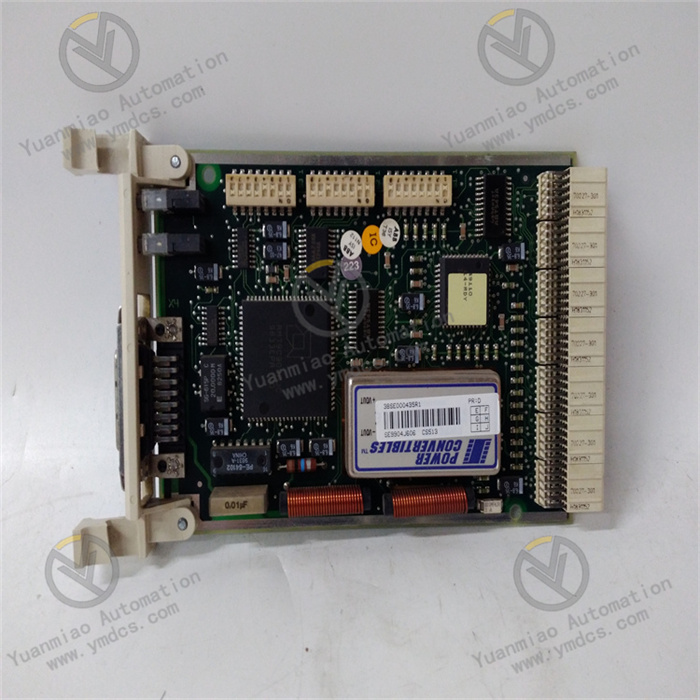
ABB NINT-72C (Product Code: 64513591) is a high-performance dual-port Ethernet network interface module customized for the AC 800M series Programmable Logic Controllers (PLCs). As a member of ABB's industrial automation communication module family, it serves as the core information hub in the System 800xA Distributed Control System (DCS). This module plugs directly into the local I/O backplane of the AC 800M CPU, establishing a highly reliable communication link via two independent Ethernet ports. It supports real-time data interaction between the main controller and operator stations, engineering stations, as well as third-party intelligent devices. With its redundancy backup, multi-protocol compatibility and wide temperature adaptability, it is widely used in industrial scenarios with stringent requirements for communication stability, such as power generation, petrochemicals and nuclear energy, ensuring the uninterrupted transmission of control commands and data.
1. Product Attributes
As a native communication module for the AC 800M ecosystem, it is positioned as a high-availability industrial-grade network interface unit. Distinguished from general-purpose communication modules, it focuses on the redundant communication and multi-protocol integration requirements of critical control systems. The specific basic information is as follows:
- Product Model: NINT-72C (Product Code: 64513591)
- Product Type: Dual-port Ethernet network interface module dedicated to AC 800M controllers, featuring a standard single-slot width design
- Core Purpose: Establish communication links between AC 800M controllers and various devices to enable efficient transmission of real-time control data, HMI interaction data and remote diagnostic data; support redundant network configuration for millisecond-level switching in case of link failures, ensuring the continuous operation of critical control loops
2. Technical Specifications
2.1 Electrical and Communication Performance Parameters
- Communication Port Configuration: Equipped with 2 auto-sensing 10/100 Mbps RJ45 Ethernet ports, supporting full/half-duplex mode switching. It enables physically isolated dual-link design, which carries real-time control and non-real-time data transmission tasks respectively
- Supported Protocols: Natively compatible with the proprietary communication protocol of ABB AC 800M, while also supporting open industrial protocols including Modbus TCP (for general industrial data interaction) and IEC 61850 (power automation standard, including GOOSE/MMS messages), enabling seamless connection with third-party intelligent devices and multi-brand automation systems
- Redundancy Function: Supports network redundancy configuration (requires ABB proprietary network management software). When the primary link fails, the standby link can switch seamlessly within milliseconds to ensure "zero data loss" and guarantee the uninterrupted operation of control loops
- Power Supply and Power Consumption: No independent power supply is required; it is powered by +5V DC from the local I/O backplane of the AC 800M CPU, featuring low power consumption and simple wiring, avoiding the impact of additional power supply failures on communication stability
2.2 Physical and Protection Specifications
- Dimensions: Standard single-slot width, with dimensions of 35mm (width) × 120mm (height) × 90mm (depth). Its compact size allows seamless insertion into the backplane slot of the AC 800M controller without occupying additional space
- Protection Rating: IP20 protection rating, suitable for installation inside control cabinets, with basic dustproof capability. It can effectively resist slight dust erosion in control cabinets and avoid circuit short circuits
- Installation Method: Plugs directly into the local I/O backplane of the AC 800M CPU without requiring additional fixing screws. It supports plug-and-play functionality, enabling convenient disassembly and assembly, and greatly shortening maintenance and replacement time
2.3 Environmental Adaptability
- Temperature Range: Operating temperature ranges from -25℃ to +60℃, suitable for high and low temperature environments in industrial control rooms and on-site cabinets; storage temperature ranges from -40℃ to +80℃, facilitating long-term spare parts storage
- Humidity and Anti-interference: Relative humidity 5%–95% (non-condensing), avoiding circuit failures caused by humid environments; equipped with excellent Electromagnetic Interference (EMI) suppression capability, it can resist strong electromagnetic radiation in industrial sites and ensure stable communication signals
3. Compatible Systems and Hardware Combinations
- Compatible Main Control Modules: Core compatibility with AC 800M series CPU modules, including models such as PM864, PM865 and PM866. It can be directly inserted into the local I/O backplane of the main control module for automatic identification and communication
- Compatible Control Systems: Seamlessly integrated into the ABB System 800xA distributed control system, enabling parameter configuration, link monitoring and fault diagnosis through Control Builder M engineering software without the need for additional driver installation
- Supporting Equipment and Components: Can connect to industrial Ethernet switches, operator stations, engineering stations, third-party Intelligent Electronic Devices (IEDs), variable frequency drives, smart electric meters, etc.; requires ABB proprietary network management software to implement redundant network configuration and improve communication reliability
4. Product Features
4.1 Dual-link Redundancy Design for Excellent Communication Availability
4.2 Open Multi-protocol Compatibility for Flexible System Integration
4.3 Plug-and-play Design for Efficient Operation and Maintenance
5. Application Scenarios and Safe Operation Precautions
5.1 Application Scenarios
5.2 Safe Operation and Maintenance Specifications
- Installation, disassembly and maintenance work must be performed by qualified electrical professionals. Before operation, all power supplies of the AC 800M controller and related equipment must be disconnected, and the Lockout-Tagout (LOTO) procedure must be implemented. Plug-in operations can only be performed after the backplane power supply is completely cut off to avoid electric shock or module damage.
- The module is only suitable for installation inside control cabinets. The installation environment must meet temperature, humidity and dustproof requirements. Avoid direct exposure to humid, dusty or corrosive gas environments, and keep it away from strong electromagnetic interference sources and high-temperature heat sources to ensure communication performance and service life.
- When configuring redundant networks, operation must be performed through ABB officially certified network management software. Link parameters must be set in strict accordance with the system manual to avoid redundancy function failure caused by configuration errors; regularly check the connection status of Ethernet ports and the integrity of cables, and promptly handle any looseness or damage.
- If the module is put into use after being idle for a long time (more than 1 year), first check the stability of the backplane power supply and ensure that the module has no damage or oxidation on its appearance, then insert it into the backplane to test the communication function, and put it into official operation only after confirming that there are no faults.