Description
1. Product Overview
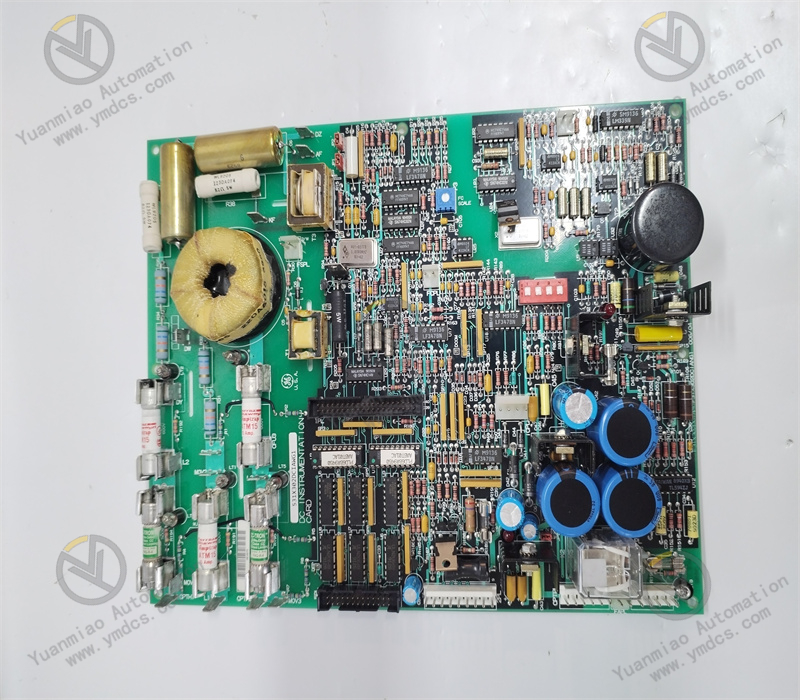
GE 531X310NDAEG1 is a dedicated digital I/O control board for Mark V/VI series turbine and generator‑set systems under General Electric industrial control systems. Part of the GE DS200 industrial hardware family, it serves as a core matching unit for the PCCA board set. Designed for main control systems of steam turbines and gas turbines in large‑scale thermal‑power, gas‑fired and combined‑cycle power plants, this board acts as the core carrier for digital signal interaction of unit control systems. It performs key functions including discrete‑signal acquisition, logic command output, unit interlock signal transfer, system status feedback, fault‑logic judgment and main‑loop coordinated control. It enables accurate monitoring of auxiliary‑equipment status, interlock‑protection triggering, start‑stop logic control and operating‑condition feedback for turbine units, and constitutes the core digital hardware for logic computation, safety interlock and coordinated equipment operation of generator‑set turbine control systems.
This product strictly complies with GE original specifications for turbine‑control hardware, IEC industrial electrical‑safety standards and EMC electromagnetic‑compatibility requirements. It has undergone a full suite of power‑grade rigorous tests: full‑load long‑term power‑on aging, high‑low temperature cyclic shock, continuous vibration fatigue, high‑voltage insulation withstand, electromagnetic‑interference resistance and switching‑loop service‑life evaluation. Supporting 24/7 year‑round full‑load operation, it withstands harsh cabinet conditions in power plants, such as high enclosed temperature, dusty humidity, alternating temperature cycles, sustained equipment vibration, heavy on‑site electromagnetic interference and grid harmonic fluctuation.
It addresses common deficiencies of conventional digital I/O boards: signal chattering, logic misjudgment, loop response lag, poor contact stability, parameter drift over long runtime and interference‑caused false actuation. As essential hardware for new‑build GE Mark‑series turbine units, technical‑retrofit replacement of aged I/O boards, rectification of abnormal digital‑logic loops and strategic spare‑part stocking for critical power‑plant units, it ensures precise logic control, reliable interlock protection and stable, controllable system performance for turbine units.
2. Functional Features
2.1 Multi‑channel Digital Signal Transceiving for Accurate & Reliable Logic Control
The 531X310NDAEG1 is equipped with multiple independent digital‑input and digital‑output loops for synchronous acquisition of unit discrete‑status signals and output of logic commands. Each channel adopts an independent‑loop design free from crosstalk and performs dedicated computation. Fitted with original high‑precision logic‑processing chips and embedded standardized turbine‑unit control‑logic algorithms, it accurately identifies unit start‑stop status, auxiliary‑equipment operation feedback, interlock‑contact states and fault switching signals, and executes rapid logic judgment and command output with zero latency, misjudgment or missed actions. It avoids sampling deviation, logic disorder and command‑output delay typical of generic I/O boards, and guarantees accurate execution of condition switching, interlock protection and equipment coordination for turbine units.
2.2 Hardware‑level Loop Protection for Safe & Stable Operation
The board integrates dedicated line fuses plus hardware overcurrent, overvoltage and surge‑protection mechanisms. Leveraging the protection architecture of G1/G2/G7/G8 series PCCA board sets, it implements independent channel‑fault blocking and global loop overload protection. Upon short‑circuit, overcurrent or abnormal voltage in an individual signal loop, the faulty channel is cut off independently to prevent fault propagation that could disable the whole board or disturb the main‑control system. The hardware protection delivers fast response and precise thresholds, effectively mitigating loop faults induced by transient grid surges, line impulses and field mis‑wiring, and improving fault tolerance and operational safety of digital loops within turbine‑control systems.
2.3 Native System Compatibility for Seamless Integration with Mark‑series Units
Natively compatible with the full GE Mark V and Mark VI turbine, gas‑turbine and generator‑set control systems and belonging to the standard DS200 industrial‑hardware ecosystem, the board’s bus protocols, logic points and communication formats fully match original‑factory system architectures. No additional protocol conversion, external signal‑conditioning modules or complex parameter calibration are required; direct on‑site rack‑mount installation is supported. It seamlessly interfaces with unit main‑control systems, power‑plant DCS, PLC and SCADA platforms to enable real‑time upload of digital operating conditions, bidirectional exchange of logic commands, remote monitoring of interlock status and accurate reporting of fault data. It fits retrofit, capacity‑expansion and upgrade scenarios for both legacy and new‑build unit control systems.
2.4 Industrial‑grade Anti‑interference Design for Complex Power‑plant Conditions
Built on power‑specific reinforced PCB construction with multi‑layer electromagnetic shielding and physical partition isolation between high‑current and low‑current loops, it delivers outstanding EMC performance. It effectively suppresses interference sources present in power‑plant environments: electromagnetic radiation from turbine equipment, harmonic noise from frequency converters, coupling interference from high‑voltage power cables, grid noise fluctuation and line induced interference. During operation, no signal chattering, false logic triggering or anomalous data jumping occurs. In harsh cabinet environments featuring high enclosed temperature, dusty humidity, temperature cycling, continuous vibration and strong electromagnetic disturbance, it maintains stable digital signals, accurate logic computation and dependable loop actuation, and prevents unit malfunctions such as false interlock, unintended start‑stop and abnormal status feedback.
2.5 Full‑scope Intelligent Self‑diagnosis for Rapid Fault Tracing
Dual hardware‑software self‑diagnosis continuously monitors board power‑supply status, bus‑communication links, operating conditions of individual digital channels, loop continuity, hardware‑chip health and fuse status. It precisely detects channel wire breakage, loop short‑circuit, signal anomaly, communication interruption, hardware aging and fuse burnout. Fault codes and abnormal point locations are actively reported to support fault tracing and condition analysis. It lowers troubleshooting complexity for digital loops in turbine‑control systems and improves unit maintenance efficiency and equipment controllability.
2.6 Standardized Modular Design for Efficient Maintenance & Replacement
Adopting the standardized modular plug‑in structure of the GE DS200 series, it fits standard rack layouts for Mark‑series unit cabinets with precise positioning, easy disassembly and secure latching for reliable contact. Standardized channel definitions and terminal blocks deliver orderly wiring and convenient servicing. Lossless in‑situ replacement of defective legacy digital I/O boards is supported without modifying field wiring, reconstructing system logic or resetting configuration parameters. It applies to non‑shutdown technical retrofits, emergency fault repair and routine‑loop maintenance, and reduces power‑plant O&M costs and unit outage losses.
3. Technical Specifications
3.1 Core Adaptation Parameters
- Model: 531X310NDAEG1
- Brand: General Electric (GE)
- Series: GE DS200 industrial control series, Mark V/VI turbine‑unit control‑system boards
- Type: Multi‑channel digital input‑output control board, PCCA‑matching logic I/O board
- Compatible Board Sets: G1, G2, G7, G8 standard PCCA board sets with on‑board line‑fuse protection
- Compatible Systems: GE Mark V / Mark VI steam‑turbine, gas‑turbine and generator‑set control systems; power‑plant DCS / PLC / SCADA
- Applicable Equipment: Turbine units and auxiliary control equipment for large‑scale thermal‑power, gas‑fired and combined‑cycle power plants
- Core Functions: Multi‑channel discrete‑signal acquisition, logic computation & judgment, interlock‑command output, hardware‑based loop protection, bus data exchange, full‑status self‑diagnosis & alarming, coordinated control of unit operating conditions
- Application Scenarios: New‑build Mark‑series unit assembly, replacement of aged digital I/O boards, rectification of abnormal turbine‑logic loops, control‑system technical retrofit & upgrade, strategic spare‑part stocking for critical power‑plant units
3.2 Electrical Performance Parameters
- Signal Types: Industry‑standard discrete digital‑input and digital‑output signals
- Channel Architecture: Multiple independent channels with galvanic isolation between channels; free of crosstalk and coupling interference
- Protection Configuration: Dedicated on‑board line fuses; hardware‑based independent overcurrent, overvoltage and surge protection per channel
- Logic Accuracy: High‑speed logic computation with microsecond‑level command response; zero delay, misjudgment or missed actuation
- Communication Bus: Natively compatible with GE Mark‑series dedicated bus for high‑speed, stable bidirectional data transmission
- Isolation Performance: Physical isolation between high‑current and low‑current circuits plus per‑channel galvanic isolation to prevent high‑voltage back‑feed and signal crosstalk
- Electrical Stability: 24/7 full‑load continuous operation; no logic drift, channel failure or false protection triggering
3.3 Operating‑condition Parameters
- Operation Mode: 24/7 year‑round online operation for signal acquisition and logic scheduling
- Response Performance: Microsecond‑level fast response for digital‑signal sampling, logic judgment and command output
- Interaction Performance: Real‑time bus‑based data upload, main‑control‑command distribution and synchronous update of logic parameters
- Stability Feature: No routine calibration or frequent maintenance; consistent long‑term logic performance and high loop reliability
- Diagnostic Capability: Comprehensive self‑check and alarm covering power supply, communication, channel loops, fuse conditions and hardware faults
3.4 Environmental Specifications
- Operating Temperature: 0 ℃ ~ +65 ℃, power‑grade range for enclosed power‑plant cabinet environments
- Storage Temperature: ‑40 ℃ ~ +85 ℃ for extreme conditions during storage and transportation
- Operating Humidity: 5%‑95% RH (non‑condensing); tolerant to dusty high‑humidity cabinet environments in power plants
- Environmental Durability: Dust‑proof, moisture‑proof, resistant to temperature‑cycle aging, continuous vibration and strong electromagnetic interference
- Compliance: Compliant with IEC industrial electrical‑safety, EMC and turbine‑unit control industry specifications
3.5 Physical Structure Parameters
- Mounting Method: DS200‑series standard rack‑mount modular plug‑in installation, compatible with Mark V/VI system cabinets
- Form Factor: Integrated industrial I/O board with compact layout to save cabinet space
- Material: Industrial flame‑retardant reinforced PCB and insulating protective structure; anti‑loosening, wear‑resistant, aging‑resistant, flame‑retardant and moisture‑proof
- Structural Feature: Partition‑isolated layout for high‑current / low‑current circuits plus independent channel‑loop design to eliminate signal crosstalk and power‑supply interference
- Interfaces: Standardized signal terminals, system‑bus connectors and fuse‑protection modules; orderly wiring and reliable contact
4. Hardware Configuration & Structural Advantages
4.1 Core Hardware Configuration
The GE 531X310NDAEG1 adopts dedicated digital‑I/O hardware architecture for DS200‑series turbine‑control systems. Its core components include multiple independent digital‑signal acquisition loops, high‑speed logic‑processing units, hardware fuse‑protection modules, multi‑stage electromagnetic‑shielding circuits, bus‑communication processors, full‑scope self‑diagnosis loops and stabilized power‑supply modules. Internal physical partitioning separates high‑current and low‑current circuits, and each channel features galvanic isolation, fundamentally eliminating signal chattering, logic misjudgment and command anomalies caused by high‑voltage interference, power‑supply fluctuation and electromagnetic noise.
All critical components pass strict original‑factory screening including full‑load aging, high‑low‑temperature thermal shock, vibration fatigue, high‑voltage insulation testing and electromagnetic‑interference evaluation. Optimized for long‑term non‑stop turbine‑unit operation, frequent condition switching and harsh power‑plant electromagnetic environments, it independently completes the full workflow: digital‑signal acquisition, logic computation, command output, loop protection, data exchange and fault self‑diagnosis. It delivers prominent strengths: high logic precision, great loop stability, dependable protection, superior anti‑interference performance and no long‑term performance degradation.
4.2 Structural Design Advantages
The board features compact standardized modular construction optimized for dense installation inside Mark V/VI series turbine‑unit cabinets, achieving high space‑utilization and neat assembly. Constructed from flame‑retardant, moisture‑proof and anti‑vibration reinforced industrial‑grade materials, circuits and protection assemblies are mechanically secured against loose connections, terminal loosening and poor‑contact faults induced by sustained cabinet vibration, temperature cycling and dusty‑humid conditions.
The on‑board independent fuse‑protection architecture provides per‑channel protection with single‑point‑fault isolation without impacting overall‑system operation. Clearly‑defined standardized terminals simplify field wiring, maintenance and loop troubleshooting. Lossless in‑situ replacement of faulty legacy I/O boards is achievable without rewiring or reconfiguring control logic, substantially lowering costs for turbine‑unit retrofits, maintenance and emergency repair to satisfy requirements for long‑term stable control of large‑scale power‑plant turbine units.
5. Working Principle
The GE 531X310NDAEG1 digital I/O control board implements a closed‑loop intelligent‑control workflow: Field digital‑signal input → Channel isolation & filtering → High‑speed logic computation & judgment → Hardware‑protection verification → Logic‑command output → Bus data exchange → Full‑status self‑diagnosis & alarm. This mechanism enables accurate acquisition of digital‑loop signals, reliable logic control and safe coordinated operation for turbine units.
During runtime, discrete signals such as unit start‑stop contacts, auxiliary‑equipment operation feedback, local selector‑switch status and interlock‑protection contacts enter the board’s independent‑channel loops. Multi‑stage filtering, shaping and isolation units eliminate field electromagnetic noise, line chattering and transient interference pulses, removing invalid noise and producing clean, stable standard digital signals to guarantee authenticity without distortion or chattering.
Clean signals are fed into the on‑board high‑speed logic‑processing unit. Combined with preset turbine‑unit control logic, condition evaluation, status identification and logic computation are performed. Corresponding control commands are generated according to unit operating conditions to drive external execution loops for unit start‑stop, condition switching, interlock protection and equipment coordination. Throughout the process, on‑board fuses and hardware‑protection loops continuously monitor channel current and voltage. Upon threshold violation, the faulty channel is locked and protection is activated to contain fault propagation. Meanwhile, via the dedicated bus, the board uploads real‑time digital operating‑condition data, channel states, logic runtime data and fault information to the upper‑level main‑control system, and receives remote configuration and control commands to realize seamless coordinated local‑and‑remote control of turbine units.
Dual hardware‑software self‑diagnosis runs continuously to monitor board power‑supply health, bus‑communication links, channel‑loop conditions, fuse status and hardware performance. Once wire breakage, short‑circuit, signal anomaly, communication dropout or hardware failure is detected, the abnormal loop is locked, fault codes are reported and system alarms are triggered. This comprehensively safeguards stable digital‑logic loops, precise control, reliable interlock and dependable operation for Mark‑series turbine units.
6. Application Scenarios
6.1 Core Digital‑logic Control for Turbine Units
Widely deployed in GE Mark V/VI turbine and generator‑set control systems for thermal‑power, gas‑fired and combined‑cycle power plants, it serves as core hardware for digital‑signal interaction and logic control. It undertakes start‑stop control, auxiliary‑equipment coordination, operating‑condition feedback, interlock‑protection judgment and fault‑logic blocking. It delivers accurate and dependable digital‑logic support for automatic turbine‑unit control, load regulation and safety protection, and constitutes indispensable foundational hardware for large‑scale turbine‑unit automatic‑control systems.
6.2 Unit Interlock Protection & Operating‑condition Safety Management
Leveraging high‑precision logic computation and hardware‑grade loop‑protection capabilities, it safeguards digital‑control‑loop safety throughout operation. It responds accurately to various abnormal conditions and fault signals and rapidly triggers interlock blocking, fault isolation and equipment‑shutdown protection actions, effectively mitigating major safety risks including unintended start‑stop, false interlock and equipment loss‑of‑control for turbine units. Through full‑scope self‑diagnosis and fault reporting, early warning of hidden defects within digital loops and precise fault tracing are realized, providing reliable data support for unit predictive maintenance, process optimization and hazard rectification.
6.3 Strategic Spare‑part Stocking for Critical Power‑plant Units
The 531X310NDAEG1 is a critical spare part for GE Mark V/VI turbine units and DS200 industrial‑control systems. Channel failure, logic malfunction, protection anomaly or communication interruption of the board can directly cause interlock failure, control disorder and abnormal status feedback, potentially leading to severe production losses such as unplanned unit outages, equipment failure and grid‑connection anomalies. Held as strategic spare hardware in power plants, it enables fast in‑situ emergency replacement of faulty boards for rapid restoration of digital‑logic control and interlock‑protection functions, sustaining continuous turbine‑unit operation. It is essential for maintenance, emergency repair, system expansion and hardware upgrade of large‑scale power‑plant units.