Description
1. Product Overview
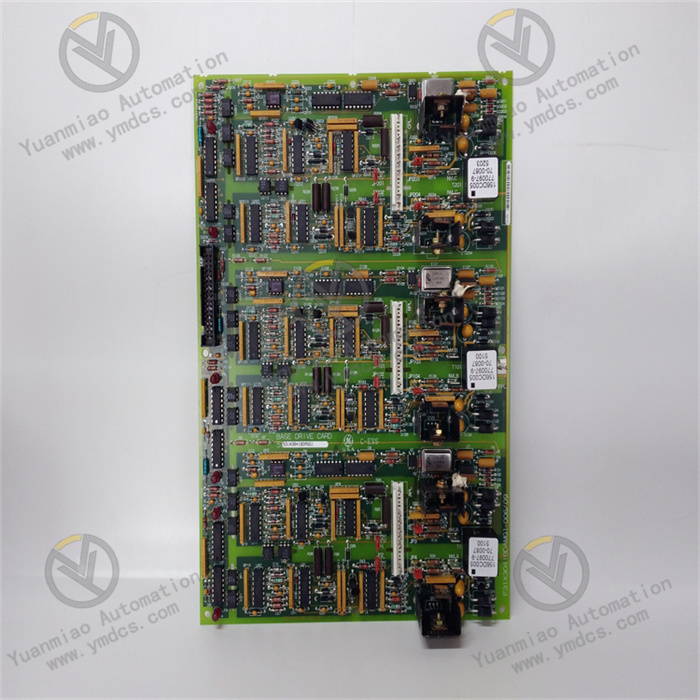
GE 531X304IBDAMG1 is a high‑precision multi‑channel analog input acquisition board under General Electric industrial control systems. As core supporting hardware for GE Mark VI / Mark VIe turbine and generator‑set control systems, it serves as a critical front‑end signal acquisition unit for power‑plant DCS, steam‑turbine control systems, excitation systems and auxiliary‑equipment control systems.
Designed for monitoring rotating machinery and thermal systems in large‑scale thermal power, hydropower, gas‑turbine and combined‑cycle power plants, this board performs multi‑channel high‑speed acquisition, signal isolation, filtering and shaping, analog‑to‑digital conversion and data upload for field 4‑20 mA standard process analog signals including temperature, pressure, flow, liquid level, vibration and valve position. It accurately converts various field industrial analog signals into system‑recognizable digital data, providing original and precise data for unit load regulation, process closed‑loop control, equipment condition monitoring, fault early‑warning and safety interlock.
This product strictly complies with GE original turbine‑control hardware specifications, IEC industrial electrical codes and EMC standards. It has passed comprehensive industrial‑grade tests including long‑duration full‑load power‑on aging, high‑low temperature cyclic shock, continuous vibration fatigue, high‑voltage insulation withstand, electromagnetic interference resistance and signal‑precision stability test. Supporting 24/7 non‑stop continuous acquisition throughout the year, it withstands harsh power‑plant cabinet conditions such as high enclosed temperature, dust‑laden humidity, alternating temperature cycles, sustained equipment vibration, heavy on‑site electromagnetic interference and grid harmonic fluctuation.
It addresses common drawbacks of conventional acquisition boards, such as signal drift, precision deviation, channel crosstalk, poor anti‑interference performance, severe temperature drift and distortion in long‑distance transmission. As an essential hardware for new‑build GE unit control system assembly, technical‑retrofit replacement of aged analog boards, rectification of abnormal process‑signal acquisition and strategic spare‑part storage for core power‑plant units, it ensures accurate acquisition of unit process parameters, stable closed‑loop control and safe controllable equipment operation.
2. Functional Features
2.1 Multi‑channel Synchronous High‑precision Acquisition with Stable Signal Accuracy
The 531X304IBDAMG1 is equipped with independent multi‑channel analog acquisition circuits for synchronous sampling of multiple 4‑20 mA standard industrial analog signals. Each channel features dedicated signal conditioning and AD conversion units with full galvanic isolation between channels to eliminate crosstalk. Adopting high‑resolution ADC chips and GE original calibration algorithms, it delivers ultra‑low temperature drift and near‑zero zero‑point offset. It reliably captures minor process parameter variations of generating units over long operating periods, avoiding elevated temperature‑induced precision degradation and numerical bouncing seen in ordinary boards. It guarantees authentic, continuous and reliable acquired data for key process parameters such as temperature, pressure and flow, supplying high‑precision data foundation for precise unit regulation and steady‑state operation.
2.2 Full‑channel Galvanic Isolation to Eliminate Signal Crosstalk and Interference
Each acquisition channel adopts independent electrical‑isolation architecture, realizing channel‑to‑channel isolation, isolation between field inputs and system bus, as well as physical separation between strong‑current and weak‑current circuits. It thoroughly suppresses signal distortion, numerical drift and inter‑channel interference caused by field ground‑loop current, common‑mode interference and differential‑mode interference. Suited for heavy‑interference power‑plant environments densely populated with frequency converters, high‑voltage apparatus and power cables, it excels at resisting coupling interference, electromagnetic radiation and grid harmonics. Signals maintain integrity without attenuation or distortion over long‑distance wiring. Hardware‑level isolation secures independence and accuracy of every process signal, preventing unit regulation fluctuation, false alarms and spurious interlock trips triggered by signal anomalies.
2.3 Native System Compatibility for Plug‑and‑Play Operation
Natively compatible with full‑range GE Mark VI and Mark VIe turbine and generator‑set control systems, the board’s bus protocol, data format and point‑definition fully conform to original system architecture. No extra protocol converters, external signal isolators or complex calibration are required; it supports direct in‑situ installation. It seamlessly interfaces with unit main‑control systems, power‑plant DCS, PLC and SCADA platforms to implement real‑time analog‑data uploading, trend logging, logical computation, closed‑loop regulation and remote monitoring. It fits both legacy and new‑build unit control architectures for new‑system assembly, legacy‑system upgrade and signal‑loop rectification.
2.4 Intelligent Signal Filtering & Shaping for Complex Field Conditions
The board integrates dual‑stage hardware multi‑level filtering and software digital filtering. It automatically suppresses high‑frequency field noise, transient impulse interference and line jitter, performing smoothing shaping for fluctuating process signals. It mitigates industrial‑site issues including signal chattering, noise contamination and abrupt value jumps. During dynamic conditions such as unit startup/shutdown, load swing, grid disturbance and equipment switching, acquired values remain smooth and continuous without glitches or data gaps, greatly improving control‑system regulation stability and process‑control accuracy.
2.5 On‑board Self‑diagnosis & Alarm for Efficient Maintenance
Dual hardware‑and‑software self‑diagnosis continuously monitors board power supply, channel open‑circuit, short‑circuit, signal over‑range, loop abnormality, bus communication fault and hardware failure. It pinpoints faulty channels and fault types, and actively reports fault codes and exception information. Real‑time alarm and fault‑log recording facilitate fast troubleshooting of wire breakage, sensor defects, ground‑fault loops and board aging. It reduces control‑system diagnostic workload and improves unit maintainability and equipment controllability.
2.6 Standardized Modular Design for Non‑shutdown Maintenance & Replacement
It adopts standardized modular hot‑swap structure for GE control systems with precise rack positioning, easy disassembly and secure latching, matching standard GE cabinet layout. Standardized interface definition and orderly wiring support lossless in‑situ replacement of defective legacy analog‑acquisition boards. No field‑wiring modification or control‑logic reconfiguration is needed, enabling non‑shutdown technical retrofits, emergency fault swap‑out and routine maintenance, lowering unit shutdown losses and system O&M expenditure.
3. Technical Specifications
3.1 Core Adaptation Parameters
- Model: 531X304IBDAMG1
- Brand: General Electric (GE)
- Series: I/O Board for GE Mark VI / Mark VIe Unit Control System
- Type: Multi‑channel Isolated Analog Input Acquisition Board
- Compatible Systems: GE Mark VI / Mark VIe turbine, gas‑turbine and generator control systems, power‑plant DCS / PLC / SCADA
- Supported Signals: Industry‑standard 4‑20 mA process analog signals
- Applicable Equipment: Steam turbines, gas turbines, combined‑cycle units, generator sets and large auxiliary thermal‑monitoring equipment
- Core Functions: Isolated multi‑channel analog‑signal acquisition, filtering‑shaping, high‑precision AD conversion, data validation, bus transmission, channel self‑diagnosis and fault‑alarm reporting
- Application Scenarios: New‑build unit‑control‑system assembly, replacement of aged analog boards, rectification of abnormal process‑signal acquisition, control‑system technical retrofit & upgrade, strategic spare‑part storage for core power‑plant units
3.2 Electrical Performance Parameters
- Input Signal Type: Standard 4‑20 mA DC analog signal
- Channel Architecture: Multi‑channel independent isolated acquisition; zero inter‑channel crosstalk
- Acquisition Accuracy: High‑precision analog‑to‑digital conversion, low temperature drift, low deviation, minimal long‑term error
- Signal Processing: Multi‑stage hardware filtering plus software digital filtering for anti‑jitter smoothing
- Isolation Performance: Channel‑to‑channel isolation, field‑to‑bus galvanic isolation; resistance to common‑mode and differential‑mode interference
- Bus Communication: Native support for GE proprietary system bus for high‑speed stable data transmission
- Electrical Stability: 24/7 full‑load continuous acquisition; no precision drift, no channel failure, no data anomaly
3.3 Operating Condition Parameters
- Operation Mode: 24/7 year‑round online acquisition and data transmission
- Response Performance: High‑speed sampling with real‑time data update tracking dynamic process‑parameter changes
- Diagnostic Capability: On‑board self‑check and alarm for channel open‑circuit, short‑circuit, over‑range, communication anomaly and hardware fault
- Stability Feature: No routine calibration or frequent maintenance; constant acquisition accuracy over long service life
- Control Compatibility: Supports unit closed‑loop regulation, load control, condition monitoring and safety‑interlock logic
3.4 Environmental Specifications
- Operating Temperature: 0 ℃ ~ +65 ℃, industrial standard range for enclosed power‑plant cabinet operation
- Storage Temperature: ‑40 ℃ ~ +85 ℃, suitable for extreme conditions during storage and transportation
- Operating Humidity: 5% ~ 95% RH (non‑condensing), resistant to dusty high‑humidity cabinet environment in power plants
- Environmental Durability: Dust‑proof, moisture‑proof, temperature‑cycle aging resistance, anti‑vibration, anti‑strong‑electromagnetic‑interference
- Compliance: Compliant with IEC industrial electrical‑safety, EMC and power‑plant thermal‑control industry standards
3.5 Physical Parameters
- Mounting Method: GE standard rack‑mount modular plug‑in installation for Mark VI / VIe system cabinets
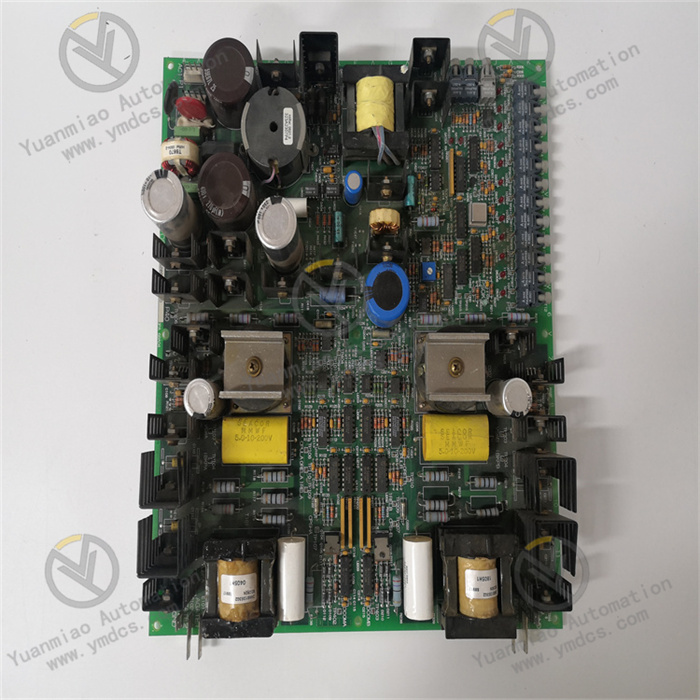
- Form Factor: Integrated industrial I/O board, compact and well‑organized layout
- Material: Industrial flame‑retardant reinforced PCB with insulating structure; anti‑loosening, wear‑resistant, aging‑resistant, flame‑retardant and moisture‑proof
- Structural Feature: Partition layout separating strong‑current and weak‑current circuits; independent per‑channel circuits eliminating signal crosstalk and power‑supply interference
- Interfaces: Standard signal terminals and system bus connectors for standardized wiring and reliable contact
4. Hardware Configuration & Structural Advantages
4.1 Core Hardware Configuration
GE 531X304IBDAMG1 adopts GE Mark‑series proprietary high‑precision analog‑acquisition hardware architecture. Key components include per‑channel signal‑conditioning units, high‑precision AD converters, multi‑stage filter circuits, galvanic‑isolation modules, bus data processors, fault‑diagnosis loops and stabilized power‑supply modules.
Each acquisition channel uses fully independent circuitry with galvanic isolation, fundamentally eliminating channel crosstalk, ground‑potential interference and electromagnetic noise. All critical components pass strict original‑factory screening including full‑load aging, high‑low‑temperature thermal shock, vibration fatigue and EMI testing. Optimized for continuous power‑plant unit operation, fluctuating process signals and harsh electromagnetic environments, it independently completes the full workflow: analog‑signal acquisition, isolation, filtering, conversion, validation and upload. It delivers outstanding performance: high acquisition precision, clean signals, robust stability and no long‑term performance degradation.
4.2 Structural Design Advantages
The board features compact standardized modular construction optimized for dense installation inside Mark VI / VIe cabinets for high space‑utilization and neat arrangement. Built with flame‑retardant, moisture‑proof and anti‑vibration reinforced materials, its internal circuits are mechanically secured against loose connections and signal faults induced by sustained cabinet vibration, temperature cycling and dusty‑humid atmosphere.
Well‑partitioned strong‑/weak‑current layout minimizes power‑supply interference and signal crosstalk to preserve measurement accuracy. Standard terminals and bus connectors simplify wiring and maintenance. Lossless in‑situ replacement of faulty legacy boards is achievable without rewiring or reconfiguring control logic, greatly cutting costs for power‑plant retrofits, maintenance and emergency repair to satisfy long‑term stable monitoring and control requirements of critical generating units.
5. Working Principle
GE 531X304IBDAMG1 analog input board implements closed‑loop acquisition workflow: Field Analog Signal Input → Per‑channel Galvanic Isolation → Multi‑stage Filtering & Signal Shaping → High‑precision Analog‑to‑Digital Conversion → Data Validation & Processing → High‑speed Bus Upload → Condition Self‑check & Alarm, realizing precise, stable and interference‑free acquisition and transmission of unit process analog data.
During operation, 4‑20 mA analog signals such as temperature, pressure, flow and valve position from field transmitters feed into respective independent acquisition channels. Signals first pass galvanic‑isolation modules to block ground‑loop current, common‑mode interference and line‑coupled noise while preserving original signal integrity. Afterwards, multi‑level hardware and software filtering suppress high‑frequency industrial noise, transient pulses and line chattering, smoothing fluctuating inputs into clean stabilized analog signals.
Conditioned analog signals are converted into high‑resolution digital readings by high‑precision AD converters. On‑board validation algorithms perform deviation correction, calibration and outlier rejection to guarantee data fidelity. Valid processed data are transmitted via the proprietary system bus to Mark VI / VIe main controllers and upper‑level industrial platforms for unit load regulation, closed‑loop process control, equipment condition monitoring, trend analysis and safety interlock.
Throughout runtime, the board continuously self‑checks channel loops, power supply, communication links and hardware health. Upon detection of open‑circuit, short‑circuit, over‑range or communication failure, it locks affected channels, reports fault codes and triggers system alarms, preventing corrupted measurements from disturbing control logic and safeguarding reliable operation of the unit control system.
6. Application Scenarios
6.1 Precise Process‑parameter Acquisition and Closed‑loop Unit Control
Widely deployed in Mark VI / VIe control systems for thermal‑power, gas‑turbine and combined‑cycle power plants. As front‑end acquisition hardware for critical process parameters including temperature, pressure, flow, liquid level and valve position, it supplies accurate real‑time measurements for automatic load regulation, thermal‑system closed‑loop control and auxiliary‑equipment coordinated control of steam turbines, gas turbines and generators. It ensures steady‑state unit performance, smooth load ramping and controllable process variables, acting as a fundamental acquisition component for unit automatic‑control systems.
6.2 Equipment Condition Monitoring and Fault Early‑warning Analysis
Leveraging high‑precision and high‑stability sampling capability, it captures subtle operational parameter variations and supplies continuous complete raw datasets for equipment aging prediction, abnormal‑condition analysis and latent‑fault detection. It assists technicians in identifying hidden defects such as pipeline blockage, measurement‑point drift, sensor degradation, valve sticking and auxiliary‑equipment malfunction, supporting predictive maintenance and mitigating equipment‑failure risks in advance.
6.3 Strategic Spare‑part Storage for Core Power‑plant Units
531X304IBDAMG1 is an indispensable spare part for GE Mark‑series unit control systems. Channel faults, acquisition failure or communication anomalies can lead to missing process measurements, loss of automatic regulation and spurious alarms, severely impairing unit load control and operational stability and potentially causing unplanned outages. As stored strategic spare hardware, it enables fast in‑situ swap‑out of faulty boards to rapidly restore system acquisition and control functions, avoiding equipment hazards and production losses. It is essential for large power‑plant maintenance, emergency repair, system expansion and hardware upgrade.