Description
1. Product Overview
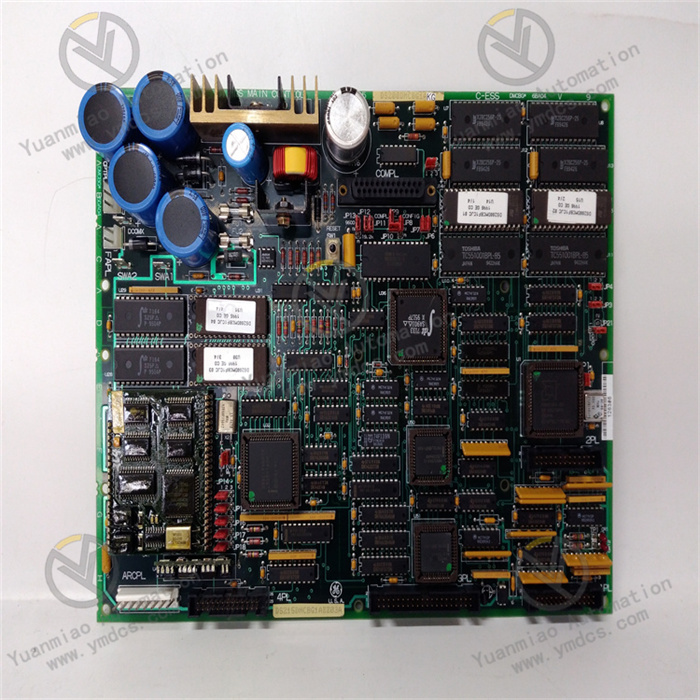
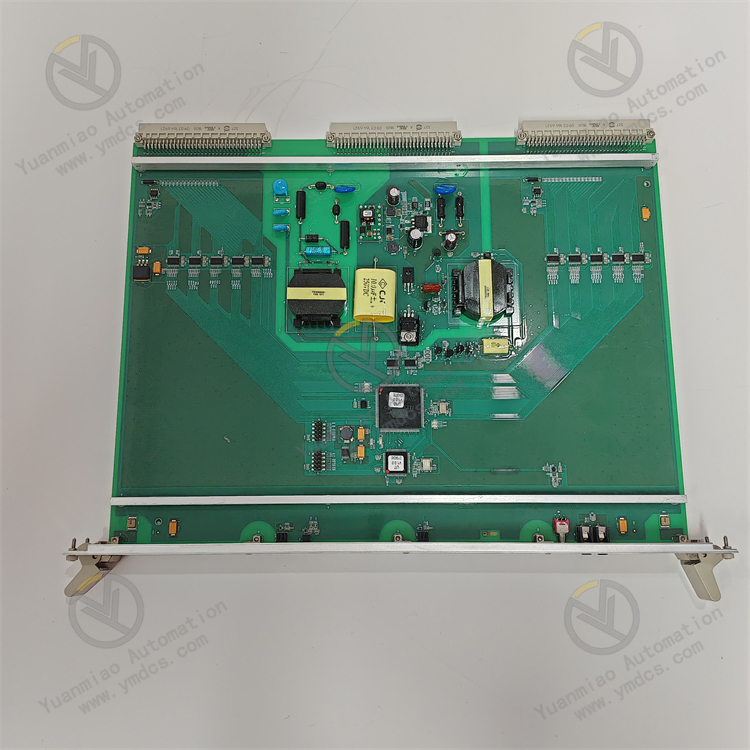
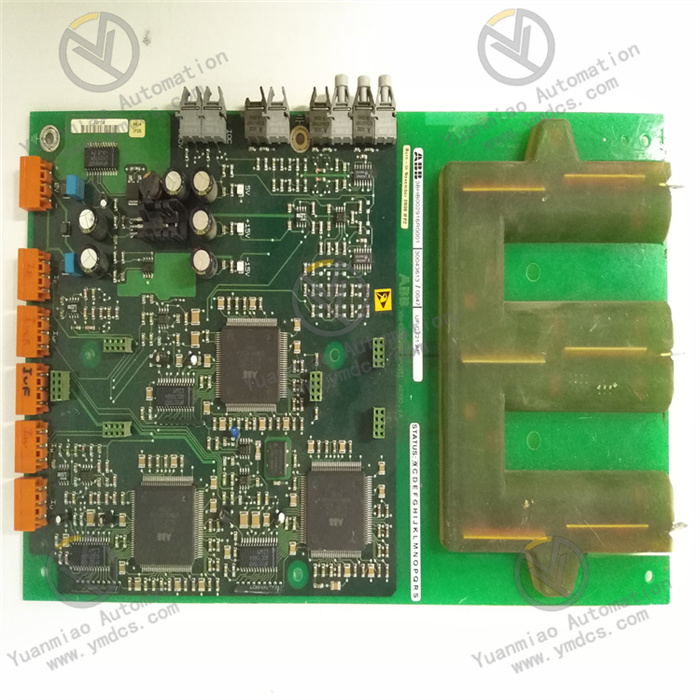
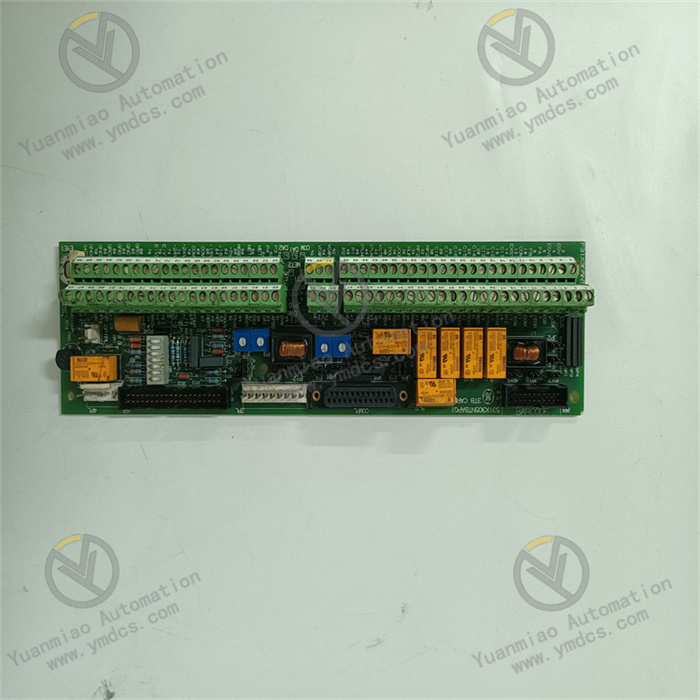
GE 531X305NTBAJG1 is a dedicated terminal interface board for the EX2000 generator‑set excitation system under General Electric industrial control systems. It belongs to the GE EX2000 excitation control hardware family and serves as a core matching board for on‑site signal transfer, terminal circuit integration, strong‑weak current signal matching and system wiring expansion of excitation systems.
Specially developed for EX2000 excitation control systems of synchronous generator‑sets in thermal‑power, hydropower and combined‑cycle gas‑fired power plants, this board performs key functions including analog and discrete‑signal terminal aggregation for excitation systems, transfer of local control loops, excitation regulation signal matching, auxiliary power distribution, on‑site wiring organization & expansion, and system circuit isolation & protection. It effectively interconnects excitation main‑control boards, local operator panels, field primary equipment, sensor acquisition loops and upper‑level monitoring systems. It is the core terminal hardware for standardized wiring, stabilized circuits and convenient maintenance of generator‑set excitation systems.
This product strictly complies with original GE EX2000 excitation system design specifications, IEC power electrical‑safety standards and EMC electromagnetic‑compatibility industrial requirements. It has passed a full set of power‑grade rigorous tests: full‑load power‑on aging, high‑low temperature cyclic shock, continuous vibration test, high‑voltage insulation withstand, electromagnetic‑interference resistance and circuit on‑off service‑life evaluation. Supporting 24/7 year‑round full‑load continuous operation, it adapts to harsh cabinet conditions in power plants, such as high enclosed temperature, dusty humidity, alternating temperature cycles, sustained equipment vibration, heavy on‑site electromagnetic interference and minor grid harmonic fluctuation.
It solves common pain points of conventional excitation terminal boards: messy wiring, poor signal contact, circuit crosstalk, limited wiring expansion, terminal oxidation & loosening after long‑term operation, as well as signal attenuation and distortion. As essential hardware for new‑build EX2000 excitation system assembly, replacement of aged terminal boards, rectification and optimization of on‑site wiring, hazard elimination of excitation loops and strategic spare‑part stocking for critical power‑plant units, it ensures stable signal transmission, reliable circuit operation and standardized, controllable wiring for generator‑set excitation systems.
2. Functional Features
2.1 Aggregate Full‑range Excitation Signals for Standardized Circuit Organization
As a dedicated terminal hub for the EX2000 excitation system, the 531X305NTBAJG1 integrates multiple standardized wiring terminals to centrally collect all local discrete signals, analog signals, power loops, interlock feedback and regulation‑control signals of the excitation system. It realizes unified organization and partition classification of scattered field wiring.
Laid out strictly per original‑factory excitation‑circuit point definitions, it features clear signal partitioning and well‑defined circuit division. It eliminates problems including disordered excitation wiring, confusing point allocation and cross‑circuit interference, and makes on‑site cabling, circuit verification and fault troubleshooting of excitation systems more standardized and efficient. It perfectly meets requirements for standardized assembly construction and O&M management of excitation systems for large‑scale units.
2.2 Accurate Signal Matching & Transmission to Prevent Signal Attenuation and Distortion
Built‑in dedicated signal conditioning and impedance‑matching circuits precisely adapt excitation‑regulation analog signals, discrete interlock signals and feedback sampling signals. It effectively compensates signal attenuation, voltage deviation and waveform distortion caused by long‑distance field cabling.
It preserves the integrity and accuracy of excitation regulation signals, unit status feedback signals and interlock‑protection signals throughout operation. It avoids faults such as excitation‑regulation deviation, abnormal unit grid‑connection, and protection mal‑operation / failure‑to‑operate induced by poor terminal contact, mismatched circuit impedance and signal crosstalk. It improves regulation accuracy and operational stability of excitation systems in an all‑round manner.
2.3 Partitioned Isolation of Strong and Weak Currents with Hardware‑level Circuit Protection
Adopting physical partition and independent‑loop layout for strong‑current and weak‑current circuits, low‑voltage control loops are completely separated from high‑power strong‑current loops. Integrated overcurrent, surge and electrostatic‑protection mechanisms resist instantaneous line surges, grid voltage fluctuation and induced noise interference.
It prevents high‑voltage circuit crosstalk and damage to excitation main‑control equipment from abnormal power‑supply impacts. It avoids whole‑board failure and system circuit anomalies caused by fault propagation from a single loop. It greatly enhances anti‑interference capability and operational fault tolerance of excitation‑system terminal loops, suited for complex electromagnetic conditions in power plants.
2.4 Native Compatibility with EX2000 Systems for Outstanding Adaptability
Natively compatible with the full GE EX2000 series excitation control systems, its point definitions, circuit logic, wiring protocols and mounting dimensions fully match the original‑factory system architecture. No extra adapter modules, secondary signal conditioning or complex parameter calibration are required; direct installation is supported for both new and legacy EX2000 excitation systems.
It seamlessly interfaces with excitation main‑control units, power‑plant DCS, PLC and SCADA upper‑level platforms to enable accurate upload of excitation operating‑condition signals, stable distribution of control commands and real‑time interaction of interlock status. It fully covers scenarios including new‑build unit assembly, technical retrofit of legacy systems, capacity expansion & upgrade and circuit rectification.
2.5 Highly‑reliable Terminal Structure for Stable Low‑loss Long‑term Operation
Equipped with industrial‑grade anti‑corrosion gold‑plated wiring terminals featuring oxidation resistance, corrosion resistance, anti‑loosening performance and plug‑and‑play durability. It withstands high‑humidity, dusty and vibrating environments in power plants and eliminates hidden risks such as signal interruption and poor circuit contact caused by terminal oxidation, virtual connection and loosening.
Terminals deliver smooth plug‑in & out, firm locking and constant contact resistance. No signal attenuation, circuit breakage or contact bounce occurs during long‑time runtime. It greatly reduces risks of abnormal unit shutdown and excitation‑regulation malfunction triggered by terminal faults, and extends service life of terminal circuits.
2.6 Modular Debug‑free Design for Efficient Maintenance and Replacement
Featuring standardized modular plug‑in structure for EX2000 systems, it provides precise rack positioning, easy disassembly & assembly and secure latching for installation in original‑factory standard cabinets. With unified standardized circuit definitions, no professional commissioning, system‑logic reconstruction or modification of main‑control configuration is needed.
Lossless in‑situ replacement of faulty legacy terminal boards is supported without unit shutdown or extensive rewiring. It enables rapid rectification of excitation terminal circuits and hardware upgrade, and effectively cuts O&M costs, emergency‑repair difficulty and unit outage losses for power‑plant excitation systems.
3. Technical Specifications
3.1 Core Adaptation Parameters
- Model: 531X305NTBAJG1
- Brand: General Electric (GE)
- Series: GE EX2000 generator‑set excitation system supporting hardware
- Type: Excitation‑system terminal interface board, signal transfer & integration board, circuit expansion & protection board
- Compatible Systems: GE EX2000 excitation control system, power‑plant DCS / PLC / SCADA industrial control systems
- Applicable Equipment: Synchronous excitation equipment for large‑scale steam‑turbine generators, hydro‑generators and gas‑turbine generator‑sets
- Core Functions: Aggregation and transfer of full‑range excitation signals, signal impedance matching and conditioning, strong‑weak‑current circuit isolation, terminal‑loop protection, on‑site wiring organization & expansion, stable system‑signal transmission, in‑situ technical‑retrofit replacement
- Application Scenarios: New‑build EX2000 excitation‑system assembly, replacement of aged terminal boards, rectification of disordered on‑site wiring, optimization of excitation‑signal loops, unit technical‑retrofit & upgrade, strategic spare‑part stocking for critical power‑plant units
3.2 Electrical Performance Parameters
- Adapted Signals: Excitation analog regulation signals, discrete interlock / feedback signals, local operation signals, auxiliary power‑supply signals
- Terminal Characteristics: Industrial‑grade anti‑corrosion gold‑plated terminals, stable contact resistance, resistance to repeated plugging, oxidation resistance, anti‑loosening
- Circuit Design: Physical isolation for strong‑current and weak‑current circuits, partitioned independent loops, free of cross‑circuit crosstalk and signal coupling interference
- Protection Capability: Built‑in overcurrent, surge and electrostatic protection; withstands instantaneous abnormal voltage and current surges on lines
- Signal Accuracy: Precise impedance matching; no signal attenuation, waveform distortion or sampling deviation for long‑distance cabling
- Electrical Stability: 24/7 full‑load continuous operation; free of circuit breakage, signal bounce and abnormal terminal contact
- Insulation Performance: Compliant with high‑voltage insulation‑withstand requirements; effectively isolates strong‑current and weak‑current circuits to prevent high‑voltage back‑feed and electric‑leakage risks
3.3 Operating‑condition Parameters
- Operation Mode: 24/7 year‑round online operation; stably undertakes signal‑loop transmission tasks for excitation systems
- Transmission Performance: Zero lag, delay or signal distortion; meets requirements for high‑speed regulation and interlock response of excitation systems
- Stability Feature: No routine calibration or frequent maintenance; constant circuit performance and no terminal aging‑caused failure over long runtime
- Adaptable Operating Conditions: Supports regular excitation conditions including frequent unit start‑stop, dynamic load adjustment and minor grid fluctuation
3.4 Environmental Specifications
- Operating Temperature: 0 ℃ ~ +65 ℃, power‑grade range for enclosed power‑plant cabinet environments
- Storage Temperature: ‑40 ℃ ~ +85 ℃ for extreme temperature conditions during storage and transportation
- Operating Humidity: 5%‑95% RH (non‑condensing); tolerant to dusty high‑humidity cabinet environments in power plants
- Environmental Durability: Dust‑proof, moisture‑proof, resistant to temperature‑cycle aging, continuous vibration and electromagnetic interference
- Compliance: Compliant with IEC power electrical‑safety standards, EMC requirements and industry specifications for generator‑set excitation control
3.5 Physical Structure Parameters
- Mounting Method: Standard rack‑mount modular plug‑in installation for EX2000 systems; precise positioning, easy disassembly and secure locking
- Form Factor: Integrated terminal board with compact and well‑organized layout and partitioned wiring design to save cabinet space
- Material: Industrial flame‑retardant reinforced PCB and insulating protective housing; anti‑loosening, wear‑resistant, aging‑resistant, flame‑retardant and moisture‑proof
- Structural Feature: Partition layout for strong‑current / weak‑current circuits and independent‑loop isolation to eliminate signal crosstalk, power‑supply interference and high‑voltage electric leakage
- Interfaces: Multiple sets of standardized partitioned wiring terminals with clear, well‑marked point definitions for convenient cabling and maintenance
4. Hardware Configuration & Structural Advantages
4.1 Core Hardware Configuration
The GE 531X305NTBAJG1 adopts dedicated terminal‑interface hardware architecture for EX2000 excitation systems. Its core components include multiple groups of partitioned standardized wiring terminals, high‑precision signal impedance‑matching units, multi‑stage signal‑filtering and conditioning circuits, strong‑weak‑current isolation modules, surge & overcurrent protection loops and stabilized power‑supply adaptation units.
Fine‑grained partitioned circuit design physically separates excitation analog regulation loops, discrete interlock loops, auxiliary power loops and feedback acquisition loops, fundamentally eliminating mutual signal crosstalk and interference‑caused distortion. Key components and terminals pass strict original‑factory screening including full‑load aging, thermal shock, vibration fatigue, high‑voltage insulation and electromagnetic‑interference testing. Optimized for long‑term non‑stop operation of generator‑set excitation systems, complex field cabling and harsh site conditions, it independently completes full workflows of signal aggregation, transfer, conditioning and protection. It delivers prominent strengths: accurate signal transmission, high circuit stability, reliable protection, high terminal durability and no long‑term performance degradation.
4.2 Structural Design Advantages
The board adopts compact standardized modular construction for the GE EX2000 series, well suited for dense installation inside excitation‑system cabinets with high space‑utilization and firm assembly. Constructed from industrial‑grade flame‑retardant, moisture‑proof, anti‑vibration and aging‑resistant reinforced materials, circuits and terminal bases are multi‑point mechanically locked. It resists faults such as terminal loosening, circuit virtual connection and board deformation & aging induced by sustained cabinet vibration, temperature cycling and dusty‑humid conditions.
Clearly marked and partitioned terminals simplify field wiring and circuit troubleshooting and lower the probability of wiring mistakes. Lossless in‑situ replacement of faulty legacy terminal boards is achievable without cabinet modification, main‑control‑logic reconfiguration or unit shutdown. It substantially cuts costs for technical retrofit, maintenance and emergency repair of excitation systems, and satisfies requirements for long‑term stable terminal‑loop guarantee of excitation systems for large‑scale power‑plant generator‑sets.
5. Working Principle
The GE 531X305NTBAJG1 excitation terminal interface board implements a closed‑loop workflow: Field multi‑type signal access → Partitioned isolation & filtering → Impedance‑matching signal conditioning → Stable circuit transmission → System bidirectional interaction → Full‑process hardware protection. This mechanism realizes standardized organization, accurate transmission and safe interaction of terminal signals for EX2000 excitation systems.
During operation, various field excitation‑system signals including excitation‑regulation analog signals, local‑operation discrete signals, equipment interlock‑feedback signals, sensor sampling signals and auxiliary power‑supply signals are fed into corresponding partitioned terminal loops of the board. All incoming signals go through partitioned isolation circuits for physical separation of strong‑current and weak‑current signals to avoid high‑voltage crosstalk and power‑supply interference. Multi‑stage filter units then remove field electromagnetic noise, line chattering and transient interference pulses to eliminate invalid noise.
Filtered and isolated signals are processed by on‑board high‑precision impedance‑matching and signal‑conditioning units to correct signal attenuation, waveform distortion and impedance deviation caused by long‑distance cabling. Field non‑standard signals are calibrated into standard signals recognizable by the excitation main‑control system to guarantee authenticity and accuracy of signal acquisition, regulation and feedback.
Calibrated standard signals are uploaded to excitation main‑control boards for excitation logic computation, voltage regulation, operating‑condition judgment and interlock protection. Meanwhile, regulation commands and control signals issued by the main‑control unit are output to field execution equipment via terminal loops to realize closed‑loop precise control of the excitation system.
On‑board hardware‑protection loops continuously monitor current and voltage of each partitioned loop. Upon line short‑circuit, overcurrent, surge impact or abnormal electric leakage, faulty loops are automatically isolated to contain fault propagation and protect main‑control equipment and field loops. Through standardized terminal integration and circuit optimization, it addresses pain points of excitation systems including messy wiring, signal instability and high circuit‑failure risk. It comprehensively guarantees stable signal transmission, precise regulation, reliable interlock and controllable operation for EX2000 excitation systems.
6. Application Scenarios
6.1 Terminal Signal Organization and Transfer for EX2000 Excitation Systems
As dedicated core terminal‑interface hardware for the GE EX2000 excitation system, it is widely deployed in excitation control systems of large‑scale synchronous generator‑sets in thermal‑power, hydropower and gas‑fired power plants. It undertakes aggregation, transfer, conditioning and transmission of full‑range excitation‑system signals. It organizes scattered on‑site wiring and standardizes partition of various signal loops. Acting as a key interconnecting hub between field primary excitation equipment, operator panels, main‑control systems and upper‑level monitoring platforms, it guarantees accurate transmission of excitation‑regulation, status‑feedback and interlock‑protection signals. It is fundamental essential hardware for normal commissioning and stable operation of excitation systems.
6.2 Excitation‑signal Loop Optimization and Anti‑interference Protection
Leveraging strong‑weak‑current isolation, signal conditioning and hardware‑protection capabilities, it targets faults such as excitation‑signal distortion, regulation deviation, interlock mal‑operation and abnormal feedback induced by complex electromagnetic environments in power plants. It effectively shields frequency‑converter harmonic noise, high‑voltage‑equipment radiation and line‑induced interference. It stabilizes analog excitation‑regulation accuracy and discrete‑signal interlock reliability, improves unit grid‑connection stability, load‑regulation precision and overall anti‑interference performance of excitation systems, and avoids unit malfunctions triggered by signal anomalies.
6.3 Strategic Spare‑part Stocking for Critical Power‑plant Units
The 531X305NTBAJG1 is a critical mandatory spare part for GE EX2000 excitation systems. Aging failure, circuit fault or abnormal signal transmission of the terminal board may directly lead to excitation‑regulation deviation, failed unit grid‑connection, interlock‑protection failure and distorted operating‑condition feedback, and may further cause severe production losses including unplanned unit shutdown, reduced power‑generation efficiency and equipment breakdown.
Held as strategic spare hardware in power plants, it enables fast in‑situ emergency replacement of faulty boards for rapid restoration of excitation‑system signal transmission and loop‑control functions, and guarantees continuous stable operation of generator‑sets. It is indispensable for daily maintenance, emergency repair, system expansion and hardware upgrade of large‑scale power‑plant units.