Description
1. Product Overview
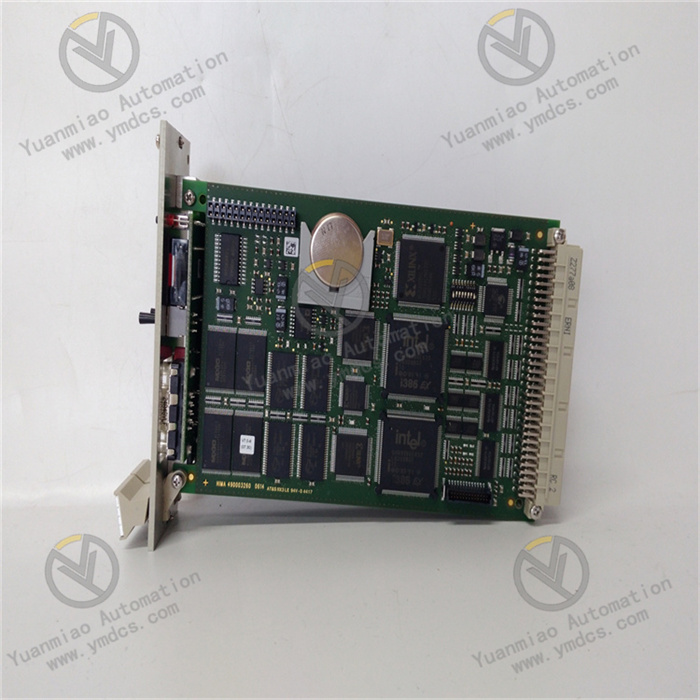
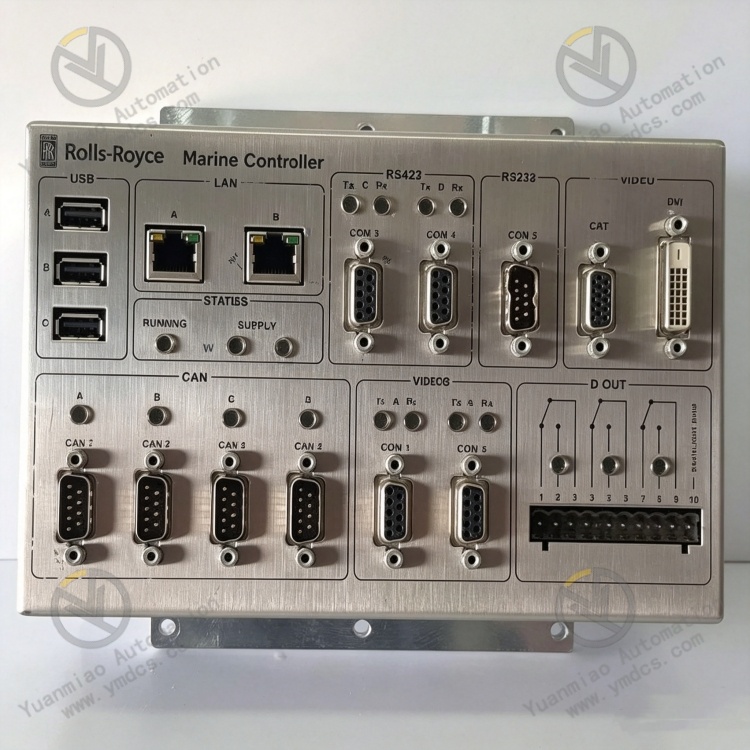
ROLLS‑ROYCE H1111.0203 is a high‑performance marine‑grade main controller originally designed and manufactured by Rolls‑Royce Marine, United Kingdom. As a core unit of Rolls‑Royce marine automation and power‑control systems, it is widely deployed for vessel power management, engine‑room automation, propulsion‑system control and marine auxiliary‑equipment control solutions.
Serving as the central computing and control hub of the ship‑board industrial‑control system, this unit integrates all‑in‑one functions including system‑logic operation, closed‑loop equipment control, signal acquisition & processing, bus‑based data exchange, fault monitoring and diagnosis. It is capable of supervising the operating status of various marine power‑equipment and auxiliary process systems. Equipped with dedicated marine‑grade computing hardware, it adapts to highly variable ship‑operating conditions. Its reinforced, corrosion‑resistant and vibration‑proof mechanical structure delivers outstanding resistance against salt‑spray, high humidity, electromagnetic interference and mechanical shock, supporting 7×24‑hour non‑stop navigation. Manufactured to stringent marine design standards for high operational reliability, this controller is a standard core component for new‑build automation systems on ocean‑going vessels, work‑ships and offshore platforms, legacy control‑system upgrades and replacement of failed main controllers.
2. Technical Parameters
2.1 Basic Specifications
‑ Product Model: H1111.0203 (Rev 2.2) ‑ Product Series: Rolls‑Royce Marine Main‑Controller Series ‑ Associated Part Number: 75670 H6036/1.0GHz Bios K6036001.008 ‑ Product Type: Main computing controller for marine automation systems ‑ Core Function: Central‑control and logic‑processing unit for ship power systems, engine‑room automation and propulsion systems ‑ Application Scope: Marine automation control systems for merchant vessels, special‑purpose work‑ships and offshore platforms ‑ Mounting Method: Fixed cabinet‑mounting, suitable for compact layout inside marine control cabinets ‑ Net Weight: 2.070 kg, lightweight reinforced construction optimized for cabinet‑installation on‑board vessels ‑ Revision: Standard production version Rev 2.2 with mature, stable firmware and broad compatibility
2.2 Core Hardware & Computing Parameters
‑ Processor Clock: 1.0 GHz dedicated marine‑grade processor delivering fast computation and highly responsive task scheduling ‑ Multi‑task Performance: Supports parallel processing of multiple equipment‑control logic loops, closed‑loop process regulation and fault‑diagnosis calculations ‑ System Firmware: Custom embedded marine control firmware with drift‑free stable execution suited for long‑term continuous ship‑board operation ‑ Control Logic: Supports configurable sequence control, equipment interlocks, closed‑loop regulation and fault‑protection logic to satisfy complex control requirements of marine power‑plants ‑ Data‑Handling Capability: Real‑time data acquisition, arithmetic processing, status logging, fault‑event recording and traceability
2.3 Electrical and Communication Parameters
‑ Power‑supply Compatibility: Compliant with standard marine power‑supply specifications, tolerant of on‑board grid‑voltage fluctuations and transient surges ‑ Power Consumption: Low‑power hardware design; low heat generation under full‑load long‑term operation eliminating risks of over‑heating shutdown ‑ Communication Capabilities: Supports dedicated marine‑bus protocols enabling seamless data‑exchange with supervisory systems, I/O modules and power‑equipment ‑ System Compatibility: Natively compatible with the full range of Rolls‑Royce marine automation, propulsion‑control and power‑monitoring systems for plug‑and‑play deployment ‑ Signal‑processing Features: Built‑in signal filtering, anomaly detection and data‑validation functions mitigating signal disturbances caused by harsh on‑board electromagnetic environments
2.4 Environmental and Protection Specifications
‑ Operating‑condition Adaptation: Purpose‑built for severe marine environments, suited for high‑temperature, high‑humidity enclosed cabinet locations inside engine‑rooms ‑ Weather‑resistance: Salt‑spray‑proof, mould‑resistant and anti‑corrosive construction to withstand corrosive marine atmospheres ‑ Vibration & Shock Resistance: Marine‑grade reinforced mechanical design tolerates navigation‑induced pitching & rolling, high‑frequency equipment vibration and transient mechanical impacts ‑ Electromagnetic Compatibility: Complies with top‑tier marine EMC standards, offering high immunity against strong electromagnetic interference generated by high‑power machinery and variable‑frequency drives inside engine‑rooms ‑ Operational Reliability: Fully solid‑state hardware architecture with no mechanically wearable components; zero performance degradation and zero parameter drift over long‑term runtime
3. Product Functions and Core Advantages
3.1 Core Product Functions
Centralised logic‑control for marine systems
As the master core of the ship automation system, it executes start‑stop sequencing, process interlocks and safety‑interlock logic for engine‑room auxiliaries, power‑plants and propulsion‑related equipment. It precisely governs equipment operation workflows, eliminates risks of false interlock triggering or unintended actuation and ensures safe and stable running of navigation‑critical machinery.
High‑precision closed‑loop condition regulation
Supports closed‑loop adjustment of multiple process parameters for marine power‑plants and auxiliary systems. It dynamically adapts to variable‑load, variable‑speed and changing operational profiles, continuously fine‑tuning equipment states to maintain steady‑state performance of the complete system.
Full‑scope fault monitoring and protective action
Real‑time supervision of controlled‑equipment health, system‑bus status and signal‑link integrity. It accurately detects equipment abnormalities, signal‑wire breakage, communication failures and system overloads, and triggers alarms and protective logic pro‑actively to prevent equipment damage and navigation‑safety hazards.
Real‑time data exchange and event traceability
Continuously collects operational data, equipment condition readings and fault events from the marine control system, performs pre‑processing, uploads and permanent logging. Archived runtime and fault records enable full traceability to support maintenance troubleshooting, process optimisation and marine‑survey documentation.
Integrated system‑wide coordination and linkage
Natively conforms to the complete Rolls‑Royce marine control‑system architecture, enabling coordinated interaction between supervisory HMI stations, field‑I/O hardware, power‑machinery and alarm systems. It guarantees synchronised command execution and consistent equipment status across the whole automation network.
Long‑duration continuous process supervision
Optimised for 7×24‑hour uninterrupted ocean‑going operation. Fault‑tolerant and self‑recovery functions allow the controller to absorb sudden operational fluctuations encountered at‑sea, maintaining uninterrupted system control with zero unplanned shutdowns.
3.2 Core Product Advantages
Original marine‑optimised design with superior environmental adaptability
Engineered specifically for the harsh conditions on ships and offshore installations. Its corrosion‑resistance, vibration‑tolerance, EMI‑immunity and wide‑temperature performance far exceed general‑purpose industrial controllers, making it an irreplaceable core component for marine‑specific applications with high salt‑spray, humidity and interference levels.
High‑level functional integration simplifying system architecture
A single unit combines logic computation, closed‑loop regulation, fault‑diagnosis and data‑communication functions, removing the requirement for external auxiliary‑control hardware. It reduces cabinet hardware count and secondary‑wiring work, lowers potential failure points and improves overall automation‑system stability.
Native system compatibility for risk‑free upgrades and replacements
Fully compatible with all Rolls‑Royce marine automation and power‑control systems with matching firmware, communication protocols and control logic. Legacy‑unit replacement requires no modification to system architecture or field wiring, delivering plug‑and‑play deployment, minimal project lead‑time and low retrofit costs with zero compatibility risk.
Accurate, stable computation delivering superior control precision
Dedicated marine‑grade processor and validated embedded algorithms provide precise task scheduling and fast response without data lag or logic corruption, sustaining consistent control accuracy over extended service life and safeguarding the operational quality of ship power‑systems.
Ultra‑high reliability and minimal maintenance overheads
Solid‑state wear‑free hardware provides excellent anti‑ageing, abrasion‑resistant and fatigue‑resistant performance. Capable of enduring long‑term variable marine operating conditions without frequent recalibration; only routine inspections are needed, significantly reducing on‑board maintenance workload and costs.
Marine‑certified compliance for smooth project acceptance
Manufactured in accordance with Rolls‑Royce original marine engineering specifications and international classification‑society rules, meeting compliance and acceptance requirements for marine projects on ocean‑going vessels and offshore platforms.
4. Typical Application Scenarios
‑ Ocean‑going merchant‑ship automation: Engine‑room automation and centralised auxiliary‑equipment control for bulk‑carriers, oil‑tankers and container‑ships
‑ Marine propulsion‑power systems: Master control for main/auxiliary engines, propulsion‑condition regulation and interlock‑management of power‑equipment
‑ Offshore‑platform control‑systems: Automation control for auxiliary power‑plants on drilling‑platforms and offshore‑wind‑energy installations
‑ Special‑purpose work‑ship automation: Main‑processing unit for dedicated control‑systems on dredgers, heavy‑lift cranes and offshore construction vessels
‑ Marine safety‑monitoring systems: Equipment‑fault surveillance, safety‑interlock execution and anomaly‑protection & alarm‑management systems
‑ Legacy marine‑system retrofits: Replacement of ageing Rolls‑Royce controllers, performance upgrades and stability‑optimisation projects for existing marine control installations
5. Installation, Commissioning and Maintenance Guidelines
Before installation, disconnect the main power‑supply of the marine control cabinet completely. Remove dust, salt‑spray residues and oil contamination from the mounting area. Securely fasten the controller into its designated cabinet position with all fixing hardware tightened to prevent loosening or bad‑contact faults caused by vessel vibration during navigation.
Separate power‑supply, signal and communication wiring runs strictly according to engineering drawings. Route power and signal cables on segregated trays and ensure single‑point earthing of all shielded communication cables, so as to avoid computation anomalies, communication drop‑outs and signal jumps induced by strong engine‑room electromagnetic interference.
Connect the unit to a stable, compliant marine power source. Prevent controller reboots, firmware corruption and logic errors caused by voltage transients, loose connections or mains‑harmonic distortion, ensuring round‑the‑clock stable online operation.
During initial commissioning, match the firmware revision to the host marine‑control system. Complete control‑logic verification, communication‑parameter configuration, equipment‑linkage testing and fault‑simulation trials to confirm accurate logic execution, correct equipment co‑ordination and reliable activation of protective interlocks.
During routine maintenance, periodically inspect module indicator lamps, casing temperature, wiring tightness and communication‑link health. Review runtime logs, fault records and equipment conditions from the supervisory station to detect hidden anomalies at an early stage.
Regularly clean salt‑spray deposits, dust and oil residues from the unit exterior. Maintain good cabinet ventilation and dry conditions to prevent connector oxidation, cable corrosion and insulation degradation, slowing component ageing and extending service life.
Replace defective controllers exclusively with original ROLLS‑ROYCE H1111.0203 (Rev 2.2) hardware. After replacement, match all system parameters, load the correct application firmware and complete stand‑alone commissioning, system‑wide joint‑testing and operational trials, confirming that control accuracy, logic‑behaviour and overall system performance are fully consistent with pre‑replacement conditions.