Description
1. Overview
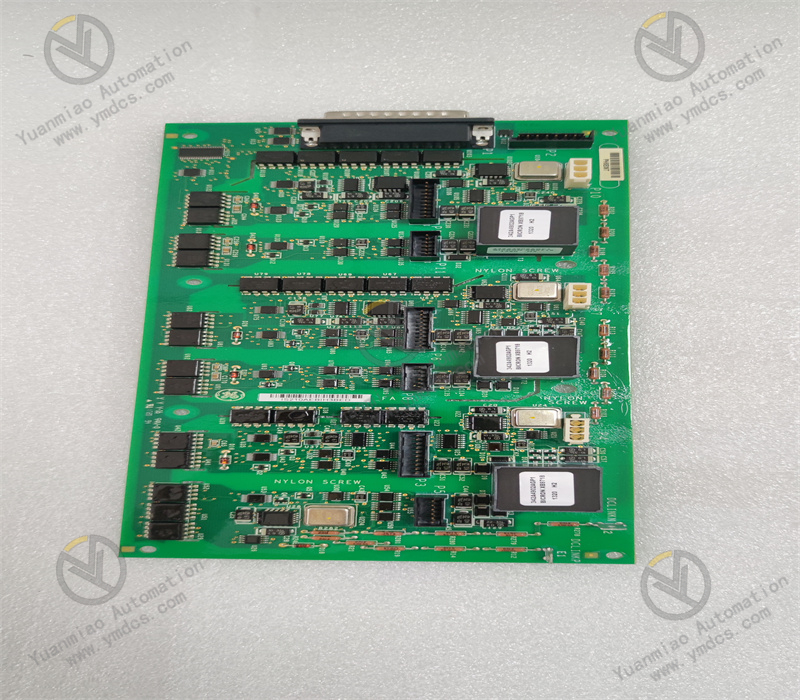
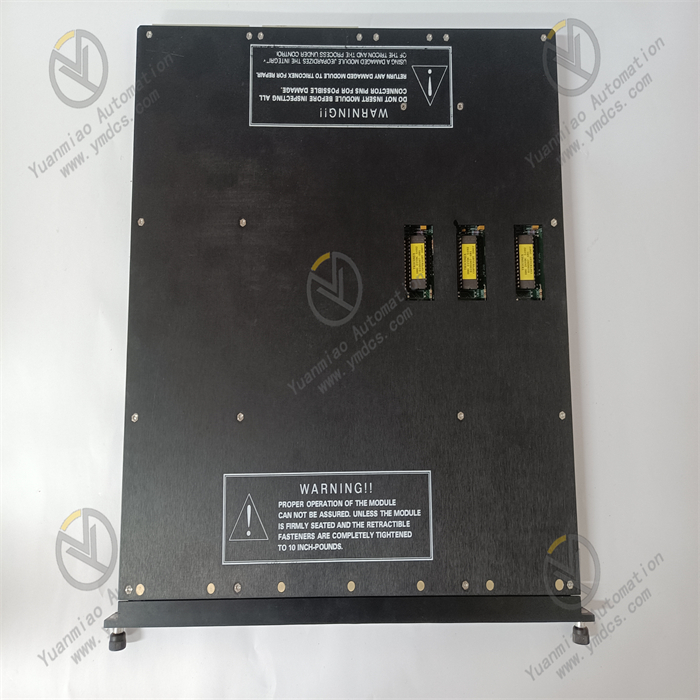
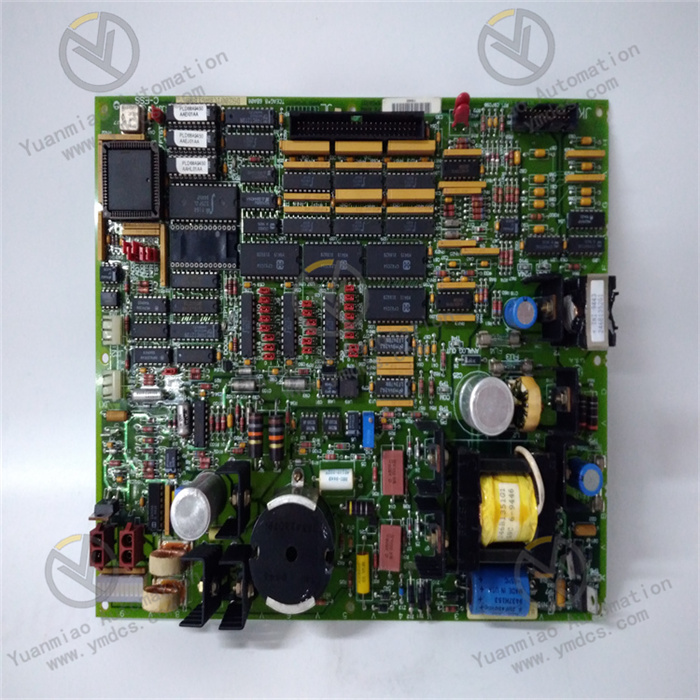
GE IS210TVBAS2A is a dedicated high-speed vibration monitoring and signal conditioning module for the GE Speedtronic Mark VIe / Mark VIeS turbine control system. It serves as the core hardware unit for vibration protection and condition monitoring systems of gas turbines, steam turbines and combined-cycle power generating units. Customized for vibration acquisition of high-speed rotating turbine equipment, the module mainly conducts high-speed collection, filtering & shaping, amplitude analysis, spectrum preprocessing and fault feature extraction of high-frequency dynamic signals including bearing vibration, shafting vibration and casing vibration of power units. It accurately captures minor vibration anomalies during unit startup/shutdown, load variation, steady-state operation and fault disturbance, delivering core data support for unit vibration over-limit protection, shafting fault diagnosis, equipment health assessment and vibration trend analysis.
Distinct from conventional analog acquisition modules, the IS210TVBAS2A boasts professional turbine monitoring attributes including high-frequency sampling, dynamic waveform restoration, multi-band filtering and vibration feature algorithm analysis, meeting the acquisition requirements of high-frequency, transient and fluctuating vibration signals of rotating machinery. Designed and manufactured in strict accordance with safety standards for power turbine equipment, the module has passed reliability tests such as high & low temperature cycling, vibration shock, electromagnetic compatibility and long-term energized aging. It can steadily operate under harsh cabinet conditions of power plants, including high temperature & humidity, dust accumulation, strong electromagnetic interference, frequency converter harmonic disturbance and 24/7 nonstop operation. Natively compatible with the full lineup of GE Mark VIe control systems, it enables non-destructive in-situ replacement of legacy vibration monitoring modules of the same model. It is widely deployed for maintenance of turbine vibration monitoring systems, optimization of vibration acquisition accuracy, upgrading of shafting protection links and hardware iteration renovation of outdated monitoring equipment.
2.1 High-Frequency High-Speed Sampling for Precise Restoration of Dynamic Vibration
Equipped with industrial high-speed AD sampling chips tailored to high-frequency vibration characteristics of turbine shafting, the module supports multi-channel synchronous high-speed sampling, which completely restores real-time vibration waveforms, transient impacts, minor fluctuations and periodic vibration features of power units. Compared with general acquisition modules, it precisely identifies incipient weak vibration abnormalities such as rubbing, looseness, rotor unbalance, shaft misalignment and bearing degradation. It thoroughly addresses defects of legacy modules such as low sampling rate, waveform distortion, loss of details and missed anomaly judgment, furnishing high-precision data for early fault prediction of units.
2.2 Professional Vibration Signal Conditioning with Intelligent Multi-Band Filtering
Embedded with turbine-specific multi-stage signal conditioning circuits and intelligent filtering algorithms, the module hierarchically eliminates invalid noise including power-frequency interference, motor harmonics, line clutter and low-frequency disturbance on site. It adaptively matches vibration signal frequency bands under different rotating speeds and operating conditions, retains valid vibration feature signals accurately and suppresses false vibration data caused by environmental and equipment interference. It guarantees authenticity and accuracy of vibration amplitude, severity and spectrum parameters, satisfying vibration monitoring demands for turbines across all working conditions.
2.3 Full-Channel Electrical Isolation with Outstanding Anti-Interference Performance
Each vibration acquisition channel adopts an independent electrical isolation architecture free of crosstalk and signal coupling between channels, equipped with multi-stage EMC electromagnetic protection, surge suppression, electrostatic protection and high-frequency interference shielding circuits. It strongly resists complex interference in power plants including intense electromagnetic radiation, frequency converter harmonics, pulse noise from equipment start-stop, line induced voltage and ground circulating current. It eliminates vibration data drift, jitter, distortion and false alarms at the signal source, adapting to complex industrial environments with intensive electromagnetic fields in power stations.
2.4 Intelligent Self-Diagnosis & Fault Tracing Ensuring High Monitoring Reliability
Functions including full-channel power-on self-test, real-time runtime status monitoring, probe open-circuit detection, loop short-circuit identification, signal over-range alarm and channel anomaly diagnosis are integrated. The module automatically detects hidden risks such as vibration probe failure, sensing line fault, poor loop contact, abnormal signal attenuation and channel hardware malfunction. It pinpoints abnormal channels accurately and uploads fault codes and operation logs, enabling maintenance staff to rapidly troubleshoot vibration monitoring loops and ensuring reliable continuous service of the unit vibration protection system.
2.5 Non-Destructive In-Situ Replacement with Strong Operation & Maintenance Adaptability
Fully consistent with legacy vibration modules of the same model for GE Mark VIe systems in physical dimensions, slot pin definitions, electrical interfaces, communication bus protocols and channel logic, it supports direct non-destructive in-situ replacement. No system configuration revision, vibration range recalibration or field vibration sensing wiring renovation is needed; the module can be commissioned for monitoring right after passing power-on self-test. It significantly cuts unit maintenance downtime and renovation costs, accommodating hardware upgrade iteration of vibration systems on legacy units.
2.6 Military-Grade Robust Construction for Long-Term Maintenance-Free Operation
Constructed with military-grade original components, thickened flame-retardant PCBs and triple-proof coatings (moisture-proof, dust-proof, anti-corrosion), the module withstands enclosed high temperature, humid condensation, dust accumulation, high-frequency vibration and long-term energized continuous operation inside cabinets. Free of mechanical moving parts, it delivers excellent resistance to aging, temperature drift and performance degradation. No sampling precision drift or channel performance deterioration occurs during long-term operation, eliminating frequent calibration and commissioning. It meets the requirements of 24-hour uninterrupted long-cycle vibration monitoring and safety protection for turbine units.
3. Specification Parameters
3.1 Basic Parameters
- Model: IS210TVBAS2A
- Manufacturer: GE (General Electric)
- Device Type: High-Speed Vibration Monitoring & Conditioning Module for Turbine Units
- Compatible Systems: GE Speedtronic Mark VIe / Mark VIeS control systems for gas turbines, steam turbines and combined-cycle units
- Core Functions: High-speed acquisition of turbine shafting/bearing vibration signals, high-frequency waveform conditioning, multi-band signal filtering & purification, vibration amplitude analysis, fault feature preprocessing, channel fault self-diagnosis, real-time vibration data upload, monitoring loop status management
- Application Scenarios: Maintenance of turbine vibration monitoring systems, replacement of outdated vibration modules, optimization of shafting vibration acquisition precision, rectification of vibration protection loops, upgrade of health monitoring systems for rotating equipment on units
3.2 Electrical & Acquisition Performance Parameters
- Operating Power Supply: 24VDC industrial wide-range regulated power supply, compliant with standard cabinet power supply specifications of power plants, low power consumption for stable operation
- Acquisition Characteristics: High-frequency synchronous sampling, fast transient response, complete restoration of dynamic vibration waveforms and detailed features
- Signal Compatibility: Supports access of eddy-current and acceleration vibration probe signals for turbines, matching mainstream vibration sensing systems of power units
- Conditioning Mechanism: Multi-stage intelligent filtering, waveform shaping, noise elimination and amplitude calibration to effectively purify vibration signals under complex conditions
- Isolation Protection: Independent electrical isolation per channel; multi-level protection against overvoltage, overcurrent, short circuit, surge, static electricity and high-frequency interference
- Diagnostic Functions: Automatic detection and alarm for open circuit, short circuit, over-range, signal abnormality and hardware faults in real time
- Communication Bus: Exclusive GE industrial control bus supporting high-speed vibration data upload, channel status feedback and fault log archiving
- Operation Mode: 24-hour uninterrupted continuous monitoring, applicable to all operating conditions including steady state, variable load, start-stop and fault transients of power units
3.3 Environmental Operating Parameters
- Operating Temperature: 0℃ ~ +65℃, suitable for long-term enclosed high-temperature cabinet operation
- Storage Temperature: -40℃ ~ +85℃, meeting environmental requirements for equipment transportation, storage and unit shutdown
- Operating Humidity: 5% ~ 95%RH (non-condensing), moisture resistant to prevent short-circuit damage caused by dew formation
- Environmental Resistance: Dust-proof, moisture-proof, anti-corrosion, vibration-resistant, anti-aging, anti-electromagnetic interference
- EMC Compliance: Complies with high-end EMC anti-interference standards for power turbine control systems, applicable to complex power plant environments with strong electromagnetic interference
3.4 Structural & Maintenance Parameters
- Structure Form: Standard GE plug-in modular structure, compatible with original cabinet slots of Mark VIe series
- Mounting Method: Slot plug-in installation with precise alignment, stable golden finger contact and superior vibration resistance
- Version Compatibility: Fully compatible with legacy vibration monitoring modules of Mark VIe series of the same model, supporting non-destructive in-situ upgrade and replacement
- Maintenance Features: Full-channel power-on self-test, real-time monitoring status diagnosis, automatic fault archiving, no routine precision calibration required
- Operational Advantages: Stable sampling, high waveform reproducibility, strong anti-interference capability, low failure rate, long-cycle maintenance-free service
After power-on, the GE IS210TVBAS2A automatically completes hardware initialization, high-speed AD chip self-test, channel loop verification, bus handshake synchronization and acquisition parameter calibration. Upon successful self-inspection, it connects to the Mark VIe control system and enters steady full-channel vibration signal acquisition and preprocessing operation.
High-frequency weak raw signals output by vibration probes installed on unit bearings, shafting, casing and other positions are fed into independent acquisition channels of the module. The signals first undergo front-end current limiting, high-voltage electrical isolation, electrostatic and surge protection to avoid damage caused by line interference and electrical surges. Multi-stage intelligent filter circuits then eliminate invalid interference signals such as power-frequency clutter, frequency converter harmonics and induced noise, reshape distorted waveforms and restore pure, authentic raw vibration waveforms of the unit.
Conditioned standard vibration signals are transmitted to the high-speed AD conversion unit for real-time conversion of high-frequency analog signals into digital signals. Meanwhile, proprietary built-in algorithms perform vibration amplitude calibration, frequency band analysis and feature parameter extraction to accurately calculate core monitoring metrics including vibration peak value, RMS value and vibration severity. Minor acquisition deviations induced by temperature drift and line loss are corrected synchronously to guarantee consistent, accurate and reliable vibration data across all channels.
Processed standardized vibration data and waveform feature information are uploaded in real time to the main control unit and upper monitoring system via GE dedicated industrial control bus, supplying core data for unit vibration trend analysis, shafting condition evaluation, over-limit interlock protection and fault diagnosis tracing. The module monitors the operating status of all channels throughout operation. Once probe faults, line open circuit/short circuit, signal over-range or channel abnormalities are detected, it immediately locks the faulty channel, uploads alarm messages and shields abnormal error data to prevent false vibration alarms and spurious protection actions, ensuring stable and reliable operation of the unit vibration monitoring and protection system.
5.1 Core Shafting Vibration Monitoring for Turbine Units
As the primary acquisition hardware of vibration protection systems for GE gas turbines, steam turbines and combined-cycle units, it undertakes high-speed collection and preprocessing of critical vibration signals from bearings, main shafts, rotors and casings. It accurately tracks vibration variations across all operating modes including unit startup/shutdown, load variation, steady-state operation and fault disturbance, supporting functions such as unit trip protection triggered by excessive vibration, early warning of shafting anomalies and equipment health evaluation. It prevents equipment damage and unit outages arising from shaft unbalance, misalignment, rubbing, bearing failure and other malfunctions.
5.2 Condition Diagnosis Optimization for Rotating Equipment in Power Plants
Widely deployed for condition monitoring of rotating equipment in thermal power, cogeneration and combined-cycle units, it addresses common defects of legacy vibration modules including low sampling rate, waveform distortion, weak anti-interference, data drift and frequent false alarms. High-precision vibration data collection and feature analysis improve the capability of early fault identification for units and boost diagnosis accuracy of equipment conditions, facilitating the transition of turbine equipment maintenance from breakdown maintenance to predictive maintenance.
5.3 High-Precision Monitoring Adaptation for Complex Operating Conditions
Adapted to harsh power plant environments featuring strong electromagnetic interference, drastic temperature fluctuation and dynamic equipment working conditions, it realizes distortion-free collection and precise analysis of complex signals such as transient impact vibration, small periodic fluctuations and low-frequency abnormal disturbance. It ensures blind-spot-free, lag-free and omission-free vibration monitoring under dynamic unit conditions, delivering reliable support for precise unit regulation and rapid fault disposal.
5.4 Non-Destructive Maintenance & Replacement of Legacy Vibration Monitoring Modules
It enables in-situ complete replacement for aging legacy modules of the same model with problems such as performance degradation, reduced sampling precision, weakened anti-interference, frequent false alarms, severe temperature drift and distorted waveform reproduction. No system configuration modification, vibration parameter recalibration or field sensing wiring alteration is needed. It achieves low-cost hardware iteration of unit vibration monitoring systems and restores precision and stability of vibration protection functions.
![]()