Description
1. Overview
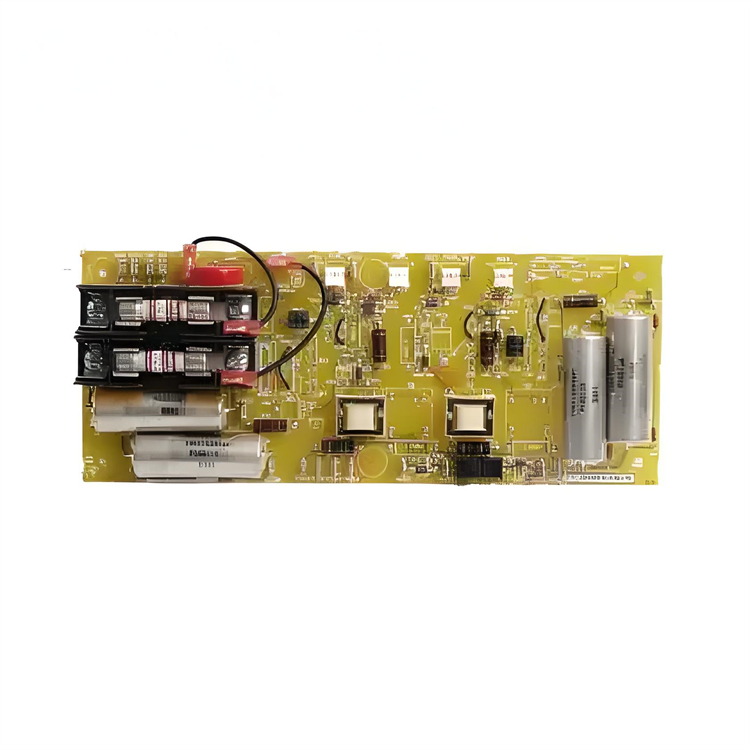
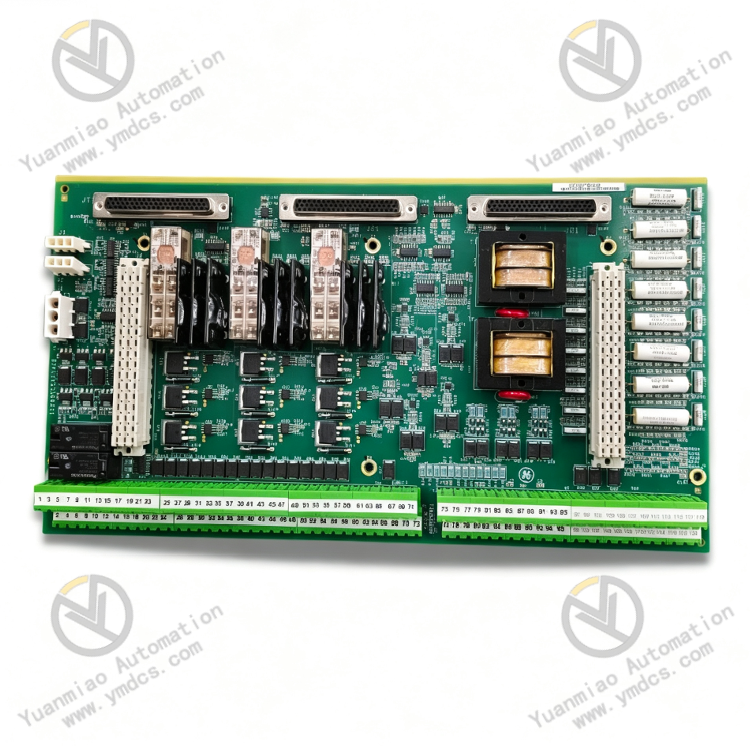
GE IS230TCSAH1A is a TCSA safety assembly for turbine control systems. It serves as a core supporting unit of the GE Speedtronic Mark VIeS (YSIL) Safety Instrumented System (SIS), designed specifically for safety control logic of gas turbines, steam turbines and combined-cycle power units.
Adopting the architecture of GE high-end safety-rated control systems, the assembly undertakes core functions including auxiliary safety logic computation of the system, signal coupling for control links, status monitoring of safety loops, coordinated system fault tolerance and hardware architecture networking. It acts as the key hardware carrier for unit safety protection, emergency shutdown interlock and fail-safe fault-tolerant control.
The IS230TCSAH1A is exclusively adapted to the Mark VIeS safety-rated control system platform. Different from ordinary commercial control boards, it meets stringent safety instrument certification standards for the power industry and features safety-grade characteristics such as fail-safe operation, redundant fault tolerance, automatic status monitoring and link self-recovery.
The equipment has passed rigorous verification tests including high & low temperature cycling, vibration shock, electromagnetic compatibility, long-term energized aging and safety reliability testing for power industry applications. It can sustain harsh operating conditions inside power plant cabinets, including high temperature & humidity, dust accumulation, intense electromagnetic interference and 24/7 uninterrupted continuous operation.
Natively compatible with all GE Mark VIeS safety control systems of the same architecture, it supports non-destructive in-situ replacement of legacy TCSA assemblies of the same model. It is widely used in maintenance of turbine unit safety control systems, iteration of legacy safety hardware, optimization of unit interlock protection links and stability upgrading renovation of SIS systems.
2.1 Safety-Grade Architecture Complying with SIS Fault Tolerance Standards
The module is developed based on the dedicated architecture of the GE Mark VIeS Safety Instrumented System and strictly complies with safety control specifications for power generating units with a built-in fail-safe operation mechanism.
Multiple redundant monitoring loops are integrated into the hardware. A single-point fault will not cause failure of safety logic, false interlock or spurious shutdown. It ensures safe degradation and reliable shutdown of the unit under faulty conditions, eliminating risks of single-point failure within the safety control system at the hardware level.
2.2 High System Compatibility for Dedicated Turbine Safety Control
Customized for safety control scenarios of GE gas turbines, steam turbines and combined-cycle units, it is deeply adapted to the control logic and safety timing of the Speedtronic system.
It precisely matches critical safety action timing for unit emergency shutdown, overtemperature & overpressure protection, vibration interlock and overspeed protection. It works in deep coordination with main control units, I/O modules and redundant bus systems to guarantee stable closed-loop safety logic for the unit under all operating conditions.
2.3 Robust Anti-Interference Performance for Complex Power Plant Conditions
It adopts industrial multi-layer shielded PCB layout, multi-stage EMC electromagnetic protection, surge suppression and electrostatic protection circuits. It effectively resists complex industrial disturbances such as harmonics generated by frequency converters, pulse interference from frequent equipment start-stop, power frequency electromagnetic radiation and line induced voltage in power plants.
Under conditions of strong electromagnetic disturbance, voltage fluctuation, high temperature and high humidity, the hardware maintains stable operation without logic disorder, signal abnormality or false triggering, adapting to round-the-clock harsh operating environments of power stations.
2.4 Non-Destructive In-Situ Replacement with Low Renovation Costs
The physical dimensions, slot pin assignments, electrical definitions, bus protocols and safety logic timing fully match legacy TCSA assemblies of the same series from the original manufacturer, enabling direct in-situ replacement.
No modification to SIS system configuration, recalibration of safety logic or renovation of field wiring and interlock links is required. The assembly can be commissioned into service for the safety system immediately after passing power-on self-test, drastically shortening maintenance downtime and cutting renovation & operation costs of the unit.
2.5 Intelligent Self-Diagnosis Monitoring for Accurate Fault Tracing
Embedded functions include full hardware self-test upon power-up, real-time runtime status monitoring, bus link diagnosis, safety loop anomaly identification and hardware fault alarming. It can automatically detect hidden risks such as hardware aging, link abnormalities, communication fluctuations and loss of loop fault tolerance. Fault locations are pinpointed accurately and fault codes are uploaded to the upper monitoring system.
Maintenance personnel can rapidly troubleshoot potential hazards to prevent prolonged operation of the safety system with faults, ensuring continuous effectiveness of the unit safety barrier.
2.6 Military-Grade Rugged Construction for Long-Term Maintenance-Free Operation
All hardware adopts military-grade industrial components, thickened flame-retardant PCBs and triple-proof conformal coating (moisture-proof, dust-proof, anti-corrosion). It withstands enclosed high temperature, humid condensation, dust accumulation, high-frequency vibration and long-term energized operation inside cabinets.
Free of moving mechanical parts, it exhibits excellent resistance against aging, performance degradation and drift. Regular calibration is unnecessary during long-term operation, satisfying the requirement of 24-hour uninterrupted safe operation of power units over long service cycles.
3. Specification Parameters
3.1 Basic Parameters
- Model: IS230TCSAH1A
- Manufacturer: GE (General Electric)
- Device Type: TCSA Safety Supporting Assembly for Turbine Control Systems
- Compatible Systems: GE Speedtronic Mark VIeS (YSIL) Safety Instrumented SIS System, gas turbine / steam turbine / combined-cycle unit control systems
- Core Functions: Hardware networking of safety systems, coordination of safety logic, status monitoring of interlock loops, fault tolerance of control links, system timing synchronization, hardware fault self-diagnosis, steady-state guarantee of safety links
- Application Scenarios: Maintenance of turbine unit SIS systems, replacement of legacy TCSA assemblies, optimization of unit safety protection links, upgrade of control system fault tolerance capacity, stability renovation of industrial safety control systems
3.2 Electrical & Performance Parameters
- Operating Power Supply: 24 VDC wide-range industrial power supply, compliant with standard cabinet power specifications for power plants; low power consumption for stable operation
- Operation Mechanism: Fail-safe architecture supporting redundant fault-tolerant operation; single-point faults do not affect system safety logic
- Timing Characteristics: Precise system clock synchronization matching unit safety interlock timing to eliminate timing misalignment and logic conflicts
- Protection Rating: Multi-level built-in protection against overvoltage, overcurrent, short circuit, surge, electrostatic discharge and high-frequency interference
- Communication Compatibility: Exclusive GE safety bus supporting status feedback, fault alarming and system configuration interaction
- Operation Mode: Supports 24-hour uninterrupted continuous operation covering steady-state, start-stop and fault protection conditions of power units
3.3 Environmental Operating Parameters
- Operating Temperature: 0℃ ~ +65℃, suitable for long-term enclosed high-temperature cabinet operation
- Storage Temperature: -40℃ ~ +85℃, meeting transportation, storage and shutdown environmental requirements
- Operating Humidity: 5% ~ 95%RH (non-condensing); moisture resistant to prevent short circuits caused by dew formation
- Environmental Resistance: Dust-proof, moisture-proof, anti-corrosion, vibration-resistant, anti-aging, anti-electromagnetic interference
- EMC Compliance: Meets high-grade power industry EMC anti-interference standards applicable to complex environments with intense electromagnetic fields in power plants
3.4 Structural & Maintenance Parameters
- Structure Form: Standard plug-in modular design compatible with slots of original GE Mark VIeS system cabinets
- Mounting Method: Hot-swappable plug-in installation with precise alignment, reliable contact and superior vibration resistance
- Version Compatibility: Fully compatible with legacy TCSA assemblies of the Mark VIeS series supporting non-destructive in-situ upgraded replacement
- Maintenance Features: Full-link self-test upon power-up, real-time status monitoring, automatic fault archiving, no routine calibration required
- Operational Advantages: Strong fault tolerance, free of single-point failure risks, stable operation, long-cycle maintenance-free service
After the GE IS230TCSAH1A assembly is powered on, it automatically completes hardware initialization, chip self-test, bus handshake, safety loop verification and system clock synchronization. Upon successful self-checks, it connects to the Mark VIeS safety control system and enters steady-state coordinated safety operation.
As the core hardware supporting component of the unit SIS system, it cooperates with the main controller throughout the process to implement closed-loop management of safety logic. It continuously monitors system bus links, hardware operating status and interlock loop conditions while synchronizing with unit control timing.
Under normal operating conditions, the assembly stabilizes the system safety architecture, guarantees precise timing for bus data interaction and maintains interlock loops in standby status, providing solid hardware safety support for normal unit start-up/shutdown, load variation and steady-state operation.
When the system encounters bus fluctuations, minor hardware anomalies or link signal disturbances, the assembly automatically executes signal correction, link fault tolerance and status compensation via built-in fault tolerance mechanisms to suppress minor disturbances and avoid spurious action of the safety system.
Once severe faults, hardware failure or link disconnection are detected, fault status is locked immediately and fault alarm codes are uploaded. It cooperates with the main control unit to activate safety logic latching, ensuring the unit shuts down smoothly in accordance with predefined safety strategies to avoid equipment damage and safety accidents.
Throughout operation, real-time data synchronization and status exchange are maintained continuously with upper systems, main controllers and field I/O modules. It establishes a full-process safety protection mechanism: status monitoring → fault-tolerant correction → fault alarming → safety latching, comprehensively ensuring complete architecture, reliable logic and accurate action of the turbine unit safety control system.
5.1 Core Supporting Hardware for Turbine Unit SIS Safety Systems
Exclusively adapted to the GE Mark VIeS Safety Instrumented Control System, it is widely deployed on gas turbine, steam turbine and combined-cycle generating units. It undertakes hardware supporting tasks including unit safety protection, emergency shutdown interlock, over-limit fault latching and fault-tolerant system operation. It ensures controllable unit operation under various faulty conditions and eliminates major accidents such as unit trip, equipment damage and outage triggered by protection failure.
5.2 Maintenance & Upgrading of Power Plant Safety Control Systems
It is used for hardware maintenance and replacement of SIS systems in thermal power, cogeneration and combined-cycle units to resolve aging issues of legacy TCSA assemblies including degraded fault tolerance, abnormal self-test, unstable communication and safety link drift. It restores full fault tolerance performance of safety systems and improves the inherent safety level of unit industrial control systems.
5.3 Adaptation for High-End Industrial Safety Control Scenarios
Suitable for high-end safety control applications in energy and heavy industry for large power equipment. It provides hardware fault tolerance, link protection and safety timing guarantee for critical equipment control systems, satisfying industrial control requirements of high reliability and high safety while avoiding single-point failure risks of control systems.
5.4 Non-Destructive Iterative Renovation of Legacy Safety Hardware
For aging failures of same-model TCSA assemblies on legacy units including performance degradation, frequent faults, loss of safety redundancy and reduced system compatibility, complete in-situ non-destructive replacement can be realized. No modification to system configuration or wiring is required, achieving low-cost hardware iteration of legacy safety control systems and improving long-term safe operating stability of power units.
![]()