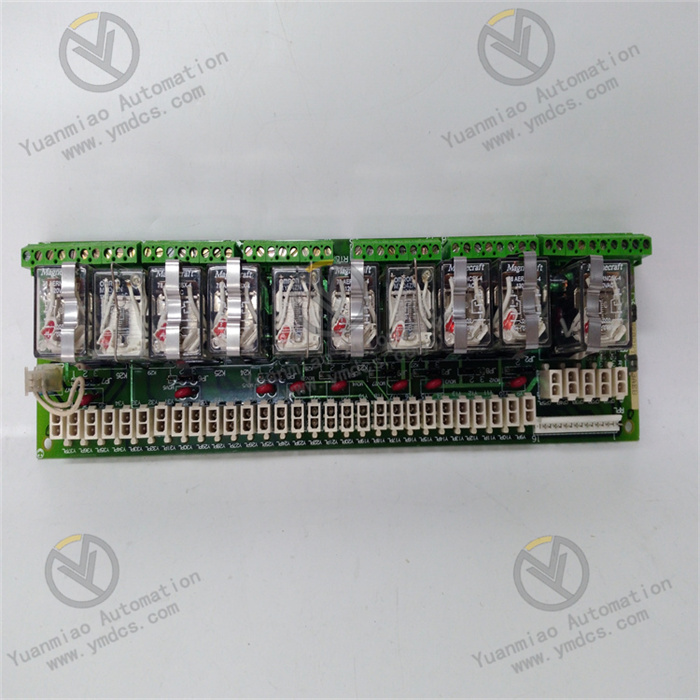
Description
ABB UNS0864B-P,V1 HIEE405227R0001
1. Product Description
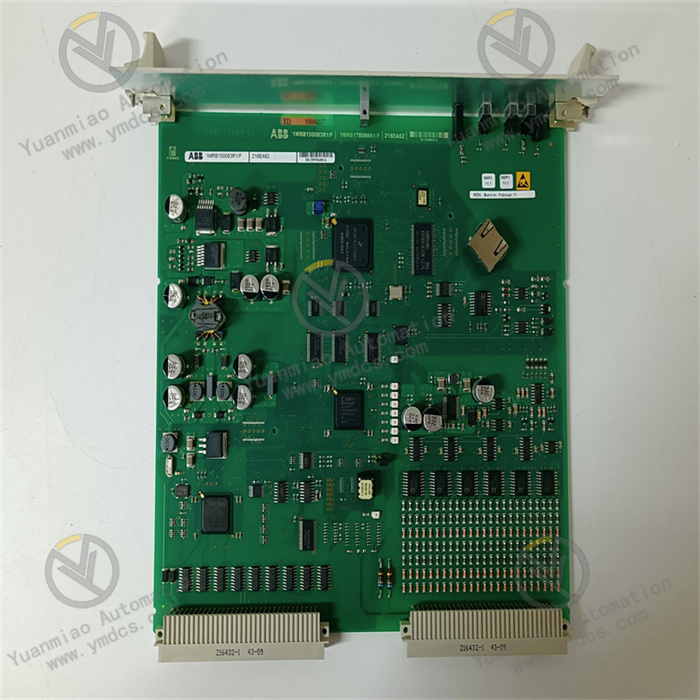
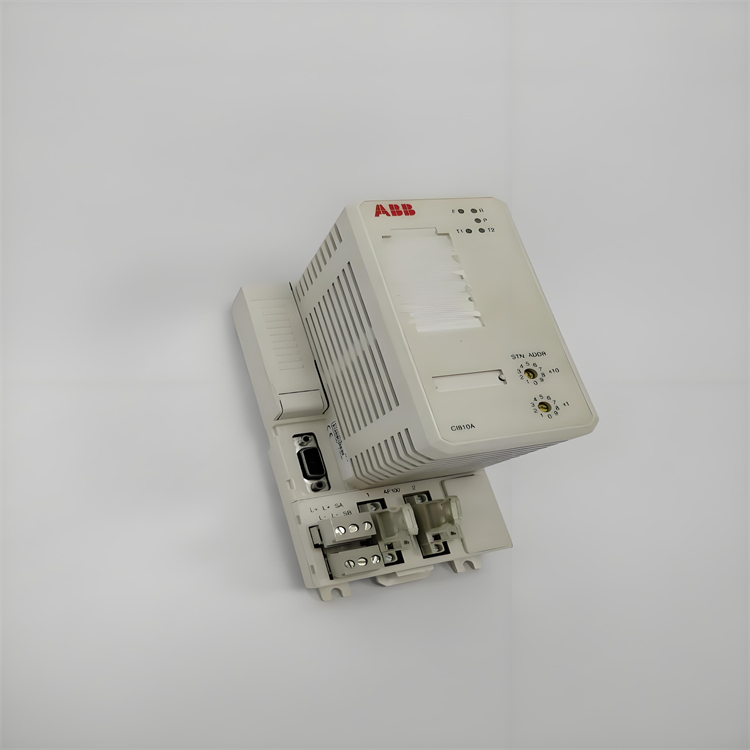
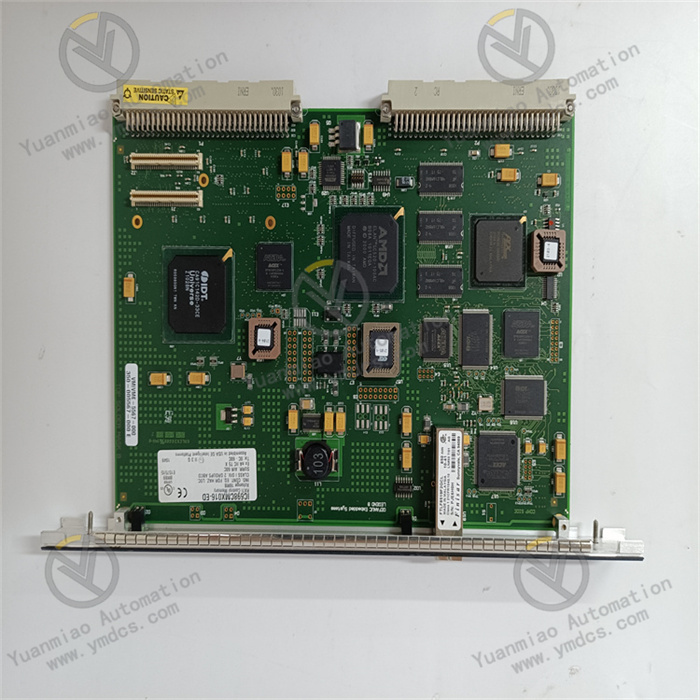
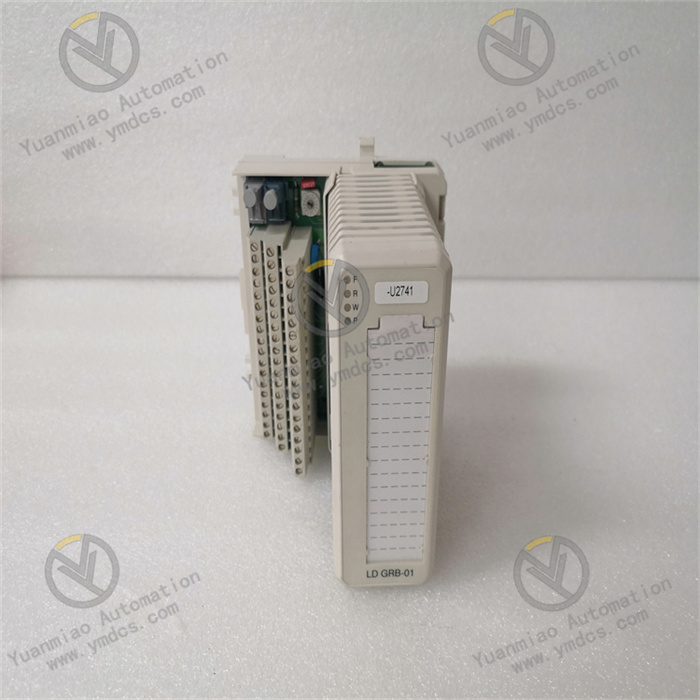
ABB UNS0864B‑P, V1 (Order No. HIEE405227R0001) is a dedicated Profibus I/O baseplate (also known as I/O backplane) for UNITROL F series excitation systems and ABB AC 800M distributed control systems. As a core bridge between field signals and upper‑level control systems, it is designed for harsh industrial environments. It is responsible for carrying I/O sub‑modules, signal transmission, power distribution and fault diagnosis, serving as a key unit ensuring smooth signal interaction and reliable operation of distributed control and excitation systems.
The module adopts a separate modular design of “baseplate + sub‑modules”. The baseplate is mainly responsible for Profibus DP communication, sub‑module power supply and full‑status diagnosis, while the sub‑modules handle acquisition and conditioning of field sensor/actuator signals. They work together to realize data exchange between field signals and upper‑level controllers.It is suitable for harsh industrial scenarios such as thermal power, nuclear power, petrochemical and metallurgy, and is widely used in remote I/O stations, excitation system signal acquisition and process control signal access. Featuring industrial‑grade high reliability, wide temperature adaptability and strong anti‑interference capability, it can operate stably for a long time in environments ranging from -25℃ to +60℃. It is seamlessly compatible with ABB UNITROL F series excitation controllers, AC 800M main controllers and UNI series I/O sub‑modules (e.g., UNI0861A), and supports hot‑swap maintenance, greatly improving system O&M convenience and flexibility while reducing full‑life‑cycle maintenance costs.This product is supplied in brand‑new original packaging with a 1‑year warranty and fast delivery, suitable for on‑site emergency repair and routine maintenance.
2. Technical Specifications
| Parameter Category | Details |
|---|---|
| Model / Order No. | Model: UNS0864B‑P, V1; Order No.: HIEE405227R0001; Type: Profibus I/O baseplate (I/O backplane) for UNITROL F series / AC 800M systems; suffix “‑P” stands for Profibus version |
| Manufacturer | ABB (compliant with IEC 61000 EMC standards, RoHS/REACH certified, full‑process quality inspection, suitable for industrial distributed control and excitation systems) |
| Core Functions | 1) Communication transfer: Supports Profibus DP protocol for data exchange between field I/O signals and AC 800M main controller / UNITROL F excitation controller;2) Sub‑module carrier: Accepts UNI series I/O sub‑modules (e.g., UNI0861A 8‑channel 4‑20mA input module) and supports various signal types;3) Power distribution: Provides stable DC power for inserted I/O sub‑modules to ensure normal operation;4) Fault diagnosis: Integrated LED status indicators for real‑time feedback of bus status, module health and sub‑module operation for quick troubleshooting;5) Hot‑swap support: Allows hot‑swap replacement of I/O sub‑modules without shutdown to improve O&M efficiency;6) Modular adaptation: One baseplate can match different I/O sub‑modules to flexibly meet changing project signal acquisition requirements. |
| Electrical Parameters | Input voltage: DC 24V±15% (for industrial low‑voltage DC power supply systems);Power output: DC 24V, max. output current 3A (for I/O sub‑modules);Communication speed: Profibus DP 9.6kbps~12Mbps, auto‑adaptive;Insulation resistance: ≥100MΩ (500V DC);Dielectric strength: ≥2500V AC/1min (between input/output/communication);Signal isolation: Galvanic isolation between input/output/power, isolation voltage ≥1kV. |
| Communication / Interface | Main communication: Profibus DP interface (EN 50170 compliant), supports bus redundancy for data exchange with AC 800M main controller and excitation controller;Sub‑module interface: Standard I/O sub‑module slots supporting hot‑swap of UNI series I/O sub‑modules;Local interface: Front pluggable spring terminals (AWG 22~14) for power input and fault alarm wiring;Built‑in 120Ω terminating resistor with manual on/off switch for bus termination. |
| Physical Characteristics | Mounting: Standard 3U rack mounting (DIN 41494), suitable for UNITROL F cabinets and industrial standard cabinets; DIN rail mounting supported;Dimensions: 290mm×185mm×195mm, compact design to save cabinet space;Ingress protection: IP20 (module body, for installation in electrical cabinets);Housing: Industrial‑grade flame‑retardant material, vibration and shock resistant, protects internal circuits from dust;Net weight: 0.9kg, original sealed packaging. |
| Environmental Adaptability | Operating temperature: -25℃~+60℃ (covers extreme temperatures in industrial equipment rooms, suitable for outdoor remote I/O stations and indoor rooms);Storage temperature: -40℃~+85℃;Relative humidity: 5%~95% (non‑condensing);Vibration resistance: 2g (10~500Hz), compliant with IEC 60068‑2‑6;EMC: Level 4 certification, strong immunity to electromagnetic interference, suitable for harsh EMI environments with inverters and high‑power equipment in power plants and metallurgical plants. |
| Reliability | MTBF ≥ 600,000 hours;Supports I/O sub‑module hot‑swap, maintenance downtime ≤ 5 minutes;Comprehensive self‑test and diagnosis for real‑time monitoring of bus, power and sub‑module status and fast fault location;1‑year warranty, brand‑new original product, suitable for emergency repair and routine maintenance;Modular design reduces spare parts cost and adapts to signal acquisition requirements of different projects. |

3. Functions & Features
(1) Modular Design for Flexible Multi‑Scenario Adaptation
- Separate architecture: “Baseplate + sub‑modules” design, where the baseplate handles communication, power and diagnosis, and sub‑modules handle signal acquisition and conditioning. When changing I/O signal types, only sub‑modules need replacement while the baseplate is retained, greatly reducing spare parts and maintenance costs and improving system flexibility.
- Multi sub‑module compatibility: Accepts various UNI series I/O sub‑modules (analog input/output, digital input/output) for 4‑20mA, 0‑10V and other signal types, configurable flexibly according to site needs to meet changing requirements in different industrial scenarios.
- Precise Profibus communication: Supports Profibus DP with auto‑adaptive speed from 9.6kbps to 12Mbps, compliant with EN 50170 and bus redundancy, ensuring stable, accurate data exchange between field signals and upper AC 800M / excitation controllers without packet loss or delay.
(2) Strong Environmental Adaptation & Anti‑Interference for Harsh Industrial Environments
- Wide temperature & vibration resistance: Operating temperature -25℃~+60℃, withstands high/low temperatures and vibration in power plant rooms, metallurgical workshops and outdoor remote I/O stations with long‑term stable performance, suitable for both outdoor and indoor installations.
- High anti‑interference capability: EMC Level 4 certified, with galvanic isolation (≥1kV) between input/output/power, effectively resisting strong EMI and voltage fluctuations on site, avoiding signal distortion and module misoperation, ensuring stable communication and signal acquisition in power plants and petrochemical facilities.
- Industrial‑grade durability: Long‑life industrial components, flame‑retardant and shock‑resistant housing, suitable for dusty and oily industrial environments to protect internal circuits and reduce failure rate. Original sealed packaging ensures safety during transportation and storage for emergency repair.
(3) Intelligent Diagnosis & Easy Maintenance to Reduce Full‑Life‑Cycle Cost
- Full‑status diagnosis: Integrated LED indicators for real‑time display of bus communication, power supply and sub‑module status (normal/fault), enabling quick fault identification without complex tools, greatly reducing troubleshooting difficulty and improving efficiency.
- Hot‑swap maintenance: Supports hot‑swap of I/O sub‑modules without shutdown, on‑site maintenance time ≤5 minutes, significantly reducing system downtime losses. Pluggable terminals facilitate on‑site wiring and maintenance.
- Easy configuration: Supports auto‑recognition of sub‑modules for plug‑and‑play operation, shortening commissioning time. 120Ω terminating resistor with manual switch simplifies Profibus bus termination and on‑site setup.
(4) Deep Compatibility & Seamless Integration
- Multi‑system adaptation: Specially designed for ABB UNITROL F series excitation systems and AC 800M DCS, seamlessly compatible with UNI series I/O sub‑modules, AC 800M main controllers and UNITROL F excitation controllers, enabling direct integration into existing systems without extra adaptation and lowering integration cost.
- Seamless system connection: Supports connection to ABB Freelance 800F and other DCS for remote monitoring, parameter configuration and fault alarm of I/O signals, improving industrial automation. Applicable in remote I/O stations for centralized acquisition and remote transmission of field signals in distributed control systems.
- Bus redundancy support: Profibus DP interface supports redundant bus configuration. Upon failure of the main bus, it automatically switches to the standby bus to ensure uninterrupted signal transmission, enhancing system reliability for nuclear and thermal power plants requiring high stability.
4. Applications
- Thermal / Nuclear power auxiliary systems: Suitable for monitoring boiler and turbine auxiliary systems of thermal and nuclear power units. As a remote I/O baseplate, it carries sub‑modules to collect field temperature, pressure, flow signals and transmits them to the AC 800M main controller via Profibus DP for precise control and monitoring.
- Excitation system signal acquisition: Used in ABB UNITROL F series excitation systems to carry I/O sub‑modules for collecting key signals such as excitation voltage, current and winding temperature, providing accurate field data to the excitation controller and ensuring stable operation.
- Petrochemical industry: Applied in signal acquisition of temperature, flow and level for reactors and pipelines, adapting to high‑temperature, high‑corrosion and strong‑interference environments, realizing centralized acquisition and remote transmission for stable and controllable production.
- Metallurgy / Water treatment: Used in cooling water control systems for rolling mills and remote I/O stations of pump stations in water treatment plants, collecting operating parameters for remote monitoring and control in harsh industrial environments to improve productivity and O&M convenience.
- Industrial captive power plants: Deployed in distributed control systems of factory and park captive power plants as an I/O baseplate for field signal acquisition and transmission, meeting operational requirements and ensuring continuous, safe power supply with reduced maintenance cost.
5. FAQs & Troubleshooting
1. Module cannot communicate, bus status indicator abnormal (red ON continuously)
Possible causes: Incorrect Profibus DP wiring, mismatched communication parameters, terminating resistor not activated, bus fault, damaged communication interface; insulation abnormality may result from damaged internal insulation or humid environment.Solutions: ① Check Profibus DP wiring (A/B lines), ensure correct and tight connection, activate 120Ω terminating resistor; ② Verify communication parameters (baud rate, address) consistent with AC 800M and excitation controller; ③ Measure bus voltage with multimeter, troubleshoot short/open circuit and repair lines; ④ If bus is normal, check communication interface and contact ABB authorized service for replacement if faulty; ⑤ For insulation issues, dry module and terminals, clean dust and oil, repair damaged insulation.
2. I/O sub‑module has no power and fails to operate after insertion
Possible causes: Abnormal baseplate input power, faulty power output, poor contact between sub‑module and slot, defective sub‑module; long‑term humid environment may cause insulation dampness in power circuit.Solutions: ① Verify DC 24V±15% input and correct polarity, tighten power terminals; ② Measure baseplate power output (DC 24V) with multimeter; contact service if no output; ③ Remove sub‑module, clean dust and oxidation in slot, reinsert firmly; ④ Replace with functional sub‑module to verify sub‑module fault; ⑤ For dampness, dry baseplate and sub‑module, improve cabinet ventilation.
3. Signal acquisition distorted, data fluctuates severely
Possible causes: Incorrect sub‑module configuration, faulty signal isolation, strong on‑site electromagnetic interference, poor wiring connection, abnormal sensor signal; dust accumulation may block signal transmission and cause distortion.Solutions: ① Check sub‑module configuration matching sensor type (e.g., 4‑20mA), reconfigure and save; ② Verify signal isolation function; contact service for repair if failed; ③ Route wiring away from inverters and high‑power motors, use shielded cables and tighten terminals; ④ Check sensor output and replace if abnormal; ⑤ Clean dust on module and sub‑module to ensure normal signal transmission.
4. System error and signal interruption after hot‑swap sub‑module
Possible causes: Improper hot‑swap operation, incompatible sub‑module type, unsynchronized bus parameters, sub‑module not recognized by baseplate.Solutions: ① Perform standard hot‑swap: disable related sub‑module circuits before removal, wait for auto‑recognition after replacement; ② Confirm sub‑module compatibility with UNI series and replace with suitable type; ③ Restart bus communication and synchronize parameters; ④ Clean slot or replace sub‑module if recognition fails.
5. Frequent module alarms and flashing indicators during operation
Possible causes: Excessive input voltage fluctuation, out‑of‑range ambient temperature, faulty sub‑module, bus congestion, internal circuit fault; in bearing‑related applications, check vibration interference from worn bearings of associated equipment.Solutions: ① Stabilize input power with surge protectors and voltage regulators; ② Improve cabinet ventilation to keep temperature within -25℃~+60℃; ③ Replace sub‑modules one by one to locate faulty unit; ④ Optimize bus configuration and reduce load to avoid congestion; ⑤ Contact ABB authorized service for internal circuit inspection if all above are excluded; ⑥ For vibration interference, check and replace worn bearings of related equipment.