Description
1. Overview
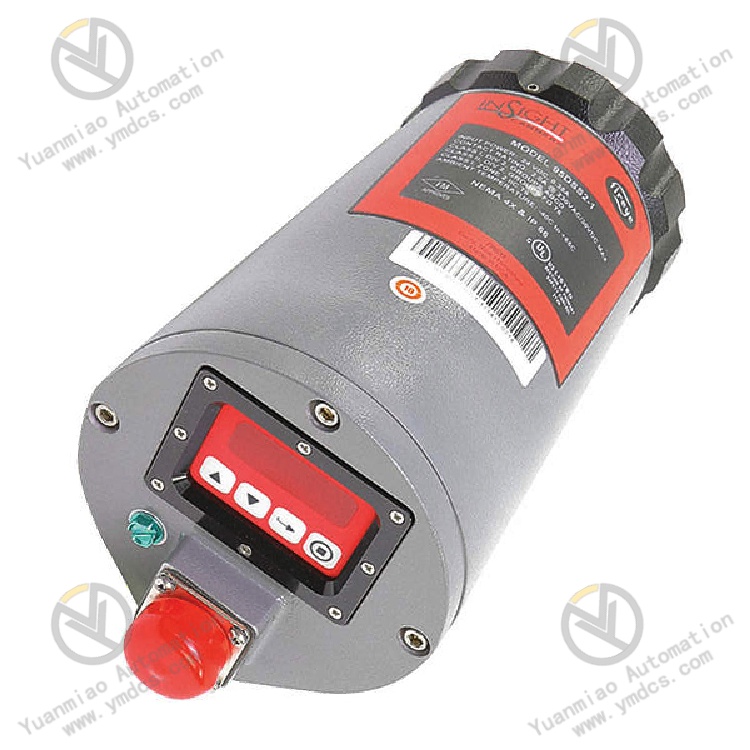
FIREYE 95DSS2-1 is a high-end integrated dual-spectrum (UV+IR) flame scanner from the InSight series, serving as the core flame monitoring device specially designed for boilers, gas turbines, incinerators and industrial burners.
Integrated with dual ultraviolet (UV) and infrared (IR) sensing detection units and adopting a microprocessor-based digital computing architecture, it requires no external flame amplifier. Built-in flame relay and fault relay enable independent functions including flame identification, flame intensity calculation, flame-out judgment, fault diagnosis and signal output. It is a critical detection component within industrial combustion control systems to ensure combustion safety, prevent deflagration caused by flame loss and implement interlock protection.
As the enhanced S2 dual-spectrum model, the 95DSS2-1 combines the high-sensitivity shortwave detection capability of ultraviolet sensing and the dust-resistant property of infrared sensing, eliminating the defects of single-spectrum detectors which are susceptible to interference from sunlight, furnace flue dust, high-temperature radiation and ambient lighting.
Equipped with automatic flame configuration, intelligent frequency identification, adaptive threshold adjustment and hardware self-verification, it supports combustion conditions of multiple fuels including gas, fuel oil, pulverized coal and biomass.
It is widely deployed for flame monitoring in thermal power boilers, gas turbines, industrial kilns, chemical process heaters and cogeneration units. Suitable for new unit matching, replacement of legacy flame probes and upgrading of combustion safety systems, it features strong anti-interference performance, high identification accuracy and low routine maintenance requirements to guarantee long-term safe and stable operation of industrial combustion equipment.
2.1 Dual-Spectrum Fusion Detection with Superior Identification Precision
Two independent UV and IR sensing channels are adopted: the ultraviolet band accurately captures instantaneous ionization characteristic signals of flames, while the infrared band identifies continuous thermal radiation signals from combustion. Cross verification and complementary judgment of dual signals completely eliminate misjudgment and missed detection induced by sunlight, furnace high-temperature background radiation, smoke dust, lighting and stray equipment light.
It can reliably distinguish actual combustion flames from interference sources such as residual furnace heat, surface reflection and high-temperature radiation. Adapted to harsh furnace environments with heavy dust, high humidity and strong stray light, its flame recognition stability far outperforms single-spectrum probes.
2.2 Integrated All-in-One Design with No Auxiliary External Hardware Required
The unit highly integrates sensors, microprocessor, flame output relay, fault alarm relay and 4–20 mA analog output module into a single integrated unit. No external flame amplifier, conversion module or signal processing unit is needed, simplifying on-site wiring and system architecture.
An 8-character LED digital display and four-button operation panel are equipped for on-site viewing of flame intensity, operating parameters, fault codes and detection frequency, as well as local parameter configuration and calibration, delivering convenient commissioning and maintenance.
2.3 Intelligent Adaptive Configuration for Multi-Fuel Compatibility
A built-in automatic configuration identification algorithm automatically captures modulation frequency and intensity characteristics of flames from different fuels, and adaptively matches gain, detection threshold and response delay parameters without complicated manual calibration.
It supports switching between combustion scenarios for natural gas, heavy oil, light oil, pulverized coal, biomass and other fuels. Manual fine-tuning is available to adapt to special furnace operating conditions, effectively solving unstable detection issues caused by flame flicker, combustion fluctuation and load variation.
2.4 Comprehensive Hardware Self-Check Protection for Controllable Operation Safety
A fully electronic self-verification mechanism is applied with no mechanical shutter structure. The device continuously monitors sensor status, circuit loops, supply voltage and signal acquisition links in real time.
In case of probe contamination, sensor failure, circuit open circuit, abnormal power supply or signal loss, the fault relay will trigger an alarm immediately, lock the fault state and display corresponding fault codes to eliminate blind spots of equipment failure.
The Flame Failure Response Time (FFRT) is adjustable from 1 second to 6 seconds. The flame-out interlock action can be configured according to unit process requirements to avoid deflagration risks resulting from accumulation of unburned fuel after flame extinction.
2.5 Industrial Explosion-Proof Rugged Construction for Long-Term Operation in Harsh Conditions
The whole unit features an explosion-proof enclosure with NEMA 4X protection rating and complies with Class I Division 2 explosion-proof standards, suitable for flammable and explosive industrial sites.
Components are screened for wide-temperature operation and reinforced against electromagnetic interference, withstanding severe conditions including furnace high-temperature radiation, equipment vibration, dust accumulation and moisture condensation.
Free of vulnerable mechanical moving parts, it boasts an extremely low failure rate and supports 24/7 non-stop continuous monitoring to meet unattended long-cycle operation demands of power plants, chemical plants and cogeneration facilities.
2.6 Standardized Signal Output with Wide System Compatibility
Multiple standard industrial signal outputs are provided: relay discrete signals can be directly connected to PLC, DCS and combustion interlock systems; the 4–20 mA analog signal linearly corresponds to 0~100% flame intensity for real-time uploading of furnace combustion status and adaptation to data acquisition and monitoring logic of various industrial control systems.
Standardized electrical interfaces and mechanical mounting structure enable direct replacement of legacy single-spectrum and split-type flame detectors without extensive modification to on-site wiring and system programs, offering excellent retrofitting compatibility.
3. Specification Parameters
3.1 Basic Model Parameters
- Model No.: 95DSS2-1
- Manufacturer: FIREYE
- Device Type: Integrated UV+IR Dual-Spectrum Intelligent Flame Scanner
- Detection Spectrum: Dual-band combined detection: UV 295~320 nm + IR 700~1700 nm
- Core Functions: Real-time flame monitoring, flame intensity measurement, flame-out judgment, fault self-diagnosis, interlock signal output, analog signal remote transmission, adaptive parameter configuration
- Compatible Fuels: Conventional industrial fuels including natural gas, LPG, light fuel oil, heavy fuel oil, pulverized coal and biomass
- Applicable Equipment: Utility boilers, gas turbines, industrial heaters, incinerators, cogeneration combustion equipment
- Application Scenarios: Supporting combustion safety for new installations, upgrade and replacement of legacy flame probes, renovation of furnace flame monitoring systems, matching for combustion interlock protection systems
3.2 Electrical Performance Parameters
- Supply Voltage: Standard 24 VDC DC power input
- Analog Output: 4~20 mA DC current signal corresponding to 0~100% flame intensity, maximum load resistance 750 Ω
- Discrete Output: Built-in flame relay and fault relay with passive contact output for interlock logic
- Flame Failure Response Time (FFRT): 1~6 seconds adjustable to match interlock protection timing of different units
- Detection Modes: Optional dual-spectrum cross verification, single-spectrum priority and adaptive intelligent judgment
- Signal Characteristics: High linearity of flame intensity, strong anti-interference capability, no frequent false or missed alarms
3.3 Operation & Display Parameters
- Display Unit: 8-digit alphanumeric scrolling LED display showing real-time flame intensity, parameters and fault codes
- Operation Method: Four physical buttons for local parameter setting, threshold adjustment, mode switching and fault inquiry
- Configuration Functions: Automatic flame feature recognition, auto parameter matching and manual precise fine-tuning
- Fault Traceability: Fault code storage and operation log recording to facilitate troubleshooting during maintenance
3.4 Environmental & Protection Parameters
- Ingress Protection: NEMA 4X dustproof, waterproof and anti-corrosion rating
- Explosion-Proof Rating: Class I Division 2, Groups A/B/C/D explosion-proof standard
- Operating Temperature: -40 ℃ ~ +85 ℃, adaptable to high and low temperature environments around furnaces
- Storage Temperature: -55 ℃ ~ +125 ℃
- Operating Humidity: 5% ~ 95% RH (non-condensing), suitable for humid and dusty industrial environments
- EMC Performance: Complies with industrial EMC standards to resist furnace high-temperature radiation, electromagnetic interference and mechanical vibration
3.5 Mechanical & Maintenance Parameters
- Mounting Method: Fixed installation via standard furnace probe bracket, compatible with universal mounting interfaces of industrial furnaces
- Structural Features: Integrated monolithic structure with no mechanical shutter or wearable moving parts, ultra-low failure rate
- Self-Check Mechanism: Full-time electronic self-verification to monitor real-time status of sensors, circuits, power supply and signal links
- System Compatibility: Compatible with all types of DCS, PLC, combustion safety control systems and unit interlock protection systems
- Maintenance Features: No frequent routine calibration required, visualized fault codes, simple replacement installation and convenient commissioning
After power-on, the FIREYE 95DSS2-1 flame scanner first executes full hardware self-test, sensor loop verification and inspection of power supply & output links. It enters flame monitoring standby mode once self-check is passed.
The built-in UV and IR sensors synchronously acquire dual-band spectral signals from furnace combustion, capture UV ionization features and IR thermal radiation features of flames respectively, and transmit data to the internal microprocessor for digital analysis and cross verification judgment.
During operation, the intelligent algorithm automatically identifies flame modulation frequency and combustion intensity fluctuation characteristics, adaptively matches detection gain and judgment threshold, and calculates the real-time flame quality percentage.
When the flame intensity exceeds the preset ON threshold, the flame relay pulls in to send a flame-present signal to the control system, meanwhile the 4–20 mA analog output uploads real-time flame intensity.
If the flame fades out and the flame quality remains below the threshold for the preset FFRT duration, the flame relay de-energizes to output a flame-loss signal and trigger unit interlock protection logic to prevent deflagration hazards.
The device performs real-time self-diagnosis throughout operation. Once probe contamination, sensor failure, circuit fault, abnormal power supply or signal anomaly is detected, the fault relay is activated immediately, the fault state is locked and the corresponding fault code is displayed to prompt maintenance troubleshooting.
The dual-spectrum cross-judgment mechanism effectively filters interference signals including residual furnace heat, ambient lighting, dust and high-temperature background radiation, ensuring accuracy, stability and safety of flame detection throughout the whole process.
5.1 Combustion Safety Monitoring for Utility Boilers
Applied to furnace flame monitoring of coal-fired, gas-fired and oil-fired boilers in thermal power and cogeneration plants. Leveraging the anti-interference advantage of dual-spectrum detection under harsh boiler conditions with heavy dust, intense radiation and large load fluctuation, it accurately identifies genuine furnace flames and eliminates missed flame-out alarms and interference false alarms.
It guarantees combustion safety during boiler startup, shutdown, load variation and full-load operation, and provides core detection signals for furnace flame trip protection and FSSS interlock systems.
5.2 Flame Detection for Gas Turbine Units
Adapted to combustion chamber flame monitoring of industrial gas turbines and combined-cycle units. It precisely captures faint and high-frequency fluctuating characteristics of gas flames with fast response and high judgment accuracy, enabling rapid identification of flame loss, flame lift-off and flashback faults.
It delivers reliable signal support for gas turbine startup/shutdown interlock, combustion protection and fault shutdown logic to ensure stable operation of turbine units.
5.3 Industrial Kilns & Chemical Heating Equipment
Widely used in chemical process heaters, industrial incinerators, hot blast stoves and biomass combustion equipment. Suitable for conditions with mixed multi-fuel combustion, severe flame fluctuation and strong on-site interference, it effectively distinguishes actual combustion flames from environmental disturbances to avoid unnecessary equipment shutdown and false interlocks, securing continuous and stable industrial production.
5.4 Upgrade & Renovation of Legacy Flame Detection Systems
It can directly replace outdated single-spectrum flame probes and split-type flame detection systems without modifying mounting brackets, on-site wiring or system interlock logic.
The dual-spectrum intelligent detection technology resolves common drawbacks of legacy equipment such as frequent false alarms, detection failure and poor anti-interference. It enables low-cost upgrading of combustion safety systems and improves the reliability of unit combustion protection.
![]()