Description
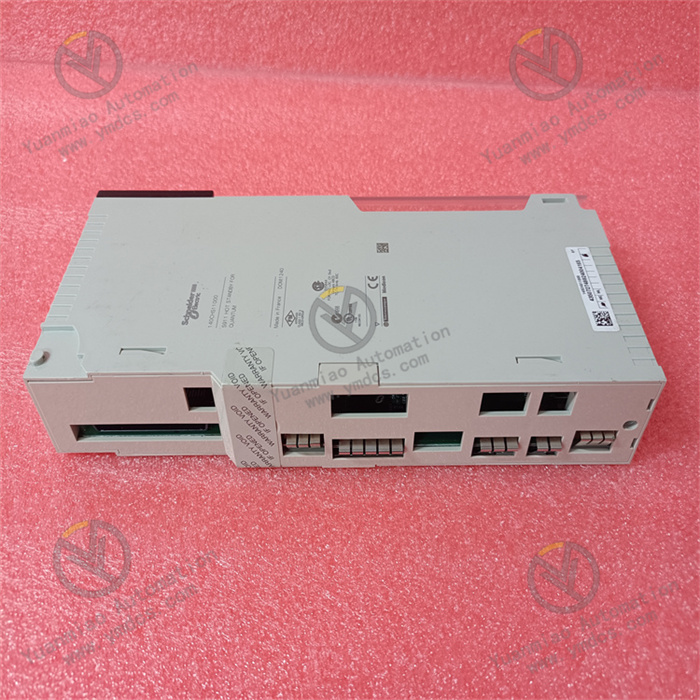
Schneider 140CHS11000
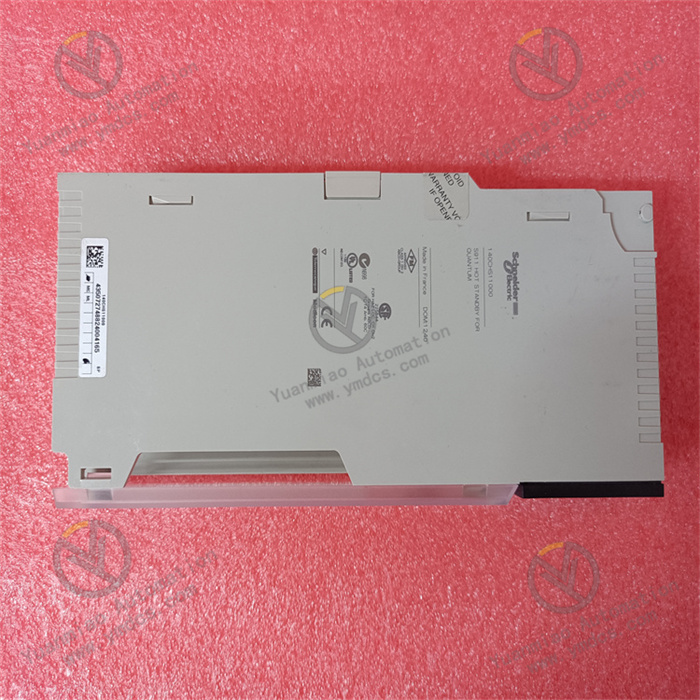
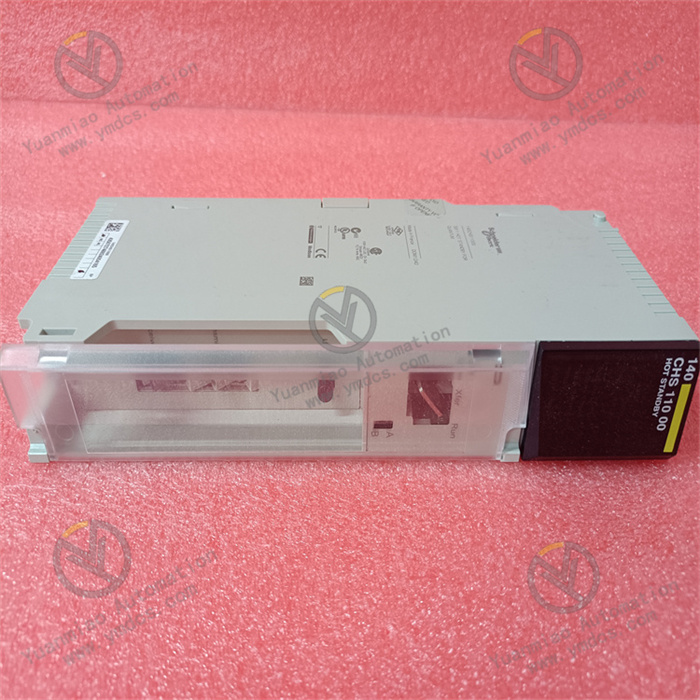
Schneider 140CHS11000 is a hot standby module in the Modicon Quantum series, specially designed for building dual-CPU redundant control systems. It achieves millisecond-level bumpless switching between primary and standby controllers via high-speed fiber-optic synchronization, ensuring continuous operation of critical processes. It serves as a core redundancy component in high-reliability applications such as power, chemical, metallurgy and other industries.
1. Positioning and System Relationship
System Affiliation
Belongs to the Schneider Electric Modicon Quantum automation platform, model 140CHS11000, classified as a hot standby redundancy control module. It is a standard single-slot module of the Quantum series and cannot operate independently. It must be installed in pairs in primary and standby CPU racks, and is exclusively compatible with the Quantum series, not with other Schneider PLC series such as Premium and M340.
Core Role
- Establish a high-speed data synchronization link between primary and standby CPUs to mirror programs, data and I/O status in real time
- Monitor the operating status of the primary controller and trigger automatic switching in case of failure to ensure uninterrupted control
- Manage consistency of redundant networks and I/O data to ensure synchronized status of actuators and sensors after switching
- Provide redundancy status diagnosis and fault alarms, supporting remote monitoring and quick maintenance
Mounting Position
Mounted on the backplane of a Quantum rack, occupying one standard slot, with one module installed in each primary and standby system. The module is equipped with multi-color LED status indicators (Run, Sync, Fault, Switch) for intuitive redundancy status feedback. Interconnection between primary and standby modules is realized via RJ45 fiber-optic interfaces, supporting point-to-point direct connection topology.
System Architecture
2. Functions and Technical Features
1. High-Performance Redundancy Switching
- Switching time: 13–48 ms (typical <20 ms), transparent process with no program interruption
- Synchronization mode: 10 Mbit/s high-speed fiber-optic synchronization with real-time data mirroring
- Switching mechanism: supports automatic fault switching, manual forced switching, and online maintenance switching
- Data coverage: full synchronization of program area, data area, I/O status and system registers
2. Industrial-Grade Communication and Isolation
- Synchronization interface: 2×RJ45 fiber-optic transceivers (multi-mode)
- Isolation voltage: 1000V DC electrical isolation between channels and backplane
- Anti-interference: common-mode rejection ratio >70 dB, ESD protection 8 kV (air)
- Compatibility: compatible with the full range of Quantum CPUs (140CPU65150, 140CPU67160, etc.)
3. Comprehensive Status Monitoring and Diagnosis
- RUN (Green): Module operating normally
- SYNC (Green): Primary-standby data synchronization completed
- FLT (Red): Module fault
- SWITCH (Amber): Switching in progress
4. Industrial-Grade Reliability Design
- Operating temperature: 0°C ~ +60°C
- Storage temperature: -40°C ~ +85°C
- Humidity: 5% ~ 95% RH (non-condensing)
- Power consumption: 3.5 W (backplane current 700 mA @ 5 V DC)
- Weight: approx. 1.06 kg
3. Technical Specifications
Product Identification
- Model: Schneider 140CHS11000
- Brand: Schneider Electric
- Series: Modicon Quantum
- Type: Hot Standby Module
- Country of origin: France / USA
Core Parameters
- Synchronization speed: 10 Mbit/s (fiber-optic)
- Switching time: 13–48 ms
- Backplane current: 700 mA @ 5 V DC
- Power consumption: 3.5 W
- Synchronization medium: multi-mode fiber (62.5/125 μm)
- Maximum synchronization distance: 2 km (multi-mode)
- Isolation: 1000V DC between channels and backplane
- Compatible CPUs: full series of Quantum dual-CPU hot standby CPUs
Physical and Environmental
- Mounting: single slot in Quantum rack
- Dimensions: 132 mm × 176 mm × 35 mm
- Weight: 1.06 kg
- Operating temperature: 0 ~ 60°C
- Storage temperature: -40 ~ 85°C
- Protection: IP20 (terminal section)
Compatibility
- Compatible with: Quantum dual-CPU redundant systems, standard / extended I/O racks, remote RIO drops
- Software: configured via Concept V2.0+, Unity Pro
- Incompatible with: Premium, M340, Micro series and third-party PLCs
4. Compatible Systems and Supporting Components
Required System Components
- Primary and standby CPU racks: Quantum full-size racks (140XBP01000/01600)
- Primary and standby controllers: same-model Quantum CPUs (e.g., 140CPU67160)
- Redundancy modules: 2×140CHS11000 (one for primary, one for standby)
- Synchronization media: multi-mode fiber, RJ45 fiber connectors
- Power supply modules: 140CPS series (e.g., 140CPS11420)
Common Accessories
- Fiber patch cords, fiber terminators
- Redundancy status monitoring modules
- Surge protectors (for highly interfered sites)
5. Application Scenarios
- Power industry: control of generator sets and substations to prevent grid fluctuations caused by shutdowns
- Chemical / Petrochemical: reactors, distillation columns and conveying systems to avoid safety incidents due to shutdowns
- Metallurgy: control of blast furnaces, converters and continuous casters to ensure continuous production
- Paper / Cement: kilns, presses and grinding systems to reduce losses from unplanned downtime
- Water treatment: automatic control of water plants and wastewater treatment plants to ensure stable water supply