Description
ABB CP502 1SBP260171R1001
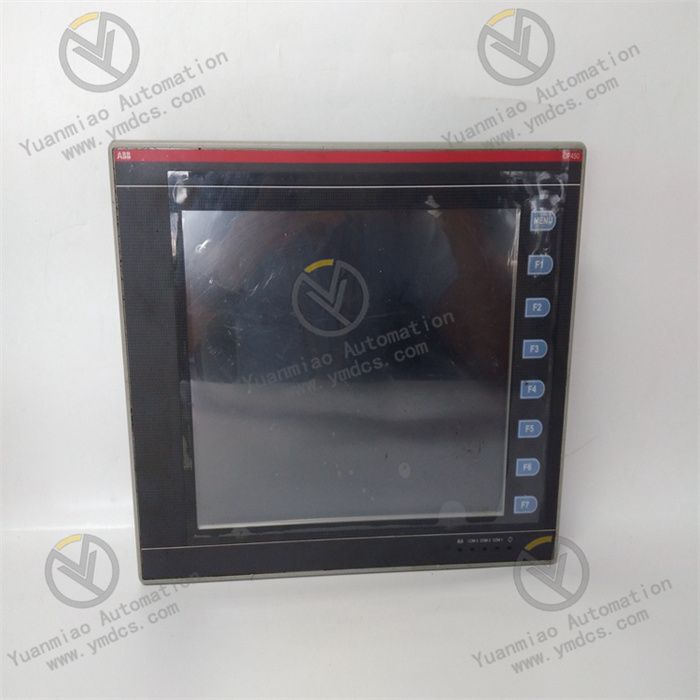
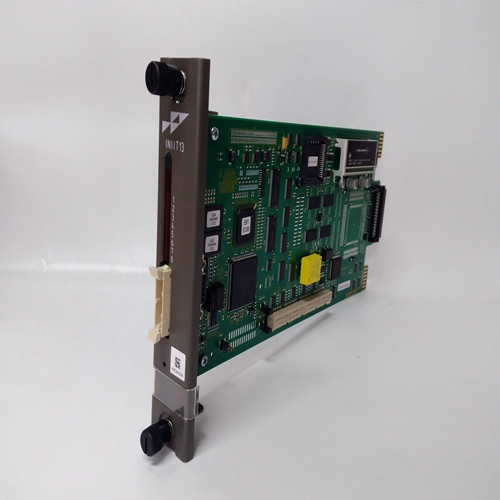
ABB CP502 1SBP260171R1001 is a control panel module, with its core positioning as the human-machine interaction hub for on-site operation and status monitoring. It enables local parameter configuration, operating status monitoring and emergency operation control of ABB series drives, PLCs and related industrial control equipment. With its concise and intuitive operation interface, stable industrial-grade performance and wide system compatibility, this module is widely applied in intelligent manufacturing production lines, industrial pump set control, fan speed control systems, hoisting equipment control and various electromechanical integrated equipment scenarios, providing on-site operation and maintenance personnel with a convenient and reliable channel for local control and status feedback, thus ensuring the efficient operation and safe running of industrial systems.
This module adopts an industrial-grade compact design, suitable for the dense installation environment of industrial sites. It is equipped with a high-definition segment LCD screen and anti-misoperation keys, supports multi-language interface switching, and features easy and understandable operation. It has complete communication interface and protocol compatibility, allowing quick access to various industrial control systems. Integrated with overvoltage, overcurrent and electromagnetic interference protection functions, it can operate stably for a long time in complex industrial environments. Meanwhile, it supports local parameter storage and backup, reducing the risk of system operation and maintenance.
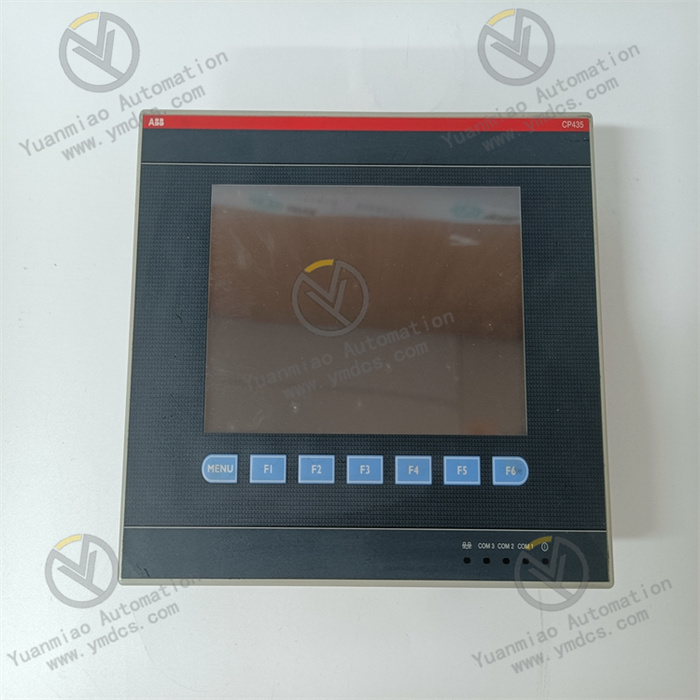
The module is equipped with a 2-line, 16-character high-brightness segment LCD screen, which can clearly display key information such as equipment operating parameters (e.g., rotational speed, current, voltage, power), working status (running/stopped/faulty) and fault codes. The screen brightness is adjustable to adapt to different lighting conditions in industrial sites, such as strong light or dim environments. It is equipped with 10 anti-misoperation mechanical keys, including mode switching keys, parameter adjustment keys, confirm/cancel keys and emergency operation keys. The keys have moderate travel and clear feedback, with dustproof and waterproof design. It supports multi-language interface switching such as Chinese and English, and the parameter setting process is simple, enabling quick operation without professional training.
It supports local configuration of core operating parameters of connected equipment, including the setting and modification of key parameters such as start/stop thresholds, operating frequency/rotational speed settings, overload protection parameters and alarm thresholds. It has a hierarchical parameter permission management function, which can set different permissions for administrators and operators to prevent unauthorized personnel from misoperating key parameters. It supports local parameter storage and backup, allowing configured parameters to be saved as templates, facilitating unified configuration of batch equipment and rapid parameter recovery after faults, thus improving operation and maintenance efficiency.
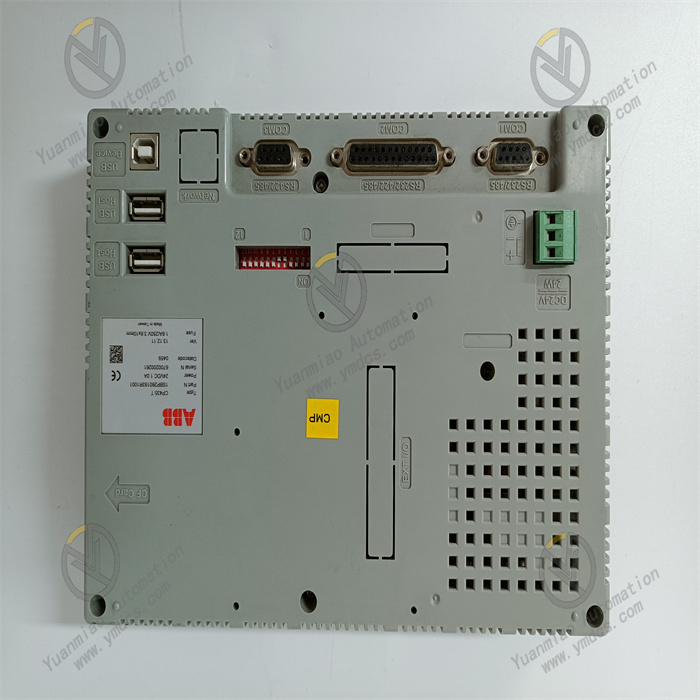
It is equipped with RS-485, RS-232 and USB communication interfaces. Among them, the RS-485 interface supports the Modbus RTU protocol, enabling direct establishment of stable communication links with ABB ACS series drives, PLCs and other industrial control equipment. The USB interface supports parameter export/import and firmware upgrade, facilitating on-site operation and maintenance as well as system upgrading. As a local extended operation unit, the module can be seamlessly integrated into ABB automation control systems, realizing two-way collaboration between local operation and remote control of upper-level systems, and ensuring the consistency and reliability of control commands.
Adopting an industrial-grade reinforced shell and high-quality components, it has an IP54 protection rating, which can effectively prevent dust and splashing water, making it suitable for dusty and humid industrial site environments. It has good anti-electromagnetic interference capability, complying with EN 55011 and EN 55022 industrial electromagnetic compatibility standards, and can resist electromagnetic interference generated by motors, frequency converters and other equipment in industrial sites. With a wide operating temperature range of -10°C ~ +60°C and a relative humidity tolerance range of 5% ~ 95% RH (no condensation), it can operate stably for a long time in extreme industrial environments.
It has real-time fault monitoring and alarm functions, which can synchronously monitor the operating status of connected equipment. When equipment faults are detected (such as overload, overvoltage, overcurrent, phase loss, communication interruption, etc.), it will immediately display fault codes and fault descriptions on the screen, and issue audible and visual alarms through a buzzer to remind operation and maintenance personnel to handle the faults in a timely manner. It supports local storage of fault logs, which can record the latest 100 fault information entries (including fault time, fault type and operating parameters at the time of the fault), facilitating operation and maintenance personnel to trace the causes of faults and quickly locate problems.
- Model: ABB CP502 1SBP260171R1001
- Product Type: Industrial Control Panel Module
- Core Functions: Local parameter configuration, equipment status monitoring, fault alarm, emergency operation control
- Compatible Systems: ABB ACS series drives, ABB PLC systems and other industrial control equipment supporting the Modbus RTU protocol
- Communication Protocol: Modbus RTU
- Communication Interfaces: RS-485, RS-232, USB 2.0
- Display Interface: 2-line, 16-character segment LCD screen with multi-language support (Chinese/English, etc.)
- Operation Keys: 10 anti-misoperation mechanical keys
- Permission Management: Hierarchical permission control (administrator/operator)
- Installation Method: Panel mounting/ DIN rail mounting (optional)
- Supply Voltage: 24V DC ±15%
- Power Consumption: Typical value 2.5W, maximum value 3.5W
- Maximum Input Current: 0.2A
- Communication Rate: RS-485 interface up to 115.2 kbps, supporting rate auto-adaptation; RS-232 interface up to 9600 bps
- Parameter Storage: Non-volatile memory, parameters retained for ≥10 years after power-off
- Fault Log Storage: Capable of storing 100 fault records
- Alarm Mode: Audible and visual alarm (buzzer + screen flashing)
- Operating Temperature: -10°C ~ +60°C
- Storage Temperature: -40°C ~ +85°C
- Relative Humidity: 5% ~ 95% RH (no condensation)
- Protection Rating: IP54
- Vibration Resistance: Compliant with IEC 60068-2-6 standard (10~500Hz, acceleration 5g)
- Shock Resistance: Compliant with IEC 60068-2-27 standard (peak acceleration 30g, duration 11ms)
- Electromagnetic Compatibility: Compliant with EN 55011 and EN 55022 industrial electromagnetic interference protection standards
- Certification Standard: CE certification, UL certification
- Dimensions: 110mm×80mm×35mm (W×H×D)
- Net Weight: Approximately 0.2kg ~ 0.3kg
- Housing Material: Industrial-grade flame-retardant ABS plastic (UL94 V-0 grade)
- Terminal Type: Plug-in anti-misplug terminal
- Status Indicators: Power light (PWR), Run light (RUN), Communication status light (COMM), Fault alarm light (ALM)
The core working logic of the ABB CP502 1SBP260171R1001 control panel module is "Power Supply - Communication Link Establishment - Parameter Interaction - Status Monitoring - Operation Response - Fault Alarm". It realizes local human-machine interaction and equipment control through the collaboration of multiple links, with the specific workflow as follows:
Power Supply and System Initialization: The module is connected to a standard 24V DC power supply. The internal power module performs voltage stabilization, filtering and reverse polarity protection to provide stable power for core components such as the display screen, keys, communication interfaces and processor. At the same time, it automatically loads preset communication parameters and language configuration information, completes the self-test of core components and interfaces, enters the ready state after passing the self-test, and simultaneously attempts to establish a communication link with connected industrial control equipment.
Communication Link Establishment and Protocol Adaptation: According to the preset communication parameters (address, baud rate, data bits/stop bits), it establishes a communication connection with the target equipment (drive/PLC) through the RS-485/RS-232 interface, and automatically adapts to the Modbus RTU communication protocol. If the communication parameters do not match, a communication abnormality will be prompted on the screen, and the communication parameters need to be reconfigured through the local keys until a stable communication link is established.
Parameter Interaction and Status Synchronization: After the communication link is established, the module periodically collects real-time operating parameters (rotational speed, current, voltage, etc.) and working status information from the target equipment, processes the data through the processor and updates the display on the screen in real time. When operation and maintenance personnel set parameters through the keys, the module encapsulates the configured parameters according to the Modbus RTU protocol and sends them to the target equipment. Meanwhile, it receives parameter confirmation information fed back by the equipment to ensure successful parameter configuration, and stores the new parameters in the local non-volatile memory.
Operation Response and Control Execution: When operation and maintenance personnel issue control commands through the emergency operation keys (such as emergency stop, manual start), the module quickly parses the operation commands, transmits them to the target equipment through the communication link, and drives the equipment to perform corresponding actions. At the same time, it real-time monitors the response status of the equipment to the control commands. If the command execution fails, it will immediately prompt an operation abnormality on the screen and trigger an audible and visual alarm.
Fault Monitoring and Alarm Handling: The module real-time monitors the communication link quality, the operating status of the target equipment and its own working status, and identifies abnormal conditions (such as communication interruption, equipment overload/overvoltage, its own power supply abnormality, etc.) through built-in diagnostic logic. When a fault is detected, it immediately extracts the fault code and fault description and displays them in a flashing manner on the screen, and activates the buzzer to issue an audible and visual alarm. It records the fault information (including fault time, fault type and operating parameters at the time of the fault) in the fault log for subsequent tracing and troubleshooting.
![]()