Description
1. Product Overview
Full Part Number: IS200BAIAH1BEE
Manufacturer: General Electric (GE)
Compatible System: Exclusively designed for GE Speedtronic Mark VI gas & steam turbine control platforms, supporting triple redundant control architecture. It provides dedicated signal bridging between DSP core units, local operator panels and external debugging PCs, widely deployed in combined-cycle power plants, industrial turbines and large compressor control systems.
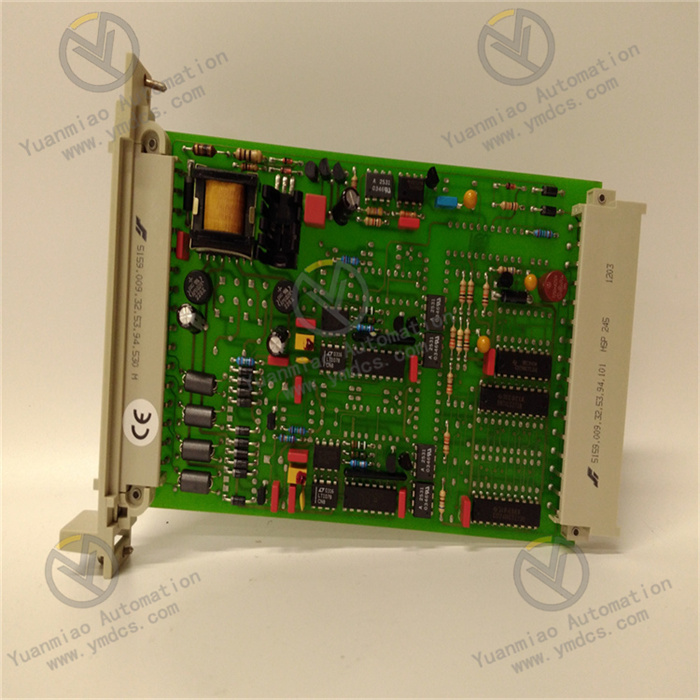
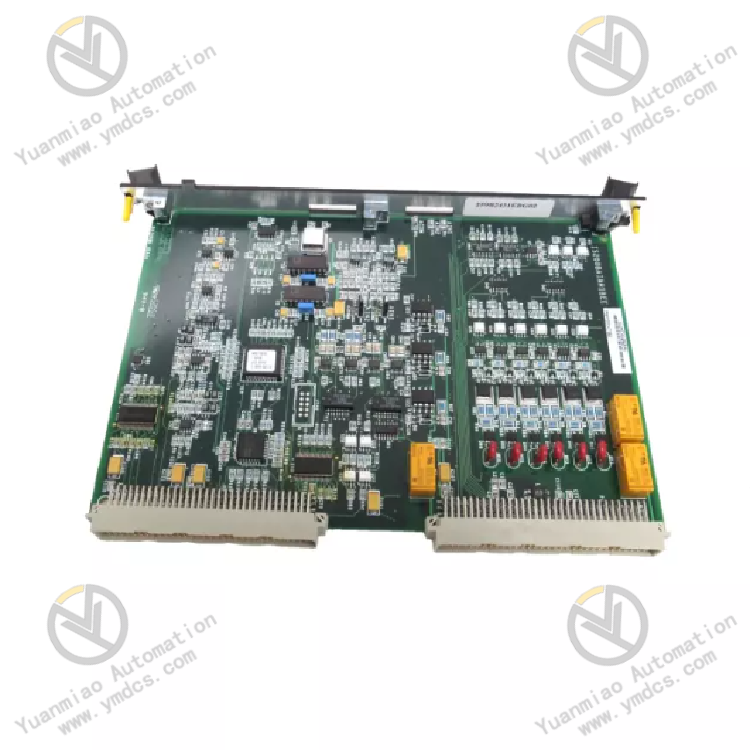
Product Definition: Integrated BAIA bridge application interface PCB with factory pre-programmed EEPROM firmware, isolated transformers, relay output circuits and standard RS-232C ports. It realizes bidirectional data interaction, signal buffering, level matching and hardware self-check functions, acting as the core human-computer interaction and debugging hub for Mark VI drive control systems. The onboard IMOK LED visually indicates real-time board operating status.
2. Hardware Structure & Six Functional Units
2.1 RS-232C Human-Computer Interaction Unit
Equipped with standard RS-232C serial interface for connection with local operator panels and external debugging terminals. It supports parameter reading, modification, program debugging and real-time status monitoring. The independent dedicated debugging channel operates separately from the system network, ensuring reliable on-site maintenance even during network failures.
2.2 DSP Core Signal Bridging & Buffering Unit
Acts as a dedicated signal bridge between DSP core processors and external interactive devices. It performs signal shaping, level matching and data verification to eliminate waveform distortion and interference, protecting core DSP circuits from level mismatch damage and ensuring accurate and lossless transmission of control commands and status data.
2.3 Isolation Transformer & Filter Unit
Built-in dual isolation transformers, filter inductors and multi-stage RC filter circuits provide complete electrical isolation and noise suppression. It blocks EMI interference and ground potential fluctuation introduced by external equipment, preventing system logic malfunction and parameter drift in high-electromagnetic-interference power plant environments.
2.4 Relay Output & Hardware Configuration Unit
Integrated 3 dedicated signal relays and 5 hardware configuration jumpers support flexible functional configuration adapting to different turbine power levels and drive architectures. Passive relay output enhances compatibility and impact resistance for external signal docking.
2.5 Self-Check & Status Indication Unit
The front-panel IMOK LED lights steadily during normal operation and flashes or turns off upon hardware failure, firmware error or communication interruption. The onboard EEPROM stores factory-default firmware, board ID and configuration parameters with permanent power-off retention. Reserved JTAG ports and test points support professional hardware fault diagnosis.
2.6 Backplane Bus Docking Unit
Dual high-density gold-plated backplane connectors fully comply with Mark VI bus timing and protocol standards, enabling high-speed data synchronization and interaction with system CPU, DSP processors and I/O modules to support stable operation of the triple-redundant control system.
3. Detailed Technical Specifications
3.1 Core Hardware & Functional Parameters
Item | Specification |
|---|---|
Model | IS200BAIAH1BEE BAIA Bridge Application Interface Board |
Platform | GE Speedtronic Mark VI Turbine Drive Control System |
Core Functions | RS232 local debugging communication, DSP signal isolation bridging, hardware configuration, self-diagnosis, signal buffering |
Onboard Devices | 3 relays, 2 isolation transformers, 1 filter inductor, 5 configuration jumpers, EEPROM, JTAG port |
Status Indicator | Front-panel IMOK LED for operation/fault status |
Firmware Feature | Factory EEPROM solidified firmware, no on-site rewriting required |
3.2 Electrical & Communication Parameters
- Power Supply: Standard centralized power supply from Mark VI rack backplane
- Communication Port: Standard RS-232C serial interface for local HMI & PC debugging
- Signal Performance: Electrically isolated signal transmission with strong common-mode noise rejection
- Configuration Mode: 5 onboard jumpers for hardware function customization
- Hot Swap Rule: Hot plugging is strictly prohibited, causing permanent short-circuit and chip breakdown
3.3 Environmental Parameters
- Operating Temperature: -20℃ ~ +65℃
- Storage Temperature: -40℃ ~ +70℃
- Humidity: 5%~95%RH non-condensing, no corrosive gas or salt fog
- Ingress Rating: IP20 for indoor sealed control cabinet installation only
4. Core Product Advantages
1. Independent local debugging channel ensures maintainability
The exclusive RS-232 channel is independent of the system network, retaining on-site debugging and parameter modification capabilities even during remote network failures, eliminating maintenance blind spots and improving system fault handling efficiency.
2. Complete electrical isolation protects core control system
Isolation transformers and multi-stage filtering completely isolate external equipment interference such as static electricity and potential difference, effectively avoiding system logic errors and spurious trips caused by external terminal equipment.
3. Flexible hardware configuration adapts to multiple unit types
Onboard jumper configuration supports compatibility with gas turbines, steam turbines and compressor units of different power ratings, featuring strong universality for system renovation and spare part replacement.
4. Visual self-diagnosis accelerates fault location
Coordinated IMOK LED and upper system diagnosis accurately distinguish hardware failures, wiring faults and communication abnormalities, greatly shortening unit outage troubleshooting time.
5. Solidified factory firmware ensures stable operation
EEPROM preloaded official firmware requires no on-site programming, enabling plug-and-play replacement without compatibility errors or program crashes.
6. High-integration maintenance-free design reduces O&M costs
Full SMD industrial components with no wearable parts require only annual inspection and dust cleaning, achieving long-cycle stable operation with minimal routine maintenance workload.
5. Application Scenarios
Combined-Cycle Thermal Power Generation
Serves as the core interface board for Mark VI gas and steam turbine main control systems, undertaking local HMI interaction and on-site PC debugging to support daily operation maintenance and fault diagnosis of power generation units.
Petrochemical Process Power Equipment
Applied in control systems of process turbines and cracking gas compressors to ensure stable local debugging channels and isolated signal transmission for continuous chemical production.
Heavy-Duty Industrial Drive Equipment
Used in metallurgy and water treatment large turbine drive systems to resist complex on-site electromagnetic interference and guarantee reliable human-computer interaction.
Legacy System Retrofit & Spare Part Reserve
In-situ replacement for aging BAIA boards with communication failure or hardware aging; critical spare part stock for power plants and chemical enterprises to prevent unplanned unit shutdowns.