Description
1. Overview
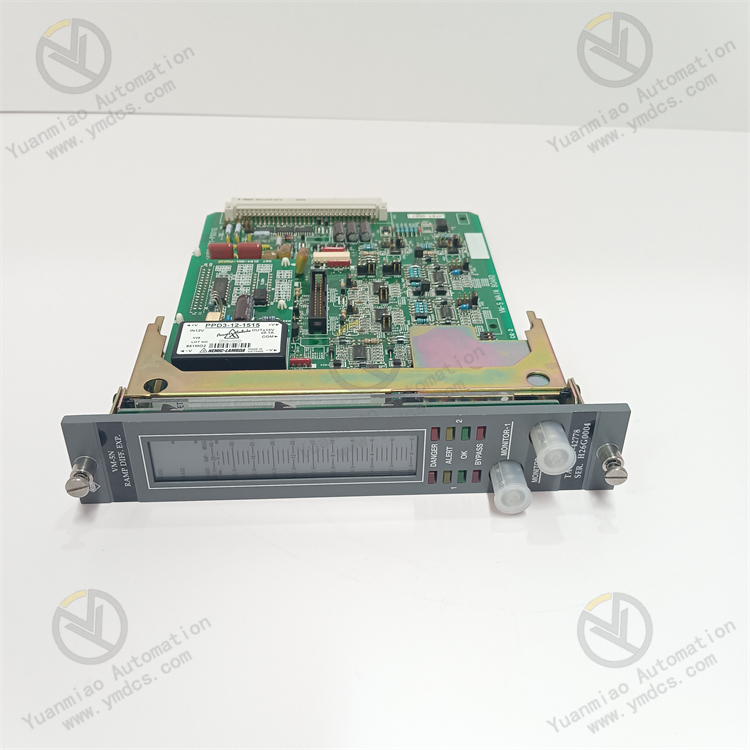
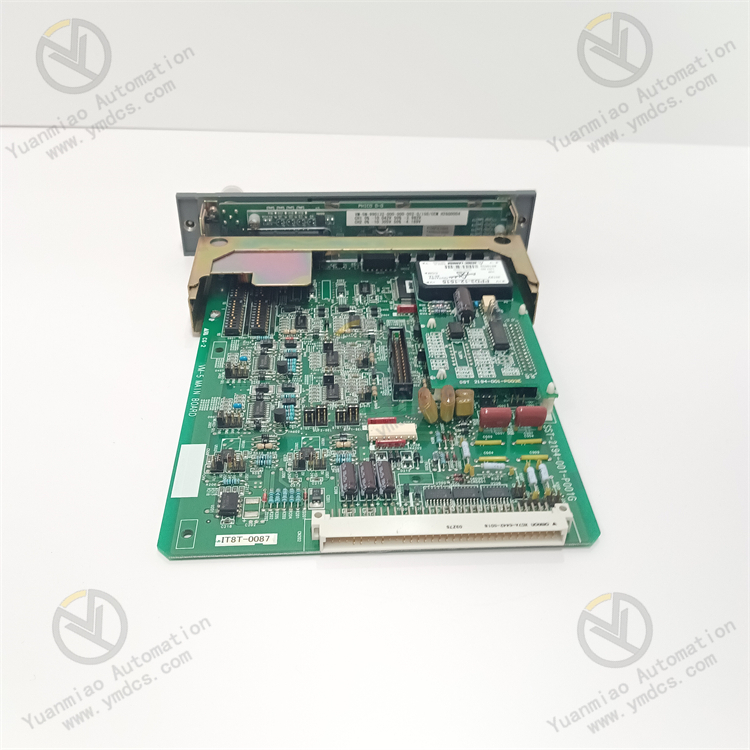
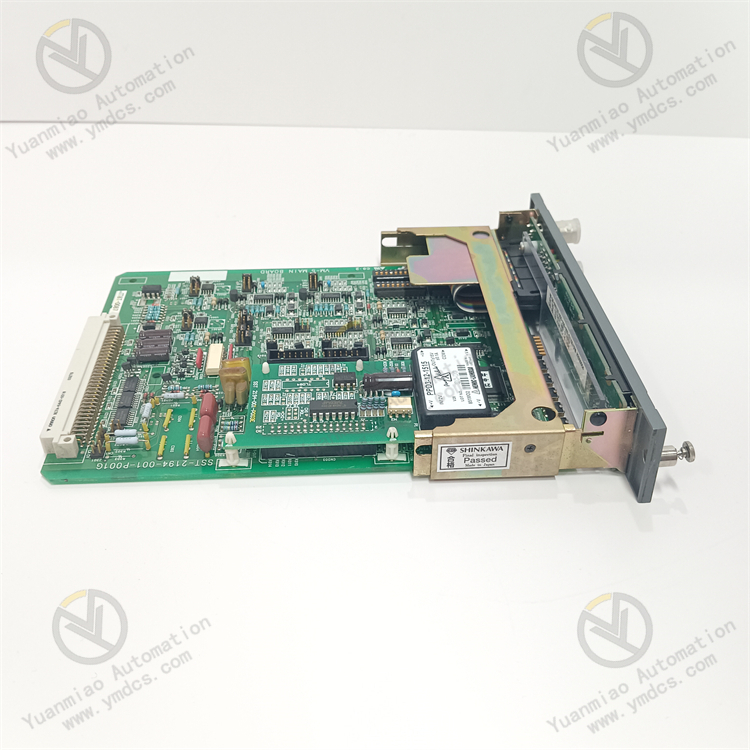
SHINKAWA VM-5N SST-2194-001-P001G is a dedicated rotor eccentricity and differential expansion monitoring module under the VM-5 series manufactured by Shinkawa Electric. It serves as core dedicated monitoring hardware for TSI (Turbine Supervisory Instrumentation) systems deployed in power, petrochemical and oil & gas industries.Custom-developed for steam turbines, gas turbines, large generator sets and high-speed centrifugal rotating units, this module delivers precise measurement of low-speed and static mechanical parameters including rotor eccentricity, shaft thermal expansion and rotor-stator clearance displacement. It pairs with non-contact eddy current displacement sensors and can identify latent defects such as rotor bending, thermal expansion deviation and abnormal eccentricity throughout unit warming-up, startup & shutdown, steady-state operation and load adjustment phases on a 24/7 basis.Integrated with high-precision static signal interpretation, intelligent anti-interference filtering, graded alarm interlock, real-time data archiving and full-loop self-diagnosis functions, it boasts prominent strengths including superior static measurement accuracy, outstanding zero-point stability, ultra-low temperature drift and time drift, and no measurement offset during long-term continuous operation.It feeds accurate feedback on static deformation and thermal expansion of the shafting, providing fundamental data support for warming-up regulation, rotor condition assessment, rotor-stator rubbing prevention and interlock trip upon parameter overrun. It acts as a critical dedicated monitoring unit to prevent shaft abrasion, rotor-stator friction and bending deformation on large rotating units.
2. Technical Features
2.1 Dedicated Parameter Monitoring to Target Core Hidden Risks of Shafting
Unlike general vibration monitoring modules, the VM-5N is purpose-designed for eccentricity and differential expansion measurement. It selectively collects key parameters such as static rotor eccentricity, thermal expansion displacement, residual shaft bending and variation of rotor-stator clearance, so as to detect hidden faults that cannot be captured by conventional vibration monitoring, including rotor thermal bending, excessive eccentricity during barring, inadequate warming-up and insufficient rotor-stator clearance.Natively compatible with Shinkawa eddy current displacement sensors, the non-contact measurement generates no mechanical wear. It enables long-term stable monitoring of shafting under static and low-speed operating conditions, perfectly satisfying refined supervision of shafting status during unit startup and warming-up procedures.
2.2 Ultra-High Static Measurement Accuracy and Long-Term Zero Stability
Equipped with exclusive high-precision static signal processing chips and proprietary calibration algorithms from Shinkawa, it optimizes signal decoding logic for low-speed and static displacement signals and fundamentally eliminates zero drift commonly seen when dynamic vibration modules perform static measurements.The module features extremely low temperature drift and time drift, with no zero offset or data fluctuation across wide temperature ranges and excellent measurement consistency during prolonged continuous operation. It is capable of capturing micron-level thermal expansion offset and eccentricity deformation of the shafting, and can truly restore the original shafting status under hot operating condition, cold condition and barring condition, complying with the specifications for precise shafting condition monitoring and safety evaluation of large steam turbine units.
2.3 Intelligent Signal Filtering Adapted to Low-Speed and Static Operating Conditions
Built-in exclusive static signal filtering algorithms can effectively distinguish valid shafting displacement signals from on-site electromagnetic clutter, line interference and minor vibration noise, filtering out high-frequency vibration interference produced during unit operation while retaining authentic static eccentricity and differential expansion data.It resolves the drawbacks of severe signal noise, data jitter and inaccurate measurement existing in traditional monitoring modules for static signals, ensuring stable, precise and reliable monitoring data during unit barring, warming-up and low-speed startup & shutdown, and furnishing accurate reference for operators to judge rotor thermal bending and sufficiency of warming-up.
2.4 Graded Interlock Protection to Avoid Severe Shafting Failures
Customizable multi-level alarm thresholds for eccentricity and differential expansion are supported, together with relay interlock output for warning and danger levels, which matches the standard protection logic: warning alert for excessive shaft eccentricity and interlock shutdown for over-limit differential expansion.The module supports real-time trend storage, SOE (Sequence of Events) timestamp recording and fault log archiving, which fully records the whole evolution of shafting operating status and allows rapid localization of root causes for abnormal eccentricity and over-range thermal expansion. It facilitates predictive maintenance and effectively avoids major equipment incidents such as rotor-stator rubbing, bearing liner scoring, permanent shaft bending and unit trip triggered by excessive rotor eccentricity.
2.5 Industrial Ruggedized Design for Harsh Working Conditions and Long-Term Maintenance
Adopting an integrated sealed modular triple-proof (dustproof, moisture-proof, anti-corrosion) design, it features aging resistance, electromagnetic interference immunity and wide temperature tolerance, which perfectly adapts to harsh on-site environments with intensive electromagnetic interference and drastic temperature & humidity fluctuation in power plants and chemical facilities.The hardware contains no adjustable vulnerable components; relay contacts have long service life and the module maintains an extremely low failure rate. It supports 24-hour non-stop continuous monitoring and fits long-term unattended operation of units.The standard rack-mount structure is fully compatible with complete cabinets and configuration systems of the VM-5 series, supporting TSI system renovation and online replacement of faulty modules for legacy units with excellent maintenance compatibility.
3. Specification Parameters
3.1 Basic Model Parameters
- Model: VM-5N SST-2194-001-P001G
- Brand & Series: SHINKAWA VM-5 Series TSI Monitoring Module
- Device Type: Dedicated Monitoring Module for Rotor Eccentricity & Differential Expansion
- Core Functions: Rotor eccentricity monitoring, acquisition of shaft thermal differential expansion, calculation of static displacement parameters, graded over-limit alarm, relay interlock output, recording of shafting condition trends, fault self-diagnosis and traceability
- Applicable Equipment: Steam turbines, gas turbines, generator sets and large industrial high-speed rotating units
3.2 Acquisition and Performance Parameters
- Monitored Parameters: Rotor eccentricity, shaft differential expansion (thermal expansion displacement), rotor-stator clearance displacement, static shaft offset
- Compatible Sensors: SHINKAWA series non-contact eddy current displacement sensors
- Measurement Characteristics: Optimized for static/low-speed signals, resistant to high-frequency vibration interference, stable and jitter-free data
- Measurement Precision: Ultra-high static measurement accuracy with excellent linearity to capture micron-level deformation
- Stability Performance: Ultra-low temperature drift and time drift; no zero offset or data distortion during long-term operation
- Signal Processing: Exclusive static filtering, electromagnetic noise reduction, clutter elimination and data de-jitter shaping
3.3 Electrical and Output Parameters
- Operating Power Supply: Standard industrial 24 VDC power supply
- Analog Output: Isolated standard 4–20 mA signal output for data acquisition by DCS/TSI systems
- Interlock Output: Multi-channel relay contact output with graded signals for warning, danger and fault status
- Communication Compatibility: Compatible with VM-5 system bus; supports industrial Ethernet and Modbus TCP general communication protocols
- Data Functions: Real-time parameter upload, historical trend storage, alarm timestamp recording and SOE event tracing
- Built-in Protection: Automatic protection against overvoltage, overcurrent, sensor open/short circuit, abnormal signals and loop faults
3.4 Environmental Parameters
- Operating Temperature: -40 ℃ ~ +70 ℃
- Storage Temperature: -55 ℃ ~ +125 ℃
- Operating Humidity: 5% ~ 95% RH (non-condensing)
- EMC Compliance: Complies with industrial EMC standards to withstand strong electromagnetic interference in power and chemical plants
- Protection Structure: Fully sealed industrial triple-proof reinforced structure with dust, moisture and aging resistance
- Operation Mode: 24-hour non-stop continuous stable monitoring
3.5 Mechanical and Maintenance Parameters
- Mounting Method: Standard embedded rack installation compatible with VM-5 series system cabinets
- Structural Features: Highly integrated monolithic modular design with vibration resistance, aging resistance and low failure rate
- Status Indication: Front visual panel with LED indicators for running status, fault, alarm and signal abnormality
- Diagnostic Functions: Sensor loop self-inspection, open/short circuit diagnosis, out-of-range signal detection and fault sequence tracing
- Configuration Adaptability: On-site custom threshold configuration, online parameter calibration and retrofit replacement for legacy units
4. Working Principle
In accordance with the API 670 standardized TSI monitoring architecture, the SHINKAWA VM-5N SST-2194-001-P001G module executes a dedicated closed-loop monitoring workflow: eddy current signal acquisition → exclusive static filtering and noise reduction → high-precision displacement calculation → condition judgment of eccentricity & differential expansion → data upload and graded interlock → full-loop fault self-diagnosis.
After power-on initialization, the module automatically completes full hardware self-test, sensor loop verification, measuring range matching and system communication handshaking. It enters normal high-precision eccentricity and differential expansion monitoring mode only after confirming healthy hardware circuits, acquisition loops, power supply and communication links.
During unit barring, warming-up, startup & shutdown and steady-state operation, the module continuously receives analog signals of static shaft displacement and clearance variation collected by field eddy current displacement sensors. Exclusive static filtering algorithms eliminate false data caused by high-frequency vibration clutter, on-site electromagnetic interference and line jitter, retaining valid signals of rotor deformation and thermal expansion.
A high-precision computing unit accurately calculates rotor eccentricity and shaft differential expansion values, and dynamically evaluates the degree of rotor thermal bending, sufficiency of warming-up and compliance of shaft thermal expansion based on preset range parameters and graded alarm thresholds.
Valid monitoring data is uploaded to DCS and TSI main control systems via 4–20 mA analog signals and system bus to realize remote real-time monitoring, trend curve storage and condition analysis of eccentricity and differential expansion parameters, providing precise data reference for unit startup & shutdown operation, warming-up duration control and load adjustment.
The module monitors sensor loop status, signal quality and hardware operation in real time throughout the whole process, and continuously compares real-time eccentricity and differential expansion readings with safety thresholds.
It automatically triggers warning alerts when slight eccentricity excess or abnormal thermal expansion deviation is detected to remind maintenance personnel to optimize warming-up and operating conditions.
In case of severe parameter overrun, sensor fault, line abnormality or hardware fault, danger alarms and local indicator alarms are activated immediately, together with synchronous recording of SOE timestamped events and fault logs. Interlock protection signals are output to assist the control system in implementing protective actions such as load reduction and emergency shutdown.Relying on dedicated static monitoring algorithms, superior stability and precise signal analysis capability, the module comprehensively guarantees safe operation of unit shafting and eliminates major equipment hazards including rotor bending and rotor-stator rubbing from the source.
5.1 Core TSI Monitoring Systems for Steam Turbine Units in Power Plants
Widely applied in TSI systems of steam turbine and gas turbine generator sets for thermal power, cogeneration and combined-cycle power plants as the dedicated monitoring unit for rotor eccentricity and differential expansion. It covers all working conditions including unit barring, warming-up, startup & shutdown, load variation and steady-state operation.It accurately measures residual rotor eccentricity, thermal bending deformation and shaft thermal expansion displacement to judge warming-up adequacy and shafting health, effectively preventing rotor-stator rubbing and bearing damage induced by excessive eccentricity during unit startup and shutdown. It serves as the core dedicated hardware for shafting safety protection of steam turbine units.
5.2 Refined Rotor Condition Monitoring for Large Rotating Equipment
Suitable for key rotating machinery such as large high-speed centrifugal units and blowers in chemical and oil & gas industries. It focuses on monitoring static rotor eccentricity and thermal deformation to predict potential shaft offset risks caused by rotor thermal bending, assembly deviation and bearing wear in advance, supporting condition-based maintenance and predictive maintenance.It compensates for the limitation of general vibration modules which cannot detect static shafting defects, realizing comprehensive refined management of dynamic and static status of rotating equipment and ensuring continuous stable production of industrial plants.
5.3 Over-Limit Safety Protection System for Unit Shafting
With graded alarm and interlock output functions for both eccentricity and differential expansion parameters, it establishes exclusive hierarchical safety protection logic for unit shafting: early warning for minor eccentricity abnormalities and interlock shutdown for severe over-limit conditions.It effectively prevents major equipment accidents such as rotor-stator friction, permanent shaft deformation and unit trip resulting from rotor thermal bending and excessive differential expansion, improves the shafting protection system of TSI and elevates the overall safety level of unit operation.
5.4 Supporting System for Industrial Automatic Centralized Monitoring
With standard 4–20 mA analog output and universal industrial communication compatibility, it can seamlessly connect with various DCS and PLC automatic control systems to realize centralized collection, remote monitoring, trend storage and intelligent analysis of eccentricity and differential expansion data.It meets the demand of centralized equipment condition management in intelligent power stations and chemical plants, enriches the full-dimensional monitoring system for rotating machinery, and improves the level of automatic operation & maintenance and fault prediction for generating units.
5.5 Retrofit and Spare Part Replacement for Legacy TSI Systems
As an original standard dedicated monitoring module of the SHINKAWA VM-5 series, it is fully compatible with cabinets, wiring logic and configuration programs of legacy systems of the same series.It is applicable to upgrade renovation, faulty module replacement and hardware iteration of TSI systems in aging power plants and chemical facilities. No large-scale modification of system architecture and on-site wiring is required; rapid equipment renewal restores measurement accuracy and interlock protection performance for shaft eccentricity and differential expansion, significantly cutting maintenance costs and renovation construction period.
![]()