Description
Bently Nevada 1900/65A-00-00-02-00-00
I. Basic Information
Bently Nevada 1900/65A-00-00-02-00-00 is a multi‑function general‑purpose equipment monitor, positioned as a cost‑effective solution for industrial equipment condition monitoring and protection. It is mainly used for continuous monitoring of various rotating machinery and critical industrial equipment. By collecting key operating parameters such as vibration, temperature, and speed in real time, it enables early fault diagnosis and preventive maintenance of equipment, providing reliable assurance for safe and stable operation. It is suitable for mid‑to‑low‑end monitoring requirements and non‑critical equipment protection scenarios.
Belonging to the Bently Nevada 1900 Series, this monitor inherits the core advantages of the series: high reliability, ease of use, and excellent flexibility. It integrates precise data acquisition technology with a simple operating design. Unlike high‑end and complex monitoring systems, it features low cost, easy installation, and simple configuration. It can be used as a standalone monitoring device, integrated into OEM complete equipment, or connected to a distributed monitoring network via communication interfaces, flexibly adapting to industrial application scenarios of different scales and types.
As a core general‑purpose model in the 1900 Series, the Bently Nevada 1900/65A-00-00-02-00-00 offers abundant I/O channel configurations, fully covering the monitoring needs of key parameters of industrial equipment. It is compatible with various types of sensors and adapts to harsh industrial operating environments. Widely applied in oil and gas, power generation, manufacturing, mining, and other industries, it is a cost‑effective choice for health monitoring of non‑critical and basic production equipment in factories.
II. Technical Specifications
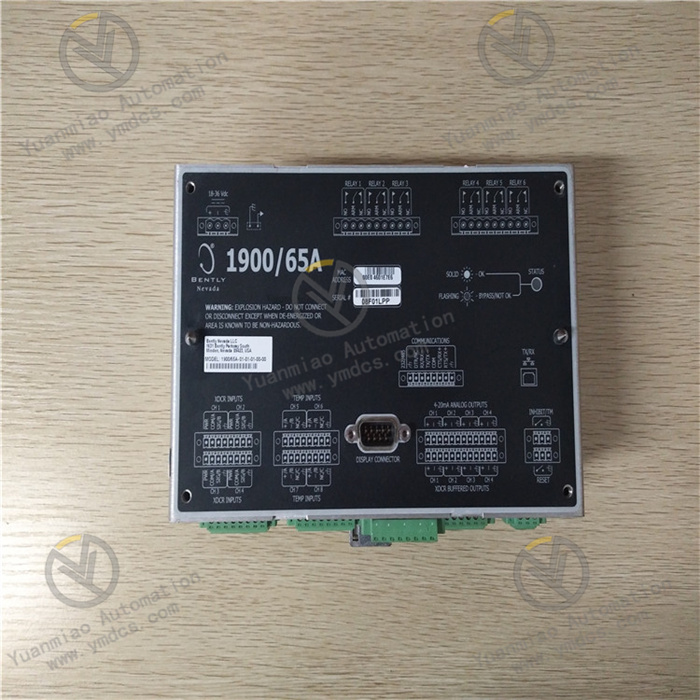
- Signal Acquisition Specifications: Equipped with 8 input channels, including 4 channels for vibration/position/speed input and 4 channels for temperature input, enabling real‑time collection of key operating parameters such as vibration, temperature, speed, and displacement. Supports various sensor types including vibration sensors, displacement sensors, temperature sensors, accelerometers, velocity sensors, and proximity probes to meet different monitoring needs. Detection frequency range: 2 Hz to 20 kHz; detection accuracy: ±0.5% full scale. Adopts 24‑bit ADC conversion to ensure high precision and accuracy in data acquisition.
- Output Channel Specifications: Features 4 analog output channels of 4–20 mA for real‑time transmission of monitoring data to external display devices or control systems. Also equipped with 6 configurable alarm relays, allowing flexible setting of alarm trigger conditions based on equipment operating standards and timely issuing fault warning signals for prompt maintenance reminders.
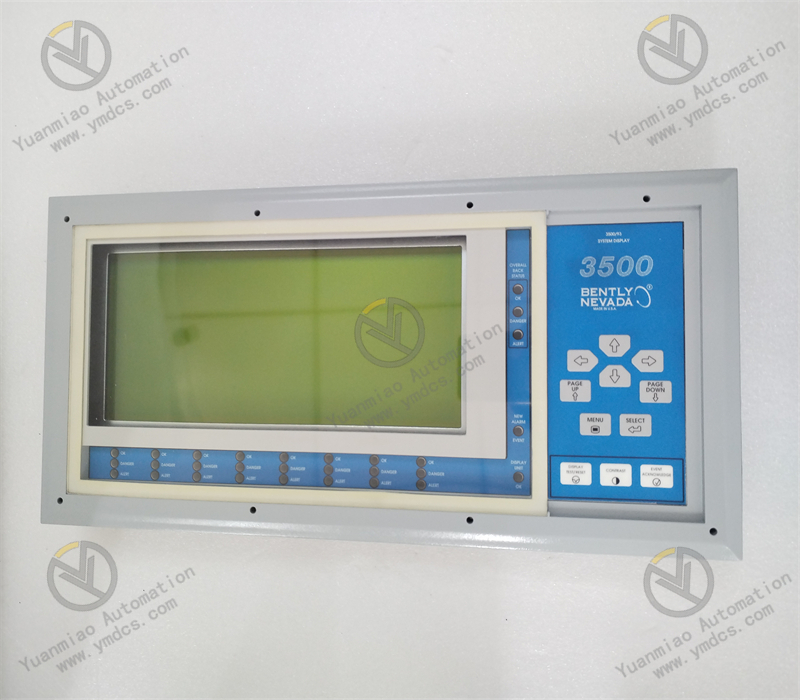
- Communication Characteristics: Supports two communication interfaces: Ethernet and RS485, compatible with conventional industrial communication requirements. Enables real‑time transmission and remote access of monitoring data, facilitating connection with external control systems and data acquisition platforms. Supports formation of distributed monitoring networks and allows remote connection of displays to the monitor, adapting to monitoring needs of standalone mechanical equipment and integrally packaged machinery.
- Power Supply: Powered by 24 V DC with stable input and good voltage adaptability, tolerating common voltage fluctuations in industrial sites to ensure continuous and stable operation of the monitor. No complicated power configuration is required, reducing system construction costs.
- Environmental Parameters: Operating temperature range: -40℃ to +85℃, suitable for extreme high and low temperature industrial environments as well as conventional industrial humidity conditions. Provides excellent anti‑electromagnetic interference and anti‑vibration performance. Enclosure protection rating reaches IP67, resisting dust, moisture, and other interference on site. Optional protective enclosure meets all‑weather outdoor installation needs and ensures stable operation under harsh working conditions.
- Compatibility: Highly compatible with various sensors such as vibration sensors, displacement sensors, and temperature sensors, allowing flexible sensor matching according to monitoring requirements. Can operate as a standalone monitoring device, integrate into OEM complete equipment, or access distributed monitoring networks to adapt to different application scenarios. Supports configurable scale factors and full‑scale ranges to further enhance adaptability.
- Physical Specifications: Compact design; monitor dimensions approximately 7.75 × 5.88 × 2.93 inches, display dimensions approximately 7.75 × 5.03 × 1.29 inches (slight variations by configuration). Small size, light weight, supports DIN rail or panel mounting. Sturdy structure built with industrial‑grade high‑quality components. Requires no extra maintenance under normal use, has a long service life, and supports on‑site rapid maintenance and sensor replacement.
III. Functional Features
- Multi‑Parameter High‑Precision Acquisition: Provides 8 input channels for simultaneous collection of multiple key parameters including vibration, temperature, speed, and displacement, covering core monitoring needs of equipment operating status. Adopts 24‑bit ADC conversion technology with ±0.5% full‑scale accuracy and a frequency range of 2 Hz to 20 kHz, accurately capturing subtle changes in equipment operation and providing reliable data support for fault diagnosis.
- Flexible I/O Configuration: Four 4–20 mA analog output channels enable real‑time transmission of monitoring data. Six configurable alarm relays allow flexible threshold setting, issuing timely warnings when abnormalities occur to prompt timely handling and prevent fault escalation. It also adapts to connection requirements of different external devices, improving system integration flexibility.
- Convenient Communication and Remote Access: Supports Ethernet and RS485 interfaces for remote access and transmission of monitoring data, allowing staff to monitor equipment status remotely without on‑site duty. Enables remote display connection for standalone and integrally packaged equipment scenarios and supports access to distributed monitoring networks for centralized management of multiple devices.
- High Compatibility and Flexible Adaptation: Compatible with various sensor types for flexible matching according to different equipment monitoring needs. Supports configurable scale factors and full‑scale ranges to suit equipment of different specifications. Can operate standalone, integrate into OEM systems, or connect to distributed networks, flexibly adapting to scenarios across different scales and industries.
- Industrial‑Grade High Reliability and Environmental Adaptability: Constructed with industrial‑grade high‑quality components and a rugged structure with IP67 protection. Offers excellent resistance to EMI, vibration, temperature, and humidity variations within a -40℃ to +85℃ operating range. Ensures long‑term stable operation in complex industrial environments such as outdoors, dust, and moisture, with a long MTBF to meet 24/7 continuous monitoring demands.
- Easy Installation and Maintenance: Compact, lightweight design with DIN rail or panel mounting and simple installation procedures without complex professional commissioning. Requires no extra maintenance under normal use and supports on‑site rapid maintenance and sensor replacement. User‑friendly operation reduces operation and maintenance costs, suitable for SMEs and basic monitoring scenarios.
- Cost‑Effective Monitoring Solution: Features low cost and high cost performance, realizing continuous monitoring of key equipment parameters without complex system configuration. Satisfies protection needs of non‑critical equipment and serves as basic monitoring for auxiliary support of critical equipment. Helps enterprises implement preventive maintenance at low cost, reducing downtime losses and maintenance expenses.
IV. Application Areas
- Oil and Gas Industry: Monitors pumps, air compressors, small reciprocating compressors, and other equipment in oil and gas extraction and transportation. Collects vibration, temperature, and other parameters in real time to identify potential faults promptly, ensuring stable equipment operation and continuous production processes while adapting to the industry’s harsh industrial environment.
- Power Generation Industry: Applied in monitoring auxiliary equipment in thermal, hydro, new energy, and other power plants, such as cooling tower fans, pumps, and blowers. Real‑time monitoring of operating status enables early fault warning, preventing auxiliary equipment failures from affecting main equipment operation and ensuring stable power supply.
- Manufacturing Industry: Widely used for basic mechanical equipment in production lines, including motors, crushers, small machine tools, etc. By monitoring vibration, temperature, and other parameters, it timely detects potential faults such as wear and looseness, reduces downtime, improves production efficiency, lowers maintenance costs, and meets monitoring needs of small and medium‑sized enterprises.
- Heavy Industry: Used for auxiliary equipment in heavy industrial scenarios such as metallurgy, mining, and cement production, including mining machinery, cement production equipment, centrifuges, etc. Adapts to complex industrial conditions, ensures safe operation through continuous monitoring, avoids production delays caused by auxiliary equipment failures, and improves operational safety and production continuity.
- Other Industrial Fields: Also applied to various pumps, fans, and other equipment in water treatment, papermaking, and other industries. Suitable for standalone, base‑mounted, and packaging machinery. Can be integrated into low‑cost OEM complete equipment, providing economical and efficient monitoring and protection solutions for various basic industrial equipment and helping enterprises implement equipment preventive maintenance.