Description
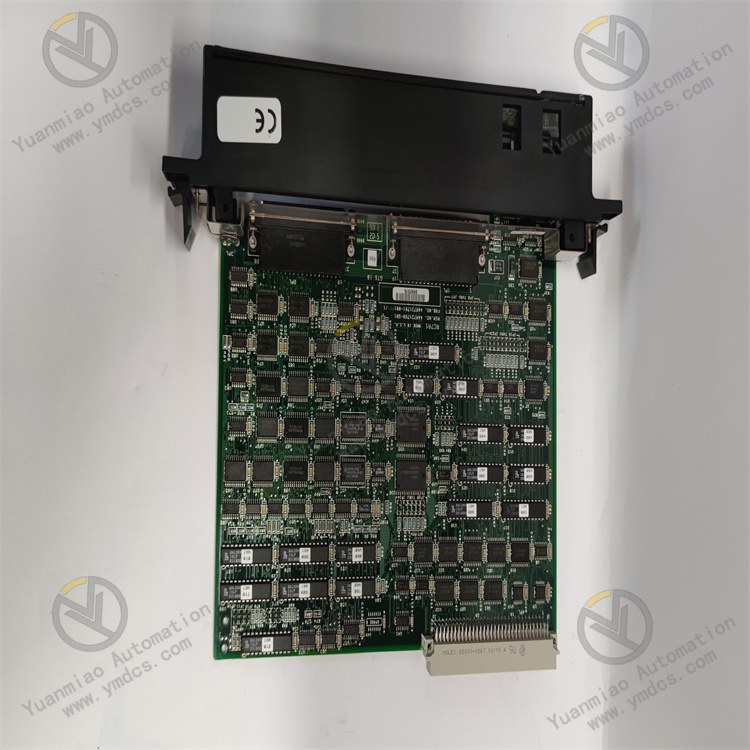
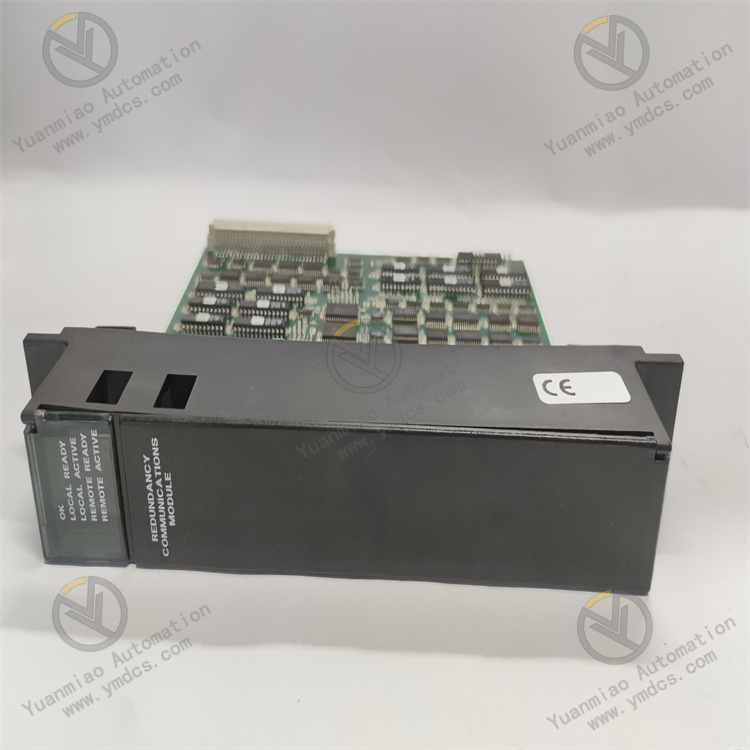
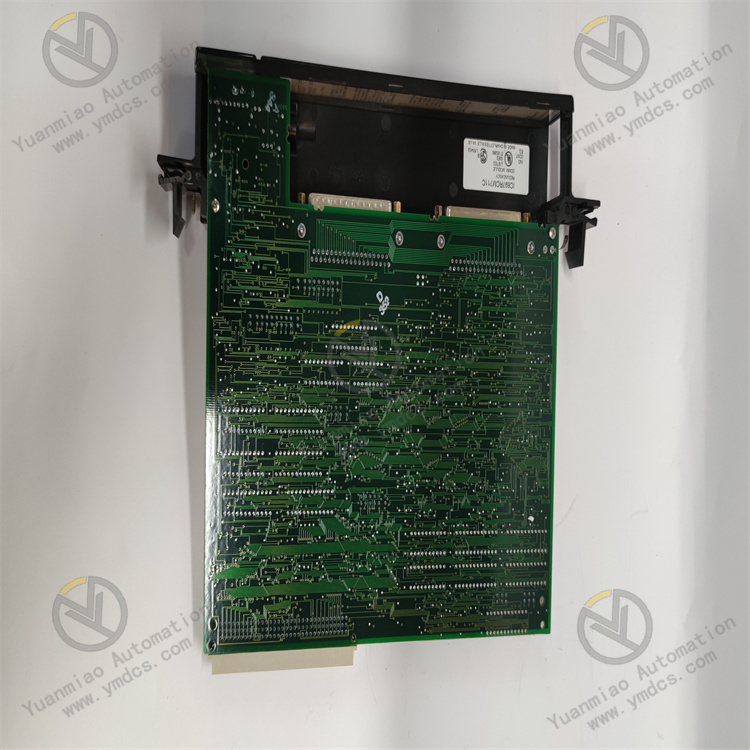
GE IC697RCM711
I. Overview
The GE IC697RCM711 is a redundant control module for the RX7i series PLCs, specifically designed for high-reliability industrial scenarios requiring "zero downtime". It undertakes key tasks including redundant switching of dual CPUs, system status monitoring, and fault diagnosis.
This module realizes seamless switching between the main and standby CPUs through redundant logic management, making it suitable for fields with strict requirements on system continuity, such as power dispatching, key petrochemical equipment, and rail transit signal control. As the "control center" of the RX7i redundant system, it can work in collaboration with dual CPUs, redundant power supplies, and I/O modules. When the main CPU fails, it completes the standby unit switchover within 10ms to ensure no interruption in the control process, providing core support for high-reliability production.
II. Technical Parameters
| Parameter Category | Specific Specifications | Description |
|---|---|---|
| Power Parameters | DC 5V (powered by backplane), power consumption ≤15W | Compatible with RX7i system power supply, low-power design |
| Redundancy Performance | Switchover time ≤10ms, supports hot standby/cold standby modes | Millisecond-level switching ensures business continuity |
| Communication Interfaces | 2 redundant backplane buses, 1 diagnostic serial port | Dual buses ensure the reliability of data synchronization |
| Environmental Parameters | Operating temperature 0-60℃, IP20 protection, MTBF ≥200,000 hours | Industrial-grade environmental adaptability, high reliability |
| Compatibility | Compatible with all RX7i series CPUs, supports 1-2 redundant racks | Seamless integration into the RX7i system, flexible expansion |
III. Functional Features
- Millisecond-Level Redundant Switching: It adopts a hardware-level redundant detection circuit to real-time monitor the operating status of the main CPU (program execution, communication links, I/O interaction). When the main CPU fails, it triggers the standby unit switchover within 10ms. During the switchover, the I/O output status remains unchanged to avoid production fluctuations. It supports real-time data synchronization between the main and standby CPUs in hot standby mode, and rapid configuration loading in cold standby mode.
- Dual Fault-Tolerance Protection: Equipped with dual redundant backplane buses, the main and standby buses transmit data independently. When one bus fails, it automatically switches to the standby bus. It has a built-in program verification and data backup mechanism, where the main CPU program is synchronized to the standby unit in real-time to ensure program consistency after switching. It supports redundant linkage control of power supplies and I/O modules.
- Intelligent Diagnosis and Monitoring: It outputs information such as the status of the main/standby CPUs, bus load, and fault codes through the diagnostic serial port. It supports linkage with GE Proficy software to intuitively display the redundant system topology and operating data. It has a fault pre-alarm function, which triggers an early alarm when abnormalities such as high CPU load or increased bus delay are detected.
- Seamless System Integration: As a dedicated module for the RX7i redundant system, it supports plug-and-play on the backplane without additional adapter software. It can work in collaboration with RX7i series I/O and communication modules, and is compatible with redundant communication of protocols such as EtherNet/IP and PROFINET, realizing full-link redundancy from the control layer to the monitoring layer.
IV. Working Principle
The core of the module follows the logic of "status monitoring - data synchronization - fault switching - recovery and self-healing":
During the initialization phase, the module establishes communication between the main and standby CPUs through the dual buses, configures the redundancy mode (hot standby/cold standby), sets the main CPU to the "running" state, and the standby unit to the "synchronization" state.
- During operation, the main CPU synchronizes the program execution status and I/O data to the standby unit in real-time through the redundant bus, and the module detects the main CPU's heartbeat signal 100 times per second.
When the main CPU's heartbeat is lost or a fault occurs, the module immediately sends a switchover command. The standby unit switches from the "synchronization" state to the "running" state, takes over I/O control, and blocks the main CPU's output at the same time.
- After the fault is eliminated, the module supports manual/automatic restoration of the main-standby relationship, and the standby unit's data is synchronized back to the main CPU to complete self-healing.
V. Common Faults and Solutions
| Fault Phenomenon | Cause Analysis | Solutions |
|---|---|---|
| Switchover indicator flashes, switchover fails | Abnormal data synchronization between main and standby units, bus fault | 1. Check the wiring of the redundant bus; 2. Verify the consistency of the main and standby programs with software; 3. Replace the bus interface chip |
| Standby unit fails to synchronize, reporting "data mismatch" | Mismatched models of main and standby CPUs, excessively long synchronization cycle | 1. Confirm that the models of the main and standby CPUs are consistent; 2. Shorten the synchronization cycle to within 50ms; 3. Re-download the program to the standby unit |
| Fault light stays on, no redundancy function | Module self-test failure, abnormal power supply | 1. Measure whether the backplane power supply is DC 5V±0.2V; 2. Re-plug the module to clean the contacts; 3. Replace with a spare module |