Description
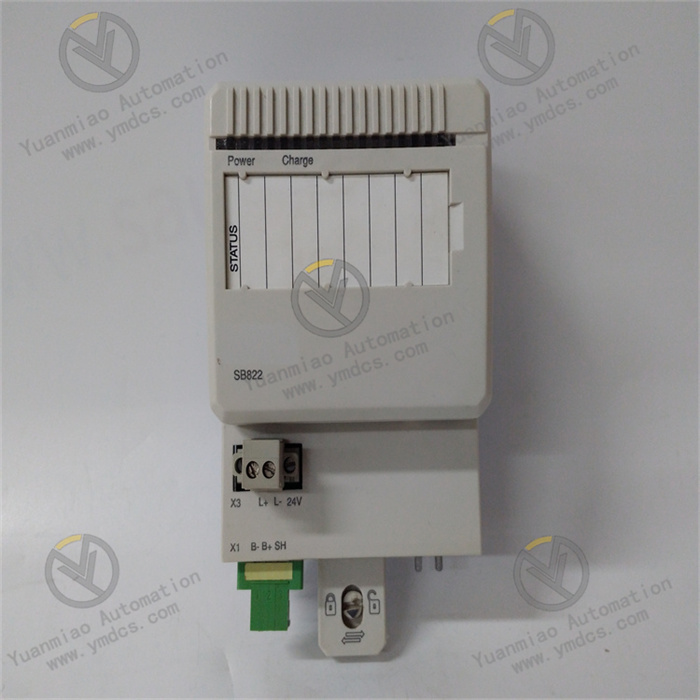
ABB SPNIS21
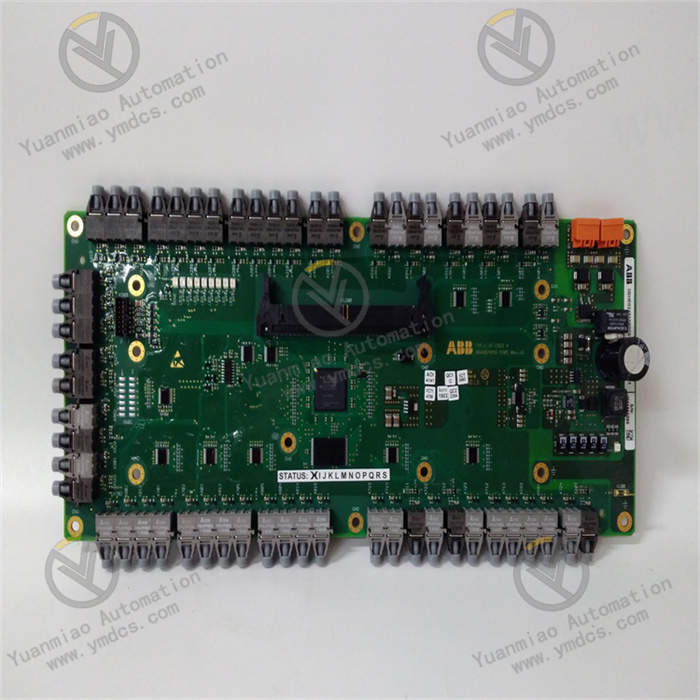
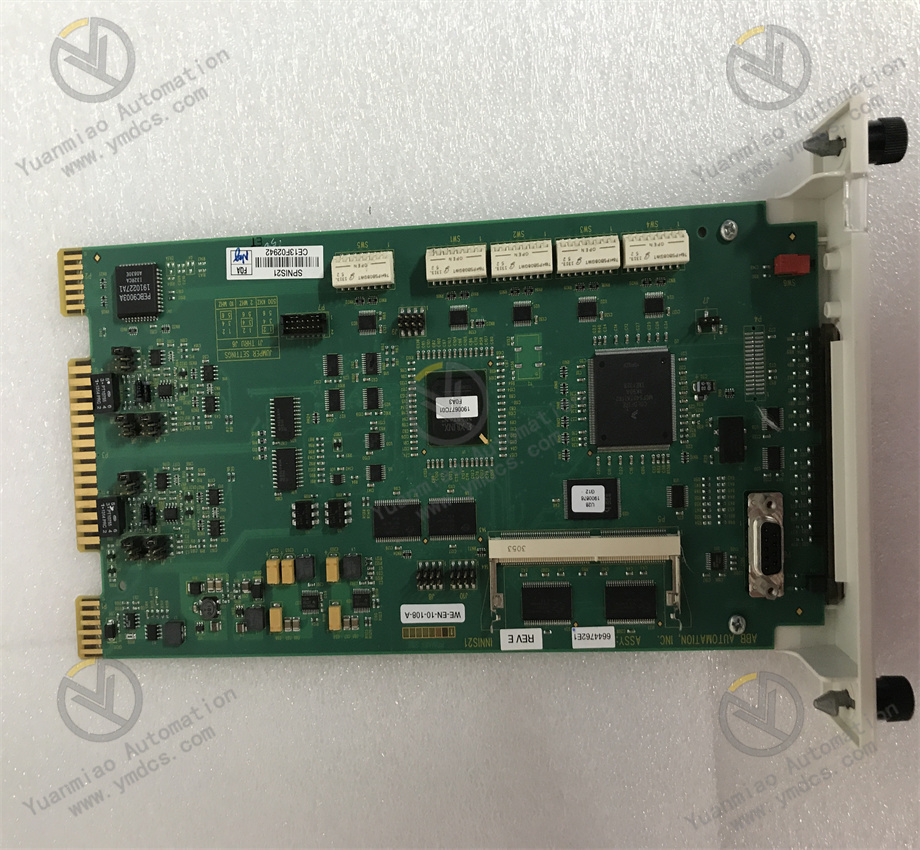
ABB SPNIS21 is a Network Interface Slave module. It is designed as an intelligent interface node for the Cnet network in large‑scale DCS systems, responsible for high‑speed data exchange, address resolution, and link redundancy management between nodes and the Cnet backbone.
As a key component in the Symphony Plus Harmony Rack cabinet, it enables communication between distributed I/O modules and the main controller. It integrates five core capabilities: high real‑time performance, dual redundant links, comprehensive LED diagnostics, hot‑swap maintenance, and strong anti‑interference performance. Suitable for harsh industrial environments including thermal power, nuclear power, hydropower, and petrochemical applications, it complies with industrial communication and functional safety standards, serving as a critical communication module ensuring continuous and stable data links in DCS systems.
Acting as the front‑end for each Cnet communication interface, the module serves as an intelligent bridge between nodes and the Cnet network, allowing any nodes on the network to communicate with each other. It typically works with the SPNPM22 (Network Processor Module) and connects to I/O modules such as the IET800 via a dedicated I/O expansion bus, establishing a full link for field data acquisition and control command output.
It also features built‑in comprehensive link monitoring and fault alarm functions, enabling quick localization of abnormalities in Cnet connections, bus communication, power supply, and other components. It supports online diagnostics and firmware upgrades, significantly reducing the risk of system downtime.
The module features a compact industrial card‑style design for installation in standard MMU (Module Mounting Unit) cabinet slots. The front panel is equipped with 16 fault/event counting LEDs, 1 main operating status LED, and a reset/stop button. Dual locking screws prevent loosening due to vibration. The housing is made of industrial‑grade shielding material with excellent electromagnetic interference resistance and dustproof performance. It supports online hot‑swap (in accordance with system safety procedures); replacement does not affect the operation of other modules in the same cabinet, meeting the minimum downtime requirements of the power generation and chemical industries.
1. Technical Specifications
- Power SpecificationsStandard +5 VDC backplane power supply (compatible with the Harmony Rack power system).Over‑voltage and over‑current protection.Low power consumption, suitable for long‑term continuous operation.Electrical isolation between power and signal/communication circuits to suppress power‑side interference.
- Communication and InterfacesCore interfaces:
- P3: Connects to NTCL01 terminal unit for Cnet coaxial/twin‑axial cable access.
- P2: Connects to I/O expansion bus for interfacing with IET800 modules.
- P1: Power interface.Cnet network: Supports redundant ring Cnet topology with automatic link failover.Cooperative communication: Works with SPNPM22 to implement data routing within the DCS.Panel: 16 LED fault code indicators + 1 operating status LED + reset button.
- Physical and InstallationSingle‑slot card, net weight approx. 0.3 kg.Front panel with locking screws.Hot‑swap supported.Protection class: IP20 (cabinet installation).Operating temperature: -20°C to +60°C.Vibration and shock resistance compliant with IEC 60068‑2 standards.EMC performance compliant with IEC 61000‑4 series standards.
- CompatibilityFully compatible with Symphony Plus DCS and Bailey Infi 90 systems.Direct replacement for the INNIS21 module without cabinet or wiring modifications.Supports various Cnet terminal and cable types.
2. Features
- Core Cnet Network AccessProvides physical and protocol‑layer connectivity from nodes to Cnet, enabling data exchange between distributed nodes. Supports address resolution and data frame forwarding to meet millisecond‑level real‑time requirements for process control.
- Dual Redundant Link ProtectionAdapts to redundant ring Cnet networks. In the event of a single link or module failure, it automatically switches to the backup channel to ensure uninterrupted communication and improve system availability.
- Comprehensive Self‑Diagnostics and Visualization16 LEDs accurately display error codes and event counts; the main status indicator clearly distinguishes between running, fault, and initialization states. Supports uploading alarms to the DCS operator station via the system bus for quick troubleshooting.
- Hot‑Swap and Tool‑Free MaintenanceSupports online hot‑swap; module replacement does not require system shutdown. Manual reset is available via the panel button, allowing basic fault handling without specialized software.
- High Compatibility and Seamless UpgradeAs a direct replacement for INNIS21, it requires no changes to system configuration or cabinet wiring. Natively adapted to the Symphony Plus ecosystem, it reduces the cost and duration of upgrading legacy Infi 90 systems.
3. Operating Principle
- Initialization and Link EstablishmentAfter power‑on, the module performs self‑tests, establishes communication with the SPNPM22 over the I/O expansion bus, and obtains its node network address. It connects to the NTCL01 terminal unit via the P3 interface to complete physical and protocol‑layer initialization of the Cnet link and establish connection to the Cnet backbone.
- Data Transception and RoutingIt receives field data (analog/digital) collected by I/O modules such as IET800, encapsulates the data per protocol, and transmits it to the target node via Cnet. It also receives control commands from Cnet, decapsulates them, and distributes them to corresponding execution modules via the I/O expansion bus. The SPNPM22 handles overall network routing and flow control, while the SPNIS21 focuses on node‑side interface processing.
- Redundancy Monitoring and SwitchingIt continuously monitors communication quality and physical connectivity of the primary Cnet link. If faults such as link interruption or excessive signal attenuation are detected, it immediately triggers redundant switching to activate the backup link and reports fault information via LEDs and the system bus.
- Fault Diagnosis and AlarmIt constantly monitors its own power supply, bus communication, and Cnet interface status. When an abnormality occurs, the corresponding fault code is shown on the panel LED, and alarm data is uploaded to the DCS, allowing maintenance personnel to quickly locate and resolve issues.
4. Applications and Case Examples
- DCS Communication in Thermal / Nuclear Power PlantsUsed as the Cnet interface between distributed I/O cabinets and the main controller in the Symphony Plus DEH/DCS systems of large thermal and nuclear power plants. It enables data acquisition and control command output for steam turbines, boilers, generators, and other equipment. Redundant design ensures continuous unit operation.
- Process Control in Petrochemical / Chemical PlantsUsed in DCS networks of refineries and chemical plants to connect field I/O modules with the main control room, transmitting key process parameters including temperature, pressure, and flow, and supporting complex interlocking and safety protection logic.
- Hydraulic Turbine Control in Hydropower PlantsServes as the communication interface in Harmony Rack cabinets for hydropower turbine governing systems, connecting LVDT position feedback, servo valve drive modules, and the main controller to ensure accurate control of guide vane opening and rotational speed.
- Legacy Infi 90 System UpgradeDirectly replaces the INNIS21 module to improve communication stability and diagnostic capability without full cabinet replacement, reducing upgrade costs and downtime.