Description
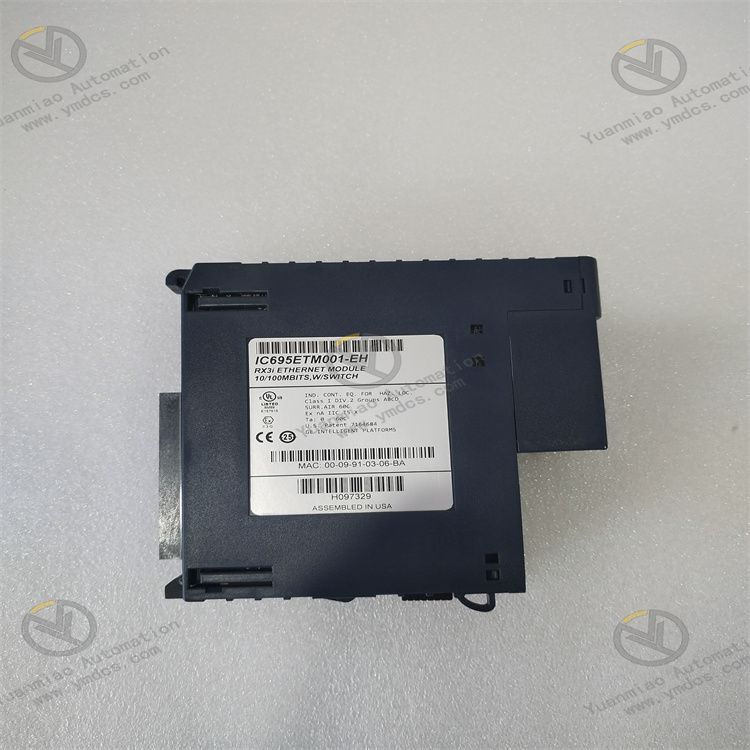
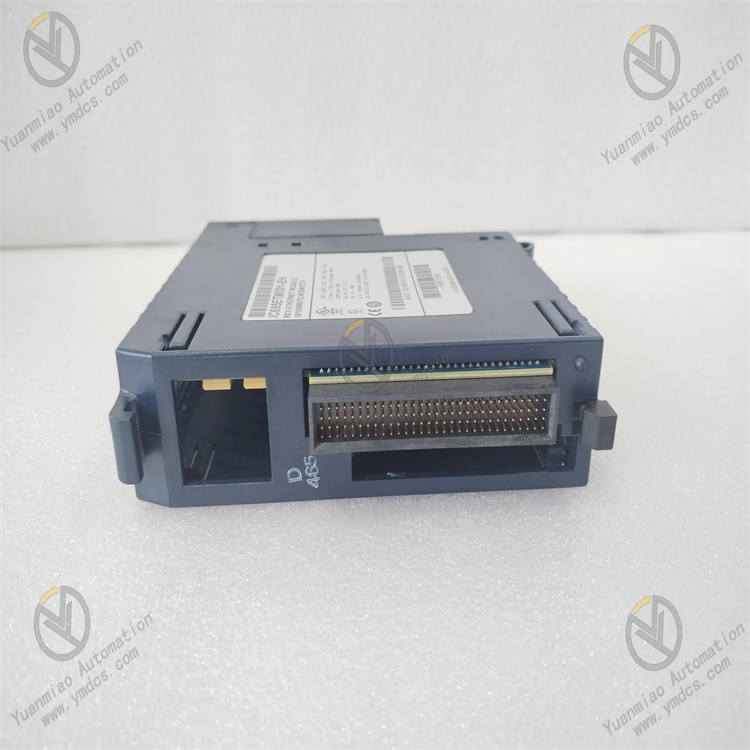
GE IC695ETM001-EH
I. Overview
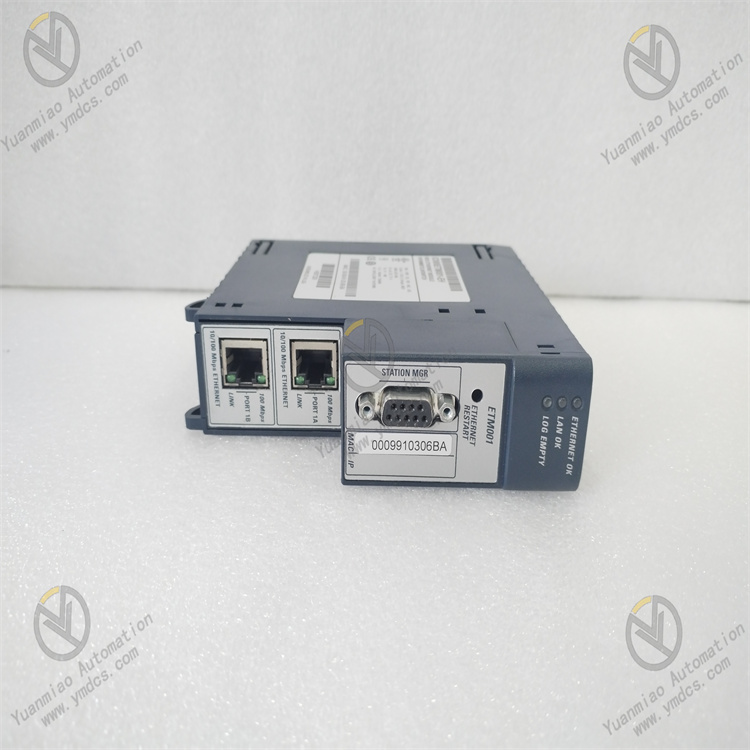
The GE IC695ETM001-EH is an Ethernet communication module for the RX3i series programmable logic controllers (PLCs), specifically designed for high-speed data interaction and distributed networking in industrial automation systems. As a key communication node of the RX3i system, it undertakes the task of Ethernet data transmission between the CPU, upper-level monitoring systems, remote I/O modules, and third-party intelligent devices. Leveraging the high speed and strong compatibility of Gigabit Ethernet, it is widely used in scenarios with strict requirements for communication real-time performance, such as power monitoring, automotive manufacturing, metallurgical chemical industry, and smart factories. This module adopts an industrial-grade anti-interference architecture, which can be seamlessly integrated into the GE RX3i control system while being compatible with mainstream industrial Ethernet protocols, providing core support for building an efficient and reliable industrial communication network.
II. Technical Parameters
| Parameter Category | Parameter Specifications | Technical Description |
|---|---|---|
| Power Parameters | Input Voltage: DC 5V (powered by RX3i backplane); Rated Power Consumption: ≤8W | Relies on centralized power supply from the system backplane, featuring low power consumption and high power supply stability |
| Communication Interfaces | 2 Gigabit Ethernet interfaces (RJ45); Supports Auto-MDI/MDI-X auto-adaptation | Dual interfaces support redundant backup or multi-segment communication; the auto-adaptation function simplifies wiring |
| Supported Protocols | EtherNet/IP, Modbus TCP, GE SRTP, TCP/IP, UDP | Multi-protocol compatibility meets the interconnection needs of devices from different manufacturers |
| Communication Performance | Communication Rate: 10/100/1000Mbps auto-adaptation; Maximum Concurrent Connections: 128; Data Forwarding Delay: ≤2ms | High speed meets large-volume data transmission needs; low delay ensures real-time control requirements |
| Operating Environment | Operating Temperature: 0℃~60℃; Relative Humidity: 5%~95% (no condensation); Protection Class: IP20 (module itself) | Adapts to the installation environment inside control cabinets; humidity resistance meets industrial scenario requirements |
| Compatibility Parameters | Compatible with GE RX3i series CPUs; Supports remote I/O modules (IC695 series); Supports DHCP/static IP configuration | Seamless compatibility with the RX3i system; flexible IP configuration adapts to different network architectures |
III. Functional Features
- Gigabit Redundant Communication Guarantee: The dual Gigabit Ethernet interfaces support link redundancy. When the main communication link fails, it can automatically switch to the backup link within 50ms to ensure communication continuity. At the same time, it supports multi-segment communication, allowing simultaneous access to the control network and information network to achieve isolated data transmission and improve network security.
- In-depth Multi-protocol Compatibility: It natively supports mainstream industrial protocols such as EtherNet/IP and Modbus TCP, enabling direct interconnection with third-party devices from Rockwell, Siemens, etc. The GE-exclusive SRTP protocol ensures high-speed communication with RX3i CPUs and remote I/O, increasing data transmission efficiency by more than 30% compared to traditional modules.
- Intelligent Network Management: It supports dual configuration via a web interface and GE Proficy Machine Edition software, allowing intuitive viewing of port status, communication traffic, and fault logs. It is equipped with IP address conflict detection and port link diagnosis functions, and can be connected to a network management system via the SNMP protocol to achieve centralized monitoring.
- High Anti-interference and Reliability: Adopting a metal shielded housing and differential signal transmission design, its electromagnetic compatibility (EMC) performance complies with the IEC 61000-4 standard, enabling it to resist electromagnetic interference generated by motors and frequency converters in industrial sites. The Mean Time Between Failures (MTBF) exceeds 200,000 hours, meeting the requirement of 24/7 continuous operation.
- Convenient System Integration: As a dedicated module for the RX3i series, it supports plug-and-play via the system backplane without additional wiring. It enables distributed expansion of remote I/O, with a maximum of 32 remote modules connectable, covering the communication needs of large-scale industrial sites.
IV. Working Principle
The core of this module is to realize a communication closed loop of "protocol parsing - data forwarding - link monitoring". The specific process is as follows:First, the module obtains DC 5V power through the RX3i backplane, completes initialization, automatically loads the preset IP address and protocol configuration, and establishes an internal communication link with the CPU.Second, after receiving the control data sent by the CPU or requests from the upper-level computer, it converts the data format according to the protocol type of the target device. For example, it converts the internal data of the CPU into the Modbus TCP frame format and sends it to third-party instruments via the Gigabit Ethernet interface. At the same time, it receives feedback data from remote devices in real time, strips out valid information after protocol parsing, and transmits it to the CPU through the backplane.Finally, the link monitoring module detects the connection status and communication quality of the dual interfaces in real time. When it detects a packet loss rate exceeding 5% or a link interruption, it triggers the redundancy switching mechanism and notifies the CPU and upper-level computer through an alarm signal to ensure the stability of the communication link.
V. Common Faults and Solutions
| Fault Phenomenon | Possible Causes | Solutions |
|---|---|---|
| Ethernet interface indicator not on | 1. Damaged network cable or poor contact; 2. Faulty switch port; 3. Damaged module interface circuit | 1. Replace with a test network cable and re-plug; 2. Replace the switch port or test the switch; 3. Replace the module and contact after-sales service |
| High communication packet loss rate | 1. Excessively high network load; 2. Presence of electromagnetic interference; 3. Mismatched port rates | 1. Optimize the network structure to reduce broadcast storms; 2. Replace with a shielded network cable and ground it; 3. Uniformly configure the interfaces to 1000Mbps full-duplex |
| Failure to communicate with remote I/O | 1. Incorrect IP address or subnet mask configuration; 2. Mismatched protocol types; 3. Faulty remote module | 1. Verify IP configuration via the web interface; 2. Standardize the protocol between the module and remote devices; 3. Detect the power supply and communication status of the remote module |
| Redundancy switching failure | 1. Incorrect redundancy configuration parameters; 2. Improper connection of the backup link; 3. Faulty module redundancy logic | 1. Reconfigure redundancy parameters via software; 2. Check the wiring of the backup link and test; 3. Restart the module or upgrade the firmware |