Description
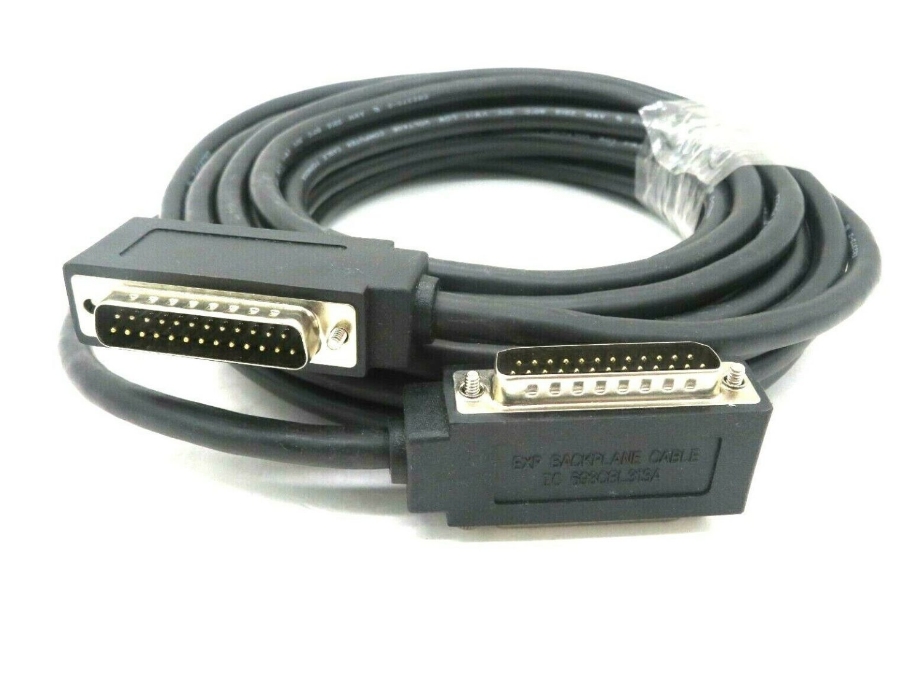
GE IC693CBL313
The GE IC693CBL313 is a dedicated communication cable for VersaMax Series PLCs, designed specifically for short-distance data transmission scenarios between internal modules of the VersaMax PLC system or between the PLC and specific peripheral devices. Its core function is to establish a stable communication link between VersaMax CPU modules, I/O modules, expansion modules, or programming devices, and to transmit digital signals, control commands, and status feedback data. With its customized design matching the interface specifications of the VersaMax Series, anti-interference transmission structure, and industrial-grade durability, this cable is widely used in VersaMax PLC deployment scenarios such as small and medium-sized industrial automation production lines, single-machine equipment control, and process monitoring systems. It serves as a critical connection component to ensure the reliability of data interaction between system modules.
- Supports asynchronous serial communication, with transmission rates compatible with common industrial communication rates such as 19200bps, 38400bps, and 57600bps; defaults to match the standard communication rate of the VersaMax system.
- Maximum transmission distance: ≤10 meters (dedicated for short distances, meeting the needs of intra-cabinet or inter-device short-distance connections).
- Conductor DC resistance: ≤50Ω/100m; insulation resistance: ≥100MΩ (at DC 500V), ensuring minimal signal loss and effective interference suppression during transmission.
- Adopts a customized plug-in interface design: one end is a male connector compatible with the communication port of VersaMax CPU modules, and the other end is a female connector matching I/O modules or programming devices. The pin definition of the interface fully complies with the VersaMax Series communication protocol (e.g., Pin 1-Power, Pin 2-Signal Ground, Pin 3-Transmit, Pin 4-Receive, and other customized definitions).
- Interface durability: ≥1000 insertion/extraction cycles; insertion force: 3-5N, ensuring reliable connection after long-term use.
- Cable core: Multi-strand tinned copper conductors (conductor cross-sectional area: 0.2mm² × 4 cores), featuring excellent conductivity and fatigue resistance.
- Insulation layer: Polyvinyl chloride (PVC) material, operating temperature range: -20℃ ~ 70℃.
- Outer sheath: Flame-retardant PVC material, industrial standard gray color, outer diameter: 6.0±0.5mm.
- Built-in twisted-pair structure (twist pitch: 10mm) combined with an aluminum foil shielding layer (coverage rate: ≥90%), significantly enhancing electromagnetic interference (EMI) resistance.
- Operating temperature: -20℃ ~ 70℃; storage temperature: -40℃ ~ 85℃.
- Relative humidity: 5% ~ 95% (non-condensing).
- Flame retardant rating: Complies with UL 94 V-0 standard, suitable for enclosed environments inside industrial cabinets.
- Fully compatible with all CPU module models of the VersaMax Series (e.g., IC693CPU313, IC693CPU323) and I/O expansion modules (e.g., IC693IOL302), no additional adapters required.
The IC693CBL313 is designed around the core concepts of "customized adaptation, stable transmission, and industrial durability." Its functional features precisely match the communication needs of the VersaMax PLC system, with key advantages as follows:
- The interface pin definition and mechanical dimensions are fully customized to match the communication port specifications of VersaMax Series modules. No manual wiring or pin adjustment is needed—simply plug into the corresponding module port to establish a communication link.
- Deeply compatible with the system communication protocol: After connection, it automatically matches the transmission rate and data format without additional communication parameter configuration, greatly reducing on-site deployment complexity.
- Adopts a three-layer protective structure: "multi-strand twisted conductors + aluminum foil shielding + flame-retardant sheath." The twisted-pair design suppresses differential-mode interference, while the aluminum foil shielding layer blocks external electromagnetic radiation interference (e.g., interference from inverters, motors, and other equipment inside the cabinet).
- Within a transmission distance of 10 meters, the signal bit error rate is ≤10⁻⁹, ensuring error-free transmission of control commands and I/O data, suitable for high-interference industrial environments.
- Optimized for short-distance transmission (≤10 meters): The cable core impedance and signal attenuation characteristics are tailored to short-distance needs, avoiding signal attenuation caused by long-distance transmission.
- Slim design (6mm outer diameter) with a flexible outer sheath allows easy routing inside industrial cabinets, flexibly adapting to installation scenarios with different distances between modules and improving wiring neatness.
- Tinned copper conductors enhance oxidation and corrosion resistance, preventing poor contact caused by conductor oxidation after long-term use.
- The flame-retardant PVC outer sheath is wear-resistant and oil-resistant, capable of withstanding oil contamination and dust in industrial sites.
- Wide temperature adaptability (-20℃ ~ 70℃) enables stable operation in low-temperature workshops or high-temperature equipment compartments, with a service life of ≥5 years.
As a "communication bridge" between modules of the VersaMax system, the IC693CBL313 essentially implements a one-way or two-way data transmission process of "signal reception → anti-interference transmission → signal restoration," and collaborates with module communication interfaces to complete data interaction. The specific steps are as follows:
- Insert the male connector of the cable into the communication output port of the VersaMax CPU module, and the female connector into the communication input port of the I/O module or programming device. The metal contacts inside the interface make tight contact to achieve mechanical and electrical connection.
- After the module is powered on, the power pins inside the cable complete the power supply initialization of the communication circuit, automatically negotiate the transmission rate and data format, and establish a communication link.
- The transmitting module (e.g., CPU module) converts digital signals into differential electrical signals, which are transmitted through the twisted pairs inside the cable.
- During transmission, the twisted-pair structure enhances differential-mode signals and cancels out interference signals generated by external electromagnetic interference on the two cores. The aluminum foil shielding layer isolates external radiation interference from the cable, preventing interference signals from invading the transmission circuit.
- The receiving module (e.g., I/O module) receives the differential electrical signals through the cable, and the internal communication chip restores the differential signals to the original digital signals.
- To compensate for minor signal attenuation that may occur during transmission, the chip’s built-in signal amplification circuit provides gain compensation, ensuring the restored signal meets the module’s recognition requirements and enabling accurate data reception.
- Some VersaMax modules are equipped with a communication link detection function, which monitors the link’s on/off status through the signal ground and power pins of the cable.
- If issues such as loose interfaces or broken cables are detected, the module triggers a communication fault alarm, indicated by indicator lights or system logs, facilitating quick location of link faults.
Based on VersaMax system operation and maintenance experience, common faults of the IC693CBL313 mainly focus on connection, transmission, and physical damage. The following are typical faults and practical troubleshooting methods:
- Possible Causes: Loose cable interface, bent/oxidized interface pins, internal cable breakage.
- Troubleshooting:
- Power off, unplug the cable, re-align it with the module port, and insert it until a "click" sound is heard to confirm proper engagement.
- Use a magnifying glass to inspect the interface pins; carefully straighten any bent pins, and clean oxidized pins with anhydrous alcohol.
- Test with a spare IC693CBL313 cable; if communication is restored, the original cable is broken and needs replacement.
- Possible Causes: Unreliable grounding of the cable shielding layer, transmission distance exceeding 10 meters, strong interference sources nearby.
- Troubleshooting:
- Check if the shielding layer of the cable’s outer sheath is connected to the cabinet ground; if not, use a ground clip to connect the shielding layer to the cabinet ground terminal.
- Verify the transmission distance; if it exceeds 10 meters, replace it with a compatible cable for longer distances (e.g., GE IC693CBL325).
- Keep the cable away from high-interference equipment such as inverters and contactors, or use a metal corrugated tube to enhance shielding for the cable.
- Possible Causes: Deformed interface latch, dust/foreign objects inside the interface, interface wear due to long-term insertion/extraction.
- Troubleshooting:
- Inspect the interface latch; gently straighten slightly deformed latches, or replace the cable if deformation is severe.
- Use compressed air to clean dust inside the interface to prevent foreign objects from blocking insertion/extraction.
- If the interface is severely worn (after more than 1000 insertion/extraction cycles), replace the cable directly to ensure connection reliability.
- Possible Causes: Scratching by sharp components inside the cabinet, oil corrosion, high-temperature aging.
- Troubleshooting:
- For minor damage (shielding layer not affected), wrap with flame-retardant insulating tape to ensure insulation.
- For severe damage (shielding layer and core exposed), cut off the damaged section and re-crimp the interface (professional tools required), or replace the cable directly.
- Organize wiring inside the cabinet to avoid sharp components, and use insulating sleeves to protect easily worn areas.
![]()