Description
GE IS200TSVOH1B
I. Overview
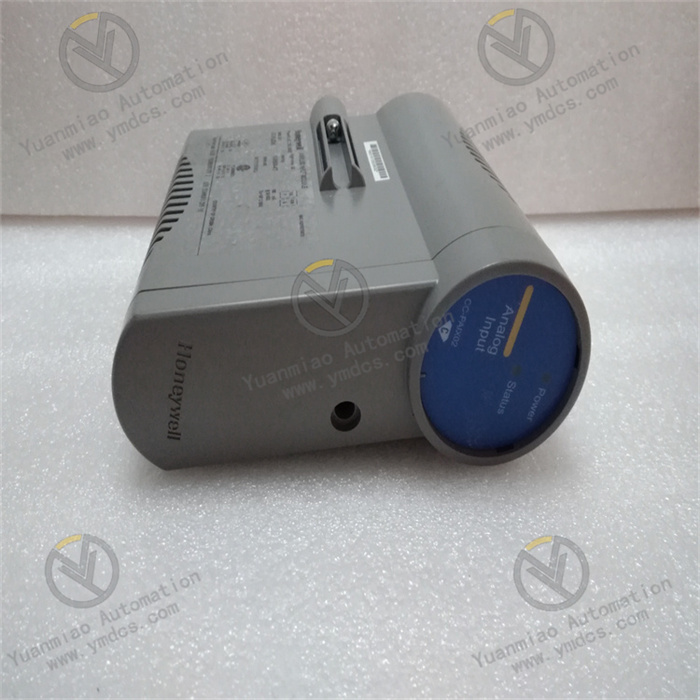
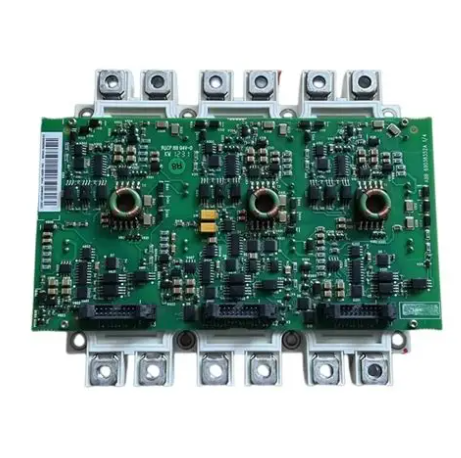
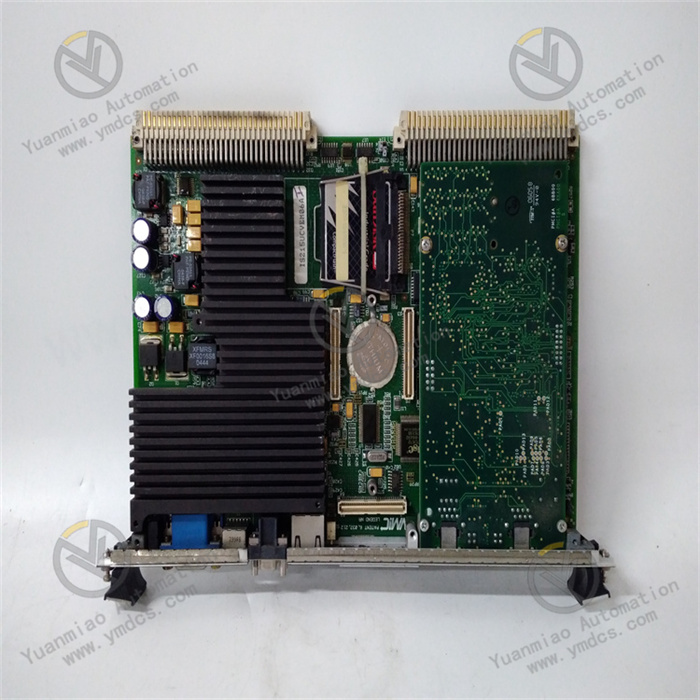
The GE IS200TSVOH1B is a high-performance temperature input module, serving as a key temperature acquisition unit of the Mark VI steam turbine control system. Tailor-made for core temperature monitoring scenarios of large rotating machinery (such as steam turbines, gas turbines, and generators), it mainly undertakes core tasks including accurate acquisition of Thermocouple (TC) signals, signal conditioning, digital conversion, and fault diagnosis. As the "core sensing node" of the temperature monitoring system, this module converts temperature changes in different ranges (such as high temperature and medium temperature) on-site into stable and reliable digital signals through a dedicated thermocouple signal processing circuit. These signals are uploaded to the control system to realize real-time monitoring, abnormal early warning, and interlock protection, providing key data support for the safe operation, fault prediction, and operation and maintenance management of equipment.
II. Technical Parameters
| Parameter Category | Specific Specifications | Detailed Description |
|---|---|---|
| Power Supply Parameters | Operating Power Input | DC 5V DC ±5% (logic power supply, taken from the system backplane bus), DC 24V DC ±10% (analog power supply, independently powered); Operating range of logic power supply: 4.75V~5.25V, Operating range of analog power supply: 21.6V~26.4V; Equipped with reverse power connection protection and overvoltage protection functions, and can withstand instantaneous voltage impact ≤30V DC |
| Power Consumption Indicator | Logic power consumption ≤ 3W; Analog power consumption ≤ 6W; Total power consumption under full-load operation ≤ 9W; Standby power consumption ≤ 1.5W; Low-power design is suitable for long-term continuous operation | |
| Thermocouple Acquisition Parameters | Number of Input Channels | 8 differential thermocouple input channels, adopting single-channel independent isolation and signal conditioning design, with no crosstalk between channels |
| Supported Sensor Types | Compatible with mainstream types of thermocouples such as J/K/T/E/R/S/B/N; each channel can be independently configured with sensor models without hardware jumper switching | |
| Measurement Range and Accuracy | Measurement range: -200℃~1800℃ (depending on the type of thermocouple, e.g., the upper limit of Type S is 1600℃, and that of Type B is 1800℃); Accuracy: ±0.1% FS; Equipped with a 16-bit high-precision ADC chip, with a minimum resolution of 0.01℃ | |
| Sampling Rate | Maximum sampling rate per channel: 100Hz; Total sampling rate ≥500Hz during multi-channel polling sampling; Channel switching time ≤ 6μs to ensure rapid response to temperature changes | |
| Cold-Junction Compensation | Built-in high-precision cold-junction compensation circuit, compensation range: 0℃~50℃, compensation accuracy: ±0.2℃; Supports external cold-junction compensation signal input, suitable for special low-temperature or high-temperature environments | |
| Signal Processing Parameters | Filter Function | Built-in hardware RC low-pass filter (cutoff frequency 50Hz/60Hz switchable via configuration) + programmable digital filter (filter time constant adjustable from 1ms to 1000ms), which can effectively suppress power frequency interference and high-frequency noise |
| Isolation Level | Isolation voltage between channels ≥ 1500V AC (rms), Isolation voltage between channels and power supply/ground ≥ 2000V AC (rms); Compliant with IEC 61131-2 industrial standard, with excellent anti-interference performance | |
| Communication and Redundancy Parameters | Communication Interface | Communicates with the controller via the Mark VI system backplane bus, bus rate: 1Mbps, data transmission delay ≤ 10μs; Equipped with 1 RS485 debugging interface, supporting Modbus-RTU protocol for on-site configuration and diagnosis |
| Redundancy Design | Supports 1+1 hot redundancy configuration; the main and backup modules synchronize acquisition data and configuration parameters in real time via a synchronization line; Redundancy switching time ≤ 50ms, no data loss during switching, ensuring monitoring continuity | |
| Environmental Parameters | Temperature and Humidity Range | Operating temperature: 0℃ ~ 60℃; Storage temperature: -40℃ ~ 85℃; Relative humidity: 5% ~ 95% (no condensation); Can operate stably in high-humidity industrial environments |
| Anti-interference and Protection | Complies with IEC 61000-4 anti-interference standard; ESD contact discharge ±8kV, air discharge ±15kV, surge immunity ±2kV, burst immunity ±2kV; Protection class IP20, suitable for guide rail installation in control cabinets | |
| Physical Parameters | Dimensions and Installation | 200mm × 160mm × 90mm (length × width × height); Installed via DIN 35mm standard guide rail or fixed with screws; Recommended module spacing ≥ 25mm to ensure heat dissipation; Weight ≤ 1kg, compact structure for easy installation |
III. Functional Features
1. Compatibility with Multiple Types of Thermocouples, Strong Scene Adaptability
2. High-Precision Acquisition and Cold-Junction Compensation, Accurate and Reliable Data
3. Enhanced Anti-Interference Design, Suitable for Severe Industrial Working Conditions
4. Full-Scene Fault Diagnosis and Alarm, High Operation and Maintenance Efficiency
5. Flexible Configuration and Debugging, High Operation and Maintenance Convenience
6. High Compatibility and Redundancy Design, Improved System Reliability
IV. Common Faults and Solutions
| Common Faults | Possible Causes | Solutions |
|---|---|---|
| Module fails to power on, power indicator is off | 1. System backplane bus fault, 5V logic power supply not provided normally; 2. Loose contact or oxidation of the connector between the module and the backplane bus; 3. Loose wiring, short circuit, or abnormal voltage of the 24V analog power supply; 4. Module power circuit fault (such as burned fuse) | 1. Check the output of the Mark VI system power module to confirm that the 5V voltage of the backplane bus is normal; 2. Power off, unplug the module, clean the oxide layer on the connector contacts, and reinsert it tightly to ensure good contact; 3. Check the wiring of the 24V analog power supply, measure whether the voltage is within the range of 21.6V~26.4V, and eliminate short-circuit faults; 4. Open the module cover to check the built-in fuse; replace it with a fuse of the same specification if burned; return the module for repair if the fault persists |
| Significant deviation in acquired data (exceeding the allowable range) | 1. Incorrect thermocouple wiring (such as reversed positive and negative poles, loose lead connection); 2. Mismatch between the configured thermocouple type of the channel and the actual sensor; 3. Cold-junction compensation function not enabled or incorrect compensation mode selected; 4. Module not calibrated or calibration expired; 5. Thermocouple aging, damage, or improper selection | 1. Recheck the wiring diagram and rewire; fasten the lead terminals to ensure correct positive and negative poles of the thermocouple; 2. Verify the channel configuration through the configuration software to ensure consistency with the actual sensor type; 3. Enable the cold-junction compensation function and select the built-in or external compensation mode according to the ambient temperature; 4. Recalibrate the channel with a standard temperature source; 5. Replace with a qualified thermocouple of the same model and confirm that the sensor range matches the measurement range |
| "Sensor fault" alarm for a specific channel (no data display) | 1. Thermocouple open circuit, loose wiring, or poor contact; 2. Thermocouple short circuit (such as pole adhesion); 3. Mismatch between the thermocouple model and the channel configuration; 4. Fault in the channel signal conditioning circuit | 1. Check the thermocouple wiring, fasten the terminals, and use a multimeter to test the line continuity; 2. Use a multimeter to measure the thermocouple resistance, eliminate short-circuit faults, and replace the damaged thermocouple; 3. Verify the consistency between the channel configuration and the thermocouple model; 4. Connect the thermocouple to a spare channel for testing; return the module for repair if the channel fault is confirmed |
| Frequent fluctuations in acquired data (poor stability) | 1. Severe on-site electromagnetic interference (e.g., close to excitation cabinets, frequency converters); 2. Thermocouple not grounded or poorly grounded (circulating current caused by multi-point grounding); 3. Excessively small filter parameter settings (insufficient anti-interference capability); 4. Loose thermocouple leads or poor contact caused by sensor vibration | 1. Replace the thermocouple cable with shielded twisted-pair wire, ground the shield layer at one end, and keep it away from high-voltage cables and interference sources; 2. Ensure single-point grounding of the thermocouple and the module, with a grounding resistance ≤4Ω, to eliminate circulating current from multi-point grounding; 3. Increase the digital filter time constant (50~200ms recommended) or switch the hardware filter frequency to match the power grid; 4. Reinforce the wiring terminals, use anti-vibration terminals, and fix the sensor against vibration if necessary |
| Redundant module switching failure (master and backup data asynchrony) | 1. Loose wiring or damaged cable of the synchronization line between the master and backup modules; 2. Inconsistent configuration parameters between the master and backup modules; 3. Incompatible firmware versions between the master and backup modules; 4. Fault in the module's redundant communication interface | 1. Check the wiring of the synchronization line, fasten the terminals, and replace the damaged cable; 2. Synchronize the parameters of the master and backup modules through the configuration software to ensure complete consistency; 3. Upgrade the firmware of the master and backup modules to the same version, referring to the GE official compatibility list; 4. Test with a spare module; return the module for repair if the interface fault is confirmed |