Description
1. Product Overview
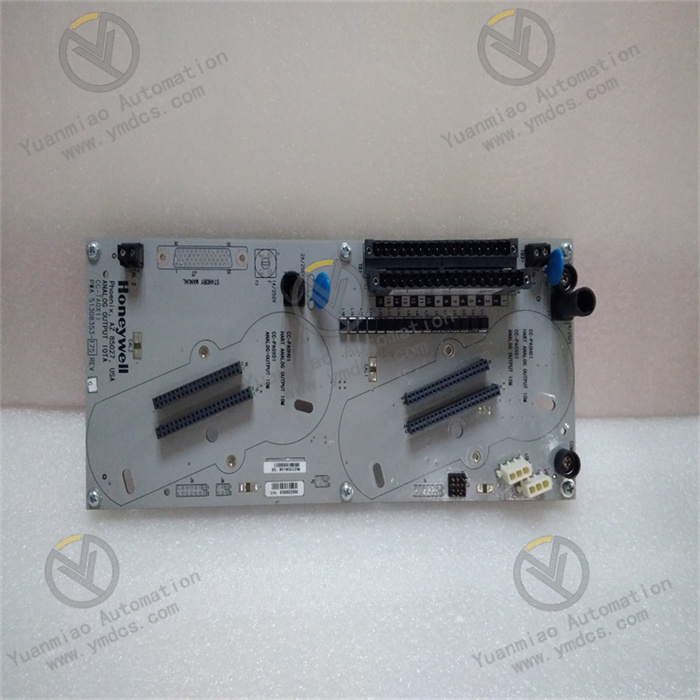
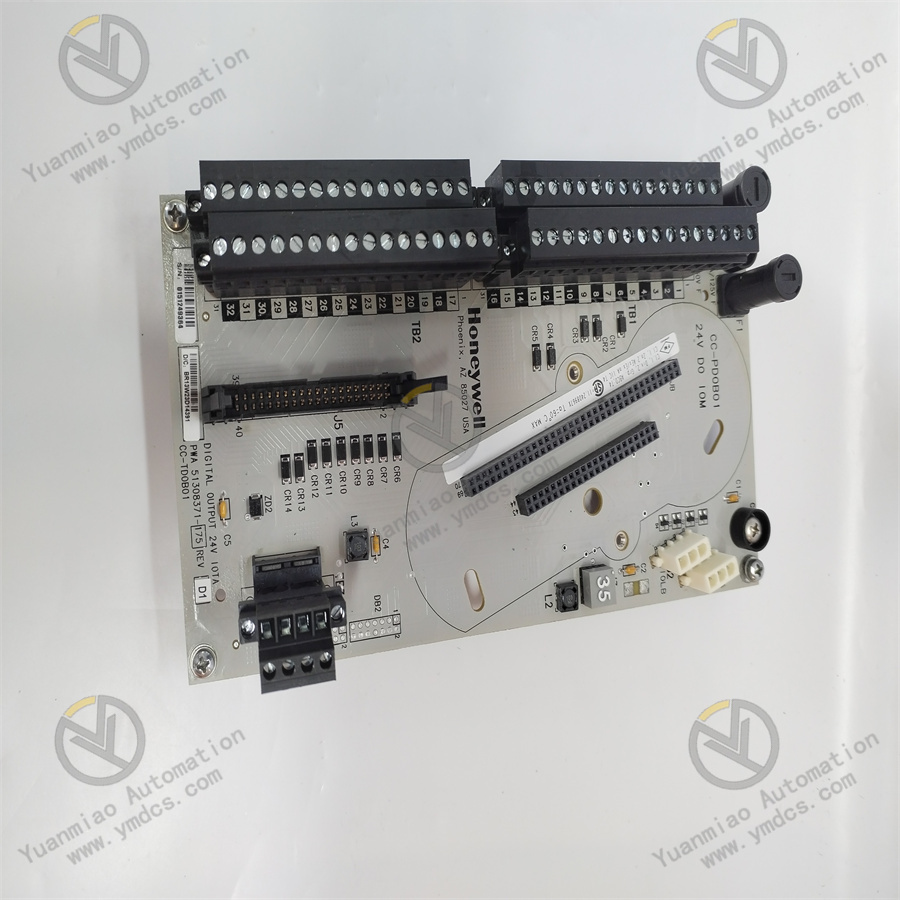
Honeywell 51308386‑175 (model designation CC‑TAIX51) is a non‑redundant 8‑Channel Analog Input IOTA Module within Honeywell ControlEdge Series‑C I/O product family. It serves as a standard core analog acquisition unit for Experion PKS, C300 and Experion LX DCS control systems. Designed for acquiring process analog field signals in process industries, it accurately measures standard 4‑20 mA industrial current signals transmitted by transducers for temperature, pressure, level, flow and valve position feedback. It is a critical module for process‑parameter monitoring and closed‑loop control in chemical, petrochemical, power, oil‑gas, water‑treatment and other process plants.
CC‑TAIX51 adopts a 9‑inch standard non‑redundant IOTA hardware architecture. It integrates 8 high‑precision independent analog input channels equipped with industrial‑grade isolated sampling circuits and dedicated signal‑conditioning chips, delivering high acquisition accuracy, low temperature drift, strong noise immunity and excellent linearity. Natively compatible with Honeywell CIOM‑A high‑speed I/O backplane bus, it supports high‑speed backplane communication and hot‑swap online maintenance for removal and replacement without system shutdown. Fully compliant with industrial EMC standards, it withstands 24‑hour non‑stop harsh plant‑floor conditions and is widely deployed in large‑scale process‑industry automation systems for its outstanding stability and measurement performance.
2. Functional Features
High‑precision Centralized Acquisition of 8‑Channel Analog Signals
Eight fully independent analog input channels enable simultaneous acquisition of multiple process analog signals, simplifying cabinet I/O layout, reducing module count and lowering wiring and maintenance costs. Optimized for industry‑standard 4‑20 mA DC current signals, it interfaces seamlessly with field instruments including temperature transmitters, pressure transmitters, level transmitters, flow transmitters and valve‑position sensors to satisfy high‑accuracy monitoring of continuous process variables in process plants. Each channel performs sampling independently without mutual interference; a fault on one channel will not affect the rest, granting excellent system fault tolerance.
Isolated Signal Conditioning & Ultra‑low‑error Measurement
Each channel incorporates dedicated galvanic isolation and high‑precision signal‑conditioning circuits to suppress ground‑potential offset, electrical crosstalk and high‑frequency harmonic interference from field side, avoiding analog‑signal drift, distortion and fluctuation. Built‑in industrial‑grade dedicated A/D conversion chips feature ultra‑low temperature drift and superior linearity with minimal full‑scale error. Minor process‑variable variations can be captured precisely, providing high‑fidelity data for PID regulation, process interlocks, parameter monitoring and energy‑consumption statistics for precision‑critical process applications.
Standard Signal Conversion & Adaptive Ranging
Bidirectional linear conversion between raw 4‑20 mA signals and engineering ranges is supported. Engineering units such as temperature, pressure, flow and level can be flexibly configured according to process requirements with automatic signal normalization. Embedded signal‑smoothing filtering suppresses signal jitter and spikes induced by field electrical noise, ensuring stable and continuous analog data output and preventing false controller regulation and spurious interlock trips.
Comprehensive Self‑diagnosis & Convenient Online Maintenance
Full‑coverage power‑on hardware self‑test and continuous runtime diagnostics accurately detect channel wire‑break, short‑circuit, signal out‑of‑range, circuit malfunction, bus communication failure and module faults. Fault codes are generated and uploaded to the host monitoring system for fast traceability and precise fault localization. Hot‑swap under DCS operation permits module insertion, removal, replacement and commissioning without disrupting system operation or data acquisition of healthy channels; plant shutdown is not required, significantly cutting production‑related maintenance risks and repair expenses. Configuration parameters are retained in non‑volatile memory upon power loss without re‑commissioning after restart.
Industrial‑grade Wide Compatibility & Strong Anti‑interference Capability
Fully compliant with industrial EMC standards, it resists plant‑grid harmonics, high‑frequency electromagnetic radiation, voltage fluctuation, electrostatic discharge and lightning‑induced transient surges. Industrial‑grade reinforced hardware with conformal‑coating protection offers dust‑proof, moisture‑proof, ageing‑resistant and damp‑heat‑tolerant properties. With wide operating temperature‑humidity envelope, it operates reliably on a 24‑hour continuous basis in harsh sites such as chemical plants, petrochemical complexes, power stations and offshore platforms.
3. Technical Specifications
3.1 Core Acquisition Parameters
Model: CC‑TAIX51 (Series‑C I/O Non‑redundant Analog Input Module) Part Number: 51308386‑175 Channel Count: 8 independent analog input channels Compatible Systems: Honeywell Experion PKS, C300, Experion LX DCS Input Signal: Standard 4‑20 mA industrial DC current signal Measurement Accuracy: High‑precision full‑range sampling with extremely low linear error Signal Processing: Hardware filtering plus software smoothing and de‑jitter for spike suppression Form Factor: 9‑inch non‑redundant IOTA module
3.2 Electrical Operating Parameters
Operating Supply: 24 VDC ±20 % industrial DC power Module Power Consumption: Low‑power industrial design for long‑term continuous operation Channel Input Impedance: Compatible with passive and active 4‑20 mA transmitters Communication Bus: CIOM‑A high‑speed backplane I/O bus Operating Mode: Multi‑channel simultaneous sampling, real‑time cyclic data upload
3.3 Physical Specifications
Dimensions: 63.5 mm × 124.46 mm × 307.34 mm Weight: Approx. 0.5 kg Mounting: Standard DIN‑rail mounting, cabinet back‑slot mounting Form Factor: Compact industrial modular board, 9‑inch IOTA standard
3.4 Environmental & Protection Specifications
Operating Temperature: 0 ℃ ~ +65.5 ℃ Storage Temperature: −40 ℃ ~ +85 ℃ Operating Humidity: 5 %‑95 % RH (non‑condensing) Ingress Protection: IP20 (for installation inside standard cabinets) EMC Performance: Compliant with industrial EMC standards for high‑EMI process‑plant environments
4. Hardware Configuration & Structural Advantages
4.1 Core Hardware Configuration
The module implements Honeywell Series‑C industrial‑grade standardized analog I/O architecture. A high‑precision dedicated A/D chip and signal processor work together with 8 fully independent signal‑conditioning, isolation and filtering circuits. Each channel performs voltage stabilization, noise reduction and galvanic isolation to eliminate crosstalk between channels and signal distortion. An on‑board hardware fault‑detect unit, bus‑communication processor and non‑volatile memory reliably store module configurations, range settings, channel status and fault logs with power‑fail retention to support fault tracing and on‑site calibration. All components are industrial‑grade temperature‑resistant and ageing‑resistant for heavy‑duty continuous‑operation field conditions.
4.2 Structural‑design Advantages
The 9‑inch compact standardized modular form factor integrates 8 channels in a space‑efficient layout, well‑suited for large‑scale installations with dense analog‑I/O points. Physically partitioned circuit zones for sampling, isolation, communication and power supply minimize electrical crosstalk and electromagnetic interference, improving operational stability and measurement accuracy.
Standard plug‑in construction supports hot‑swap replacement without system shutdown or disconnection of field instrument loops, greatly reducing maintenance‑related downtime risk and overhaul costs. Clearly labelled terminal blocks facilitate fast field wiring, point‑checking and troubleshooting. Fan‑less passive cooling eliminates moving wear‑prone parts for low failure rate and long service life, ideal for unattended 24‑7 industrial operation.
5. Working Principle
Honeywell 51308386‑175 (CC‑TAIX51) analog input module executes closed‑loop workflow: multi‑channel simultaneous sampling → isolated signal conditioning → A/D conversion → range scaling & calibration → bus data upload → real‑time fault self‑diagnosis, delivering high‑precision, high‑reliability real‑time acquisition and transmission of field analog process signals.
After power‑on, the module automatically completes hardware initialization, bus calibration, channel detection and configuration‑parameter loading. Upon successful full‑range self‑test, it enters multi‑channel simultaneous cyclic‑sampling mode. Field 4‑20 mA analog current signals from transmitters are fed into respective channels via terminal blocks. Signals go through galvanic isolation, hardware filtering, voltage stabilization and noise reduction before being sent to the A/D unit for analog‑to‑digital conversion.
Based on pre‑configured engineering‑range parameters, the processor performs linear scaling, calibration and smoothing filtering to generate accurate engineering values. Process data is uploaded synchronously over the CIOM‑A high‑speed backplane bus to the C300 main controller and host supervisory system, supplying core data for process‑variable display, closed‑loop PID control, over‑limit alarming, process interlocks and energy‑consumption accounting.
During runtime, the module continuously monitors channel‑signal status, loop conditions, hardware circuitry and bus health. When channel wire‑break, short‑circuit, signal out‑of‑range, hardware fault or communication anomaly is detected, fault status is latched, fault codes are logged and system alarms are triggered, while unaffected channels keep operating normally. This maximizes DCS fault tolerance and process‑control stability to ensure safe and continuous operation of the whole automation plant.
6. Application Scenarios
Petrochemical & Fine‑chemical Plants
Widely deployed on process units such as chemical reactors, distillation columns, heat‑exchange systems and polymerization units. It acquires key analog process variables including temperature, pressure, level, flow and vacuum degree to support precise process regulation, parameter monitoring and safety interlocks. It mitigates hazards such as process deviation, over‑temperature and over‑pressure to sustain safe and continuous chemical production.
Thermal‑power & Cogeneration Power Plants
Applied in DCS systems for coal‑fired, combined‑heat‑and‑power and captive power stations. It collects analog signals for medium temperature, pipe pressure, tank level, flow and valve opening across boiler, turbine and auxiliary‑equipment subsystems. High‑precision measurements support unit load regulation, process optimization and safety supervision for stable and efficient generator‑set performance.
Oil‑gas Production, Gathering & Transmission Projects
Used in automation systems for oil‑gas gathering stations, long‑distance pipelines and oil/gas storage facilities. It captures critical parameters such as pipeline pressure, medium temperature, tank level and transport flow. It meets demanding oil‑gas‑industry requirements for explosion‑protection, high noise immunity and high safety integrity for accurate monitoring and automatic regulation of oil‑gas storage‑and‑transport processes.
Municipal Water‑supply & Waste‑water Treatment, Environmental‑protection Projects
Suitable for waterworks, sewage‑treatment plants, water‑reclamation facilities, flue‑gas desulfurization and denitrification systems. Analog parameters including pH, dissolved oxygen, level, pressure and flow are acquired to enable automatic monitoring and precise control of water‑treatment and flue‑gas‑abatement processes for stable municipal‑environmental‑facility operation and compliant effluent discharge.
Process Industries: Metallurgy, Pharmaceutical & Light Industry
As a core standard analog‑acquisition unit, it is extensively implemented on continuous production lines in metallurgy, building‑materials, pharmaceutical, food and light‑industry sectors. Accurate analog‑variable measurements underpin closed‑loop process control, quality management and energy‑efficiency improvement, elevating plant automation, intelligence and refined production‑management capabilities.