Description
ABB SNAT603CNT
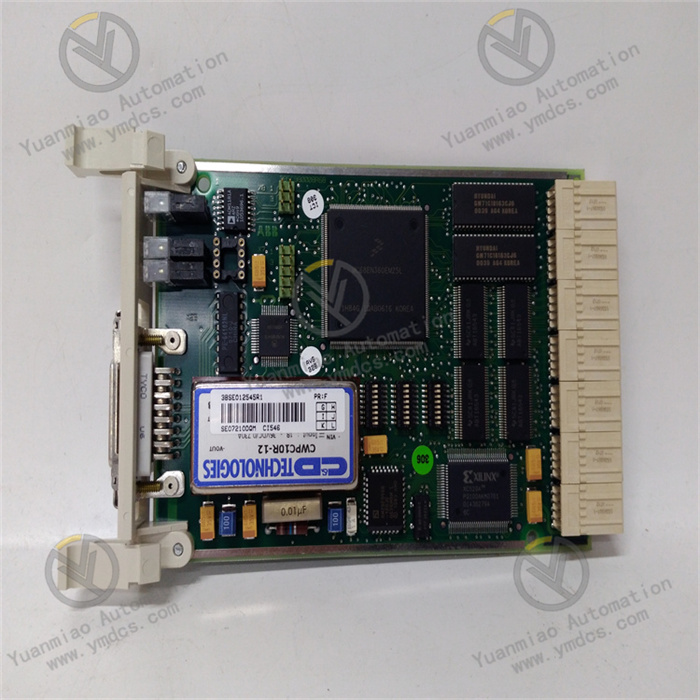
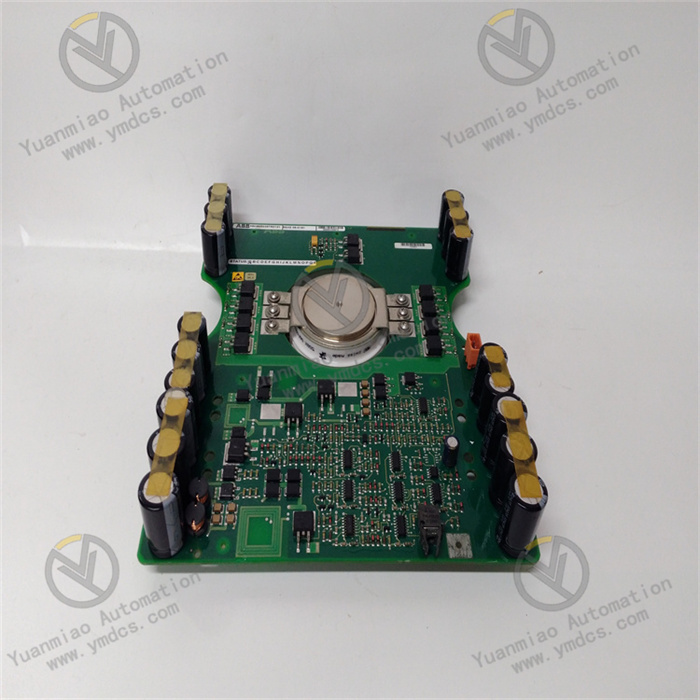
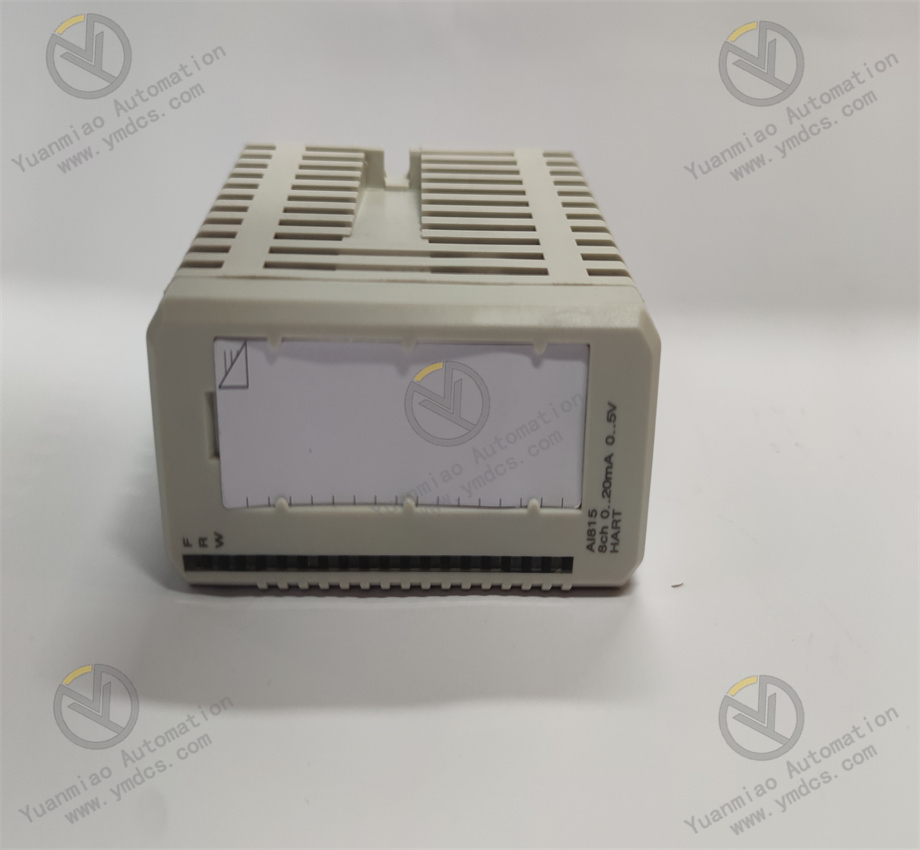
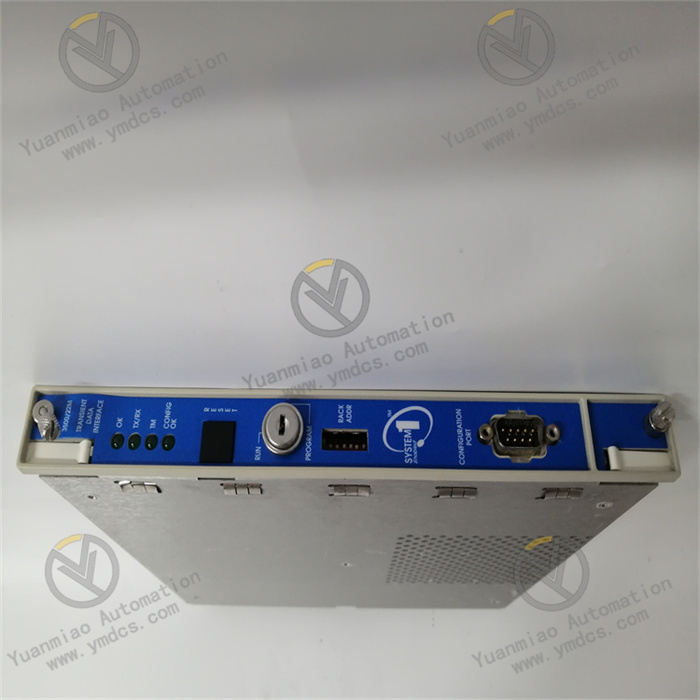
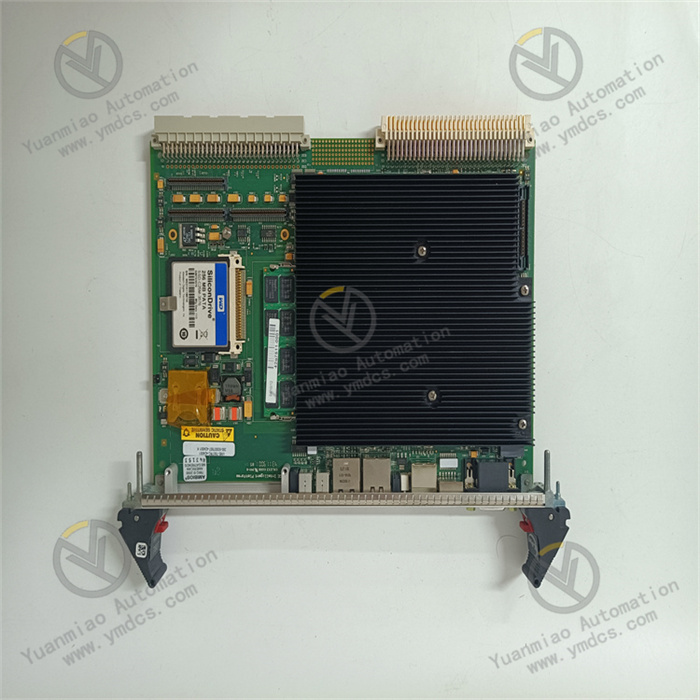
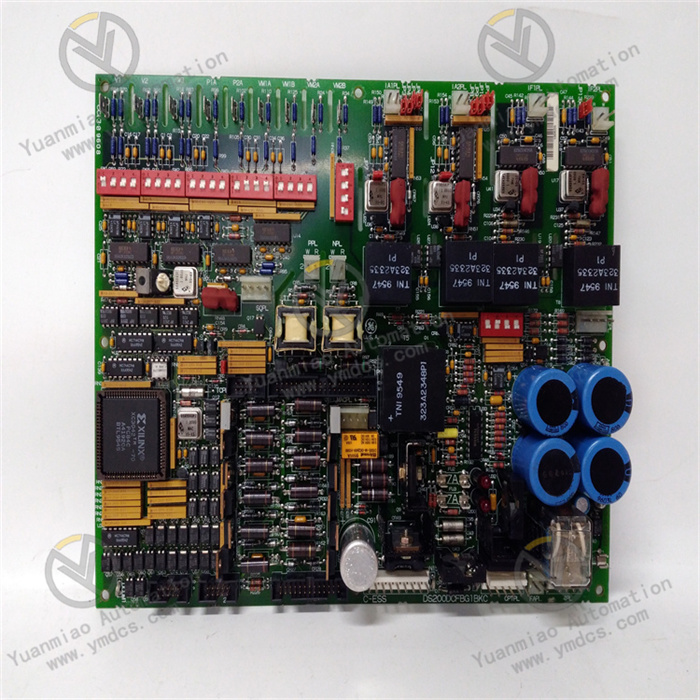
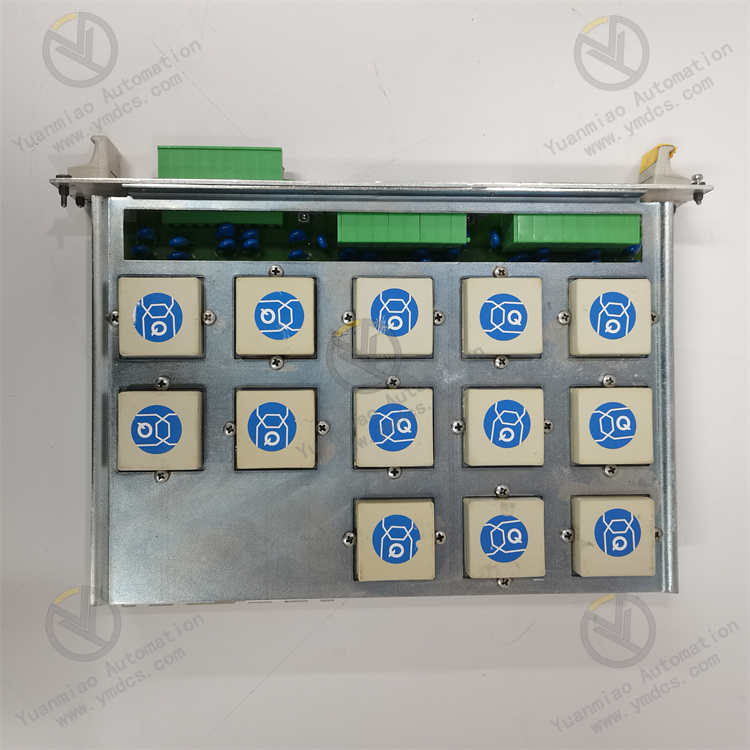
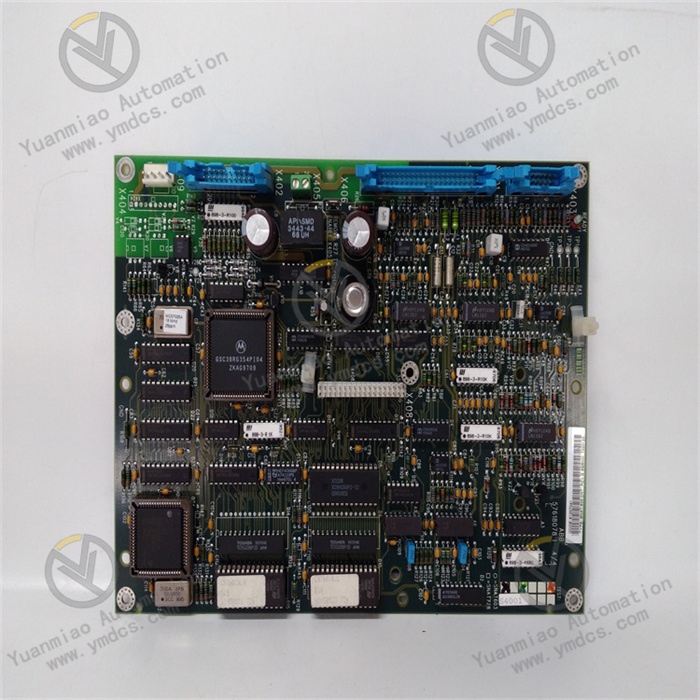
ABB SNAT603CNT is a high-performance industrial automation control board under ABB, belonging to the core products of ABB SNAT series. At the same time, as an important part of the S800 I/O series, it is mainly compatible with AC 800M series controllers and System 800xA Distributed Control Systems (DCS). It integrates multiple functions such as analog signal conditioning, precise logic control, and multi-protocol communication linkage, and is a key core component for realizing pure signal transmission and precise equipment control in industrial automation systems. This module adopts a modular structure design, integrates military-grade components and advanced fault diagnosis functions, has excellent anti-electromagnetic interference capabilities and environmental adaptability, supports a variety of industrial communication protocols such as Profibus and Modbus, and can seamlessly connect with various industrial sensors, actuators and third-party automation equipment. It is widely used in petrochemical, power generation, metallurgy and steel, intelligent manufacturing and other fields. It can not only be used as an analog input terminal to ensure stable original signals, but also undertake core tasks such as motor control and process regulation, providing reliable support for the stable, efficient and safe operation of industrial production.
I. Functions and Technical Advantages
1. Core Functions
- Analog Signal Conditioning and Isolation: As the "first gateway" for sensor signals to enter the control system, it can provide electrical connection, signal isolation, filtering and conversion services for various analog sensors such as 4-20mA transmitters, RTDs and thermocouples, ensuring the purity and stability of original signals before conversion into digital signals, greatly improving the measurement accuracy and anti-interference ability of the control loop, and adapting to high-density I/O configuration scenarios.
- Precise Logic Control and Drive: Equipped with high-performance control capabilities, the output frequency can reach 50kHz, which can realize speed regulation, torque control of industrial motors and precise regulation of various industrial equipment. It supports 10 input signals and 6 output signals, and can flexibly adapt to various control needs such as servo control, mode selection and brake control, adapting to complex industrial automation tasks.
- Multi-Protocol Communication Linkage: Fully supports a variety of industrial communication protocols such as Profibus DP, Modbus RTU/TCP, Ethernet/IP and CANopen, can seamlessly connect with ABB 800xA, Symphony Plus and other systems and third-party automation equipment, realize two-way high-speed transmission of control signals and operating data, ensure the coordinated linkage of the entire automation system, and reserve 2 mini PCIE interfaces to support 3G or WiFi expansion, improving communication flexibility.
- Fault Diagnosis and Convenient Maintenance: Built-in advanced fault diagnosis module, realizing real-time performance monitoring through the integrated web server interface, which can quickly locate problems such as signal abnormalities, communication interruptions and equipment failures. At the same time, it supports firmware over-the-air upgrades, enabling function optimization without shutdown; the modular design separates on-site wiring from the core signal processing part, so that replacing faulty components does not require changing on-site wiring, greatly shortening fault repair time and maintenance costs.
2. Key Advantages
- Genuine Original Adaptation: Designed and manufactured by ABB, strictly following the technical specifications of industrial automation equipment, 100% compatible with ABB AC 800M controllers, System 800xA DCS systems, S800 I/O series, and ABB ACV700 series frequency converters. With precise dimensions (standard size 120×80×25mm or 250×100×50mm, adapting to different scenarios), the interface and protocol are fully compatible, eliminating the compatibility risks of third-party modules and ensuring system operation stability.
- Industrial-grade Durable Performance: Adopts military-grade components and reinforced housing, with dual-channel isolation design, which can effectively resist strong electromagnetic interference, adapt to a wide temperature working environment of -25℃~+70℃ (some scenarios can cover -40℃~+80℃), and can stably cope with complex working conditions such as high and low temperature alternation, dust and vibration on industrial sites, with a long trouble-free operation cycle. It has also passed multiple certifications such as CE, UL and ISO 9001, complying with industrial safety standards.
- Flexible Expansion and Convenient Operation: The modular structure design supports flexible expansion of Distributed Control Systems (DCS). The high-density terminal block design saves cabinet space and optimizes cabinet wiring; the operation logic is simple, supporting custom parameter configuration, batch import and export and online debugging. The firmware over-the-air upgrade function can realize seamless function enhancement without shutdown, greatly improving project deployment and operation and maintenance efficiency, and reducing labor costs.
- Strong Versatility and Adaptability: It is not only compatible with ABB's own automation systems, but also with various third-party industrial equipment. It can be used not only as an analog input terminal unit, but also as a motor control board and the core of frequency converter control. It is compatible with various application scenarios such as industrial robots, elevator control, power turbines and vibration monitoring systems, with strong versatility, and can meet the personalized control needs of different industries.
II. Technical Specifications
Category | Item | Value |
|---|---|---|
Basic Specifications | Model | SNAT603CNT |
Product Type | Industrial Automation Control Board (Analog Signal Conditioning + Logic Control) | |
Compatible Systems | ABB AC 800M Controller, System 800xA DCS System, S800 I/O Series, ACV700 Frequency Converter | |
Core Purpose | Signal conditioning, logic control, motor drive, communication linkage, fault diagnosis | |
Environmental & Mechanical | Operating Temperature | -25℃~+70℃ (extended range -40℃~+80℃) |
Protection Degree | IP20 (module itself, must be installed in IP54 or higher control cabinet) | |
Dimension & Weight | Dimension: 120×80×25mm or 250×100×50mm; Weight: 0.5kg | |
Communication & Power Supply | Communication Protocol | Profibus DP, Modbus RTU/TCP, Ethernet/IP, CANopen, SNMP |
Power Input | 220V AC (±10%); Optional 15-60V DC, 120/125V DC (adapts to different scenarios) | |
Communication Interface | Ethernet (RJ45), RS-232, RS-485, CAN, 2 mini PCIE expansion interfaces | |
Power Consumption | 18W | |
Control & Signal | Output Frequency | 50kHz (±2%, ±0.5% for some models) |
Signal Interface | 10 input signals, 6 output signals, supporting analog sensor access | |
Certification Standards | CE, UL, ISO 9001 |
III. Application Areas
- Petrochemical and Process Control: Used in process control systems in petrochemical, oil refining and other industries, connecting temperature, pressure, flow and other analog sensors on reactors, distillation towers and pipelines, realizing precise collection and regulation of process parameters, ensuring the safety and efficiency of the production process, and adapting to the needs of harsh industrial environments.
- Power Industry Automation: Applied in power plant automation networks, compatible with boilers, steam turbines and auxiliary systems, responsible for the access and conditioning of temperature (thermocouples, RTDs), pressure and other signals. At the same time, it can be used for the control of power turbines and vibration monitoring systems to ensure the stable operation of power production.
- Intelligent Manufacturing and Robot Control: As the core control board of industrial robots, it is responsible for control tasks such as robot joint movement and attitude adjustment, realizing complex operations such as welding, handling and assembly; at the same time, it is compatible with automated production lines, coordinating and controlling various equipment, realizing the automation of material transportation, processing and assembly, and improving production efficiency and product quality.
- General Industry and Special Scenarios: Compatible with general industrial loads such as steel production monitoring, elevator control systems, fans, pumps and compressors, providing precise speed and torque control; at the same time, it is suitable for extreme environment scenarios such as offshore platforms and mining, as well as batch process control in pharmaceutical, food, water treatment and other industries, with strong versatility.
- Equipment Maintenance and System Upgrade: As an original spare part for ABB ACV700 series frequency converters, it is used for replacement when the control board fails, quickly solving problems such as control abnormalities and communication interruptions; at the same time, it can be used as an upgrade component for old automation systems, improving control accuracy and communication compatibility, and adapting to new process control needs.
IV. Installation and Use Guide
1. Pre-Installation Preparation
- Model Verification: Confirm that the SNAT603CNT module is compatible with the used automation system, controller and frequency converter models, and check the module size and parameters (such as power input, output frequency) according to the application scenario; check that the module has no external damage, no loose components, and no damaged interfaces, check the equipment list to ensure that the module and accessories are complete and can be used normally.
- Environment and Safety: Disconnect the power of the control cabinet and wait for the capacitors to discharge for ≥ 5 minutes; wear an anti-static wristband to avoid static damage to the module and related equipment; the installation environment must be dry, free of condensation and conductive dust, away from strong electromagnetic interference sources, in line with industrial installation specifications, and ensure the installation surface is flat and well-ventilated, adapting to the module's wide temperature working needs.
- Tools and Materials: Prepare RJ45 network cables, wire crimpers, screwdrivers, cleaning brushes, and multimeters; clean the installation position in the control cabinet and the module interface to ensure the interface is clean and free of foreign objects; prepare relevant configuration parameters, communication protocol setting files and sensor wiring specifications, and familiarize yourself with the module wiring and configuration process in advance.
2. Installation and Use Operation
- Module Installation: According to the module size, fix the SNAT603CNT module at the designated installation position in the control cabinet, tighten the fixing screws to ensure the module is installed firmly and without looseness; pay attention to the installation direction of the module to avoid blocking the interface and heat dissipation area, which is convenient for wiring, heat dissipation and later maintenance, reserve sufficient heat dissipation space, and avoid module operation abnormalities caused by poor heat dissipation.
- Wiring Operation: According to the wiring specifications, connect the module to sensors, actuators, controllers and frequency converters, ensure that the analog signal wiring is correct and in good contact, and avoid signal interference; connect the corresponding specifications of power supply (AC 220V or DC power), check the positive and negative poles of the power supply to avoid reverse connection leading to module damage; connect the module to the automation system with RJ45 network cables or corresponding communication interfaces, ensure the communication link wiring is standardized; sort out the cables after wiring, fix them with cable ties to avoid cable extrusion and pulling.
- System Configuration: Start the module and related equipment, configure communication protocols (such as Profibus, Modbus), IP address, port number and expansion interface parameters according to the application scenario; import preset control parameters and signal conditioning parameters, adjust signal filtering and isolation related settings according to the sensor type and process requirements, save and back up the configuration to ensure the parameter settings are accurate and adapt to on-site operation needs; if communication function expansion is required, install the corresponding module through the mini PCIE interface.
- Debugging and Confirmation: Start the signal acquisition and control functions to verify whether the module's signal conditioning effect, communication linkage and logic control functions are normal; simulate fault scenarios to verify the effectiveness of the fault diagnosis and early warning functions; after completing the debugging, generate a debugging report for filing and future reference to ensure the module can be put into normal use; at the same time, test the firmware upgrade function to ensure the upgrade process is smooth and does not affect system operation.
3. Maintenance and Replacement
- During daily maintenance, regularly check the module operation status, interface connection and heat dissipation, clean the module surface and interface dust to avoid poor contact or poor heat dissipation caused by dust accumulation; regularly back up configuration parameters and fault records to facilitate later fault recovery and system upgrading; regularly check the wiring tightness to avoid signal abnormalities or communication faults caused by looseness; regularly check the firmware version and upgrade to the latest version for debugging in time.
- When the module fails (such as abnormal signal conditioning, communication interruption, control failure), first check whether the wiring, power supply and configuration parameters are normal; if the module failure is confirmed, disconnect the power supply and wiring, use the advantage of modular design to directly disassemble the faulty module without changing the on-site wiring, replace it with a new SNAT603CNT module, reconfigure parameters and debug, avoid violent disassembly to damage the module and other equipment, and installation and maintenance must be operated by professional personnel.
- Avoid using corrosive cleaning agents to wipe the module to prevent component aging and damage; when storing the module, place it in a dry, cool and electromagnetic interference-free environment to avoid module damage caused by humidity and high temperature; avoid dropping metal debris into the module to prevent short-circuit faults; when the module is idle, do a good job in dust and moisture prevention, and conduct regular power-on detection to ensure stable module performance.