Description
1. Product Overview
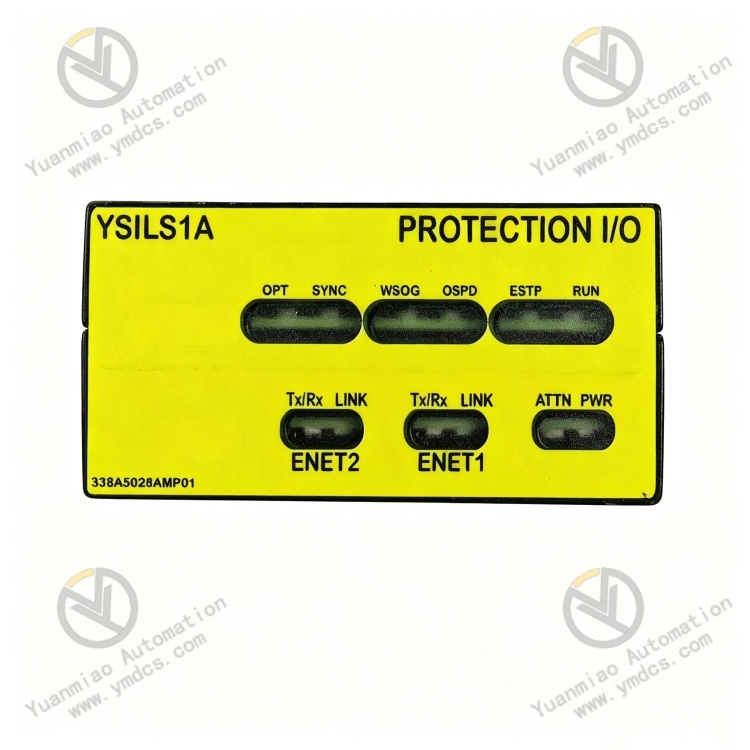
IS220YSILS1A is a dedicated SIL‑rated core controller module for General Electric (GE) Speedtronic Mark VIeS control systems. Belonging to the YSIL series high‑integrity safety main‑control units, it serves as the core computation and scheduling heart for SIS safety‑instrumented systems, unit emergency trip protection and interlock logic control of gas turbines, steam turbines and large compressor units. Designed for high‑risk continuous‑production conditions in power, oil‑gas and chemical industries, it performs core functions including system safety‑logic computation, fault diagnostics, interlock judgment, protection‑command output and system bus scheduling. It is the critical hardware enabling SIL3 safety‑level protection for Mark VIeS functional‑safety control systems.
Equipped with an industrial‑grade quad‑core high‑performance processor and built upon a redundant fault‑tolerant architecture, the module delivers high‑speed logic computation, full‑channel self‑diagnostics, fault tolerance and hot‑swap redundant operation. It processes critical process parameters such as unit temperature, pressure, vibration, displacement, rotational speed and valve position around the clock, and accurately executes safety logics including safety interlocks, over‑temperature & over‑pressure protection, overspeed trip and emergency shutdown. Developed in strict compliance with industrial functional‑safety standards, it adapts to harsh conditions of high‑risk explosion‑proof environments, heavy electromagnetic interference and long‑term non‑stop operation. Featuring an extremely low false‑actuation rate, high fault tolerance and superior reliability, it is a preferred drop‑in replacement for aging main‑control modules suffering from computational anomalies, logic stalling and safety‑interlock failures in legacy Mark VIeS systems, and comprehensively improves the integrity and stability of unit safety‑control systems.
2. Functional Features
2.1 SIL3 High Safety Integrity Level for Unit Functional‑Safety Protection
As a safety‑grade main‑controller exclusive to Mark VIeS systems, IS220YSILS1A meets industrial SIL3 functional‑safety certification criteria. Purpose‑built for unit safety‑instrumented systems, emergency‑protection logics and critical interlock loops, it accurately executes all unit safety‑protection logic computations and avoids logic misjudgment, command delay, interlock false tripping and failure‑to‑trip. At hardware level, it safeguards safe shutdown during start‑stop, load regulation and abnormal conditions for gas turbines, steam turbines and compressor units, and fully satisfies functional‑safety compliance requirements for high‑risk equipment in power, chemical and oil‑gas sectors.
2.2 Quad‑core High‑speed Computing Architecture for Efficient Low‑latency Logic Processing
Powered by an industrial‑grade AMD G‑series quad‑core processor running at up to 1.2 GHz, it delivers massive logic‑computing throughput and ultra‑fast data‑processing capability. It processes large volumes of analog, digital and pulse process data in parallel, and rapidly completes interlock‑logic judgment, fault diagnostics, parameter computation and command output. It achieves microsecond‑level response to sudden abnormal conditions such as unit overspeed, over‑temperature, over‑pressure and excessive vibration, preventing equipment damage and process runaway caused by delayed protection commands and ensuring accurate, fast and reliable unit protection actions.
2.3 Comprehensive Self‑diagnostics and Fault‑tolerant Operation with Ultra‑low False‑failure Rate
Embedded comprehensive hardware self‑diagnosis and logic fault‑tolerance mechanisms continuously monitor processor operation, bus communication, power‑supply loops, logic computation and channel status. It automatically identifies hardware anomalies, computation deviations, communication faults and program exceptions, and provides fault tolerance, fault masking, alarm generation and redundant switching. Single‑point faults do not impair overall system operation. It eliminates risks such as unplanned shutdown, logic failure and spurious interlock triggering induced by single‑point faults in conventional main‑controllers, and supports 7×24‑hour non‑stop safe unit operation.
2.4 Redundant Hot‑standby Operation with On‑line Non‑stop Redundant Switchover
Supporting standard TMR triple‑modular redundancy and dual‑redundancy configurations, it enables seamless hot‑standby, on‑line synchronization and bumpless switchover between primary and standby modules. Upon primary‑controller failure, the standby module takes over all safety‑logic computation and control tasks within milliseconds with no shutdown, no logic interruption and no command loss. It fundamentally resolves unit unplanned outages triggered by main‑controller faults and greatly enhances redundant reliability of safety‑control systems and continuous‑production stability of generating units.
2.5 Native OEM Bus‑protocol Compatibility for Deep System Adaptation & Coordination
Fully compatible with the bus architecture of the complete GE Mark VIeS safety‑control‑system family, it seamlessly works with auxiliary boards including IS200SCSAS1A, IS200TCSAS1A and IS200WCSAS1A. Bus communication timing, data‑exchange protocols and logic‑mapping rules strictly follow OEM specifications. It closely cooperates with system analog I/O, discrete I/O, servo‑control and communication modules to realize integrated closed‑loop control of unit measurement‑and‑control, interlocks, protection and scheduling, delivering outstanding system compatibility and coordination stability.
2.6 Industrial‑grade High‑reliability Design for Long‑term Service under Harsh Conditions
Constructed with military‑grade industrial components, high‑flame‑retardant corrosion‑resistant PCB substrates and full‑range dust‑proof, moisture‑proof and anti‑interference design, it has passed rigorous temperature‑cycle, vibration, EMC and high‑voltage insulation tests. It withstands harsh field conditions in power stations, oil‑gas and chemical plants including high temperature & humidity, dust accumulation, temperature cycling, sustained vibration and heavy electromagnetic interference. Hardware performance does not degrade over time; computation accuracy remains stable without program drift. Its MTBF (Mean Time Between Failures) reaches 414 248 hours, offering long maintenance‑free cycles and low operation‑and‑maintenance costs.
2.7 Non‑intrusive In‑situ Replacement for Low‑cost Retrofit & Upgrade of Legacy Systems
Overall installation dimensions, slot positions, terminal definitions and programming‑configuration logic are fully backward‑compatible with legacy safety main‑controller modules of the same series. Aging modules with computation anomalies, communication stalling and unstable interlocks can be directly replaced on‑site. No cabinet modification, reprogramming‑reconfiguration or shutdown for logic rectification is required. Safety‑critical hardware upgrade can be completed within short time to substantially improve computation accuracy and protection reliability of unit safety‑control systems.
3. Technical Specifications
3.1 Basic Specifications
Product Model: IS220YSILS1A Manufacturer: General Electric (GE) Product Series: Speedtronic Mark VIeS Functional‑safety Control System Product Type: SIL3 Safety‑grade Core Main‑controller Module Applicable System: GE Mark VIeS Gas‑ & Steam‑Turbine SIS Safety‑instrumented System Compatible Auxiliary Boards: OEM auxiliary boards such as IS200SCSAS1A, IS200TCSAS1A, IS200WCSAS1A Processor: AMD G‑series industrial quad‑core processor, 1.2 GHz Core Purpose: Main‑control unit for unit safety‑logic computation, interlock protection, fault diagnostics and bus scheduling Key Features: SIL3 safety level, quad‑core high‑speed computation, redundancy & fault tolerance, comprehensive self‑diagnostics, hot‑standby bumpless switchover, industrial‑grade high reliability, non‑intrusive replacement
3.2 Computation & Control Parameters
Processor Architecture: Quad‑core parallel high‑speed computing architecture Computation Response Speed: Microsecond‑level logic judgment and command output Control Functions: Safety‑interlock logic computation, emergency‑trip protection, fault‑diagnosis alarming, bus‑data scheduling, equipment closed‑loop control Fault‑tolerance Mechanism: Triple‑layer protection: hardware fault tolerance, logic fault tolerance, communication fault tolerance Redundancy Modes: Dual‑redundancy / TMR triple‑modular redundancy, on‑line hot‑switching Diagnostic Capabilities: Comprehensive hardware self‑diagnostics, program self‑validation, real‑time communication‑status monitoring, precise fault localization Safety Level: Complies with SIL3 Safety Integrity Level standard
3.3 Operating & Electrical Parameters
Power Supply: Standard system 24 VDC industrial power supply Operation Mode: 7×24‑hour year‑round non‑stop continuous operation MTBF: ≥ 414 248 hours Computation Performance: No logic drift, no data latency, no computation deviation, accurate & stable command output Anti‑interference Class: Industrial Class‑A EMC, resistant to heavy electromagnetic interference Insulation Performance: High‑voltage insulation, breakdown resistance, ESD resistance, surge protection System Compatibility: Full family of GE Mark VIeS functional‑safety control systems for power‑generation units
3.4 Environmental & Mechanical Parameters
Operating Temperature: ‑30 ℃ ~ +65 ℃ Storage Temperature: ‑40 ℃ ~ +85 ℃ Relative Humidity: 5 % ~ 95 % non‑condensing Ingress‑protection Rating: IP20 industrial rating Construction Material: High‑flame‑retardant industrial PCB, military‑grade industrial components, corrosion‑resistant anti‑oxidation gold‑plated edge‑connectors Shock‑vibration Performance: Tolerates unit start‑stop shocks, sustained micro‑vibration and cabinet structural vibration Mounting: Slot‑based embedded installation in standard control cabinets Applicable Conditions: Harsh continuous‑production environments for thermal‑power, cogeneration, gas‑fired power‑generation, oil‑gas refining and chemical industries including high‑risk explosion‑prone and high‑interference scenarios
4. Hardware Configuration & Structural Advantages
4.1 SIL3‑rated Hardware Architecture Consolidating Unit Safety‑protection Barriers
Designed end‑to‑end against functional‑safety standards, its hardware circuits, logic computation, fault judgment and command output satisfy SIL3 high‑safety‑level requirements and effectively mitigate risks of logic loopholes, false tripping and failure‑to‑trip found in conventional main‑controllers. Optimized for critical safety loops such as unit emergency trip, safety interlocks and shutdown protection, it guarantees fast, precise and reliable unit shutdown under abnormal conditions at hardware level, prevents severe equipment damage and production‑safety accidents, and meets industry functional‑safety acceptance criteria.
4.2 Quad‑core High‑performance Computing for Complex Unit‑control Logics
The 1.2 GHz quad‑core parallel‑computing architecture delivers outstanding data throughput and logic‑processing capacity. It readily handles massive complex interlock logics, multi‑channel data computation and real‑time closed‑loop‑control tasks for large gas turbines, steam turbines and compressor units. Compared with ordinary main‑controllers, it achieves lower computation latency, higher logic accuracy and stronger multi‑task parallel‑processing capability, perfectly meeting high‑load, high‑precision and high‑real‑time safety‑control demands of generating units.
4.3 Comprehensive Self‑diagnostics & Fault‑tolerant Design for Zero‑risk High‑stable Operation
A full‑scope hardware‑and‑software self‑diagnostic system continuously inspects module processor, power supply, bus, storage, computation logic and external‑loop status. It pinpoints fault locations, raises alarms and performs fault‑isolation via fault tolerance. Single‑point faults will not propagate or impair overall system operation. It addresses industry‑wide pain points of unannounced failures and interlock runaway in legacy main‑controllers and greatly improves operational stability and maintainability of safety‑control systems.
4.4 Redundant Hot‑standby Bumpless Switchover to Avoid Unplanned Shutdown
Supporting mainstream industrial dual‑redundancy and TMR triple‑modular‑redundancy fault‑tolerant architectures, primary and standby modules synchronize data, logic and status in real‑time. Upon primary‑module failure, millisecond‑level bumpless switchover occurs without logic interruption, control loss or production outage. It satisfies continuous‑production requirements of power‑station, chemical and oil‑gas facilities, reduces unplanned unit‑shutdown frequency and improves equipment availability and production benefits.
4.5 Industrial‑grade Robust Quality for Long‑term Maintenance‑free Service
Built with military‑grade industrial components and validated through strict temperature cycling, vibration‑shock, EMC and damp‑heat‑aging tests, the board offers excellent corrosion‑resistance, dust‑proofing, moisture‑proofing and anti‑interference performance. Long‑term operation brings no hardware aging, computation drift or communication degradation. Extended maintenance‑free cycles cut O&M costs and spare‑part replacement frequency for unit safety systems.
4.6 Fully‑compatible Non‑intrusive Replacement for Cost‑effective & Efficient Retrofits
Fully backward‑compatible with original hardware architecture, bus protocols, configuration logics and installation specifications of Mark VIeS systems, legacy faulty main‑controllers can be directly swapped. No system reconstruction, logic modification or shutdown‑based commissioning is needed. Safety‑critical unit hardware can be upgraded at low retrofit cost to rapidly resolve legacy‑system issues such as computation stalling, unstable interlocks and failed diagnostics, and lift overall unit safety‑control level.
5. Application Scenarios
SIS Safety‑instrumented Systems for Large Power‑generation Units: Widely deployed in Mark VIeS safety‑control systems for thermal‑power, cogeneration, gas‑turbine and steam‑turbine units. As the core main‑control unit, it executes safety‑logic computation and command output for unit overspeed protection, over‑temperature & over‑pressure interlocks, high‑vibration shutdown, shaft‑line protection and emergency trip to ensure safe and stable power‑station‑unit operation.
Safety‑control Systems for High‑risk Oil‑gas‑refining Facilities: Applied in SIS safety systems of large compressor packages, furnaces, reaction units and high‑risk power equipment for oil‑gas production and refining processes. Leveraging its SIL3 high‑safety‑level features, it satisfies functional‑safety management requirements for explosion‑hazardous areas, realizes accurate anomaly judgment, safety interlocks and emergency‑shutdown protection for equipment, and mitigates high‑risk production‑safety hazards.
- Interlock‑protection Systems for Large‑scale Industrial Power Equipment: Deployed in safety‑control systems for waste‑heat power generation, large process auxiliaries and complete power‑equipment packages. It undertakes equipment‑condition monitoring, fault diagnostics and interlock‑protection logic computation to guarantee closed‑loop safety management of industrial power equipment.