Description
1. Product Overview
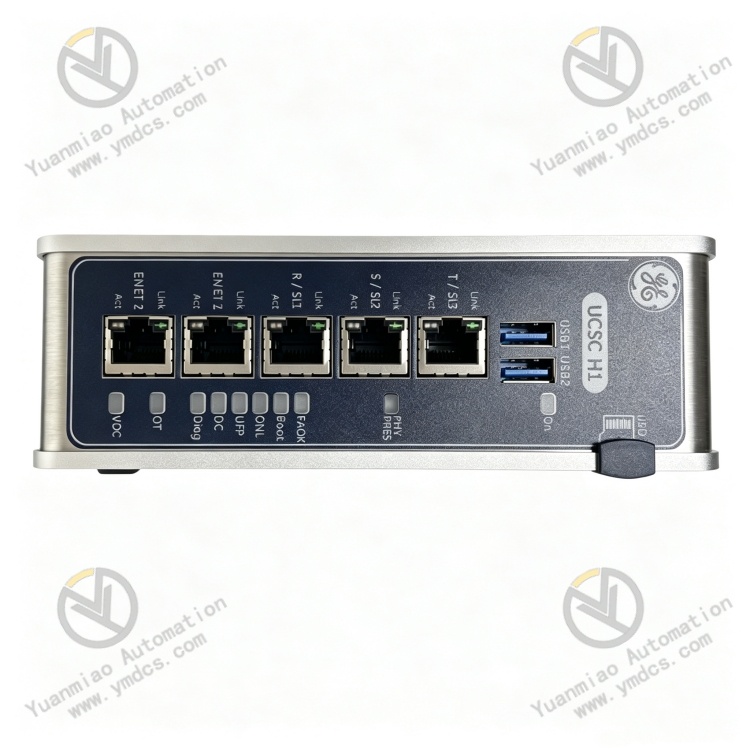
IS420UCSCH1B is a dedicated UCSC quad‑core high‑performance main‑controller module for GE Vernova Speedtronic Mark VIe / VIeS control systems. As a high‑end real‑time computing and control core unit, it acts as the core computing hub for gas turbines, steam turbines, large compressor units, power‑plant BOP auxiliary control systems, and oil‑gas & chemical process‑control systems. Representing GE’s new‑generation upgraded main‑control unit, it is equipped with an industrial‑grade AMD G‑series quad‑core processor, large‑capacity memory and solid‑state storage, and runs on the QNX real‑time multi‑task operating system. Designed for complex control logic, high‑speed data computation, multi‑protocol communication and system bus scheduling of large power equipment, it fully meets the demands for high real‑time performance, high reliability and high stability in continuous industrial production.
Compared with conventional legacy single‑core and dual‑core main‑controller modules, IS420UCSCH1B delivers stronger multi‑task parallel computing capability, larger data‑throughput bandwidth and more stable real‑time scheduling performance. It supports deployment in stand‑alone redundant and TMR triple‑modular‑redundancy architectures. It processes full‑dimensional process parameters including unit temperature, pressure, vibration, rotational speed, flow rate and valve position, and accurately executes core tasks such as closed‑loop regulation, logic interlocks, fault diagnostics, data upload and protocol conversion. Featuring a design free of back‑plane I/O binding, it prevents measurement‑point data loss during maintenance and replacement. Suitable for harsh operating conditions of high temperature‑humidity, heavy electromagnetic interference and year‑round non‑stop operation in power, oil‑gas and chemical industries, it serves as the preferred drop‑in upgrade solution for legacy Mark VIe systems suffering from insufficient computing power, logic stalling, communication latency and aging‑induced main‑controller failures.
2. Functional Features
2.1 Quad‑core High‑speed Computing Architecture for Real‑time Parallel Processing of Complex Logics
Powered by an industrial‑grade AMD GX‑412HC quad‑core processor with a clock speed up to 1.2 GHz, paired with 4 GB DDR3 high‑speed RAM and 40 GB solid‑state storage, it outperforms traditional legacy main‑controller modules in computing capacity. Based on QNX Neutrino industrial real‑time operating system, it supports multi‑task parallel scheduling. It computes massive volumes of analog, discrete and pulse process data simultaneously, and efficiently handles complex tasks including unit load regulation, servo control, interlock logic, sequence judgment and fault tracing. It delivers microsecond‑level command output, eliminating logic delay, data stalling and computation overflow of old controllers, and guarantees real‑time performance and accuracy of unit control.
2.2 Adaptive Multi‑protocol Communication for Full‑scenario Industrial Interoperation
On‑board multiple independent communication interfaces include 2 software‑configurable RS‑232/422/485 serial ports. Natively supporting mainstream industrial protocols such as Modbus RTU/TCP, DNP3 and UDP/IP, it enables bidirectional protocol conversion and transparent data transmission. It seamlessly connects field smart instruments, PLC auxiliary‑control equipment, host monitoring systems and cloud data platforms, supporting parameter acquisition, remote commissioning, data upload and clock synchronization. It perfectly satisfies multi‑dimensional communication requirements for local unit control, remote monitoring, plant‑wide networking and cloud‑based operation & maintenance.
2.3 Maintenance‑oriented Design with Zero Measurement‑point Data Loss for Greatly‑improved Operation Safety
Adopting an independent main‑control architecture that does not rely on the back‑plane for hosting I/O application programs, it avoids loss of field measurement‑point data, loop interruption and logic failure during module inspection, plug‑unplug and replacement. Different from traditional back‑plane‑bound main‑controller modules, it supports on‑line maintenance and hot‑swap of faulty modules without shutdown. It significantly reduces shutdown risks and maintenance difficulties for unit overhaul, and fits the zero‑shutdown requirement for continuous production in power stations, chemical and oil‑gas industries.
2.4 Comprehensive Self‑diagnostics and Fault‑tolerant Operation for Maximized System Stability
Built‑in hardware‑level comprehensive self‑diagnostic mechanisms continuously monitor processor status, memory & storage, communication links, power‑supply loops, system programs and bus scheduling. It automatically identifies hardware anomalies, program exceptions, communication disconnections and data deviations, accurately locates fault points, generates active alarms and implements fault‑tolerant isolation. It supports single‑point fault masking and self‑recovery. Single‑point anomalies will not propagate or impair overall system operation, and prevent unit interlock false tripping, failure‑to‑trip and unplanned shutdown caused by main‑controller faults.
2.5 Flexible Redundancy Architecture Supporting Multiple Fault‑tolerant Deployment Modes
It supports multiple deployment modes: stand‑alone, dual‑redundancy and TMR triple‑modular redundancy, which can be flexibly configured according to the critical‑control level of the unit. Under redundant configuration, primary and standby modules achieve real‑time synchronization of data, logic and clock. Upon primary‑module failure, millisecond‑level bumpless switchover takes place with no logic interruption, no command loss and no production shutdown. It covers both conventional auxiliary‑control scenarios and core host safety‑control scenarios, balancing economy and safety redundancy requirements.
2.6 Industrial‑grade Robust Protection for Long‑term Service under Harsh Conditions
It adopts a minimalist fan‑less and battery‑free hardware design without vulnerable heat‑generating components, eliminating common hazards such as over‑heat aging, fan failure and battery breakdown. The module has passed rigorous temperature‑cycle, vibration‑shock, EMC and high‑voltage insulation tests. The board provides excellent dust‑proof, moisture‑proof, corrosion‑resistant and anti‑interference performance. It withstands harsh field conditions including high temperature‑humidity, dust accumulation, sustained vibration and heavy electromagnetic interference. It runs stably 7×24 non‑stop, featuring long maintenance‑free cycles and ultra‑low failure rate.
2.7 OEM‑compliant Non‑intrusive Replacement for Low‑cost System Upgrade
Fully compatible with the complete GE Mark VIe / VIeS control‑system family, its bus timing, communication protocols, configuration logics, installation dimensions and slot positions strictly follow OEM standards. Legacy low‑computing‑power main‑controller modules can be directly replaced on‑site. No cabinet modification, reprogramming‑reconfiguration or loop‑logic commissioning is required. System computing‑power upgrade can be completed within a short shutdown window, effectively solving pain points of legacy systems such as runtime stalling, communication latency, limited expandability and poor stability, delivering outstanding retrofit cost‑performance.
3. Technical Specifications
3.1 Basic Specifications
Product Model: IS420UCSCH1B Manufacturer: General Electric (GE Vernova) Product Series: Speedtronic Mark VIe / VIeS Turbine Control System Product Type: UCSC Quad‑Core High‑performance Main‑controller Module Processor Model: AMD GX‑412HC Industrial Quad‑core Processor Processor Clock Speed: 1.2 GHz Operating System: QNX Neutrino 6.5 / 7.1 Industrial Real‑time Operating System Memory: 4 GB DDR3 High‑speed RAM Storage: 40 GB SSD Solid‑state Drive Core Purpose: Main‑control unit for unit core logic computation, bus scheduling, multi‑protocol communication, closed‑loop control and system operation‑and‑maintenance Key Features: Quad‑core high‑speed computing, multi‑protocol compatibility, maintenance with zero measurement‑point loss, comprehensive self‑diagnostics, redundancy & fault tolerance, fan‑less maintenance‑free design, non‑intrusive in‑situ upgrade
3.2 Communication & Computing Parameters
Serial Interfaces: 2 independent software‑selectable RS‑232/422/485 ports Communication Protocols: Modbus RTU/TCP, DNP3, UDP/IP bidirectional protocol conversion Baud Rate: 300 bps ~ 115200 bps Computation Mode: Multi‑task parallel real‑time computation Response Speed: Microsecond‑level logic judgment and command output Synchronization: IEEE 1588 Precision Time Protocol supported Diagnostic Capabilities: Full hardware self‑diagnostics, program self‑validation, real‑time communication‑status monitoring, precise fault localization Redundancy Modes: Flexible deployment: stand‑alone / dual‑redundancy / TMR triple‑modular redundancy
3.3 Operating & Electrical Parameters
Power Supply: Standard 24 VDC industrial regulated power supply Operation Mode: 7×24‑hour year‑round non‑stop continuous operation Hardware Design: Fan‑less, battery‑free, no passive vulnerable components Computation Performance: No logic drift, no data latency, no computation overflow, stable multi‑task operation Anti‑interference Class: Industrial Class‑A EMC, resistant to severe electromagnetic crosstalk Insulation Performance: High‑voltage insulation, breakdown resistance, ESD resistance, surge protection System Compatibility: Full family of GE Mark VIe / VIeS power‑generation, auxiliary‑control and functional‑safety control systems
3.4 Environmental & Mechanical Parameters
Operating Temperature: ‑30 ℃ ~ +65 ℃ Storage Temperature: ‑40 ℃ ~ +85 ℃ Relative Humidity: 5 % ~ 95 % non‑condensing Ingress‑protection Rating: IP20 industrial rating Construction Material: High‑flame‑retardant industrial PCB, military‑grade components, corrosion‑resistant anti‑oxidation gold‑plated edge‑connectors Shock‑vibration Performance: Tolerates unit start‑stop shocks, sustained micro‑vibration and cabinet structural vibration Mounting: Slot‑based embedded installation in standard control cabinets Applicable Conditions: Harsh continuous‑production environments for thermal‑power, cogeneration, gas‑fired power‑generation, waste‑heat power‑generation, oil‑gas refining and chemical industries including explosion‑hazardous and high‑interference scenarios
4. Hardware Configuration & Structural Advantages
4.1 High‑end Quad‑core Computing Breaking Performance Bottlenecks of Legacy Systems
Compared with traditional dual‑core and single‑core main‑controller modules, the hardware combination of 1.2 GHz quad‑core processor, large memory and solid‑state storage greatly improves system data‑processing throughput and multi‑task parallel capability. It easily handles complex interlock logics, multi‑channel closed‑loop regulation, high‑frequency data acquisition and massive communication‑interaction tasks of large‑scale units. It resolves problems of legacy systems such as insufficient computing power, program stalling and inability to add new measurement points and logics, and satisfies demands for intelligent and refined unit‑control upgrade.
4.2 Integrated Multi‑protocol Communication Enabling Global Interconnection of Equipment
Equipped with multiple configurable serial communication interfaces and mainstream industrial protocols, it supports seamless connection of field devices from different vendors with different protocols. It realizes data interworking and bidirectional interaction among local devices, host systems and cloud platforms. Featuring protocol conversion, data normalization and clock synchronization, it simplifies cabinet networking architecture, reduces investment in relay equipment, and improves integrated linkage capability of plant‑wide automation systems.
4.3 Independent Main‑control Architecture Achieving Zero‑data‑loss Maintenance
Breaking away from back‑plane I/O binding, the independent main‑controller completes computation and scheduling without occupying back‑plane resources or binding measurement‑point loops. During routine maintenance, hot‑swap and module replacement, field I/O measurement‑point data, logic programs and configuration parameters remain intact. No pre‑shutdown backup or program re‑download is required. It greatly simplifies maintenance workflows and reduces overhaul‑related shutdown costs and production losses.
4.4 Minimalist Fan‑less Design for Long‑term Maintenance‑free Stable Operation
Eliminating traditional fan cooling and battery energy‑storage structures, it adopts full‑range passive heat dissipation. Without moving vulnerable parts or risks of battery aging and leakage, it fundamentally avoids common failures including fan jamming, dust‑induced breakdown, battery failure and over‑heat crash. Low heat generation, high operational stability and strong anti‑aging performance deliver extended maintenance‑free cycles for unattended continuous‑production scenarios.
4.5 Multiple Fault‑tolerance & Self‑diagnostics Eliminating System Runaway Risks
A dual hardware‑and‑software self‑diagnostic system covers all operating status of the module. It inspects latent faults in real‑time, gives early warnings for abnormal conditions and prevents operation with existing faults. Combined with multi‑mode redundant switchover mechanisms, single‑point faults are fully isolated and will not trigger logic disorder, false command output or unit interlock anomalies, fully safeguarding unit operational safety and production stability.
4.6 Fully‑compatible Non‑intrusive Upgrade for Efficient & Low‑cost Retrofits
Fully backward‑compatible with hardware‑and‑software architecture of the complete Mark VIe family, it shares identical installation, wiring, configuration and communication specifications. Legacy low‑performance main‑controller modules can be swapped directly. No cabinet reconstruction, logic re‑engineering or shutdown‑based commissioning is needed. It realizes upgrade of computing power, stability and expandability for unit control systems at low retrofit cost, and fits intelligent‑retrofit projects for various legacy units.
5. Application Scenarios
Main‑control Systems for Large Power‑generation Units: Widely used in Mark VIe main‑control systems for thermal‑power, cogeneration, gas‑turbine, steam‑turbine and combined‑cycle units. As the core computing unit, it undertakes key tasks including unit load regulation, shaft‑line control, temperature‑pressure closed‑loop regulation, safety‑interlock logic computation and unit start‑stop scheduling to ensure stable and efficient host‑unit operation.
Power‑plant BOP Auxiliary‑control Systems: Suitable for plant‑wide auxiliary‑control systems such as water treatment, desulfurization & denitrification, circulating‑water system, ash handling and coal‑handling systems. It is responsible for auxiliary‑equipment condition monitoring, process‑logic control, parameter regulation and data upload, realizing automatic and intelligent centralized management of plant‑wide auxiliary controls.
Oil‑gas & Chemical Process‑control Systems: Applied in control of high‑risk process equipment including oil‑gas production & refining units, large compressor packages, reaction kettles and heating furnaces. Leveraging high‑reliability computing power and multi‑layer fault tolerance, it delivers precise regulation of process parameters, equipment safety interlocks and emergency response under abnormal conditions, ensuring safety and stability of high‑risk continuous production.
- Industrial Intelligent Networking & Cloud‑based O&M Systems: Relying on multi‑protocol communication capability, it performs field‑device data acquisition, protocol conversion, data normalization and cloud upload. It supports industrial digital and intelligent transformation, enabling remote equipment monitoring, fault diagnostics, data tracing and intelligent operation‑and‑maintenance.
6. Product Advantages
Powerful Quad‑core Computing for Comprehensive Performance Upgrade: The 1.2 GHz quad‑core computing power together with large memory and solid‑state storage greatly improves multi‑task processing capacity, resolves stalling, latency and limited expandability of legacy systems, and adapts to complex unit‑control logics.
Multi‑protocol Compatibility for Global Interconnection: Supports multiple mainstream industrial protocols to realize cross‑device and cross‑system data interaction, simplifies networking structure and improves plant‑wide automation linkage efficiency.
Zero‑loss Maintenance with Extremely Low Shutdown Risks: Independent main‑control architecture retains measurement points and logics during maintenance & replacement with no shutdown rework required, greatly cutting maintenance costs and production losses.
Fan‑less Maintenance‑free Design with Superior Operational Stability: Minimalist design free of vulnerable parts eliminates conventional hardware failures. It runs stably 7×24 hours with long maintenance‑free cycles.
Multi‑layer Fault‑tolerance Protection for High Safety Level: Comprehensive self‑diagnostics plus bumpless redundant switchover guarantee normal system operation upon single‑point faults, avoiding unit false interlocks and unplanned shutdowns.
- Non‑intrusive In‑situ Replacement with Outstanding Retrofit Cost‑performance: Fully backward‑compatible with legacy systems for plug‑and‑play upgrade. It realizes system performance iteration at low cost and fits various industrial‑retrofit projects.