Description
1. Product Overview
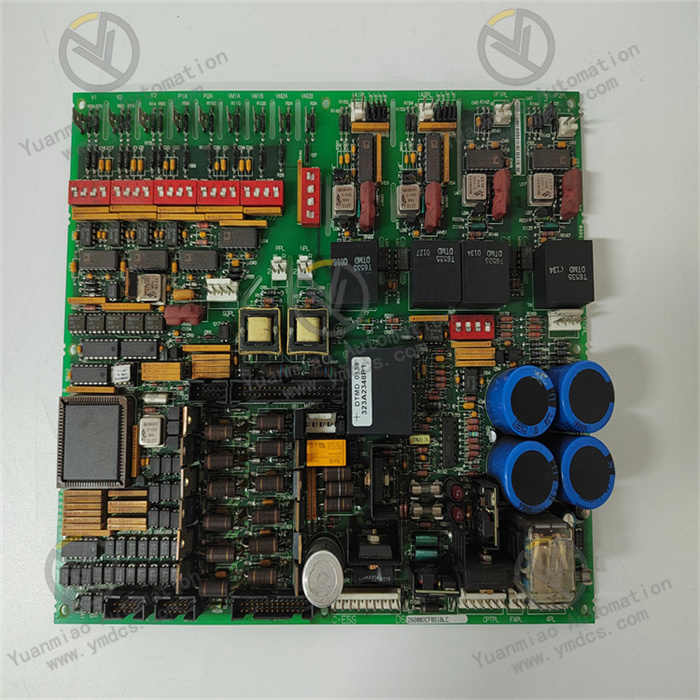
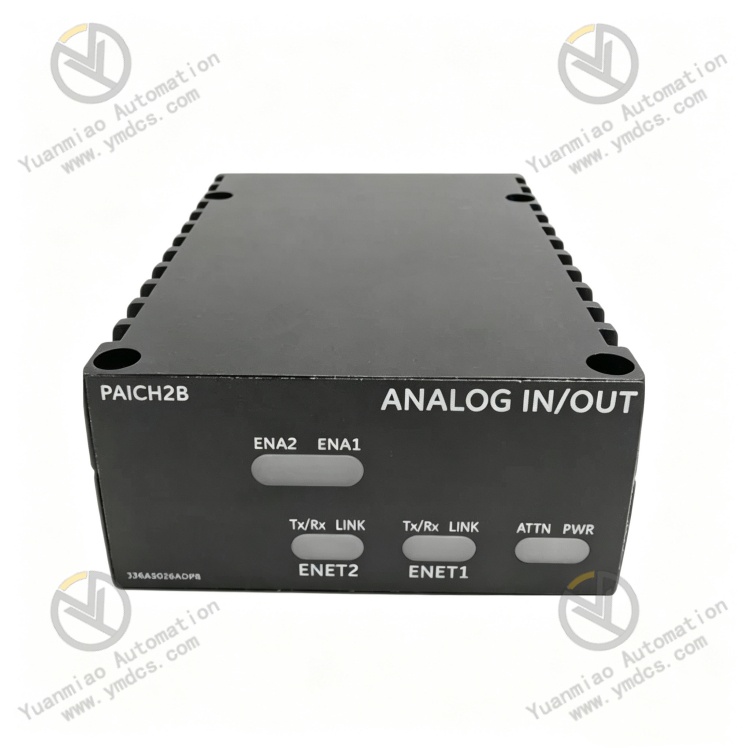
GE IS220PAICH2B is a high‑precision mixed Analog Input/Output (AI/O) module dedicated to the GE Vernova Speedtronic Mark VIe turbine control system. It serves as a core signal acquisition and conditioning unit for gas turbine, steam turbine and combined‑cycle power generation unit control systems. Designed for high‑precision closed‑loop control of power equipment, this module integrates multi‑channel analog signal acquisition and analog regulating output functions. It performs precise acquisition of field analog signals such as temperature, pressure, flow rate, valve position, process voltage and current, while outputting standard analog signals to drive field actuators, regulating valves and variable‑frequency devices. It is a critical I/O module for turbine condition regulation, load control, closed‑loop process parameter adjustment and equipment condition monitoring.
Fully compatible with the complete Mark VIe control architecture, the module delivers high acquisition accuracy, strong output load capacity, reliable channel isolation, excellent anti‑interference performance and comprehensive fault self‑diagnosis. It is widely applied in thermal‑power gas turbines, steam turbines, combined‑heat‑and‑power plants and distributed‑energy generating units. It fits various engineering scenarios including matching for new‑build unit control systems, replacement of legacy Mark VIe system modules, expansion of analog signal loops, and upgrade & retrofitting of industrial control systems.
2. Functional Features
2.1 Integrated Mixed AI/O with Comprehensive Signal Compatibility
The module integrates multiple high‑precision analog input and output channels, supporting access to various field analog signals including voltage, current and temperature sensor signals. It is compatible with common industrial signal types such as thermocouples, RTDs, standard 4‑20 mA and 0‑10 V. A single module completes both process data acquisition and control command output, replacing the conventional discrete AI‑plus‑AO module solution. It streamlines the system I/O architecture and perfectly meets closed‑loop control requirements for continuous‑operation power‑generation units.
2.2 16‑Bit High‑Precision AD/DA Conversion for Superior Control Accuracy
Equipped with 16‑bit high‑resolution ADC and DAC chips, the module provides high signal acquisition resolution, favorable linearity and extremely low error. It accurately captures minor operating‑condition fluctuations and parameter variations of power units. Analog output delivers smooth curves and stable regulating linearity, satisfying high‑precision operating‑condition requirements such as gas‑turbine inlet air regulation, steam‑turbine fine load trimming, and precise process pressure & temperature control. It effectively improves unit control stability and power‑generation efficiency.
2.3 High‑Drive Analog Output for Field Actuator Compatibility
Analog output channels feature a maximum drive capacity of 200 mA. They can directly drive field regulating valves, servo actuators, electrical converters, variable‑frequency regulating units and other loads without additional signal isolators or relay driver modules. Output signals feature strong anti‑attenuation performance against load variation; no signal voltage drop or waveform distortion occurs over long‑distance wiring, adapting to complex on‑site wiring conditions in power plants.
2.4 Full‑Channel Galvanic Isolation with Outstanding Anti‑Interference Performance
Independent galvanic isolation is implemented for all AI/O channels. Inter‑channel isolation voltage reaches 1500 Vrms with common‑mode rejection ratio ≥100 dB @60 Hz. It effectively suppresses heavy electromagnetic interference, signal crosstalk, potential difference fluctuation and line surge surges in power‑plant environments. Analog‑signal drift, data jumping and regulating offset are eliminated to guarantee stable and reliable unit parameter acquisition and equipment regulation.
2.5 Comprehensive Self‑Diagnosis and Fault‑Early‑Warning Mechanism
Hardware‑based functions including built‑in self‑test, channel wire‑break detection, over‑range monitoring and module operating‑condition diagnosis are implemented. The module identifies channel anomalies, circuit faults and module hardware abnormalities in real time and uploads fault codes and alarm messages. Maintenance personnel can rapidly locate fault points, trace root causes and perform troubleshooting, significantly shortening fault‑diagnosis duration and mitigating unit shutdown risks.
2.6 Dual‑Ethernet Redundant Communication for Stable and Reliable Networking
Two independent Ethernet communication ports are provided to support redundant network architecture. Automatic bumpless switch‑over is executed for communication links. Single‑link failure will not disrupt normal module data exchange or process control. It avoids working‑condition runaway, parameter invalidity and unintended equipment actions caused by communication outages, satisfying high‑reliability requirements for non‑stop continuous operation of power‑generation units.
3. Technical Specifications
3.1 Basic Specifications
Model: IS220PAICH2B; Manufacturer: GE Vernova; Product Series: Speedtronic Mark VIe Turbine Control System; Device Type: High‑precision Mixed Analog Input‑Output Module; Core Functions: Analog signal acquisition, process parameter monitoring, analog closed‑loop regulating output; Mounting: Standard back‑plane slot mounting in control cabinet.
3.2 Channel Configuration Parameters
Input Channels: Multi‑channel programmable analog inputs supporting thermocouple, RTD, 4‑20 mA current and 0‑10 V voltage signals; Output Channels: Multiple high‑precision analog outputs, software‑programmable for 4‑20 mA / 0‑20 mA; Output Load Capacity: Max. 200 mA drive current per channel for heavy‑duty field actuators; Isolation Performance: 1500 Vrms galvanic isolation between channels; CMRR ≥100 dB @60 Hz.
3.3 Accuracy & Conversion Parameters
Conversion Accuracy: 16‑bit high‑resolution AD/DA conversion; Acquisition Linearity: Negligible full‑range linear error without segment offset; Response Speed: Low conversion latency with high real‑time performance to satisfy dynamic unit regulation; Temperature Stability: No parameter drift under wide‑temperature conditions; consistent accuracy for long‑term operation.
3.4 Communication & Networking Parameters
Communication Architecture: Dual‑path redundant Ethernet communication; Communication Features: High‑speed real‑time data exchange, automatic link bumpless switch‑over, link‑loss auto‑alarm; System Compatibility: Natively compatible with GE Mark VIe main control system, plug‑and‑play; Networking Capability: Support large‑scale system I/O networking and coordinated multi‑module parallel operation.
3.5 Electrical Parameters
Power Supply: Standard 24 VDC industrial power supply; Built‑in multi‑circuit protection including voltage regulation, filtering, surge suppression and ESD protection. It withstands power‑grid fluctuation and electromagnetic noise in power plants, ensuring stable long‑term module operation and preventing module reboot, signal anomaly and regulation failure induced by electrical abnormalities.
3.6 Environmental Parameters
Operating Temperature: Industrial wide‑temperature range; Environmental Resistance: Dust‑proof, moisture‑proof, vibration‑resistant, shock‑resistant and EMI‑resistant, suitable for harsh enclosed cabinet environment in power stations; Operation Mode: 24‑hour uninterrupted year‑round operation, low hardware failure rate and excellent durability.
4. Hardware Configuration & Structural Advantages
4.1 Integrated AI/O Architecture for Streamlined and Efficient System
A single module integrates analog acquisition and regulating output functions. Separate AI and AO modules are no longer required, which reduces cabinet module quantity, simplifies wiring loops and lowers potential circuit‑fault points. The integrated hardware realizes highly synchronized timing for signal sampling and command output, improving closed‑loop‑control response speed and process stability of power‑generation units.
4.2 16‑Bit High‑Precision Conversion Hardware for Superior Measurement‑Control Accuracy
Industrial‑grade high‑precision AD/DA chips are specially optimized for dynamic turbine regulation. They deliver high resolution, minor linear error and ultra‑low temperature drift, enabling precise detection of minor unit load variation as well as temperature and pressure offset. Accurate data and regulating support are provided for unit frequency trimming, load adjustment and closed‑loop pressure/temperature stabilization.
4.3 High‑Load Isolated‑Output Design for Broad Field Adaptability
Combining 200 mA high‑drive output with full‑channel galvanic isolation, the module directly drives various field regulating valves and actuators. It is immune to long‑distance‑wiring interference and load fluctuation, delivering stable output and sufficient driving capability. It addresses common pain points of conventional analog modules such as weak drive capacity, signal attenuation and susceptibility to interference.
4.4 Dual‑Network Redundant Hardware for Strong Fault Tolerance
Dual independent Ethernet links implement communication hot‑standby redundancy. Automatic bumpless switch‑over occurs upon single‑link failure without interrupting unit control logic or data transmission. Hardware‑level prevention is achieved against process shutdown and equipment malfunction caused by communication faults, securing continuous safe production of power‑generation units.
4.5 Industrial Rugged Hardware for Durability and Reliability
The unit adopts industrial flame‑retardant PCB and high‑durability components, subject to strict OEM aging, temperature cycle, vibration and shock tests. It features outstanding anti‑aging, anti‑vibration and anti‑EMI performance. No accuracy degradation or hardware failure occurs under long‑term heavy‑duty continuous operation, matching unattended long‑term‑running mode for power plants.
5. Application Scenarios
- Heavy‑Duty Gas‑Turbine Control System: Analog signal acquisition of temperature, pressure and flow for GE Mark VIe gas‑turbine units; closed‑loop analog regulation for inlet valves, regulating valves and actuators.
- Steam‑Turbine and Combined‑Cycle Power Plants: Process‑parameter monitoring, fine load trimming and coordinated‑condition regulation for steam‑turbine auxiliaries; centralized measurement and control for unit analog signals.
- Combined‑Heat‑and‑Power & Distributed‑Energy Units: Closed‑loop process control, precise parameter monitoring and coordinated analog control for power‑generation units to guarantee stable and high‑efficiency operation.
- Auxiliary Process Systems in Power Plants: Analog‑signal acquisition and precise valve control for flue‑gas desulfurization, denitrification, water treatment, HVAC and other auxiliary equipment.
- Legacy Mark VIe System Upgrade & Retrofit: Replacement of aging analog I/O modules, expansion of analog signal loops, control‑system accuracy upgrade, spare‑parts supply and maintenance projects.
6. Product Advantages
- High‑precision measurement & control for enhanced unit stability: 16‑bit high‑resolution conversion plus ultra‑low signal‑drift design realizes accurate unit parameter monitoring and fine regulation. Parameter deviation, control oscillation and operating‑condition fluctuation are effectively mitigated to improve power‑unit stability and generation efficiency.
- High drive capacity plus robust isolation for broad field adaptability: 200 mA high drive together with 1500 V high‑isolation protection tolerates complex on‑site electromagnetic interference and long‑distance‑wiring losses. No extra relay devices are needed to simplify site construction and adapt to various harsh power‑plant operating conditions.
- Redundant communication plus self‑diagnosis for high operational safety: Bumpless dual‑network switch‑over and full‑channel fault self‑diagnosis provide early warning for circuit and module faults, mitigating unexpected shutdown risks, securing continuous production and lowering maintenance difficulty and outage losses.
- High‑density integration with excellent engineering cost‑effectiveness: One‑module AI+AO measurement‑control capability streamlines system architecture and reduces hardware and wiring costs. Low failure rate and long service life suit new‑build, retrofitting and expansion projects with prominent practical value and cost‑performance for engineering deployment.