Description
1. Product Overview
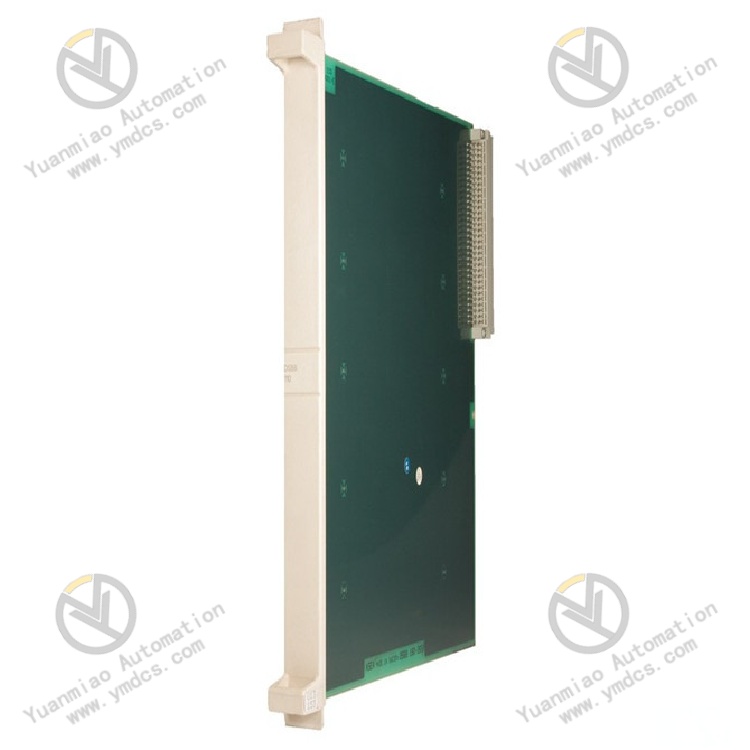
ABB CI527 (part number: 3BSE019327R1) is a dedicated PCI‑to‑AF100 bus coupler module for ABB AC800F / AC800M control systems, serving as a core communication component of DCS/PLC systems. Designed for bus interconnection of industrial control systems, it enables high‑speed transparent data exchange between the PCI interface of the upper industrial host and the on‑site AF100 industrial bus. It acts as the standard core communication conversion component for the ABB AF100 distributed I/O bus system. Adopting an industrial‑grade hardware architecture, the module integrates hardware‑based bus protocol parsing, data forwarding and self‑diagnosis functions. Featuring stable communication and strong anti‑interference capability, it is widely deployed in process‑industry automation control systems for long‑term non‑stop industrial operation. It is a standard core module for faulty‑unit replacement, system capacity expansion and bus networking of legacy ABB industrial‑control systems.
2. Core Technical Parameters
2.1 Basic Specifications
- Model: CI527
- OEM Part Number: 3BSE019327R1
- Product Type: PCI‑to‑AF100 bus coupler communication module
- Compatible Systems: ABB AC800F, AC800M series controllers and industrial hosts
- Bus Standard: Fully compliant with ABB AF100 field‑bus protocol
2.2 Communication and Electrical Parameters
- Upper‑level Interface: Standard PCI‑slot interface for PCI‑bus communication with industrial PCs / controllers
- Downstream Bus: AF100 field bus, supporting networking communication of distributed I/O stations
- Communication Mechanism: Hardware‑accelerated protocol parsing, high‑speed data forwarding, low latency and low packet‑loss rate
- Power Supply: Powered internally via the system I/O bus; no separate external power supply required for simplified cabinet wiring
- Status Indication: On‑board LED indicators for visual monitoring of power status, bus operation and communication faults
2.3 Environmental and Operating Parameters
- Operating Temperature: 0 ℃ ~ +60 ℃, suitable for constant‑temperature conditions inside standard industrial control cabinets
- Storage Temperature: ‑20 ℃ ~ +70 ℃
- Operating Humidity: 5%‑95% RH, non‑condensing
- Anti‑interference Level: Complies with industrial EMC standards to resist electromagnetic interference generated by frequency converters and high‑voltage equipment inside cabinets
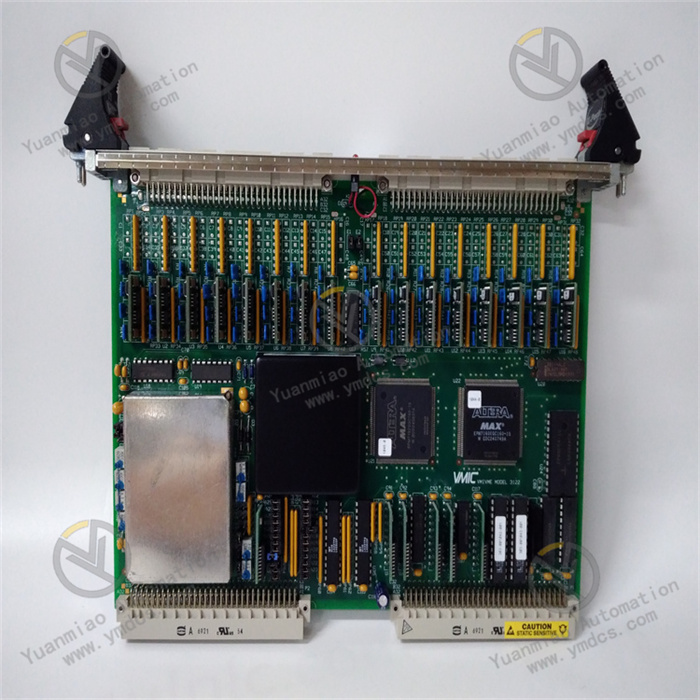
- Structural Design: Standard board‑type module for installation into standard slots of industrial PCs and controllers
3. Product Functions and Core Advantages
3.1 Core Product Functions
- Bus Protocol Conversion & Networking: Realizes bidirectional data conversion between the PCI parallel bus and AF100 serial field bus, establishes the communication link between the controller and distributed I/O stations, and supports signal acquisition and command distribution for the whole system.
- High‑speed Transparent Data Transmission: Enables real‑time bidirectional transmission of I/O points, analogue values, equipment status and control commands to guarantee real‑time performance and accuracy of closed‑loop regulation in control systems.
- On‑board Bus Fault Self‑diagnosis: Built‑in hardware self‑diagnosis function continuously monitors bus disconnection, communication anomalies, bus interference and module failures, and quickly reports fault information to facilitate maintenance troubleshooting.
- Distributed I/O Expansion Support: Operates as the master‑side coupler for the AF100 bus, capable of connecting multiple distributed I/O modules to flexibly expand system input/output points and meet production‑line expansion and process‑upgrade requirements.
3.2 Core Product Advantages
- 100 % Native Compatibility: Original ABB accessory perfectly matching the full AC800 system range. Protocol‑conflict‑free operation with no extra programming required; plug‑and‑play.
- Industrial‑grade Stable Communication: Hardware‑embedded bus protocol delivers lower latency and higher reliability than software‑based forwarding. No long‑term data drift or unexpected communication drop‑outs; suitable for 24‑hour continuous production.
- Simplified Installation and Wiring: Slot‑mounted board powered from the internal bus. No external power supply or complex cabling needed, which reduces wiring complexity inside control cabinets and potential failure points.
- Visual Fault‑oriented Maintenance: LED indicators clearly display running, fault and offline status for fast fault location and reduced downtime.
- Long‑term Maintenance‑free Operation: Pure‑circuit hardware design with no moving parts, offering excellent ageing‑resistance and vibration‑resistance. No periodic calibration required after commissioning, which lowers maintenance costs significantly.
- Retrofit‑friendly: Fully compatible with legacy AF100 bus systems. It is the standard replacement module for maintenance, bus expansion and upgrade of installed ABB automation assets.
4. Typical Application Scenarios
- Process‑industry DCS Control Systems: Bus networking for complete ABB AC800 systems in chemical, petrochemical, pharmaceutical and water‑treatment plants
- Factory Automation Control Systems: Distributed I/O signal acquisition and remote‑station communication conversion on production lines
- Legacy‑equipment Retrofit Projects: Faulty‑module replacement and I/O‑point capacity expansion for existing ABB AF100 bus systems
- Power‑energy Industry: Bus‑communication units for plant auxiliary‑control systems and substation automation systems
- HVAC, Light‑industry and Metallurgy: Master communication coupler networking for large‑scale complete automation equipment
5. Installation, Operation and Maintenance Guidelines
- The PCI board‑type module must be installed under power‑off conditions. Insert it into the standard PCI slot of the controller or industrial host after full power‑down, and tighten the fixing screws to avoid communication anomalies caused by loose connection during operation.
- Complete AF100 bus wiring strictly in accordance with specified bus‑topology rules to prevent poor contact, wrong wiring or short‑circuits. Configure bus terminating resistors as required to ensure stable bus‑signal quality.
- Keep the operating environment dry, dust‑free and free of corrosive gases to avoid short‑circuiting or poor board‑card contact caused by cabinet condensation and dust accumulation.
- Route communication cables away from strong‑interference sources such as frequency converters, contactors and high‑voltage power cables. Use shielded communication cables with proper earthing to mitigate electromagnetic interference.
- Verify LED indicator status after power‑on. Confirm successful module initialization and bus handshake with no fault alarms before switching the system to automatic operation.
- Check module operating status regularly during routine maintenance. If communication‑fault alarms occur, troubleshoot bus cables, terminating resistors and connected I/O devices first. Unauthorised disassembly of the module by non‑specialist personnel is prohibited.
- Always replace or expand the system with original modules of the identical model to ensure consistent bus protocols and hardware parameters and prevent communication failures caused by networking incompatibility.