Description
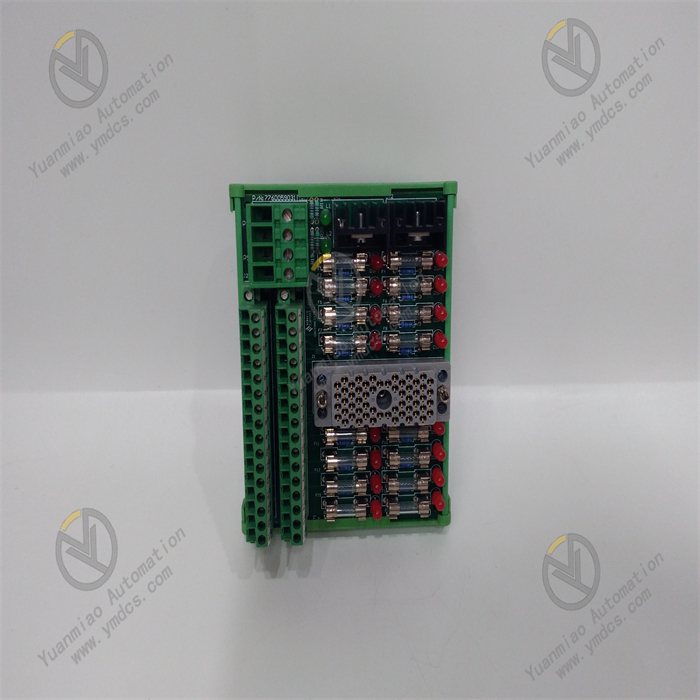
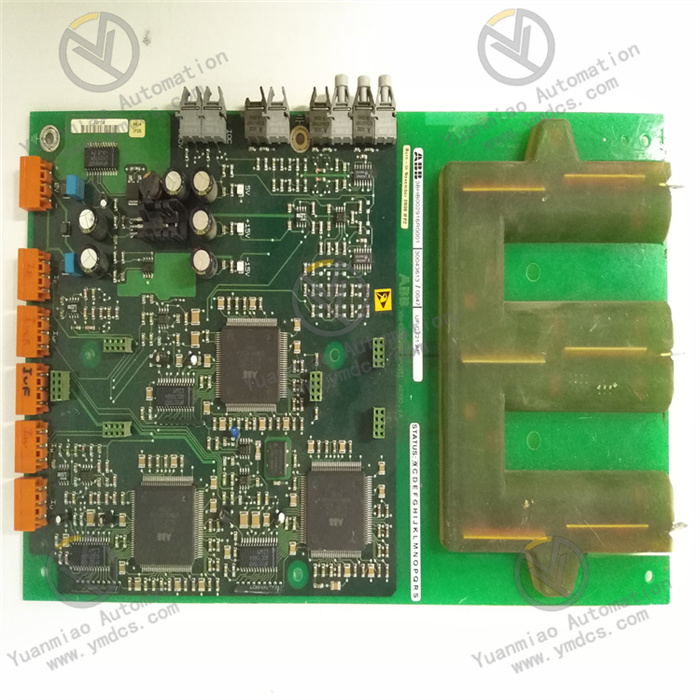
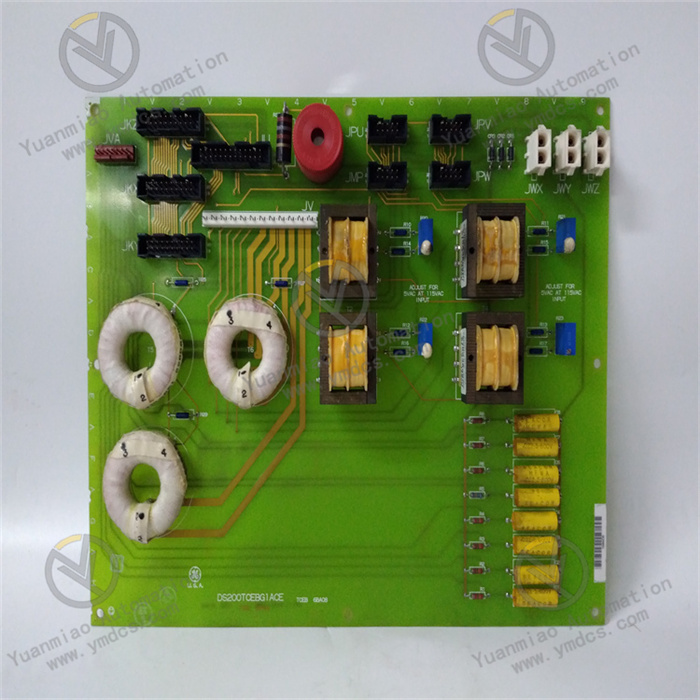
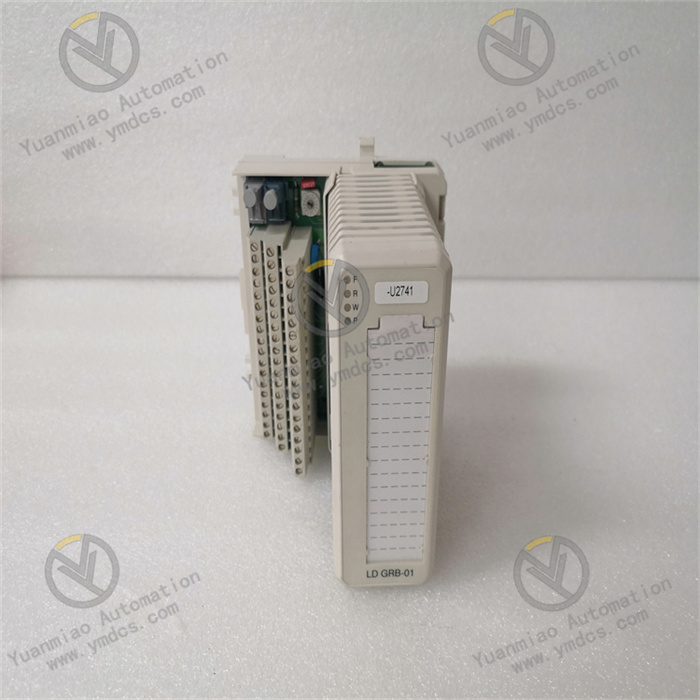
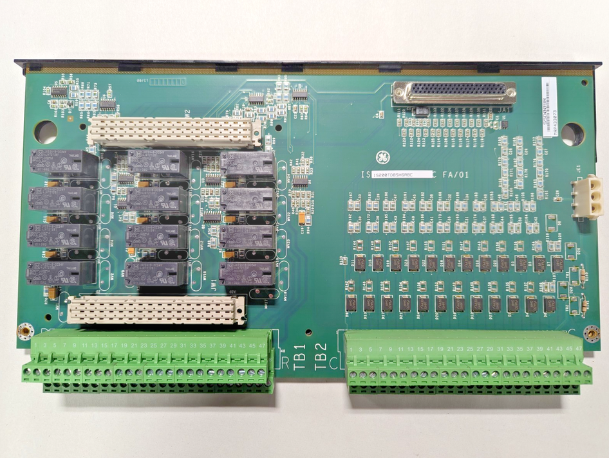
GE IS200TDBSH6ABC
I. Basic Information
II. Technical Specifications
(1) Basic Hardware Parameters
- Model: IS200TDBSH6ABC
- Brand: GE
- Type: Mark VI Turbine I/O Terminal Signal Conditioning & Signal Transfer Board
- Applicable System: GE Speedtronic Mark VI Distributed Control System for Gas / Steam Turbines
- Application Range: Large gas turbines, steam turbines, combined-cycle generator sets, industrial turbine equipment, signal acquisition & control systems for utility turbines, automatic control systems for petrochemical power units
- Hardware Architecture: Precision industrial PCB design integrated with signal conditioning circuits, high-frequency filter units, channel isolation circuits and terminal protection circuits with multi-channel independent signal layout
- Wiring: Standard industrial screw terminal wiring for secure field cable connection and convenient troubleshooting of individual points
- Mounting: Fixed panel installation inside standard cabinets matching dedicated Mark VI cabinet layout with backplane heat dissipation, suitable for high-density cabinet arrangement
- Protection Class: IP20 overall cabinet-grade protection against dust, moisture and mild contamination inside electrical enclosures
- Mechanical Feature: Integrated single-board construction free of redundant mechanical parts with superior vibration and shock resistance for long-term power plant service
Core Functions: On-site turbine signal acquisition & conditioning, isolated I/O signal conversion, high-frequency noise filtering, terminal overload protection, high-precision process signal transmission and stabilization of system I/O links
(2) Rated Electrical Parameters
- Operating Power: Designed for standard internal cabinet power supply of Mark VI system with stable output and strong ripple suppression, matching conventional DC power distribution of power plants
- Signal Compatibility: Supports industry-standard analog signals and digital discrete signals compatible with all turbine temperature, pressure, vibration and speed sensors as well as actuator feedback signals
- Channel Isolation: Electrically isolated independent channels; fault or abnormal signal on one channel will not affect other channels or full-board operation
- Onboard Protection: Built-in overvoltage, overcurrent, surge and reverse polarity protection circuits to withstand field electrical surges, static interference and grid voltage fluctuation
- Signal Accuracy: High-precision conditioning circuitry with ultra-low acquisition and transmission error to guarantee accurate measurement of unit process variables
Operation Mode: Rated for continuous 24/7 energized operation adapting to unattended round-the-clock production of power facilities
(3) Signal Processing Performance
- Conditioning Capability: Filters, shapes and amplifies attenuated, distorted and noise-contaminated raw field signals to restore standard industrial waveform
- Response Speed: Ultra-low signal latency with millisecond-level real-time transmission to meet fast data sampling and control requirements under dynamic turbine operating conditions
- EMI Resistance: Embedded high-frequency filters to suppress signal dithering and jump caused by heavy electromagnetic interference, variable-frequency noise and power supply ripple at power stations
- Channel Consistency: Uniform processing precision and synchronous timing across all channels to eliminate sampling offset among multiple measured parameters
- Signal Stability: Built-in anti-dither and clutter rejection to prevent false signal jumps and erroneous parameter reporting induced by field disturbance
Transmission Reliability: Fault-tolerant hardware link design ensuring long-term stable, loss-free and drift-free signal delivery under harsh working conditions
(4) Interface & Communication Specifications
- Signal Terminals: Multiple independent industrial terminal blocks for field analog/digital signal input and output
- System Compatibility: Natively compatible with Mark VI bottom-layer bus and signal protocols; plug-and-play without complex programming setup
- Bus Connection: Reliable interconnection with Mark VI main control boards and expansion modules to realize bidirectional data exchange between field instrumentation and master controller
- Diagnostic Function: Supports online signal monitoring and channel fault diagnosis; individual point status accessible via upper monitoring software
Expansion Compatibility: Flexible signal expansion for full-range turbine instrumentation including all types of sensors, valve actuators and field transmitters
(5) Environmental Specifications
- Operating Temperature: -30℃~+65℃ ultra-wide industrial range coping with high cabinet temperature, seasonal ambient swing and equipment heat buildup at power plants
- Storage Temperature: -40℃~+85℃ withstanding extreme temperature shock during long-distance transit and prolonged warehousing
- Operating Humidity: 5%~95%RH (non-condensing) for humid enclosed cabinet environments prone to dew formation from temperature variation
- Environmental Durability: Compliant with high-grade power-industry EMC standards against severe EMI, voltage swing, mechanical vibration and shock for high-voltage, variable-frequency and high-magnetic-field power plant environments
- Cooling Method: Passive natural cabinet convection plus metal backplane conductive cooling; fanless, zero mechanical wear and maintenance-free operation
- Pollution Degree: Industrial Pollution Degree 2 suitable for dusty, mildly corrosive and oil-contaminated power plant cabinet environments
III. Key Features
- High-precision Signal Conditioning Prevents Waveform Distortion: Equipped with dedicated filter and waveform shaping circuits to recover attenuated and distorted long-distance field signals under heavy interference, restoring original turbine process signals and securing valid measured data.
- Independent Isolated Channels Stop Cross-Channel Fault Propagation: Each channel features galvanic isolation; short-circuit, overload or abnormal input triggers individual channel lockout without fault spreading to adjacent channels or master control, greatly improving overall system safety.
Multi-level Electrical Protection for Harsh Site Conditions: Integrated overvoltage, overcurrent, surge and reverse polarity protection blocks equipment damage from unstable utility grid, electrical surges and field miswiring, ideal for long-term continuous turbine operation.
- Ultra-low Latency Real-time Signal Delivery: Low-delay architecture completes signal sampling, conditioning and upload within milliseconds to satisfy real-time demands of turbine speed regulation, load trimming and safety protection logic.
- Superior Anti-interference Performance Ensures Drift-free Signals: Circuitry optimized for high-frequency variable-frequency and high-magnetic-field plant surroundings effectively eliminates signal jitter and drift to avoid false unit regulation or spurious protection trips.
- Maintenance-free Rugged Industrial Construction: Entire board free of moving parts and consumable components; sealed dustproof layout with outstanding thermal & shock resistance for 24/7 power plant operation and minimized maintenance expense.
- Excellent Plug-and-play Compatibility: Native full compatibility with complete GE Mark VI turbine control system; ready for commissioning right after wiring without protocol revision or program modification for new project installation and obsolete system retrofit.
IV. Working Principle
- Power-on Self-test & Initialization: Upon receiving system power supply, the board automatically executes circuit self-check, channel terminal verification and hardware initialization, entering standby signal-processing mode once no short-circuit or hardware fault is detected.
- Raw Field Signal Input: Front-end screw terminals collect real-time raw analog and discrete feedback signals from on-site sensors and actuators covering temperature, pressure, vibration, rotational speed, valve status and interlock switch points.
- Signal Filtering & Waveform Restoration: High-frequency clutter filtering, waveform shaping, amplification and anti-dither processing eliminate invalid distorted readings caused by industrial interference and regenerate standard usable process signals.
Channel Isolation & Electrical Protection: Galvanic separation between individual channels with continuous real-time voltage/current monitoring; immediate channel shutdown upon overload, short-circuit or overvoltage to contain fault spread.
- Standardized Signal Upload: Conditioned stable process data is uploaded to master control boards per proprietary Mark VI communication protocol to provide precise input for unit logic computation, process regulation, safety interlock and fault judgment.
- Downstream Command Routing: Control instructions issued by master controller go through terminal matching and isolated protection before being transmitted to field actuators for valve positioning, equipment startup/shutdown and interlock execution.
- Real-time Condition Monitoring & Fault Logging: Continuous tracking of channel signal status, circuit health and link performance with automatic fault logging for accurate failure tracing during overhaul and troubleshooting.
- Cyclic Steady-state Operation: Under normal operating conditions, the board cycles continuously through signal collection, conditioning, data upload and command routing to guarantee unobstructed field links, accurate process measurement and dependable control actions for turbines around the clock.
V. Application Scenarios
(1) Signal Acquisition System for Gas / Steam Turbine Units
As the front-end core signal board of Mark VI turbine system, it is deployed for full-point signal sampling and conditioning of large gas turbines, steam turbines and industrial turbines to ensure precise acquisition and stable transmission of core parameters including speed, temperature, pressure and vibration for accurate unit regulation and safety protection.
(2) Auxiliary Control for Combined-cycle Power Plants
Widely used on Mark VI systems of thermal, cogeneration and combined-cycle power facilities to pre-process and transfer all field I/O signals, securing stable data links for generator grid synchronization, load control, condition monitoring and safety interlock and supporting continuous compliant plant operation.
(3) Automatic Control for Petrochemical Captive Power Plants
Installed on in-house power units of petroleum, chemical and coal-to-chemical enterprises; its robust signal processing suppresses abnormal measurement-induced unit fluctuation, unplanned shutdown and false protection to sustain steady production of manufacturing lines and on-site power systems under high-interference plant environments.
(4) Signal Management for Heavy-duty Large Power Equipment
Applied on automation systems of large industrial turbines and compressor sets to realize centralized conditioning, isolation and transmission of multi-channel field signals, improving sampling precision and control stability of heavy power machinery.
(5) Legacy Mark VI System Upgrade & Spare Part Replacement