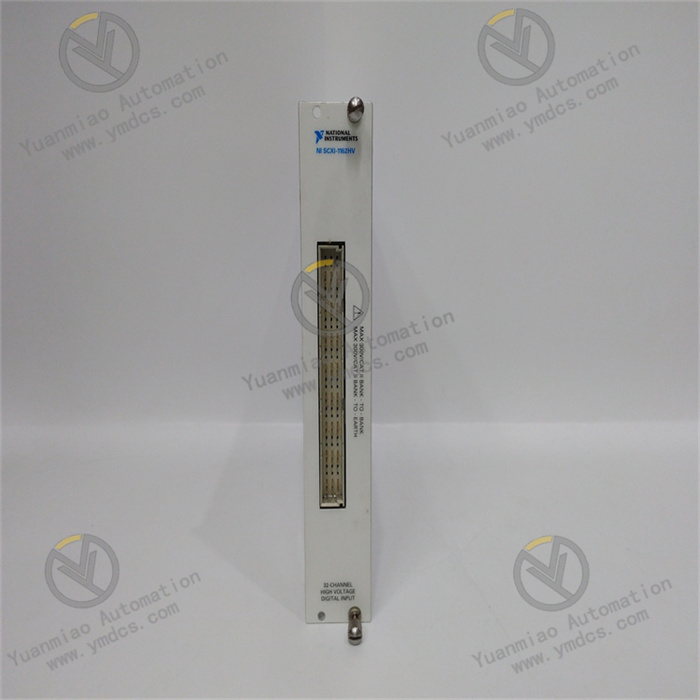
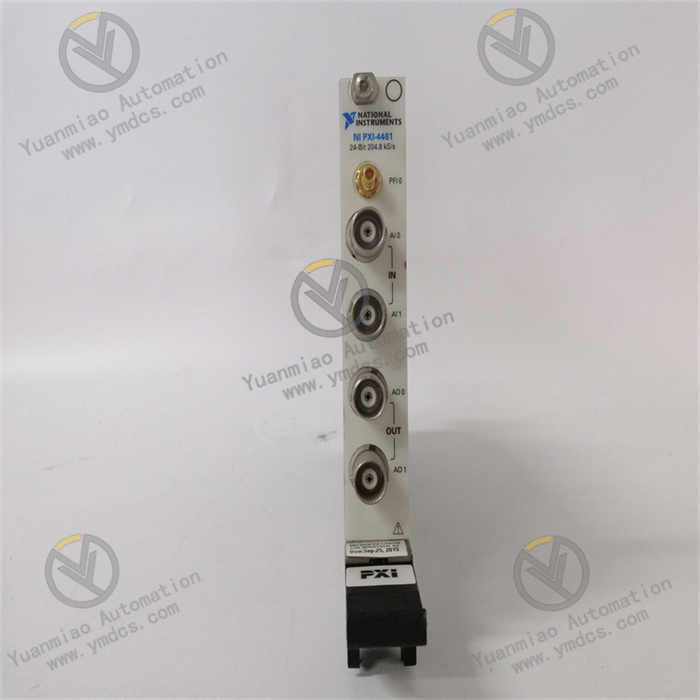
I. Basic Information
Full Model:HWA143-TDM-PMC-V20
Brand & Origin:GE General Electric, USA Original
Product Positioning
As a dedicated TDM time-division multiplexing PMC communication module for GE Mark VI turbine DCS systems, it serves as the core high-speed data interaction unit of GE heavy-duty power control systems. Specially designed for high-precision timing signal transmission, multi-channel data multiplexing and accurate timing synchronization of large-scale power equipment such as gas turbines and steam turbines, it undertakes core tasks including high-speed timing data acquisition, TDM multi-channel multiplexing transmission, PMC programmable multi-channel scheduling, equipment timing signal synchronization and real-time operating data interaction. It is the key hardware for GE Mark VI series generator sets and power control systems to realize high-precision timing control, multi-channel parallel data transmission and equipment collaborative linkage. Widely applied in high-end power automatic control scenarios such as thermal power, gas power generation, large-scale power equipment and heavy industry energy, it acts as an essential original spare part for replacing old communication modules, renovating timing links and upgrading system stability of Mark VI systems.
Hardware Architecture
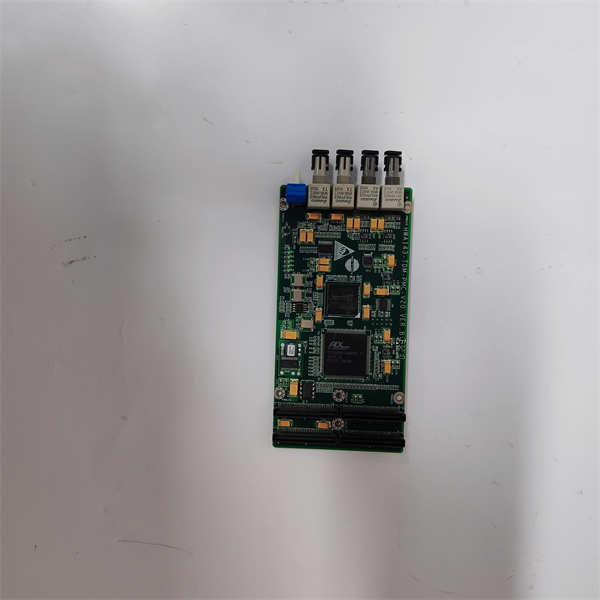
It adopts an industrial-grade FPGA + dedicated communication processing chip architecture, integrated with TDM time-division multiplexing timing control kernel, PMC multi-channel programmable scheduling unit, high-speed data cache, differential signal transmission circuit, hardware timing calibration loop and fault self-healing monitoring system. Adopting power-level enhanced protection design with complete separation of strong and weak currents, the board is coated with military-grade three-proof coating and anti-interference shielding layer, specially adapted to harsh power working conditions with strong electromagnetic field, high vibration and wide temperature fluctuation. The built-in hardware-level timing parsing and multi-channel multiplexing mechanism independently completes time-sharing transmission, timing alignment, data packaging and error correction verification of multi-channel signals without CPU intervention. It features high timing accuracy, large channel capacity, ultra-low transmission delay, strong anti-interference performance and no long-term timing drift, thoroughly solving industrial pain points of traditional power communication modules such as timing disorder, channel interference, data packet loss and synchronization deviation.
Mounting Specification
It supports embedded plug-in installation in dedicated slots of GE Mark VI series DCS system standard racks, matching original factory backplane bus timing and electrical definitions. The buckle locking anti-vibration structure prevents loosening and ensures stable contact during equipment operation. The panel is equipped with indicator lights for communication operation, timing synchronization, link fault and channel activation status, supporting intuitive on-site inspection, timing link status judgment and rapid communication fault location. Featuring compact structure and high power-level integration, it adapts to the dust-proof, wide-temperature and high-vibration round-the-clock operating environment of power station control cabinets, and supports non-stop system maintenance and disassembly, fully complying with GE Mark VI power control system original installation, wiring and operation specifications.
Compatible Systems
Exclusively adapted to GE Mark VI gas/steam turbine DCS distributed control systems, it natively supports TDM time-division multiplexing transmission protocol and PMC programmable multi-channel communication mechanism. Perfectly compatible with GE power system dedicated configuration and operation maintenance software, it supports channel parameter configuration, timing calibration, link load monitoring, online fault diagnosis and data timing verification. It can be seamlessly connected with Mark VI system main control units, various signal acquisition modules, unit execution control units and upper monitoring systems, supporting multi-channel parallel networking and multi-signal multiplexing transmission, adapting to the core networking requirements of high-precision timing linkage control for large power units.
Product Characteristics
An original power-grade high-speed TDM/PMC communication module. It completes full-load channel multiplexing aging, long-term timing stability test, high and low temperature limit condition verification, power-level EMC electromagnetic compatibility certification and link fault tolerance pressure test before factory delivery. It adopts independent hardware timing scheduling and data transmission with zero system CPU resource occupation, supporting multi-channel time-sharing multiplexing parallel transmission with large communication throughput and extremely high timing synchronization accuracy. It is equipped with instantaneous link fluctuation self-recovery, data error correction retransmission and timing deviation calibration functions, supporting 24/7 uninterrupted high-load operation under power working conditions. Old modules with timing drift, communication attenuation and channel faults in Mark VI systems can be replaced in situ, adapting to stability upgrading, timing link renovation and iterative upgrading of old equipment for power unit control systems.
II. Technical Specifications
1. Core Communication Protocol Parameters
Core Transmission Mechanism: Integrated with TDM (Time Division Multiplexing) time-division multiplexing transmission technology, it realizes time-sharing parallel transmission of multi-channel signals through accurate time slice division, completely eliminating multi-channel data preemption, signal crosstalk and transmission conflicts. Equipped with PMC (Programmable Multi-Channel) programmable multi-channel scheduling mechanism, it supports custom configuration of channel quantity, transmission timing and bandwidth ratio, which can be adaptively adjusted according to the signal transmission requirements of different units. The protocol is optimized for timing control of power power equipment, featuring stable transmission frame structure and strong anti-electromagnetic interference performance, fully meeting the strict high-speed, high-precision and high-synchronization data interaction standards of large turbine equipment.
2. Timing & Transmission Performance Parameters
Adopting hardware-level accurate timing calibration kernel, the overall transmission delay is controlled at nanosecond level with unified multi-channel data timing and no phase deviation, ensuring synchronous and accurate transmission of various unit operating condition signals and control instructions. It supports multiplexing transmission of large-scale multi-channel signals with large single-module channel load capacity, fully covering real-time interaction requirements of multi-dimensional operating signals such as unit temperature, pressure, speed, vibration and valve position. The built-in high-speed data cache and hardware frame verification mechanism ensures nearly 100% data transmission accuracy, with no timing drift, data dislocation or frame loss during long-term operation, meeting the strict timing standards for continuous and stable operation of power units.
3. Electrical Parameters
Standard Working Power Supply: 24V DC industrial DC power supply, compatible with GE Mark VI system rack standard backplane power supply specifications. It features low rated power consumption and low heat generation, with no power attenuation and stable voltage adaptation under full-load communication conditions. The power supply loop is integrated with multi-stage surge prevention, overvoltage prevention, overcurrent prevention and electrostatic discharge protection circuits, which can effectively resist instantaneous power grid fluctuation, voltage impact and high-frequency clutter interference in power stations, avoiding timing disorder, communication interruption and module restart faults caused by abnormal power supply, ensuring long-term stable operation of the module in complex power supply environments.
4. Fault Tolerance & Protection Parameters
Built with a complete communication link fault tolerance and self-recovery system, it real-timely monitors link signal quality, timing deviation, channel status and data frame integrity, and automatically completes data error correction, abnormal frame elimination, instantaneous link reconnection and timing deviation correction. When a single channel fails, the module automatically isolates the faulty channel without affecting the multiplexing transmission and timing synchronization of other normal channels, preventing overall communication paralysis caused by single-point faults. Adopting power-level EMI electromagnetic protection architecture, it withstands strong electromagnetic interference generated by power station frequency converters and high-power equipment start-stop, ensuring continuous and stable communication links under complex working conditions.
5. Environmental Operating Parameters
Operating Temperature:-40℃~+85℃
Storage Temperature:-45℃~+90℃
Operating Humidity:5%~95% RH, non-condensing
The whole machine has passed authoritative power industry certifications. Adopting enhanced three-proof and anti-vibration structural design, it has excellent dust-proof, moisture-proof, aging-resistant, anti-vibration, wide-temperature resistant and strong electromagnetic interference-resistant performance. It can withstand extreme harsh working conditions such as high temperature, low temperature, high dust, frequent equipment vibration and strong electromagnetic radiation in power stations, exclusively suitable for core power automatic control scenarios such as thermal power generation, gas power generation and large-scale power units.
III. Key Features
1. TDM Time-Division Multiplexing for Efficient Multi-Channel Parallel Interaction
Equipped with industrial-grade standard TDM time-division multiplexing core technology, it realizes time-sharing parallel transmission of multi-channel operating signals through accurate time slice segmentation, thoroughly solving the pain points of concurrent conflict, signal crosstalk and insufficient bandwidth of traditional communication modules. Cooperated with PMC programmable multi-channel scheduling function, it can flexibly configure channel bandwidth, transmission timing and priority, and grade the transmission of unit key control signals and conventional monitoring signals to ensure priority interaction of core control instructions, greatly improving unit data transmission efficiency and channel utilization, adapting to the high-speed interaction requirements of massive signals from large power units.
2. Hardware-Level Accurate Timing Synchronization for Zero-Deviation Unit Control
Relying on the independent hardware timing calibration kernel, it independently completes full-process data timing alignment, phase correction and clock synchronization without system software intervention, with timing accuracy far exceeding ordinary communication modules. There is no timing drift or phase deviation during long-term operation, which can ensure unified timing of key actions such as unit speed regulation, valve control, interlock protection and operating condition adjustment, eliminating major hidden dangers such as unit fluctuation, inaccurate regulation and interlock misoperation caused by communication timing disorder, providing core timing guarantee for precise closed-loop control of large power equipment.
3. Independent Hardware Operation with Zero System Resource Occupation
All data multiplexing, timing calibration, frame verification, link scheduling and fault monitoring tasks of the module are independently completed by the dedicated hardware kernel, completely not occupying the computing and scanning resources of the Mark VI system main control CPU. Even when the unit is running at full load with high-frequency interaction of massive data, the system main control can still focus on logical operation and process control without system scanning delay, excessive load and operation stuttering caused by communication data processing, comprehensively improving the operation stability and response real-time performance of the entire power control system.
4. Strong Fault-Tolerance & Self-Recovery Mechanism for Harsh Power Conditions
Deeply optimized for complex and harsh working conditions in the power industry, it has complete functions of link fault self-inspection, data error correction, instantaneous interference self-recovery and faulty channel isolation. Faced with abnormal conditions such as power station electromagnetic interference, small grid fluctuation and instantaneous link jitter, it can automatically complete data retransmission and timing correction, and restore stable communication without manual intervention. Single-channel fault automatic isolation protection prevents fault diffusion from affecting the operation of the whole module and unit control system, fundamentally reducing the probability of unit communication faults and shutdown faults, meeting the 24/7 uninterrupted continuous operation requirements of power equipment.
5. Non-Destructive In-Situ Replacement with Strong Adaptability for Power System Renovation
The hardware dimensions, rack slot definition, backplane electrical protocol, TDM/PMC communication timing and configuration parameters are fully compatible with GE Mark VI series DCS system standards. Old modules with timing drift, unstable communication and channel failure can be directly replaced in situ. No modification of unit control procedures, reconstruction of communication topology or recalibration of system timing is required. Full-load unit operation can be realized after normal power-on self-test and synchronization, greatly shortening the downtime for power system technical renovation and fault maintenance, and effectively reducing power station operation and maintenance costs and shutdown losses.
IV. Working Principle
GE HWA143-TDM-PMC-V20 is a dedicated TDM time-division multiplexing high-speed communication module for GE Mark VI power DCS systems. As the core hub for multi-channel data interaction and timing synchronization of the unit, after being inserted into the slot of a standard Mark VI rack and completing backplane power supply and bus docking, it automatically finishes hardware self-test, timing kernel initialization, TDM time slice calibration, PMC channel parameter matching and bus link handshake upon power-on, and completes system initialization to enter normal communication operation state.
During normal system operation, relying on the built-in TDM time-division multiplexing mechanism, the module performs time-sharing packaging and multiplexing transmission on multi-channel unit signals such as temperature, pressure, speed, vibration and valve position according to preset accurate time slice division rules. Through the PMC programmable multi-channel scheduling logic, it distinguishes signal priorities and realizes graded transmission of key control signals and conventional monitoring signals. Meanwhile, the hardware kernel real-timely completes transmission data frame verification, timing alignment and phase correction, uploads multiplexed accurate data to the system main control unit, receives adjustment, interlock and start-stop control instructions issued by the main control, and distributes them to corresponding equipment channels in time-sharing, realizing accurate timing collaborative control of multiple equipment and points of large power units.
In the whole operation process, the module real-timely monitors communication link signal quality, channel working status, timing deviation and data integrity. Relying on power-level protection and fault tolerance mechanisms, it filters signal abnormalities caused by electromagnetic interference and grid fluctuation in real time, and automatically completes data error correction, instantaneous link self-recovery and timing calibration. When a single channel has faults or signal abnormalities, it immediately isolates the faulty channel, latches fault codes and uploads alarm information to ensure normal timing transmission and data interaction of other channels without affecting the operation of the entire unit control system. It continuously provides high-speed, accurate and high-fault-tolerance multi-channel timing communication support for GE Mark VI turbine automatic control systems, ensuring long-term stable and deviation-free continuous operation of generator sets.
V. Application Scenarios
1. GE Mark VI Gas/Steam Turbine Main Control Systems: As the core timing communication unit, it undertakes multi-channel data multiplexing transmission, timing synchronization and equipment linkage control of gas turbines and steam turbines, ensuring high-precision and high-synchronization closed-loop regulation of power units.
2. Large-Scale Thermal/Gas Power Generation Automatic Control Systems: Adapted to the 24/7 continuous production conditions of power station generator sets, it undertakes high-speed interaction of massive unit operating data and accurate timing calibration tasks, avoiding unit operation fluctuation and process faults caused by communication timing deviation.
3. Multi-Channel Collaborative Control Systems for Power Equipment: Used for distributed signal transmission and timing synchronization of multi-equipment and multi-point large-scale power equipment, realizing accurate timing linkage of unit auxiliary equipment, valves and monitoring equipment, and improving the collaborative control accuracy of the entire power system.
4. Technical Renovation & Upgrading of Old Mark VI Power Systems: Replaces old communication modules with timing drift, communication attenuation and high failure rate, repairs system faults such as timing disorder, data packet loss and unstable links, and improves the overall stability and control accuracy of generator set control systems.