Description
1. Overview
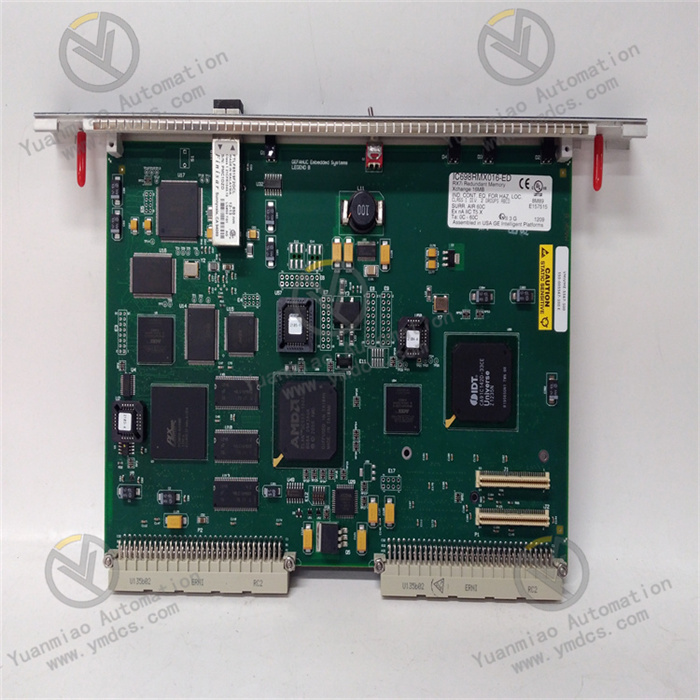
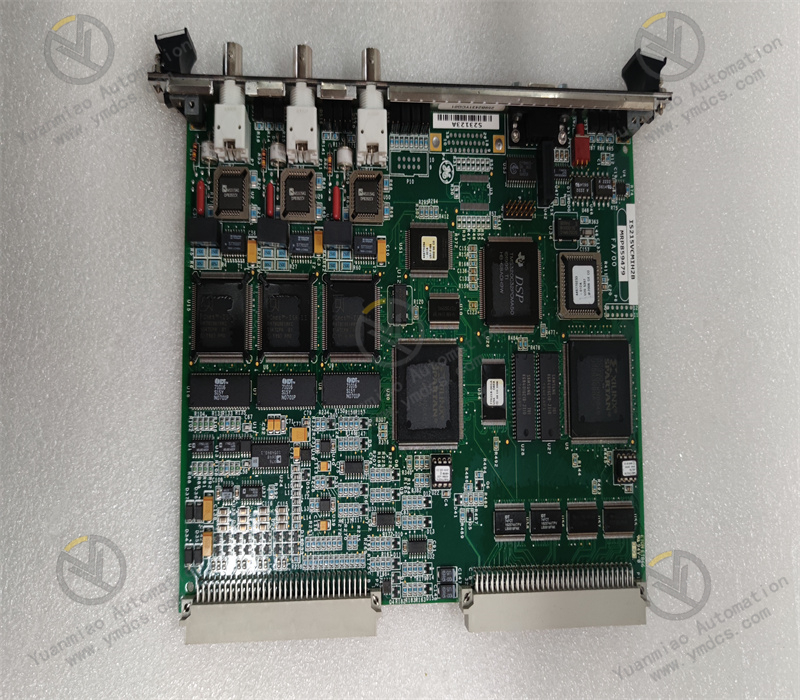
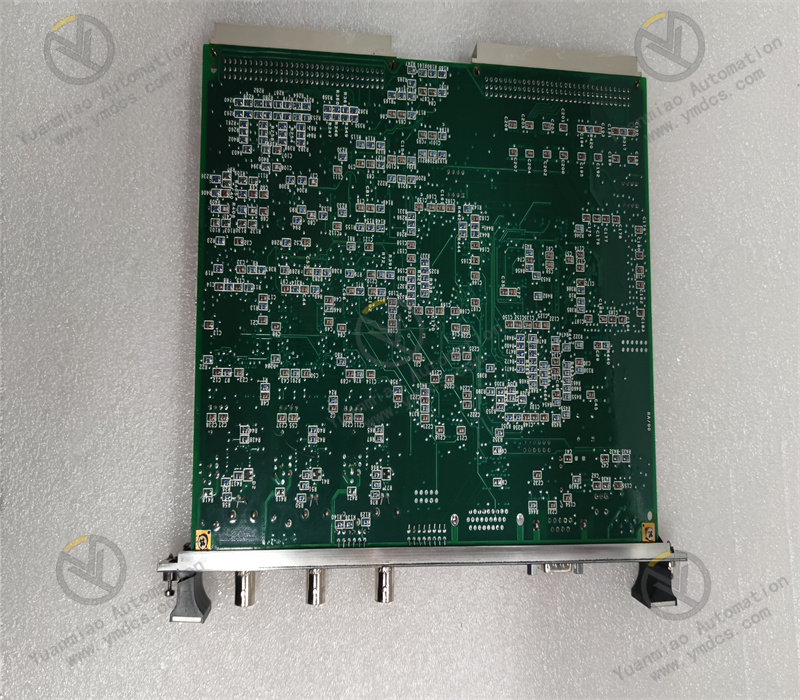
IS215VCMIH2CA is a VME bus communication master board for GE (General Electric) former Fanuc automation platform Mark VI / Mark VIe gas turbine and steam turbine control systems, serving as the core communication hub module of turbine machinery control systems. As the core interconnection unit for system I/O, this card undertakes data interaction and time synchronization between the chassis backplane bus, remote I/O and redundant controllers. It is critical hardware to realize stable monitoring, interlock protection and automatic regulation for control systems of gas turbines, steam turbines and combined cycle units. This module supports the TMR Triple Modular Redundancy fault-tolerant architecture with fault self-recovery and data voting, as well as high-precision time synchronization. Designed for uninterrupted long-term operation, high reliability and heavy electromagnetic interference in power plant environments, it is an exclusive original board card indispensable to unit control systems with no universal alternative models.
2. Functions and Features
2.1 Core Functions
VME Bus Master Communication: Acts as the manager of the chassis VME backplane bus, uniformly scheduling data transceiving, command interaction and time synchronization of all I/O boards and control boards inside the chassis to realize coordinated operation of all hardware resources.
Redundant Data Interaction and Voting: Compatible with the Mark VIeS triple redundant control architecture. It completes data comparison, fault voting and fault-tolerant judgment among three controllers to prevent misoperation caused by single-point hardware faults and ensure reliable unit protection logic.
SafetyNET Network Data Forwarding: Responsible for receiving, parsing and forwarding data of SafetyNET deterministic industrial Ethernet, establishing data links between main control units, distributed I/O, extended chassis and remote measurement points.
High-speed Time Synchronization and Task Scheduling: Equipped with an on-board FPGA hardware time scheduling unit to precisely control control cycles, sampling cycles and output refresh cycles, ensuring millisecond-level response accuracy for rapid gas turbine regulation, overspeed protection and interlock logic.
Hardware Self-diagnosis and Status Reporting: Continuously monitors bus status, link status and board operation status. It actively reports faults to the system and triggers status alarm indicators for rapid fault localization.
2.2 Product Features
High-reliability Fault-tolerant Architecture: Supports TMR triple redundant data voting. Single-point faults will not disrupt system operation, meeting safety requirements for key power plant equipment.
High-speed Real-time Response: Adopts hardware hard real-time scheduling with fast response and high timing precision, free of data delay and timing disorder, suitable for dynamic rapid regulation of gas turbines.
Industrial Wide-temperature Anti-interference Performance: Features wide operating temperature range and excellent EMC electromagnetic compatibility, capable of withstanding harsh power plant conditions including high temperature, dust, vibration and strong electromagnetic interference.
Modular Standard Compatibility: Standard VME C-size double-slot form factor, compatible with all GE Mark VI/VIe chassis. Replacement requires no modification of program configuration or wiring and supports online maintenance replacement.
3. Specifications
| Parameter Item | Technical Specification |
|---|---|
| Model | IS215VCMIH2CA |
| Device Type | VME Bus Communication Master Board for Mark VI/VIe Control System |
| Core Chip | Xilinx Spartan-6 LX16 FPGA (Hardware Timing Control) |
| Bus Standard | VME Industrial Backplane Bus |
| Operating Power Supply | DC 24V (Tolerance: 18~32VDC) |
| On-board Output | DC 5V On-board Regulated Power Supply |
| Power Consumption | Approx. 25W |
| Operating Temperature | -40℃ ~ +70℃ |
| Mechanical Form Factor | VME C-size, Double-slot Installation |
| Response Latency | Millisecond-level Hard Real-time Response |
| Redundancy Mechanism | Support TMR Triple Modular Redundancy Data Voting and Fault Tolerance |
| Applicable Systems | GE Mark VI / Mark VIeS Gas Turbine & Steam Turbine Control Systems |
4. Working Principle
As the communication and timing hub of the system, the IS215VCMIH2CA follows a closed-loop workflow: Bus Scheduling → Data Interaction → Redundant Voting → Time Synchronization → Status Diagnosis. After power-up, the board completes VME backplane bus initialization, link self-test and device enumeration to identify all I/O boards and control units within the chassis. During operation, the card continuously receives control commands from the main controller, distributes commands to each functional I/O board via the VME bus, and simultaneously collects measurement point data, equipment status and loop feedback signals from the field and transmits them back to the main control arithmetic unit.
Under the TMR redundant architecture, the board performs real-time comparison and fault-tolerant voting on three channels of homologous data, automatically eliminating abnormal erroneous data to guarantee data consistency and reliable control logic. The on-board FPGA hardware unit precisely manages system sampling cycles, regulation cycles and protection action timing to avoid timing offset and data delay. Meanwhile, it continuously monitors bus links, power supply and chip operating status. Once an abnormality is detected, fault alarms are triggered and abnormal links are isolated immediately to ensure uninterrupted stable operation of the unit control system.
5. Application Scenarios
Gas Turbine Control Systems: Serves as core communication and timing control hardware inside main control cabinets of GE heavy-duty and industrial gas turbines equipped with Mark VI/VIe systems. It supports core logic such as combustion regulation, speed control, load control and overspeed protection.
Steam Turbine & Combined Cycle Power Plants: Handles bus data interaction and time synchronization for steam turbine governing systems, auxiliary machinery control systems and interlock protection systems.
Large Industrial Power Equipment Control: Acts as the bus hub for fault-tolerant control systems of large compressors, power generation units and turbomachinery.
Maintenance and Upgrade of Legacy Power Plants: Replaces older communication master boards of the same model. Fully compatible with the original system architecture, configuration logic and chassis backplane to achieve rapid commissioning without further modifications.
6. Common Faults and Troubleshooting
6.1 System Bus Interruption, All I/O Modules in Chassis Offline
Fault Causes: Abnormal 24V DC power supply to the board; poor backplane bus contact; failure of the board’s main FPGA; bus program crash.Solutions: Check DC24V power supply voltage and fuses of the chassis; power off, clean the board edge connectors and VME backplane slots then reinsert and secure the board; perform chassis restart and reset. If the fault persists, the board suffers hardware damage and shall be replaced with original IS215VCMIH2CA.
6.2 Frequent System Alarms for Communication Jitter and Data Intermittent Disconnection
Fault Causes: Aging timing circuits of the board; degraded bus driving capability; oxidized backplane interfaces; unstable links caused by electromagnetic interference.Solutions: Verify standardization of chassis grounding and shield grounding; remove oxidation and dust from backplane and board interfaces; monitor bus communication quality. Replace the board if jitter cannot be eliminated to restore stable bus timing and communication.
6.3 Abnormal Redundant Voting, System Alarms of Inconsistent TMR Data
Fault Causes: Timing offset of board channels; drift of data sampling precision; failure of redundant link synchronization.Solutions: Verify consistency of firmware version and parameters among three redundant boards; re-synchronize system timing; calibrate bus synchronous clock. Replace the board directly if hardware timing drift cannot be repaired.
6.4 RUN Indicator Off, FAIL Alarm Indicator Steady On
Fault Causes: Damaged board firmware; abnormal FPGA program; core hardware failure; failed power-on self-test.Solutions: Power cycle for reset; re-flash matching firmware. If self-test keeps failing and alarms cannot be cleared, the board is deemed defective and shall be replaced with original board of the same model.
6.5 Delayed Data of Partial I/O Channels, Slow Regulation Response
Fault Causes: Degraded bus scheduling performance of the board; bus load congestion; attenuation of hardware processing rate.Solutions: Troubleshoot congested points on downstream I/O boards; optimize system bus task scheduling. Replace the main communication board once performance attenuation is confirmed to restore real-time system response.